Jamaican Coffee Is More Than Just Blue Mountain: What Is Jamaican High Mountain Coffee and Its Flavor Profile
The Noble Origins of Blue Mountain Coffee
Even if you couldn't place Jamaica on a map, you would almost certainly recognize the name Jamaican Blue Mountain Coffee. Celebrated for generations as "the finest among coffees," it has long been the benchmark against which other origins are measured. So what exactly makes this coffee from a small Caribbean island so revered? Let's take a closer look at the heritage behind Blue Mountain.
Jamaica, the birthplace of Blue Mountain Coffee, is an island nation in the Caribbean Sea of Central America, covering roughly one-third the area of Taiwan. Blue Mountain, rising to 7,400 feet, is the highest peak on the island and sits about a 40-50 minute drive from the capital, Kingston. The mountain is frequently wrapped in cloud and mist — hence its name — and it is here, in this narrow band of highland, that the prestigious Blue Mountain Coffee grows.
A Privileged Coffee Aristocrat
What makes Jamaican Blue Mountain Coffee so precious is the rare combination of exceptional growing conditions and an equally exceptional post-harvest pipeline. From variety selection and cultivation through harvesting, processing, grading, and export packing, Blue Mountain is, in many ways, the model student of the coffee world.
Coffee worldwide comes from three main species: Arabica, Robusta, and Liberica. Blue Mountain Coffee belongs exclusively to the finest of these, Arabica.
It is worth understanding that not every coffee grown in the Blue Mountains earns the name. Only coffee cultivated between elevations of 1,500 and 5,000 feet qualifies as genuine Blue Mountain Coffee. The cool highland climate stretches the ripening period of the cherries, and the significant day-night temperature differential slows the conversion of starch into sugar within the beans — a slow maturation that concentrates and enriches the coffee's aroma.
"Good coffee must be planted on slopes," explains Cao Cunli, the only Taiwanese grower who owns a coffee farm on Jamaica's Blue Mountain. Sloped terrain drains quickly, which means the coffee trees are constantly drawing in fresh water rather than sitting in runoff.
Another signature of the region is the shade canopy planted alongside the coffee. These are typically banana trees or Jamaica's native Ackee trees, which shield the coffee from harsh direct sunlight while helping to hold the soil in place. Tending the trees demands real patience and a meticulous eye: regular pruning removes old wood to push new growth, and the developing fruit must be inspected often, with underdeveloped cherries picked off early so they don't drain nutrients from the rest. "Caring for Blue Mountain Coffee is like raising children," Cao says.
Walk through the groves and you'll see coffee cherries in abundance, shifting from green to red as they ripen. The moment a cherry turns fully red it must be picked — any delay invites fermentation and spoilage.
Every Blue Mountain cherry is harvested by hand. Workers move between the trees on steep slopes, picking ripe cherries one at a time. Because cherries on the same branch ripen at different rates, a single plot may need dozens of passes before the harvest is complete, which makes the whole process enormously labor-intensive.
After picking, the fruit is first floated in water to sort out defective cherries, then processed by the washed method to strip away skin and mucilage and reveal the beans inside, before heading to central processing stations. During harvest season, the washed beans — known as wet parchment — are spread across the plaza beside the mill like grain drying in the sun.
Once dried, the beans go through rigorous hand sorting and machine grading before being packed for export. Famously, Blue Mountain Coffee ships in handmade wooden barrels rather than the burlap bags used for nearly every other origin — a tradition that sets it apart even before it is brewed.
Before any Blue Mountain Coffee leaves the island, it must clear a detailed inspection by the Jamaican Coffee Industry Board. Only lots that pass the Cupping Test administered by professional quality-control staff may enter the world market. Hernandez, director of the Board, has been emphatic that Blue Mountain values quality over volume: "Quality, quality, quality, that is No. 1 priority."
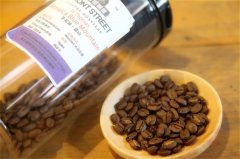
FrontStreet Coffee's Jamaican Blue Mountain Coffee has come through all of these checkpoints, arriving with a rich aroma, a smooth and mellow body, and delicate hints of fruit. A proper medium roast brings out its distinctive, refined character at its best.
Blue Mountain is not the only coffee Jamaica produces — the island also grows High Mountain and Prime Washed grades. But Blue Mountain remains the highest quality and scarcest of the three. Today roughly 90% of Jamaica's Blue Mountain Coffee is bought by Japanese companies, with what remains exported to the United States and Britain, which is precisely why it commands such extraordinary prices.
FrontStreet Coffee Recommendation
If you want to taste the legend for yourself, FrontStreet Coffee's Jamaica Blue Mountain No.1 is the grade to seek out — the strictest classification in the region, sourced from the historic Clifton Estate, where coffee has been grown since around 1750 at an elevation of roughly 4,300 feet. FrontStreet holds full origin certification for this lot and even displays the original wooden shipping barrels, so the coffee's provenance can be traced with complete confidence.
The beans are roasted medium-dark to highlight the coffee's trademark balance and traditional depth, and shipped within five days of roasting so they arrive at peak flavor. Brewed as pour-over, expect layered notes of nuts, dark chocolate, cream and caramel with a soft, lingering sweetness — clean, gentle acidity, no harshness, and an impressively full body. It is equally rewarding as an everyday cup or as a gift for someone who appreciates the classics.
Important Notice :
FrontStreet Coffee is a long-established specialty coffee roaster in Guangzhou China, selling freshly roasted beans from its own farm in Yunnan as well as dozens of carefully selected single-origin beans from around the world for both pour-over and espresso. The products deliver consistently excellent quality and great value, with shipping within 24 hours. Guangzhou's FrontStreet Coffee shop is recommended by many coffee lovers, and the beans are now available online at the Tmall 。
FrontStreet Coffee has moved to a new address:
FrontStreet Coffee Address: 315,Donghua East Road,GuangZhou
Tel:020 38364473
 Scan and follow the En Gafei WeChat official account. Please indicate that the reprint comes from "En Gafei".