What does SOE coffee mean? Is it just single origin beans? What are the taste differences between Yirgacheffe SOE coffee and blended beans?
SOE coffee has become especially fashionable in recent years. Virtually every newly opened neighborhood coffee shop now installs two or more espresso grinders — one loaded with traditional beans (usually a blend), the other with SOE beans. Generally, SOE is treated as an upgraded version of the traditional (blend) option, with an extra charge to switch. Depending on the city's consumption level and the quality and price of the beans, that surcharge typically runs between 3-10 yuan.
Understanding Coffee Terminology
FrontStreet Coffee would like to clarify these terms first:
SOE stands for "Single Origin Espresso" — espresso made specifically from coffee beans of a single origin.

Single-origin coffee beans refer to beans from a single origin. Broadly defined, the category includes all single-origin beans, SOE included. Under the influence of the specialty coffee movement, traceability for single-origin coffee now extends to the most detailed level possible.
Blend coffee beans mean deliberately combining beans from two or more origins (usually grouped by producing country) with cost, stability, and flavor in mind. Blends likewise divide into those intended for espresso and those for pour-over, with espresso use being the primary one.

The History and Evolution of SOE
SOE isn't actually new! Most people simply want to drink a cup of coffee and have no reason to study coffee's backstory — so when they hear about SOE beans and the surcharge, they assume it must be something premium.
In fact, SOE predates blended coffee (only the term came later). FrontStreet Coffee needs to explain the logic behind the emergence of blends here. Before blends existed, the world naturally drank single-origin beans — coffee from Mocha, coffee from Brazil, coffee from Java. Nobody emphasized "single-origin" because it was taken for granted and needed no special mention.
Only when consumer markets reached a certain scale (mainly the European market at the time), combined with the risk of unstable production and quality from the major origins, did people begin blending beans from different regions to hedge that risk. From then on, blended coffee became the mainstream: beans from different regions complemented one another and stabilized the flavor, and even if one origin had a poor harvest the following year, the formula could be adjusted to compensate.
The recent resurgence of SOE is largely an environmental story. Single-origin coffee has taken root in drinkers' minds: pour-over coffee is dominated by single-origin beans whose extracted flavors are excellent, creating the subconscious equation "single-origin equals good coffee."
Really, the rise of single-origin coffee traces back to the concept of specialty coffee. In brief, a group of industry leaders set out to fix inconsistent quality at the root: through standard-setting, teaching farmers scientific cultivation, and paying premium prices for high-quality beans, they incentivized meticulous farming. Bean quality improved, and the brewed cup naturally got better.
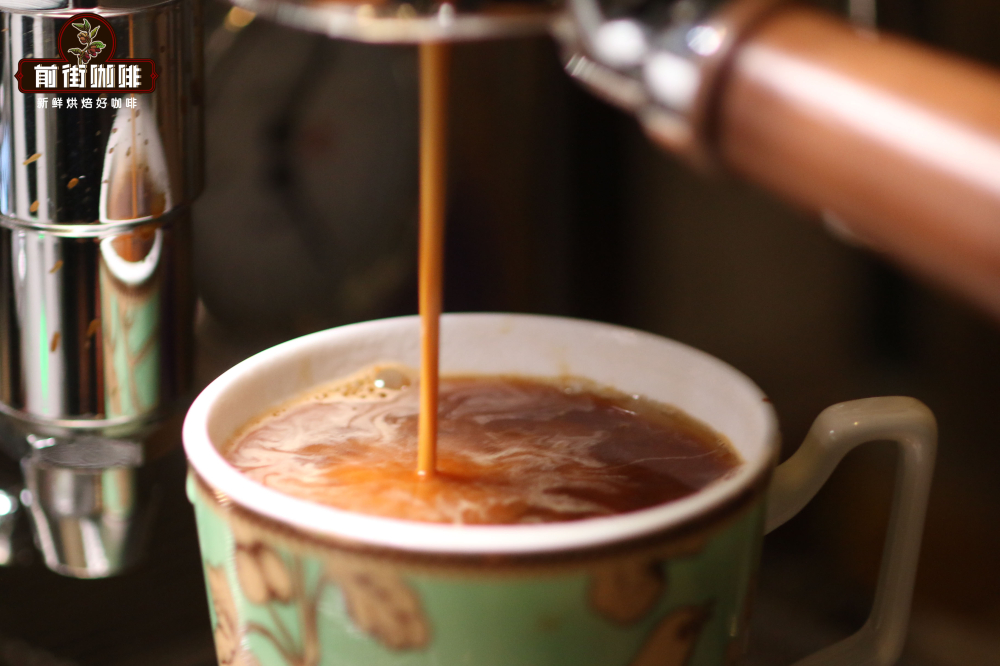
For a long time, our impression of espresso was balanced, bitter black coffee that tasted best with milk. That wasn't the fault of the extraction method — it was the beans. Espresso couldn't be priced too high and was consumed in volume, so cost came first, then stability, then flavor. Blending was the safest approach, and blend components had to be high-yield and supply-stable, so ingredients were drawn basically from the top ten coffee-producing countries. Flavor settled into a fixed band of caramel, nuts, cream, and cocoa, because — considering the compatibility of various beans — dark-roasting everything was the least troublesome path (market taste preferences being a leading factor too). Traceability was weak, so consumers could only recognize which roaster or shop made good coffee.
Single-origin coffee, meanwhile, emphasizes the flavors of specific producing regions and their traceability stories. Having succeeded in extraction methods like pour-over and siphon, it naturally extended into espresso — becoming what we now call "SOE."

Why Does SOE Cost Extra?
If SOE isn't inherently superior to a blend, why can it command a higher price? The reason is simple — the raw material cost of the beans behind it is higher.
Logically, espresso pulled from pure Brazilian beans from one region could also be called "SOE," yet you rarely see it on menus. Because the espresso extracted that way wouldn't necessarily taste better than a blend! Beans marketed as "SOE" must offer flavors that set them apart from traditional blends and surprise the drinker enough to justify the price. That's why so many Ethiopian small-region beans end up as SOE: Ethiopia is famous for citrus and floral flavors, and with a relatively bold (slightly lighter) roast, people can taste an espresso unlike anything a traditional blend offers.

Later, specially processed beans proliferated — with ever more distinctive, recognizable flavors — and were quickly adopted for SOE. Rising bean costs flowed straight into the surcharge. Hence most shops stock at least one regular blend and one SOE bean, satisfying both the value-minded and the flavor-chasers.
SOE vs. Blend: Which to Choose?
As FrontStreet Coffee said, there's no inherent pecking order between SOE and blends — the difference lies in purpose. One of FrontStreet Coffee's popular blends, the Sunflower Warm Sunshine Blend, combines FrontStreet Honduras Sherry beans with FrontStreet Ethiopia Yirgacheffe Natural Red Cherry Project beans — both top-quality single-origin coffees. Blended, they create a 1+1>2 flavor: sherry, vanilla cream, chocolate — a profile distinctly different from traditional espresso blends. Of course, once your blending goal is flavor and stability, the price advantage disappears.

For historical reasons, "blend" has become a stereotype in many people's minds — which is exactly why some merchants avoid good blends. "SOE" contrasts neatly with "blend" (single-origin versus blend, good impression versus bad). Consequently, when SOE became a trend, bandwagon effects were inevitable, producing SOEs built not on flavor but on the label alone.
Choosing Suitable Coffee Beans for SOE
FrontStreet Coffee has found that many people assume SOE is just running single-origin beans through an espresso machine. Only after bringing home all manner of floral, fruity beans and feeding them to their machine do they discover the problem: first the coffee sprays wildly, then the shockingly sour espresso stops them at one sip, and they start wondering whether their equipment is too cheap or their technique is wrong.

In truth, the reason your home SOE doesn't match the shop's probably lies not in your gear or technique, but in the roast level — that bean simply wasn't suited to espresso. According to FrontStreet Coffee's baristas, choosing beans suited to SOE extraction makes delicious espresso easy, and turning it into an Americano or latte twice as effective. FrontStreet Coffee's menu features two single-origin beans with dedicated SOE versions: the strawberry-flavored FrontStreet Hua Kui, and the classic Yirgacheffe-flavored FrontStreet Kongjia. Just select the espresso roast when ordering.

Making SOE Yirgacheffe Dirty with FrontStreet Coffee's Kongjia Beans
FrontStreet Coffee's shop machine is the commercial single-group "Lelit Bianca," which adjusts extraction through pressure, reaching a maximum of 11 bar. Home machines only need 9 bar of pressure to cover extraction and milk frothing, paired with an espresso grinder.

SOE Coffee Extraction Parameters
Coffee Beans: FrontStreet Ethiopia Natural Kongjia
Coffee Dose: 20g
Coffee Liquid Yield: 40g
Dose-to-Yield Ratio: 1:2
Extraction Time: 26-33 seconds
Grind Setting: Galileo 2.0
FrontStreet Coffee uses a double basket with a capacity of roughly 18-20 grams of grounds, dosing 20 grams when preparing drinks.

Usually the ratio of grounds to liquid falls between 1:1.5 and 1:2.5; FrontStreet Coffee's extraction ratio is 1:2 — 20 grams of grounds yielding 40 grams of liquid. Time tracks the flow rate: single extractions generally run 20-35 seconds, since coffee extracted in under 20 seconds usually tastes thin while extraction past 35 seconds tends toward over-extraction and burnt bitterness. FrontStreet Coffee's espresso mostly lands in the 28-30 second range.

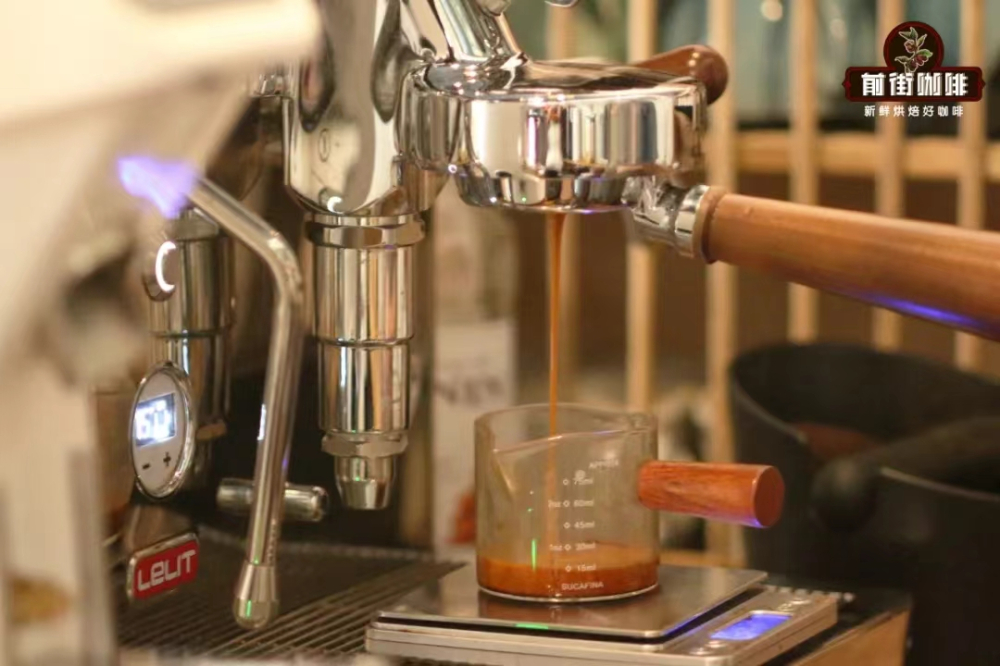
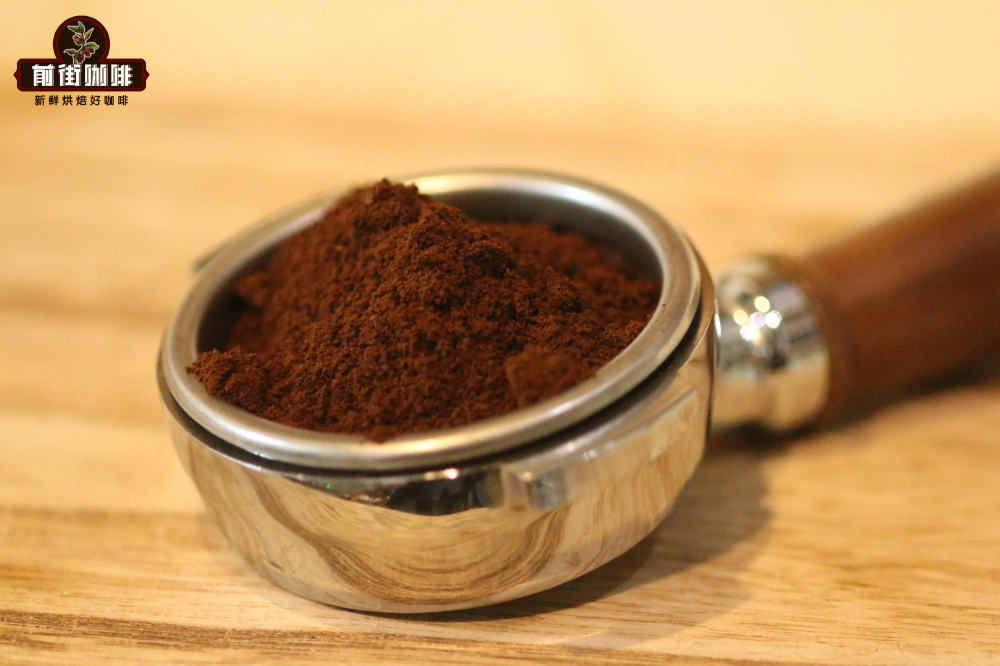
FrontStreet Coffee first wipes the portafilter dry, grinds a double dose, weighs out 20 grams on a scale, distributes the grounds evenly with a tool, and tamps the puck firmly for stable extraction. Then flip the extraction switch to release water — wetting the group head and washing away any stray grounds — gently lock the portafilter in place, and start the extraction. When the scale shows 40 grams of liquid at around 28-33 seconds, switch off, and a cup of SOE espresso is ready. Add iced water or 80°C hot water to taste, and you have a Yirgacheffe SOE Americano.

For a hot SOE latte, FrontStreet Coffee uses a 1:6 ratio: 40 grams of espresso into a pre-warmed cup, then 240g of milk frothed on the steam wand. Keep the milk between 50-65°C for dense, moderately thick foam, then blend it evenly with the espresso. The result is a Yirgacheffe SOE latte that tastes like a lemon cookie — rich and smooth, warming you through.
FrontStreet Coffee Recommendation
Want a Yirgacheffe for SOE and pour-over alike? FrontStreet Yirgacheffe Guodingding, a washed G1 lot from the Guodingding cooperative in the Worka area (1900-2300m, local heirloom varieties), shows orange, berry, lemon, sugarcane, and green tea with the region's signature jasmine-citrus clarity. As pour-over, FrontStreet suggests a V60 at 90-91°C, 15g of coffee at 1:15, a grind passing 80% on a #20 sieve (EK43s at 10), with a 30g bloom for 30 seconds, pours to 95g and 100g, and a total of 2:00-2:10. For brighter, fruitier days, FrontStreet Natural Red Cherry — full-red-cherry natural processing — layers citrus acidity, berry juiciness, honeyed sweetness, and a cream-smooth body. Either bean bridges the gap between your pour-over shelf and your espresso machine.
Important Notice :
FrontStreet Coffee is a long-established specialty coffee roaster in Guangzhou China, selling freshly roasted beans from its own farm in Yunnan as well as dozens of carefully selected single-origin beans from around the world for both pour-over and espresso. The products deliver consistently excellent quality and great value, with shipping within 24 hours. Guangzhou's FrontStreet Coffee shop is recommended by many coffee lovers, and the beans are now available online at the Tmall 。
FrontStreet Coffee has moved to a new address:
FrontStreet Coffee Address: 315,Donghua East Road,GuangZhou
Tel:020 38364473
 Scan and follow the En Gafei WeChat official account. Please indicate that the reprint comes from "En Gafei".