Sun-Dried Yirgacheffe Review: ORC Red Cherry vs. Aricha Comparison
Ethiopia's Coffee Regions and FrontStreet Coffee's Yirgacheffe
Ethiopian coffee comes primarily from eight major regions: Lekempti, Limu, Illubabor, Djimmah, Harar, Teppi/Bebeka, Sidamo, and Yirgacheffe.
Yirgacheffe is a small town in Ethiopia sitting at 1,700-2,100 meters — one of the world's highest-altitude coffee regions and a byword for Ethiopian premium coffee. Lakes Turkana, Abaya, and Chamo feed abundant water vapor into the area, and the rift valleys — the "Misty Valley" above all — stay wrapped in fog year-round, with spring-like seasons, gentle breezes, and cool, humid air. Thousands of coffee varieties thrive here, cultivating a unique terroir where floral and fruity aromas interweave, enchanting and ever-changing.
Yirgacheffe's first coffee trees were planted by European monks (not unlike Belgian monks growing grain for beer); farmers and cooperatives took over later, and the trees still scatter naturally through forests, fields, and backyards. At harvest time, Ethiopian coffee trading companies come to town to buy the farmers' beans, auctioning and exporting them under the "Yirgacheffe" brand.
What is the "Red Cherry Project"?
The "Red Cherry Project" (ORC) is a quality-improvement initiative for small-scale farms. In 2007, Trabocca — the Netherlands' largest green coffee supplier — launched it in pursuit of top Ethiopian beans. The project demands not only that every cherry be fully red, but that all picking be done entirely by hand — and that is merely the baseline; the project runs far deeper.
The main goal is to reward coffee farmers and surprise roasters. Trabocca invites Ethiopian farms to produce small batches of roughly 1,500-3,000 kilograms (25-50 bags) before the harvest season. Pickers select only cherries at 100% ripeness, which makes an enormous difference to flavor — so the diligent, sharp-eyed, hardworking Ethiopian women who do the sorting are the Red Cherry Project's crucial drivers.
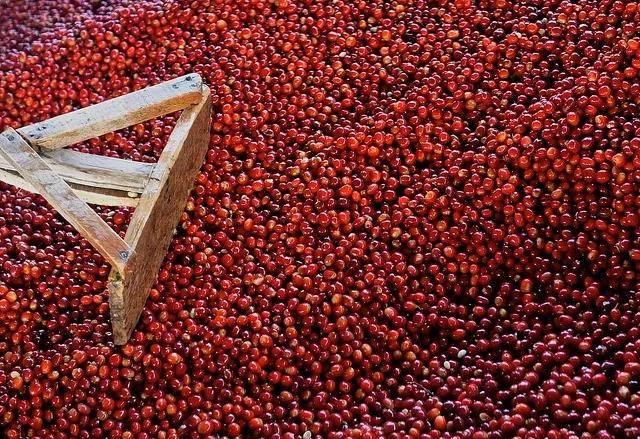
The project is also a reinforcement scheme pushing farms to invest more effort in selection and sorting, and these coffees earn relatively higher prices. The Red Cherry Initiative spans washed, natural, semi-washed, semi-natural, and experimental coffees, with major producing regions including Yirgacheffe, Sidamo, Bonga Forest, Lekempti, Kembata, Illubabor, Harar, Limu, and — added in 2011 — the Golocha area near Harar. Every lot showcases flavors that represent the character of Ethiopian coffee. After receiving the coffee, Trabocca screens it again: farms that meet quality standards in cuppings held in both the Ethiopian and Dutch offices receive substantial bonuses.
Trabocca has reinvested all recent profits into its partner farms. The company stresses that this is a non-profit project — the Red Cherry team is just four people, including the owner and a secretary, with the parent company covering other administrative work to keep expenses down, so every profit returns to the farms.
Trabocca has deep roots in Ethiopia. Founder Menno Simons knew almost nothing about coffee until he traveled there and was stunned by the unique flavor of the native varieties. The company also trades other primary agricultural products — cocoa and fresh fruits among them — always hunting for quality raw materials while championing environmental protection and farmers' livelihoods. Its vision reads "Discover, Develop, Deliver," and Simons has toured Ethiopia's regions, estates, and mills since day one, discovering varieties with captivating flavors — the Red Cherry Project is what that vision became.
First, the cupping bar is high. In cupping rooms in Addis Ababa and Amsterdam, Trabocca re-screens every delivery, judging the beans in both countries. Qualified lots are auctioned to buyers worldwide — and coffee sold through this platform generally reaches more than 4 times the international spot price for ordinary coffee, with the highest lots hitting 20 times.
Second, production is small but the quality demands are steep: participating beans must come in small batches, typically 1,500-3,000 kilograms, so each receives the attention top Ethiopian lots deserve.
Finally, Trabocca pours real resources into the project: donated natural drying racks, shade nets, generators, and other equipment; financial loans, new hardware, and production and processing know-how to raise farmers' skill; plus real-time monitoring and safe transport, ensuring "Red Cherry" beans get the best care at every stage.
In short, the project raises purchase prices for high-quality green coffee so farmers will attend to every step of harvesting and processing. Better beans taste better, win wider recognition in the end market, and thereby justify the higher price paid upstream.
Aricha Processing Plant — Beyond the Red Cherry Project
FrontStreet's Yirgacheffe Misty Valley story: since washed processing arrived in the Yirgacheffe region in the late 20th century, defect counts dropped sharply and the region's beans won fans worldwide. Local coffee merchant Abdullash Bagersh, nostalgic for traditional natural flavors, improved the natural method — better flavor, fewer defects — and launched three legendary Yirgacheffe naturals: "Idido Misty Valley," "Beloya," and "Aricha."
FrontStreet's Yirgacheffe Aricha: Aricha, formerly known as Idido, is a renowned coffee processing plant near Yirgacheffe town.
Misty Valley (marked in red) is the zone closest to Yirgacheffe — formerly Idido, now the Aricha coffee processing plant.
The Yirgacheffe region holds many excellent mills, and coffee from them commands far higher prices. The natural Yirgacheffe from the Kebel Aricha Mill — the beans we call ARICHA — is one: processed by refined natural method and classified Gr.1 (G1, Ethiopia's highest coffee grade) by the ECX, it has earned the title "King of Fruits."
After the mill selects usable cherries, whole cherries with pulp and skin intact go onto elevated drying racks. That labor-intensive rack drying keeps the fruit off the ground, preventing earthy off-flavors and yielding exceptionally clean fruit flavors.
After more than two weeks of natural drying, the dark-brown cherries rest in professional storage until the flavor fully matures. Before shipment the beans are hulled from the dried cherries — and the sweetness goes without saying.
Green Bean Comparison
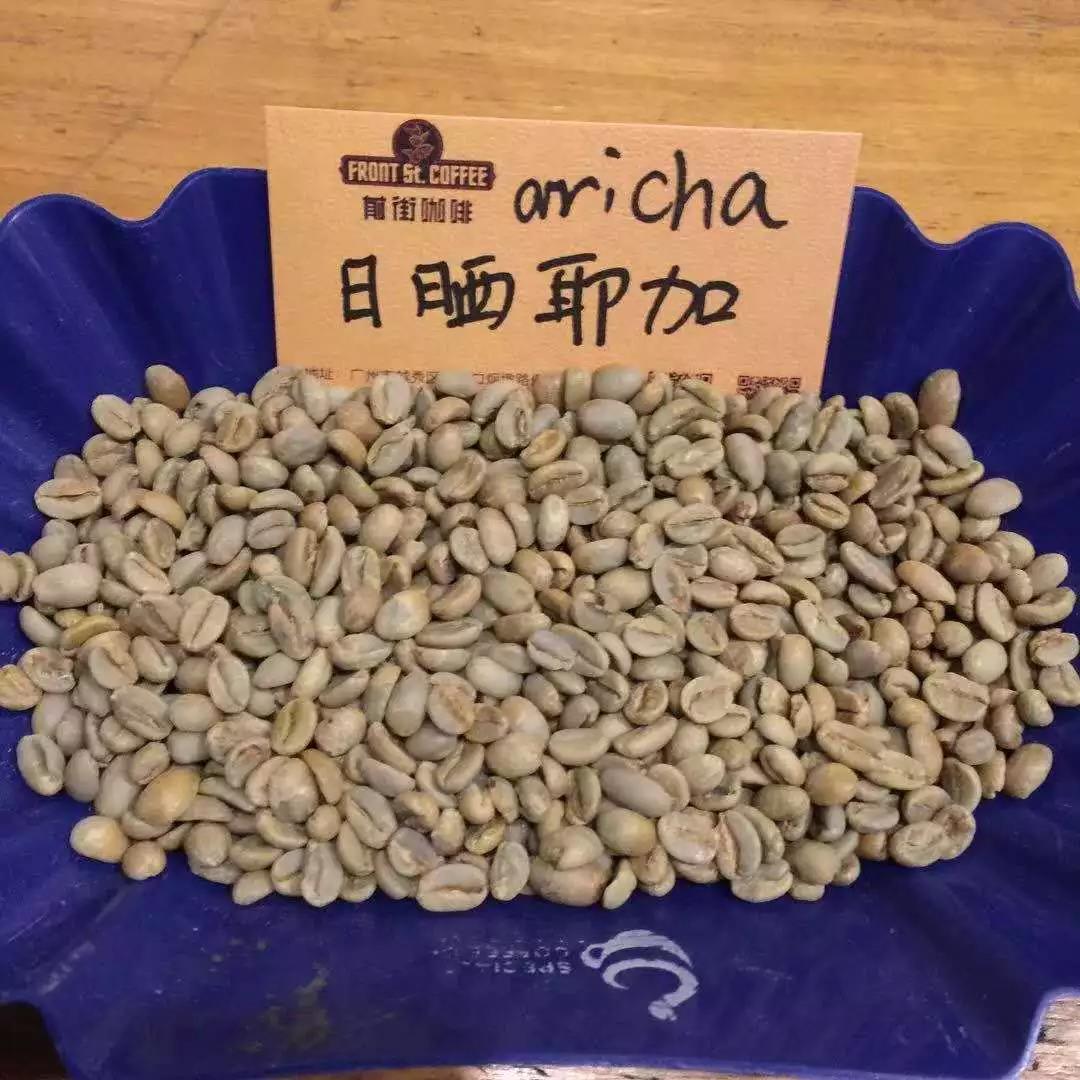
FrontStreet's Yirgacheffe is the local native small-grain variety: relatively round and very small, mostly 14-15 screen.
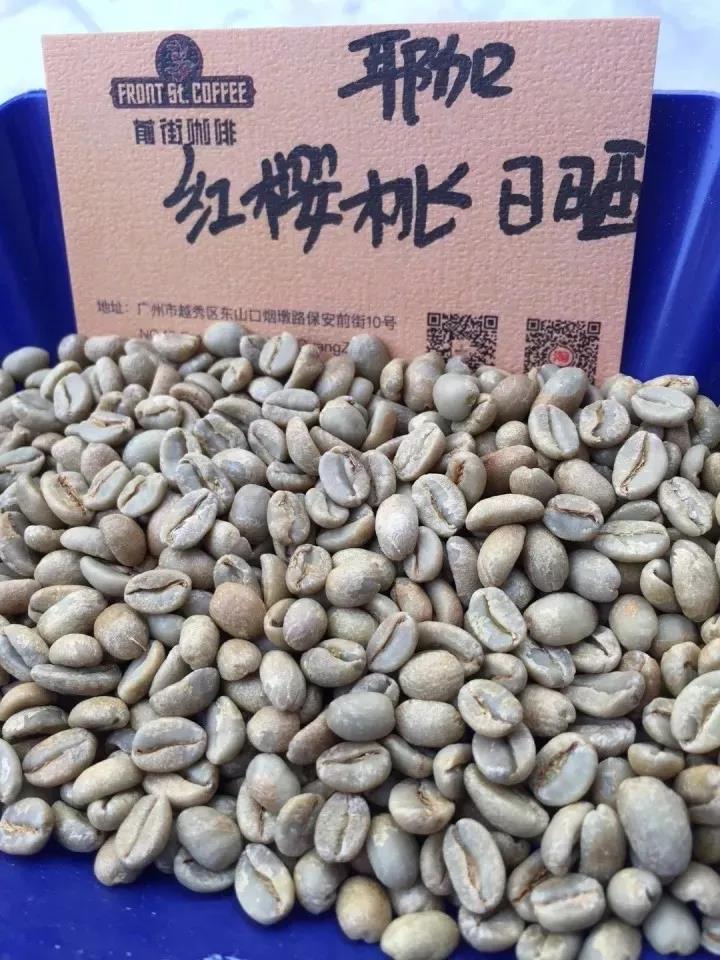
Both the Red Cherry and the Aricha are G1 grade. The green beans show the yellow-green color typical of natural coffee, uniform and full, with few defects.
Roasting Comparison
FrontStreet Coffee's Red Cherry: charged at 194°C.
FrontStreet Coffee's Aricha: charged at 198.6°C.
On the roasting curves, the Red Cherry runs smooth while the Aricha fluctuates more — its maturity is less uniform, so we slightly extended the Aricha's drying stage for more even color and fuller development.
Because the Red Cherry's maturity is uniform and its flavor clean, we roast it light-medium to preserve the florals, fruit acidity, and mature fruit-fermentation aromas.
Though the Aricha drops at a higher temperature and develops longer than the Red Cherry, the Red Cherry develops at a higher temperature after first crack, achieving fuller sweetness and aroma. The Aricha's longer post-crack development runs at lower temperature — certain flavors turn more intense, but the overall cup thins somewhat. The advantage of this approach is better bean appearance and a cleaner flavor.
Cupping Comparison
FrontStreet Coffee's Red Cherry: strawberry, berries, cream, spices, almonds, oolong tea.
FrontStreet Coffee's Aricha: fermented fruit aroma, apricot-peach, cedar, berries, black tea.
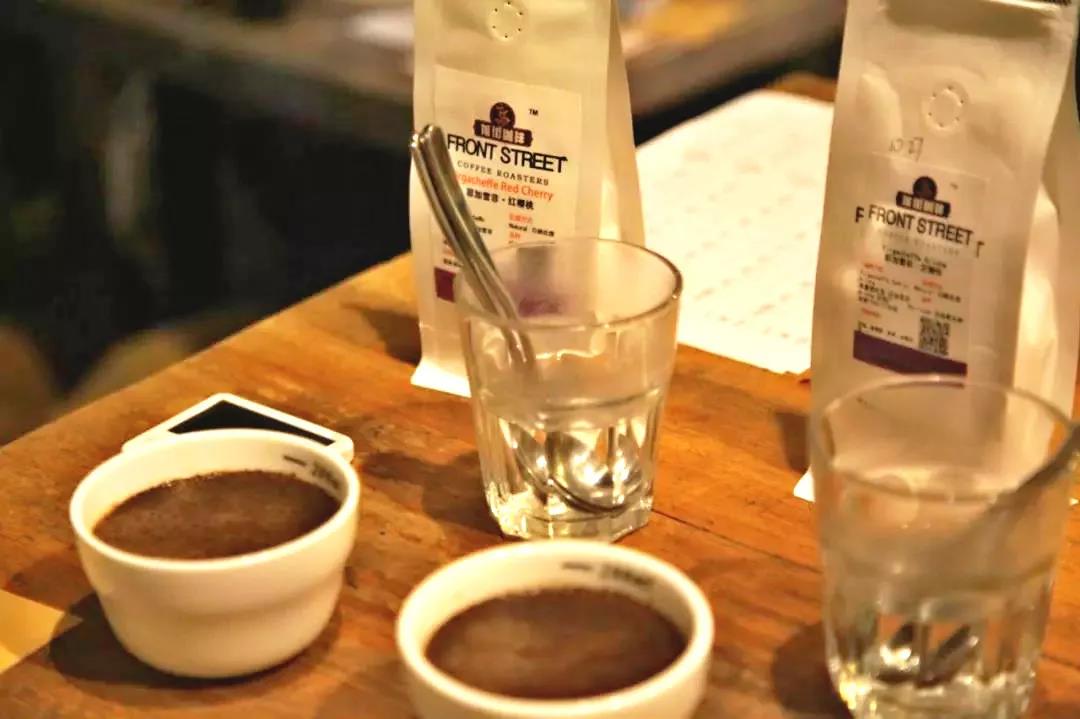
Truthfully, the two cups are quite similar: both strongly sweet, both gentle and clean overall. But the Red Cherry's aroma is cleaner and more lifted, its berry flavors more prominent, with an oolong-tea aftertaste; the Aricha leans into fermentation, fresher on top with apricot-peach and a black-tea finish.
Green beans from Red Cherry and non-Red Cherry lots look little different, yet the gap shows in the roaster and on the cupping table. Red Cherry beans' uniform maturity preserves abundant florals and fruit acidity through the roast; unevenly mature non-Red Cherry beans make balancing uniformity, fullness, and cleanliness far harder.
FrontStreet Coffee Recommendation
After a side-by-side like this, the natural-processed Yirgacheffe rarely leaves your mind — and FrontStreet carries the entry points. The FrontStreet Red Cherry featured above comes from the same spirit as Trabocca's project: only fully ripe, defect-free cherries, dried whole on raised beds for three to five weeks and turned every 2-3 hours early on to prevent uneven heat and over-fermentation. The cup pairs classic Yirgacheffe citrus acidity with berry juice, honeyed sweetness, and cream-smooth body. If you want the washed side of the region, the FrontStreet washed Yirgacheffe daily cupper is the classic first bean — white jasmine, bright citrus and lemon, a tea-like finish at a friendly price — and the FrontStreet Guodingding Cooperative lot from the Worka zone adds single-village character with jasmine fragrance and none of the old bitterness.
To brew any of them, FrontStreet suggests a V60 dripper with 15g of coffee at a fine-sugar grind (80% pass on a #20 sieve), water at 90-91°C, and a 1:15 ratio in stages: a 30g bloom for 30 seconds, up to 125g over about a minute, then to 225g once the bed drops to two-thirds — drawdown finishing in about 2:00-2:10 for a clean, sweet, layered cup.
Important Notice :
FrontStreet Coffee is a long-established specialty coffee roaster in Guangzhou China, selling freshly roasted beans from its own farm in Yunnan as well as dozens of carefully selected single-origin beans from around the world for both pour-over and espresso. The products deliver consistently excellent quality and great value, with shipping within 24 hours. Guangzhou's FrontStreet Coffee shop is recommended by many coffee lovers, and the beans are now available online at the Tmall 。
FrontStreet Coffee has moved to a new address:
FrontStreet Coffee Address: 315,Donghua East Road,GuangZhou
Tel:020 38364473
 Scan and follow the En Gafei WeChat official account. Please indicate that the reprint comes from "En Gafei".