Espresso Brewing Methods | Espresso Extraction Practical Analysis | How to Adjust Grind and Tamping?
FrontStreet Coffee Recommends Blue Mountain 2018 - Jamaica Blue Mountain No. 1 Clifton Manor
A few days ago we shared how to make a good espresso, and then we received a short video from a friend with some questions. We soon discovered that many people who make espresso don't know how to adjust according to the extraction state. Today, let FrontStreet Coffee walk through a brief practical analysis to help you extract espresso better in real use.
First, let's look at the video a reader uploaded to us.
Let's analyze the extraction state in the video. For quite a long time after extraction began, the coffee liquid was "dripping" out, which points to the grind being too fine and blocking the water. On top of that, upon asking, this friend had used relatively fresh coffee beans. Strong degassing plus too-fine grinding are exactly what causes an abnormal early extraction stage.
Now let's continue analyzing the state of the coffee liquid. In the middle stage of extraction, the left spout finally flowed a stream while the right side was still dripping. Moreover, look at the color difference of the coffee liquid from the two sides—especially the right side, which is very dark in color. This indicates unevenness inside the coffee puck. There are two reasons. First, uneven distribution: the right half of the portafilter held more coffee powder than the left, so its density after compaction was higher and extraction ran unevenly on the two sides. Second, a grinding problem: large clumps of powder were concentrated in the right half of the portafilter. Clumps are denser than loose grounds, so some coffee ends up under-extracted while some is over-extracted, and the color of the flowing coffee liquid is very uneven.
Then let's look at the coffee puck and portafilter pictures we asked for.
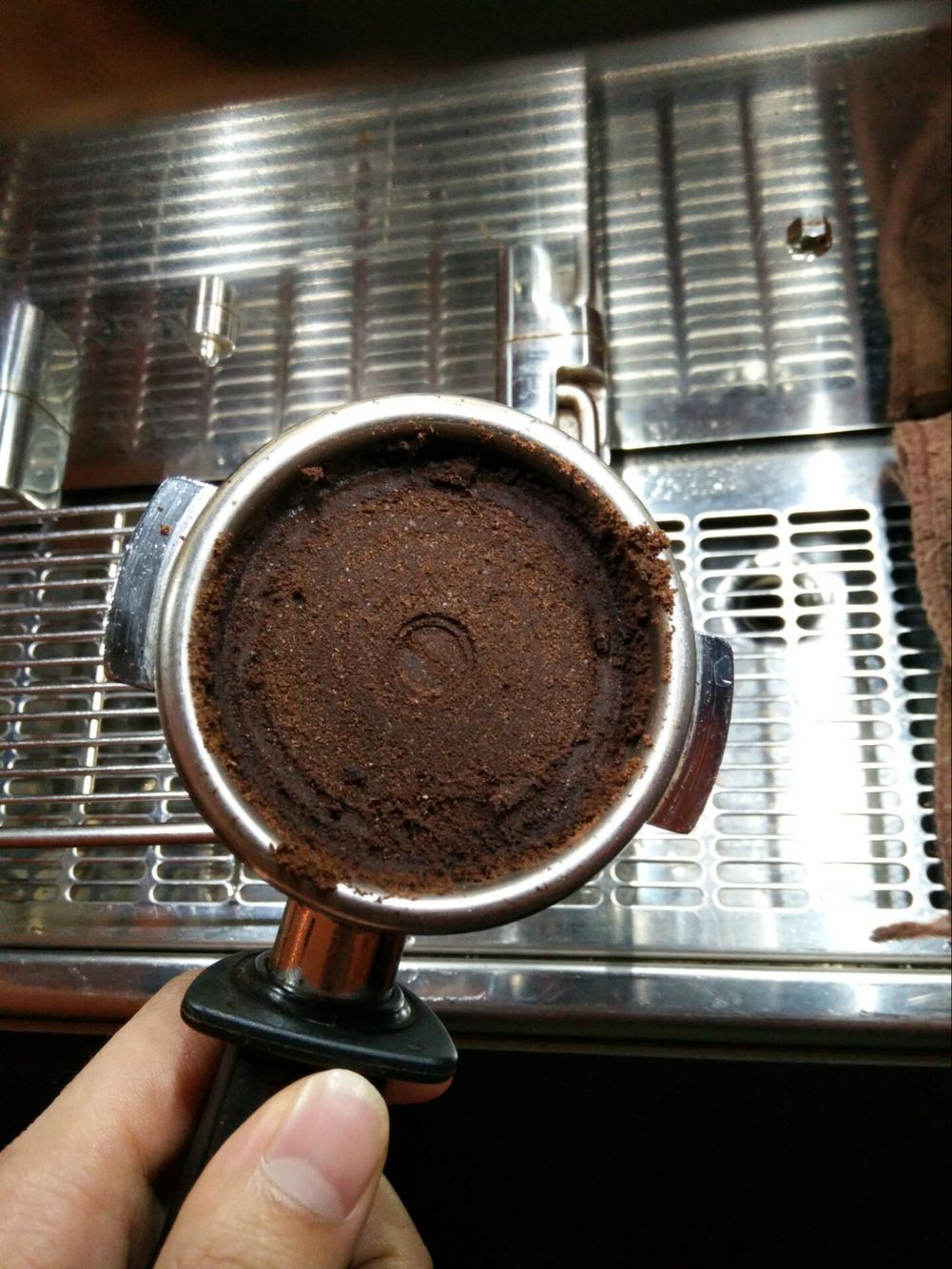
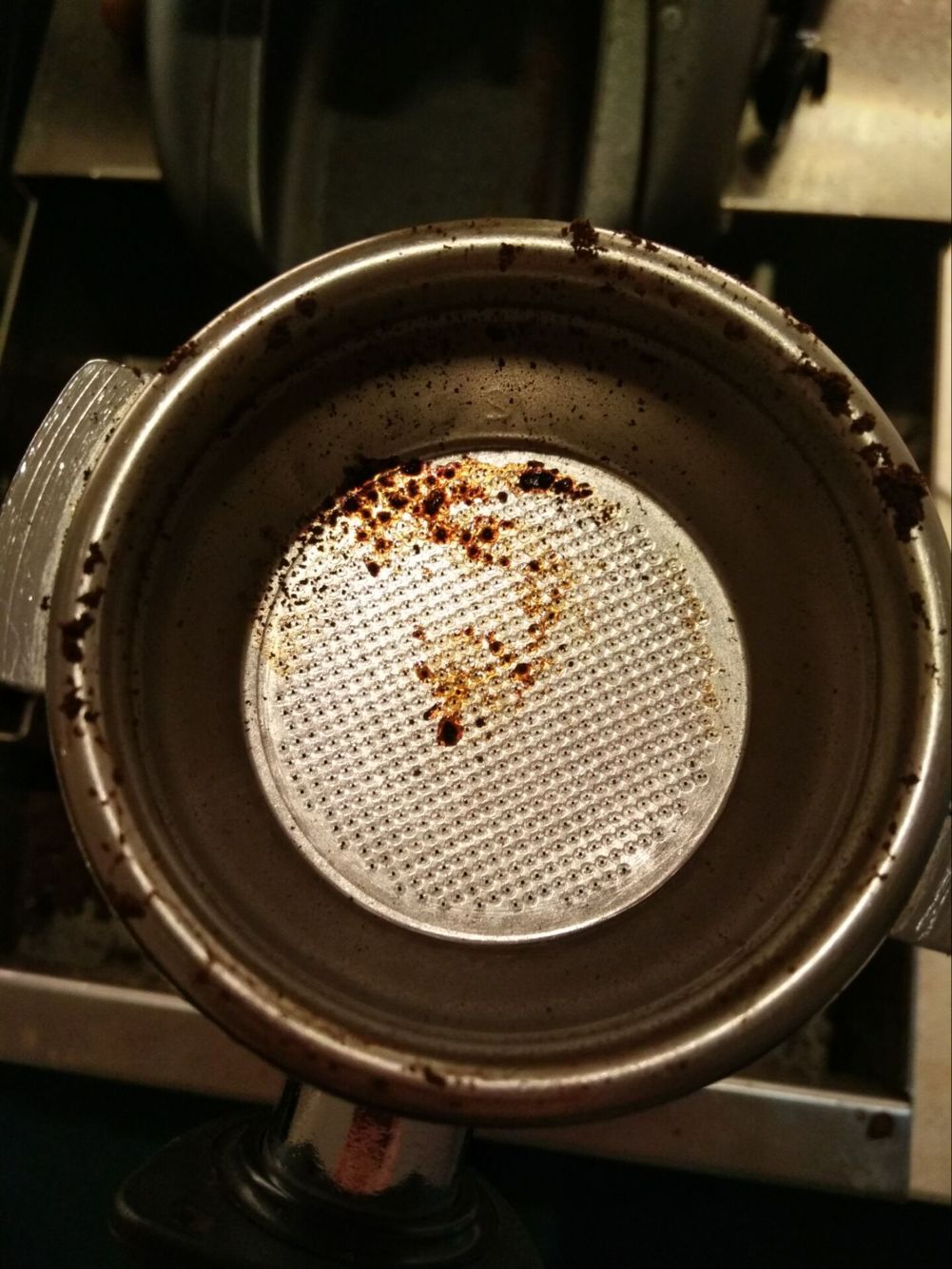
Based on this coffee puck, we see a lot of coffee powder on the edge, which may be residue left after not cleaning after tamping, or there is another possibility: your tamper and portafilter do not match. In addition, the puck indentation is very deep, indicating too much coffee powder.
Then look at the portafilter after removing the coffee puck. We have said before how to judge over-extraction. Like this, the residual coffee liquid in the portafilter is very dark in color, which means the over-extraction is very serious.
Finally, returning to the video, the 30-second video's extraction is not over yet. The extraction time is too long, which is also a cause of over-extraction.
Through the above analysis, we can apply these lessons to actual adjustments.
Dose Adjustment
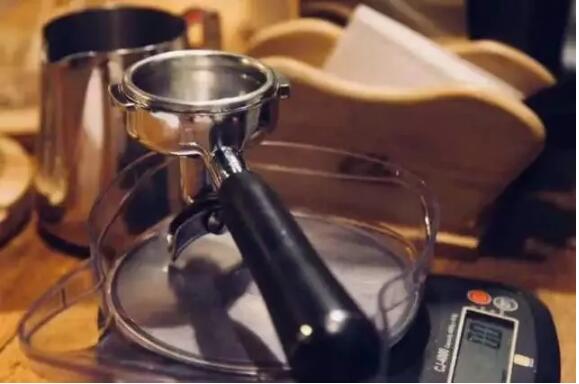
To obtain stable output, a fixed dose is necessary. Otherwise your coffee will be strong in one cup and weak in another. Moreover, if there is more than one barista at the bar, a fixed dose is the first element of output consistency.
Each portafilter matched with a coffee machine has a capacity standard. We generally weigh according to this standard. Whether it's too much or too little, it will extract an incorrect espresso; using too much dose in particular means fine powder is easily sucked back into the shower screen, causing unnecessary damage to the machine.
Grind Adjustment
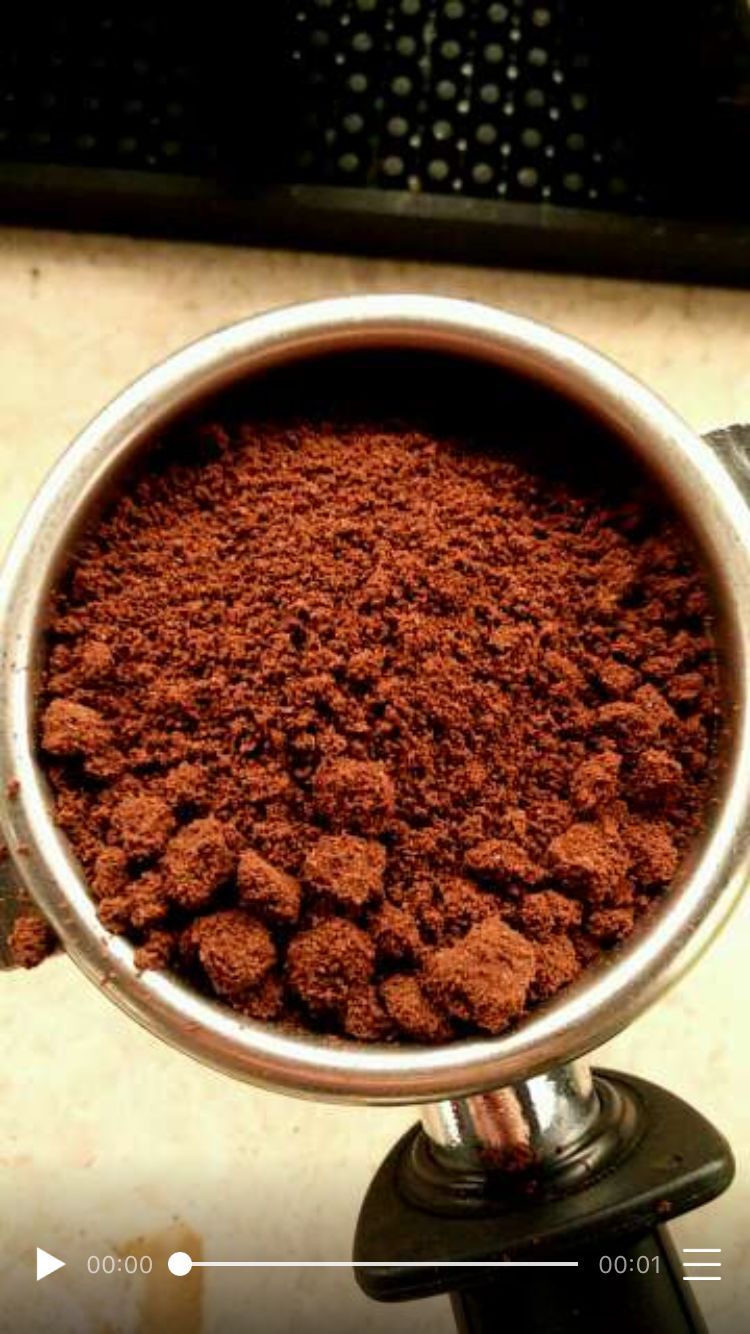
The powder particle state shown above is not very normal. If such powder clumps appear on a quantitative automatic grinder, they are caused by static electricity. It's not a problem if you can easily poke them open with your fingers. But if they come from too-fine grinding, long-term uncleanness of the grinder burrs, or large agglomerates caused by wear of the burrs, please check and correct them one by one according to the actual situation. Of course, the beans play a role too: with oily dark-roasted coffee beans, powder clumps are unavoidable.
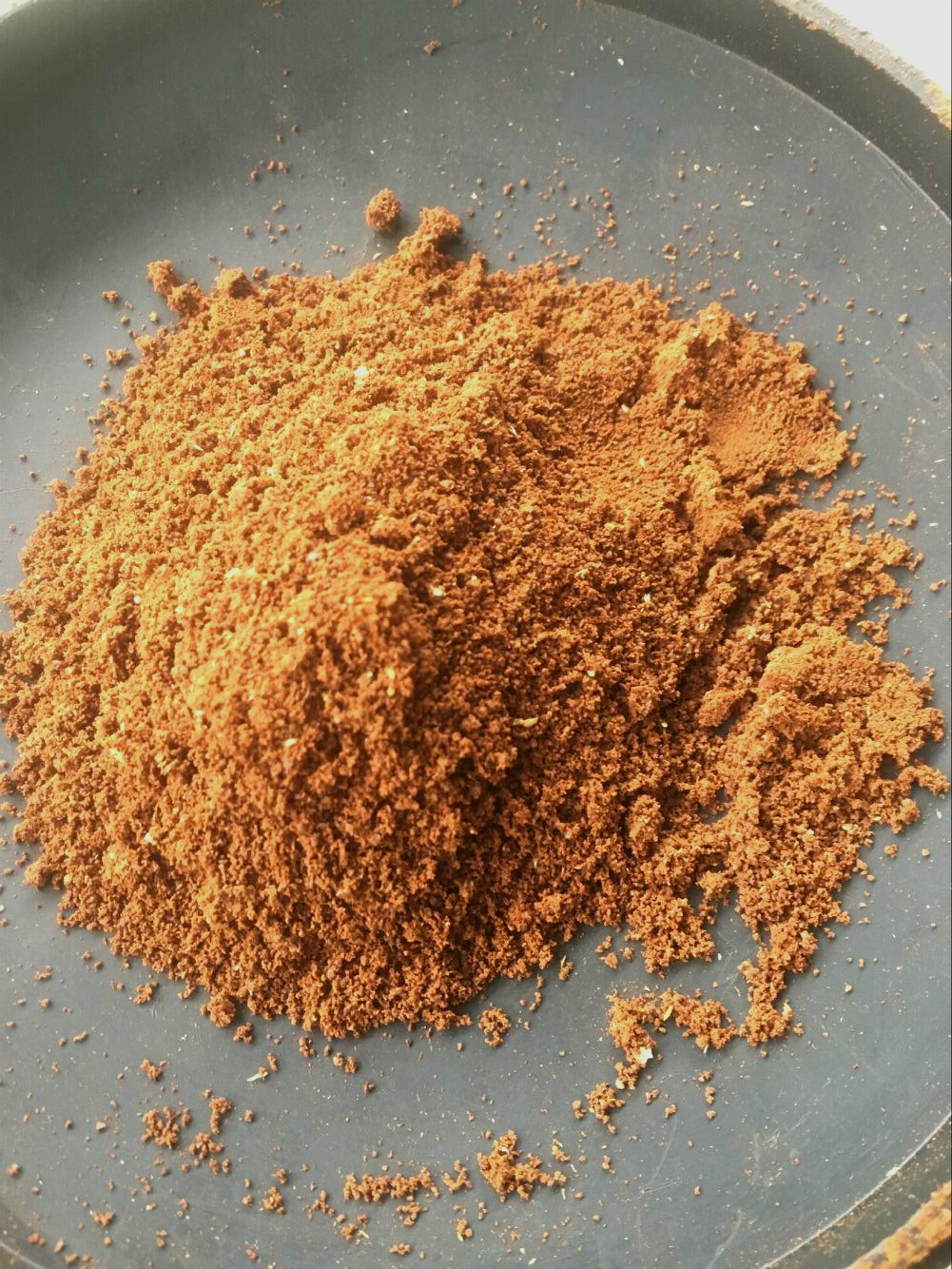
The normal powder particle state should look like the picture above. If you are using a grinder and coffee machine for the first time, grind a little to observe first: adjust the grind finer, then coarser while grinding, and you will see the powder change from large clumps to small clumps to almost no clumps. Generally speaking, a small amount of small clumping (from static electricity) is the more suitable grind size. Try making a double shot first, then adjust according to a time of 25±3 seconds, with the extraction amount equal to dose × 2. Finally, remember to taste and confirm the flavor.
Check Tamping
Why did we skip distribution? Because we have talked about distribution a great deal before, and correct distribution does not mean correct tamping. Tamping is a test of finger skill. The following applies only to ordinary tampers.
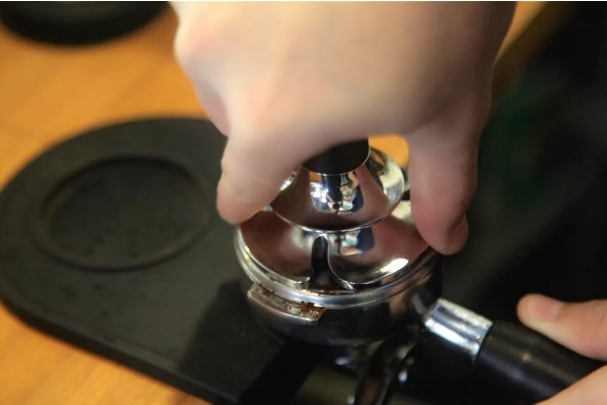
Our habit is to use 3 fingers (thumb, index finger, middle finger) at 3 fixed points to "touch" and judge whether the puck is tamped flat. But if you are a novice, there is a good way to check whether the tamping is flat. Although it is relatively slow, it can intuitively judge and adjust it. Please see the picture below.
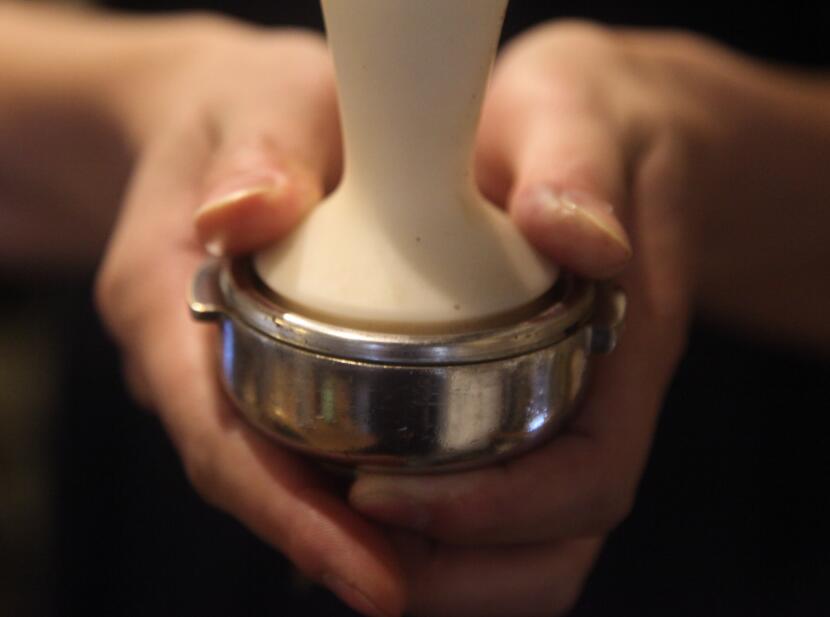
After tamping, hold the whole handle like this and use 2 thumbs to feel whether the entire tamper edge is parallel to the portafilter, then make fine adjustments according to the high and low places. Remember to only make fine adjustments for leveling; do not press down with your thumbs.
Finally, here is a normal extraction video. Pay attention to the time point when the coffee liquid first falls, the flow rate of both spouts, the end time and the liquid weight.
FrontStreet Coffee Recommendation
When you want to practice espresso with a single origin, FrontStreet Ethiopia Huakui SOE is a rewarding bean. It is medium roasted, so the espresso shows red berries, light florals and orange, with citrus-scented crema, a clean body and an elegant aroma. It is especially good for Huakui SOE Americanos and Huakui SOE flat whites.
If you prefer a heavier, low-acid shot, FrontStreet PWN Gold Mandheling SOE is the answer. The beans are hand-sorted three times and machine-sorted once to minimize defects, then medium-dark roasted. Pulled as an SOE it delivers pronounced spice, herbal and sandalwood notes, caramel and a full body, with a dark chocolate finish.
For a sweeter, crema-rich option, FrontStreet Queen Estate SOE comes from high-altitude Brazilian ground where large day-night temperature swings build more flavor precursors. Medium-dark roasted, it brings thick nut, cream and peanut aromas with a sweet chocolate aftertaste, and it pours a beautiful, rich crema that also holds up well in milk drinks.
Important Notice :
FrontStreet Coffee is a long-established specialty coffee roaster in Guangzhou China, selling freshly roasted beans from its own farm in Yunnan as well as dozens of carefully selected single-origin beans from around the world for both pour-over and espresso. The products deliver consistently excellent quality and great value, with shipping within 24 hours. Guangzhou's FrontStreet Coffee shop is recommended by many coffee lovers, and the beans are now available online at the Tmall 。
FrontStreet Coffee has moved to a new address:
FrontStreet Coffee Address: 315,Donghua East Road,GuangZhou
Tel:020 38364473
 Scan and follow the En Gafei WeChat official account. Please indicate that the reprint comes from "En Gafei".