Pour-Over Parameters for Santa Felisa Estate Double Anaerobic Geisha Coffee & Double Anaerobic Processing Introduction
Estate Introduction
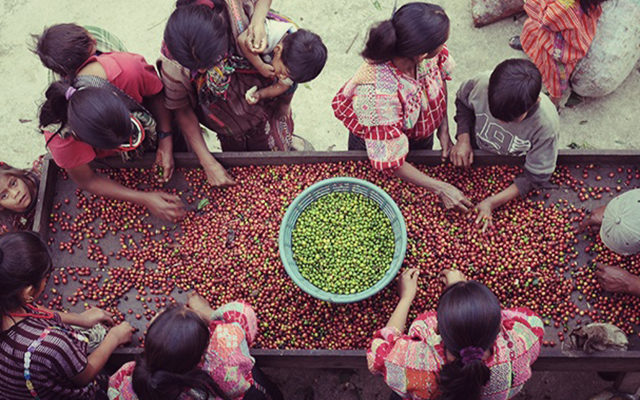
The historic Santa Felisa estate, with a century of history, is bordered to the west by the Atilan region and to the east by the renowned Antigua region. It sits near two volcanoes: Volcán Acatenango and Volcán de Fuego. Santa Felisa's own processing plant stands at an altitude of about 1,550 meters, while the coffee cultivation extends up to around 1,900 meters. In climate, soil, and altitude alike, these are premier conditions for an exceptional estate.
In 1940, Mr. Trinidad Cruz founded Santa Felisa estate in Guatemala's renowned Acatenango region. Now in its fourth generation of operation, the estate spans altitudes of 1,500-1,920 meters with annual rainfall of 800-1,200mm. Through years of dedicated management, its commitment to quality shows throughout the growing environment: no artificial chemical pesticides, and organic fertilizers such as vermicompost for the coffee trees. On the social side, the estate employs local Maya people, provides educational opportunities and courses in Maya cultural handicrafts for its female employees, and offers considerable care in both living and working conditions.
Coffee Details
Country: Guatemala
Region: Acatenango
Estate: FINCA SANTA FELISA
Altitude: 1,800 meters
Average Temperature: 18-22°C
Annual Rainfall: Approximately 800-1,200mm
Cupping Score: 86.25 points
Variety: Geisha
Processing: Double Soak
Flavor Profile: Sugarcane sweetness, honey, cream, vanilla
This Geisha originates from Africa, which is why Santa Felisa calls it "African Geisha," distinguishing it from the Central and South American Geishas typified by Panama. The specific growing area is a section of the estate called "Mist Mountain," famous for its year-round cloud cover. The low temperatures and high humidity make the cherries mature slowly and develop exceptional sweetness; they are harvested only when Brix levels exceed 22. This Mist Mountain Geisha is a competition lot, it was Lot #4 in the 7th Santa Felisa Cup of Excellence auction in 2016.
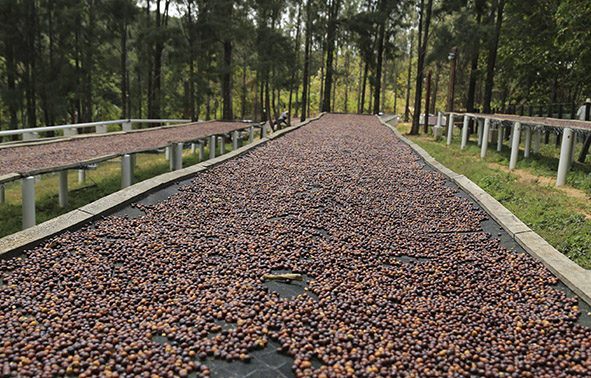
The processing differs from standard washed coffee, employing a Double Soak method similar to the Kenyan process. After the cherry pulp is removed, the coffee soaks for 24 hours in fermentation tanks, followed by an additional 24-hour water soak, 48 hours of fermentation in total. Lighter beans are sorted out along the way. Finally, the coffee dries on patios for 5-10 days. This method particularly highlights a clean aftertaste and bright acidity.
FrontStreet Coffee's Pour-Over Geisha Technique
Today we introduce FrontStreet Coffee's go-to pour-over technique for Geisha: the three-stage method.
Three-Stage Pour Method
A segmented extraction method that divides one portion of water into three separate pours.
Suitable for light, medium-light, and medium roast beans.
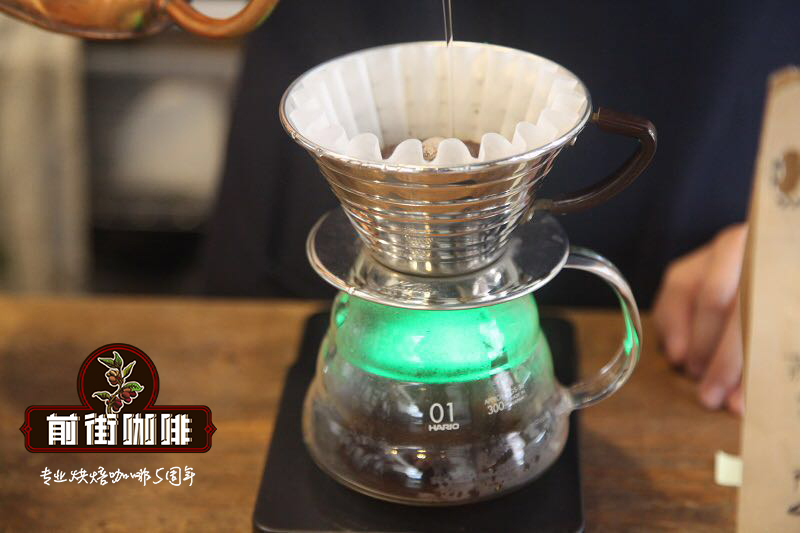
Uses the Kalita wave dripper (cake-cup style).
Lengthening the bloom or adding pour interruptions enhances the richness of the body.
Three-Stage Segmented Extraction Method
Advantages: More layered than single-pour methods, clearly revealing the front, middle, and back-end flavor profiles. The technique increases the water volume with each stage after the bloom, typically pouring when the liquid level drops to the surface of the coffee bed, and using small, medium, and large flows for the three stages.
Disadvantages: Demands greater precision in flow rate and volume control.
FrontStreet Coffee's Geisha Pour-Over Parameter Recommendations
The cake cup uses immersion extraction, increasing the contact area between grounds and water. Compared with a V60, this enhances texture and produces a more viscous mouthfeel.
15g of coffee, water at 91-92°C, grind BG 5R (64% pass-through on the Chinese #20 standard sieve), coffee-to-water ratio close to 1:15-16.
Technique: Bloom with 27g of water for 30 seconds. Using hot water from the kettle, start at the center of the filter and pour clockwise in expanding circles. Start timing as the pour begins: pour 27g, stop, and wait 30 seconds before the first main pour.
For the first pour, circle as before but slightly slower, accelerating as you reach the outer ring. Stop pouring at around 1:15. When the liquid level drops by one-third, pour again. The second pour should concentrate on the center, avoiding the edges where coffee meets the filter paper to prevent channeling. End extraction at around 2:05. The tail end can be omitted, the longer the extraction runs, the more astringency and roughness build.
Segmentation: 30-125-230g
FrontStreet Coffee Recommendation
If Santa Felisa's African Geisha intrigues you, FrontStreet Coffee's Ethiopia Granana Estate Geisha offers another side of the variety, an Ethiopian-landrace expression. The Granana Gesha farm near Yirgacheffe is a rare single-variety estate; its washing station, founded in 2014 and run by Mr. Israel Degefa, sits where Kochere and the Granana Abaya area meet, with some 700 hectares of coffee land, much of it uncultivated, fertile, and shaded by forest trees. Grown under original rainforest canopy and hand-picked at full ripeness, the cherries are sun-dried on raised beds for 14-20 days depending on the weather. Roasted medium-light and brewed as pour-over, it shows bright citrus acidity, elegant ginger-flower aroma, and the full sweetness of mature fruit, with a silky-smooth texture and the refined, lingering finish that is the Geisha hallmark. It suits drinkers who love floral, tea-like delicacy and want to taste Geisha at its botanical source, at a far gentler price than Panama competition lots.
Important Notice :
FrontStreet Coffee is a long-established specialty coffee roaster in Guangzhou China, selling freshly roasted beans from its own farm in Yunnan as well as dozens of carefully selected single-origin beans from around the world for both pour-over and espresso. The products deliver consistently excellent quality and great value, with shipping within 24 hours. Guangzhou's FrontStreet Coffee shop is recommended by many coffee lovers, and the beans are now available online at the Tmall 。
FrontStreet Coffee has moved to a new address:
FrontStreet Coffee Address: 315,Donghua East Road,GuangZhou
Tel:020 38364473
 Scan and follow the En Gafei WeChat official account. Please indicate that the reprint comes from "En Gafei".