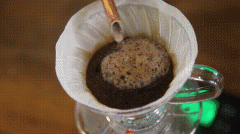
90+ Juliette Honey Process Gesha: Pour-over vs Syphon Brewing _ Panama Gesha Coffee Pour-over Tutorial
90+ Juliette: Where the Name Comes From
Juliette | H2 Level 39
Name Origin
At the Ninety Plus Geisha estate, a path runs from the farmhouse to the coffee drying area. Walk it in the evening and you pass a row of exceptionally beautiful datura flowers, whose bell-shaped blooms give off a fragrance so captivating it is almost intoxicating — yet the scent lasts only about an hour. We came to call that floral note "Beauty of the Night." Datura also carries a legend: a local indigenous tribe in Panama is said to have placed the flower under their pillows at night for protection, believing it holds a special energy that guards the family.
Alongside datura, deadly nightshade, henbane and mandrake belong to the family of "witch herbs." Because these plants are thought to possess mystical powers, wizards often use them to prepare magical brews. Datura is an essential ingredient in love potions — drink one and you are said to win your beloved's heart. Yet wizards also prepare datura into a poison capable of causing madness or death.
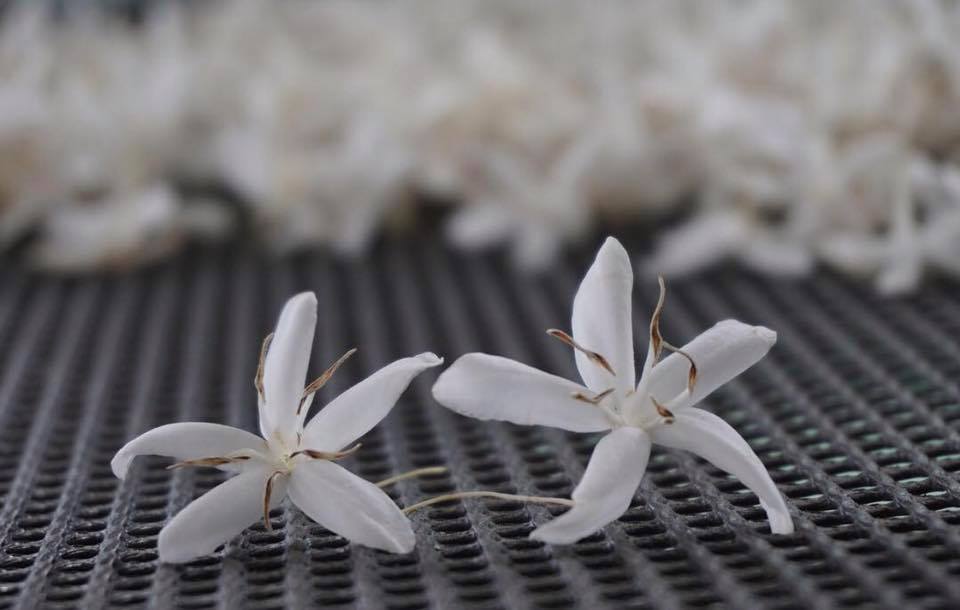
Once, while running a small-scale aromatic evaluation of a coffee in our sensory lab, we suddenly detected a blend of honeysuckle, orange, milk chocolate and floral aromas. That scent carried us straight back to the evening on the path lined with datura. Its soft, feminine profile left us deep in thought about those flowers and about Shakespeare's tragic love story, "Romeo and Juliet." So we named this Geisha "Juliette Coffee."
Origin
Ninety Plus Panama Geisha Estate
Altitude
1250-1650m
Variety
Ethiopian Heirloom Original Variety
Processing Method
Honey Processing
Flavor Profile
Building on the inherent flavors of the Geisha variety, it also carries rich floral aromas. In the cup it reveals orange peel, caramel and dried cashew.
FrontStreet Coffee's Common Pour-Over Technique for Geisha: The Three-Stage Method
Three-Stage Pouring Method
Segmented Extraction
Dividing one portion of water into three stages for pouring.
Suitable For
Light roast, medium-light roast and medium roast coffee beans.
Equipment
Kalita Wave filter (cake-shaped filter).
Enhancement
Increase the bloom time or the number of pour interruptions to enhance the richness of the coffee's flavor.
Three-Stage Pouring Segmented Extraction Method
Advantages
More layered than a single continuous pour, and it can clearly separate the front, middle and back end of the coffee's flavor. The method increases water volume after the bloom, typically pouring when the liquid is about to drop to the bed surface, and using small, medium and large flows for three-stage extraction.
Disadvantages
It places higher demands on the brewer's control of flow rate and volume.
FrontStreet Coffee's Geisha Pour-Over Parameter Recommendations
The Wave filter uses immersion extraction, which increases the contact surface between grounds and water. Compared with a V60, it can enhance texture and give a more viscous mouthfeel.
15g of coffee grounds, water temperature 91-92°C, grind BG 5R (64% pass-through on the Chinese standard 20-mesh screen), water-to-coffee ratio approximately 1:15-16.
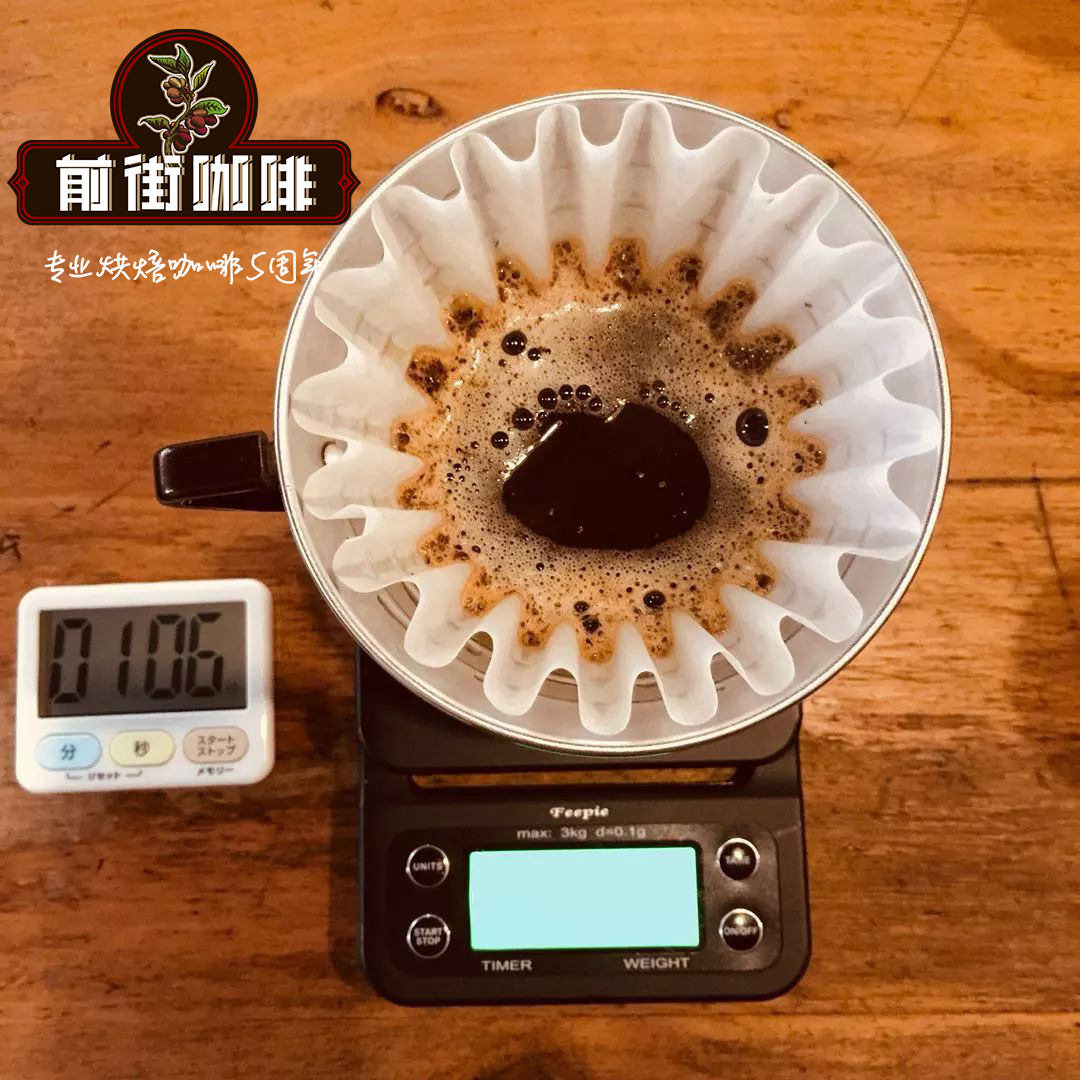
Technique: 27g of water for the bloom, bloom time 30s. Pour the hot water from the kettle in clockwise circles around the center of the filter. Start timing when brewing begins, pour to 27g, then stop and wait 30 seconds before the first pour.
For the first pour, again circle, slowing slightly and picking up pace as you reach the outer ring, and stop pouring at around the 1:15 mark. When the liquid level drops by 1/3, pour again. The second pour should concentrate on the center, keeping the stream off the point where the grounds meet the filter paper to avoid channeling. End extraction at around the 2:05 mark. The tail end can be discarded — the longer it runs, the more astringency and rough texture creep in.
Pouring Segments
30-125-230g
FrontStreet Coffee Recommendation
Panama is where Gesha made its name, and FrontStreet Coffee's Panamanian lots follow the estate hierarchy directly. FrontStreet Esmeralda Red Label Geisha — formally "Esmeralda Special" — is grown at 1,600-1,800 meters, and every lot must cup above 90 points. Each has its own number and comes from a single small plot, so buyers can chase the fine differences between batches. FrontStreet Esmeralda Green Label Geisha, originally "Private Collection," blends several plots rather than highlighting one, expressing the estate's signature high-altitude Gesha profile at a friendlier price, which makes it the better-value route into the estate. For a first taste of Gesha more broadly, FrontStreet Boquete Geisha is an entry-level Panamanian lot that delivers the classic orange-blossom honey character, an oolong tea texture and delicate fruit acidity with clear layering.
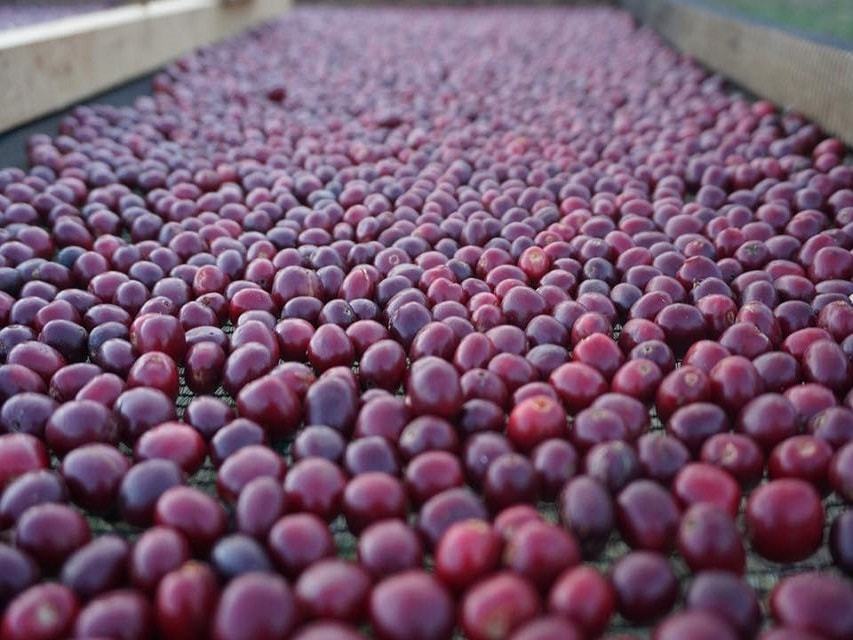
Ethiopia, where Gesha originated, offers a different reading of the variety. FrontStreet Gesha Village Gold Label belongs to the Gesha 1931 variety, roughly 10% of the village's total production and its top coffee outside of auction, and it is regularly chosen by competitors; the lot is processed as a refined natural, giving a complex, layered cup. FrontStreet Gesha Village Red Label is the Gori Gesha variety, about 15% of production, and scores 88 or above on the SCA 100-point scale — a single-terroir series with full traceability on every lot number, down to the block name, variety and processing date. For a rare single-variety Ethiopian estate, FrontStreet Grana Geisha comes from the Grana processing station at the border of the Kochore and Grana Abaya areas, established in 2014 and run by Israel Degefa, where the station's growing area covers as much as 700 hectares, much of it uncultivated, with fertile soil and shade trees throughout. Hand-picked ripe cherries are dried on raised beds for 14-20 days depending on the weather, and after a medium-light roast the cup shows bright citrus acidity, elegant ginger flower, ripe fruit sweetness and a fine, silky texture with the precise finish that defines Gesha.
Gesha is a medium-light roast, floral and fruity, with a hard texture that tends to sink and clog the drain hole during brewing. FrontStreet suggests grinding to about 78% pass-through on the Chinese standard #20 screen — roughly fine sugar — and brewing at 91°C. Their pour-over recipe uses 15g of coffee in a small Hario V60 at a 1:16 ratio, poured in three stages: start the timer, pour to 30g and bloom for 30s; then a second small-flow circle to 125g; wait for the bed to drain halfway, then continue with a small-flow circle to 225g, finishing with a total extraction time of about 2 minutes 10 seconds to 2 minutes 20 seconds.
Important Notice :
FrontStreet Coffee is a long-established specialty coffee roaster in Guangzhou China, selling freshly roasted beans from its own farm in Yunnan as well as dozens of carefully selected single-origin beans from around the world for both pour-over and espresso. The products deliver consistently excellent quality and great value, with shipping within 24 hours. Guangzhou's FrontStreet Coffee shop is recommended by many coffee lovers, and the beans are now available online at the Tmall 。
FrontStreet Coffee has moved to a new address:
FrontStreet Coffee Address: 315,Donghua East Road,GuangZhou
Tel:020 38364473
 Scan and follow the En Gafei WeChat official account. Please indicate that the reprint comes from "En Gafei".