How to Brew Brazilian Pangshan Estate Premium Sun-Dried Drip Coffee _ Brazilian Drip Coffee Ratio Calculation
Professional coffee knowledge exchange and more coffee bean information, please follow Coffee Workshop (WeChat official account: cafe_style).
Brazil Coffee Farm - Fazenda Pântano
Fazenda Pântano sits in Brazil's concentrated zone of high-quality coffee plantations. It is an outstanding representative of the large-scale coffee estates of southern Minas Gerais state, serving as a collaborative consortium and brand service agency for surrounding farms, and is also a member of the Brazilian Specialty Coffee Association (BSCA). The farm's green coffee is exported and traded through the world's largest coffee export port, Santos Port in São Paulo.
When people think of Brazil, they first think of commercial beans, but that is not the whole story. Brazil also has estates that are genuinely admirable.
COE Award-winning Region
Fazenda Pântano was founded in 1824. Over three centuries, through seven generations of inheritance and cultivation - continuously improving quality, expanding exports and acquiring land - it directly owns approximately 2,000 hectares of extremely high-quality coffee plantations, and also manages farms belonging to neighboring families and friends.
Harvesting
The core area of Fazenda Pântano covers about 1,000 hectares, of which roughly 400 hectares are planted with extremely high-quality coffee.
Natural Processing at Fazenda Pântano
At an altitude of 905-1160 meters, the unique climate and geography create naturally outstanding specialty coffee at Fazenda Pântano. The farm produces many famous varieties, including Mundo Novo, Acaiá, Catucaí, Bourbon and Icatu. Its processing methods are mainly semi-washed (honey processing) and natural.
Semi-Washed Processing at Fazenda Pântano
This method yields a relatively high body, balancing smooth chocolate sweetness with refreshing fruit acidity. Thanks to the balanced natural environment, output is extremely stable.
Fazenda Pântano combines modern agricultural machinery with manual harvesting, using techniques and experience accumulated over several generations to make the most of the authentic character of southern Minas Gerais coffee. For this reason the farm has also obtained UTZ, Rainforest Alliance and 4C certifications. Its coffee is high in quality and stability, renowned throughout Brazil and worldwide.
The Santo Antônio do Amparo section, which just won the Brazil Cup of Excellence award last year, belongs to the core producing area of southern Minas Gerais near the headquarters of the Brazilian Specialty Coffee Association (BSCA).
FrontStreet Coffee Brewing Suggestions
How to Brew Brazil Coffee [Fazenda Pântano] Well
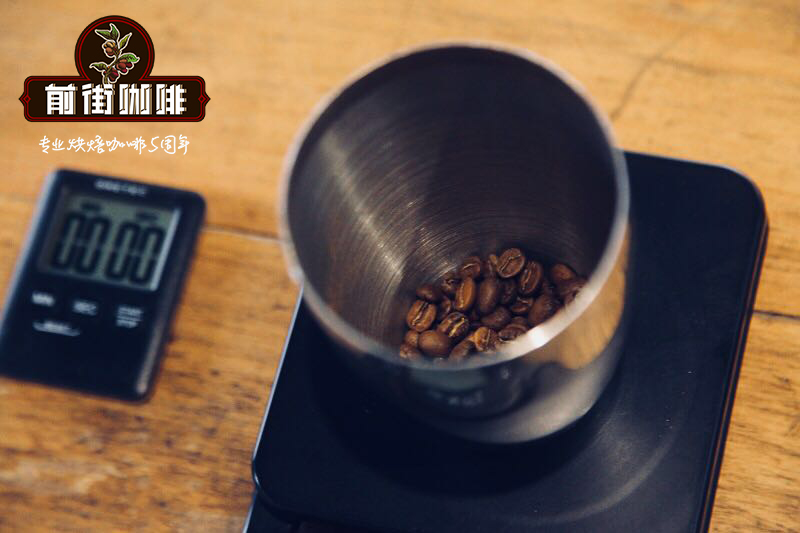
FrontStreet Coffee pour-over reference: weigh 15 g of Fazenda Pântano coffee and grind to a medium setting. The particles should be slightly coarser than table salt. We use a BG grinder at setting 6A (standard sieve pass rate 50%), water at 88°C, and a Kono or Kalita dripper, with a recommended coffee-to-water ratio of around 1:14.
Pour hot water from the kettle in clockwise circles centered on the middle of the dripper, and start timing when brewing begins. In 15 seconds, brew the coffee to 30 g, then stop pouring. When the time reaches 1 minute, make the second pour, again in clockwise circles centered on the middle of the dripper. The water stream should not hit the area where the coffee powder meets the filter paper, to avoid a channeling effect.
When pouring, stop one circle short of the outermost edge, then work circle by circle toward the center. At 2 minutes and 10 seconds, brew the coffee to 210 g, completing the process.
Japanese-Style Ice Pour-Over [Fazenda Pântano]
FrontStreet Coffee ice pour-over [Fazenda Pântano] reference:
Brazil coffee [Fazenda Pântano], medium-dark roast, BG grinder setting 5R (standard sieve pass rate 60%).
20 g powder, 150 g ice cubes, 150 g hot water. The water temperature is 1°C higher than the normal pour-over recommendation of 88°C. Normal grinding uses a small Fuji setting of 3.5, while ice pour-over uses a slightly finer half setting - small Fuji setting 3. The recommended powder-to-(water plus ice) ratio is 1:15.
Bloom water amount 40 g, bloom time 30 seconds.
Segmented pouring: a first segment of 60 g of water and a second segment of 40 g. Use a relatively fine but high water column, pouring forcefully to stir and agitate the powder so it tumbles fully - but note that the liquid level should not rise too high or hit the edge filter paper.
The entire extraction takes approximately 2.5 minutes, similar to the normal extraction time for 20 g of powder.
FrontStreet Coffee Recommendation
For an everyday Brazilian single origin in the same balanced, low-acid style, the FrontStreet Coffee Brazil Cerrado Red Bourbon is a reliable pick. From the well-known Cerrado region and the common Red Bourbon of South America, it is roasted medium: expect rich cream peanut, toast, caramel and hazelnut aromas, a round and smooth body, low acidity and a light bitterness - at home in pour-over, moka pot, espresso SOE, siphon or French press.
If you want the sweetness and fruit lift of a rarer variety, the FrontStreet Coffee Brazil Queen Estate grows the uncommon Yellow Bourbon in Mogiana near South Minas, on fertile red volcanic soil. A natural mutation of Red Bourbon with a cleaner fruit character, it delivers a sugarcane-like sweetness found in no other region, alongside fruit and chocolate notes, whether brewed as pour-over, moka or home espresso.
And since low acidity and a balanced body make Brazil the foundation of so many espresso recipes, FrontStreet Coffee's Italian-style blends all rely on it. The rich-crema FrontStreet Coffee Classic Blend, the nut-forward FrontStreet Coffee Premium Blend, the balanced FrontStreet Coffee Black Cocoa Blend and the dedicated FrontStreet Coffee Commercial Blend each add chocolate and cream aromas plus a gentle sweet-sour-bitter balance that keeps extraction stable.
Important Notice :
FrontStreet Coffee is a long-established specialty coffee roaster in Guangzhou China, selling freshly roasted beans from its own farm in Yunnan as well as dozens of carefully selected single-origin beans from around the world for both pour-over and espresso. The products deliver consistently excellent quality and great value, with shipping within 24 hours. Guangzhou's FrontStreet Coffee shop is recommended by many coffee lovers, and the beans are now available online at the Tmall 。
FrontStreet Coffee has moved to a new address:
FrontStreet Coffee Address: 315,Donghua East Road,GuangZhou
Tel:020 38364473
 Scan and follow the En Gafei WeChat official account. Please indicate that the reprint comes from "En Gafei".