Flavor Profile of Kenya AA Nyeri Gatina Estate Coffee - Lot 650 from Gatina Factory
What Are the Flavor Notes of Kenya AA Nyeri Gatina Estate Coffee Beans - Gatina Factory - LOT 650?
Kenya is a model country for producing outstanding coffee. Its high-altitude washed Arabica beans rank among the finest coffees on earth. Most lots are graded and inspected by the Kenya Coffee Board and sold at auction, and the Board maintains rigorous standards for coffee research, development, and quality management. Its excellent auction system helps push prices up to support struggling coffee farmers, while agricultural education continuously updates growers' techniques and produces ever-better coffee. Quality coffee grows along Kenya's high mountain slopes at altitudes between 4,200 and 6,800 feet. Premium Kenyan coffee with blackberry fruit notes is produced in limited quantities, and the best lots come from small estates—making them a magnet for coffee buyers.
Nyeri, west of Mount Kenya in central Kenya, is the birthplace of many of the country's greatest coffees. The current crop of Gatina Estate beans comes from a farm in Nyeri (auction lot number: 650). One of the biggest changes in Kenyan coffee since 2009 is the extremely low proportion of defective and empty beans (the same holds at the Konokuno Estate). Lightly roasted, the acidity is vibrant, without astringency or bitterness; roasted darker (generally to a C-slightly strong profile), the coffee stays springy without any burnt bitterness, and the finish unfolds into a long-lasting tropical-fruit sweetness. Gatina's green beans are uniform and large, recalling Kenya's Kianywani Estate. The hand-sorted defect rate is about 4%. Roasted to a light city roast, weight loss is 16%. During the drying phase of the roast, fresh grape aromas rise from the drum, and as caramelization begins, the room fills with the sweetness of toffee.
Gatina AA is produced by the primary cooperative processing station, Gatina Factory. Gatina lies just 148 kilometers from Nairobi, in the administrative town of Karatina—the factory itself is only about a 15-minute drive from town, at an altitude already above 1,800 meters.
The Gatina cooperative produces roughly 10% high-quality specialty coffee in its annual output, and its very best green beans amount to fewer than two containers a year. Most visitors are specialty roasters. Green beans marketed as Gatina factory lots are actually subdivided into different qualities and batches. Gatina belongs to Mugaga FCS (Farmers Co-operative Society) and counts 681 members, of whom about 527 actually grow coffee and deliver cherries to the factory. In other words, Gatina is a textbook smallholder cooperative: each farmer tends only about 150 coffee trees and pools cherries centrally for processing. After grading, the best lots go straight to buyers in the specialty market—by far the best route for smallholders growing top-quality coffee. Slightly lower grades are sold to traditional factories or traders, which fetches far worse prices. Gatina matches its trading model to bean quality: for high-grade lots sought by specialty roasters (such as batches bought directly by Auscha), prices are best—usually double what local traders offer. As long as quality holds up, small volume is no obstacle.
The cooperative employs one full-time manager—the factory manager—who runs daily processing and operations and keeps the pulping equipment working through harvest. In addition, three representatives sit on the management committee of the upstream Mugaga FCS, taking part in major decisions and safeguarding the cooperative's overall interests.
Because the members' gardens sit at higher elevations, the harvest runs from October to January. The varieties are SL28 and SL34, grown in deep, fertile, free-draining red volcanic loam. Most members farm above 1,800 meters and can pick twice a year, with temperatures ranging from 14°C to 25°C. All in all, the soil and climate could hardly be better suited to quality coffee.
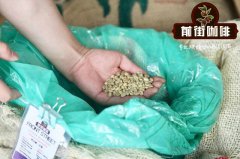
From bean selection through re-testing to the final decision, Gatina Estate's green beans come through large, deep green, and remarkably clean.
Light Roast (City/Fragrant):
The dry fragrance after grinding is spicy with a plum-like sweetness. In the cup, cherry and rose florals fill the nose. The classic blackberry acidity here is comparatively gentle—not the aggressive sort. The flavor is bright, complex, and textured, with a lemony acidity that turns sweet and lingers on the palate. People who dislike acidic Kenyan light roasts usually object to the sharp, prickly, spicy acidity that hits you immediately. But once you experience how Kenyan coffee's original fruit acidity can transform into sweetness laced with florals, that great wave of blackberry acidity becomes your clearest and loveliest memory of the cup.
Medium Roast (General B):
This roast level is the most balanced meeting point of acidity and sweetness for Gatina Estate. The brew carries the tea aroma of wheaty black tea, with the fruit sweetness of pineapple and a very delicate, soft acidity—an elegant orange character. The prickly, spicy edges are gone, replaced by a smooth milk-tea texture, and the finish carries the sweetness of citrus jam (preserved fruit).
Dark Roast (General C):
Through the aroma of brown-sugar syrup there is still a trace of floral, grassy acidity. Honey-syrup sweetness dominates this roast level—thick, lively, and elastic. After brewing, the grounds swell with exceptional freshness and brightness, clear signs of a fresh crop. A subtle fruit acidity appears as the coffee cools and fades as you keep drinking. The aftertaste is sugarcane.
Because Kenyan beans are hard and dense, deeper roasting does not turn bitter or burnt. Taken to a slightly strong profile, the cup is a rich, thick sweetness wrapped in brown sugar—like toffee with syrup at its center—wonderfully sweet, and a fine alternative to Yellow Bourbon (Yellow Mantou).
FrontStreet Coffee Recommends Brewing:
Dripper: Hario V60
Water Temperature: 90°C
Grind Size: Small Fuji grinder at setting 3.5
Brewing Method: Water-to-coffee ratio 1:15, using 15 g of coffee. First pour 25 g of water and bloom for 25 seconds. Second pour to 120 g, then pause. When the water level in the coffee bed drops to half, resume pouring slowly until you reach 225 g. Total extraction time around 2:00.
Analysis: A three-stage method keeps the front, middle, and back flavors of the coffee clearly separated. Because the V60's deep ribs drain quickly, pausing between pours helps stretch the extraction time.
FrontStreet Coffee Recommendation
Kenya's signature is washed processing done brilliantly—and the definitive example in FrontStreet Coffee's lineup is our Kenya Cherry Tomato. Kenya excels at double-washed (double fermented) processing, running the beans through a second round of washing, soaking, and drying; the result is an almost juice-like cup. Expect layered aromas of cherry tomato, dried dark plum, snow pear, black plum, and yellow sugar—bright, sweet-tart, and juicy, a longtime favorite of coffee enthusiasts.
If you love washed coffee's clarity and bright fruit acidity, our Ethiopia Yirgacheffe Guodingding Cooperative is another washed gem worth a place on your shelf: produced by a skilled processing team in Guodingding village, its remarkably refined, clean cup shows jasmine florals and luminous citrus acidity, with green tea and honey tones emerging after a medium-light roast—delicious as a pour-over, cold brew, or even espresso.
Important Notice :
FrontStreet Coffee is a long-established specialty coffee roaster in Guangzhou China, selling freshly roasted beans from its own farm in Yunnan as well as dozens of carefully selected single-origin beans from around the world for both pour-over and espresso. The products deliver consistently excellent quality and great value, with shipping within 24 hours. Guangzhou's FrontStreet Coffee shop is recommended by many coffee lovers, and the beans are now available online at the Tmall 。
FrontStreet Coffee has moved to a new address:
FrontStreet Coffee Address: 315,Donghua East Road,GuangZhou
Tel:020 38364473
 Scan and follow the En Gafei WeChat official account. Please indicate that the reprint comes from "En Gafei".