Ethiopia Red Cherry Project | Shilcho Cooperative | G1 Washed Local Heirloom
The Red Cherry Project and the Shilcho Cooperative sit at the heart of Ethiopia's specialty revival. This article covers the trade systems behind them and the flavor of a G1 washed local heirloom.
Ethiopia Red Cherry Project | Shilcho Cooperative | Flavor of G1 Washed Local Heirloom Varieties?
Ethiopia is the first country where coffee was discovered, and it remains one of the most important and finest producers in terms of both quality and quantity. Most of its coffee is traditionally Arabica, with an annual output of about 350,000 tons, of which over 70% is exported worldwide. Approximately 15 million people nationwide are engaged in coffee-related work, and over 90% of farms and cooperatives are small-scale holdings.
After 2008, Ethiopia's agricultural products, including wheat, corn, sesame and coffee, were fully integrated into the ECX trading system, the Ethiopian Commodity Exchange, replacing the existing auction and export methods. Under this practice, farmers and cooperatives deliver coffee to centralized ECX warehouses, where beans of the same grade from the same producing area are mixed together and then auctioned directly; buyers cannot tell which specific farms, cooperatives or producing areas the coffee came from. This approach does not actually affect production or quality, and it makes quality easier to judge by price, so buyers get what they pay for. What it does affect is the middlemen, who can no longer freely track coffee and pocket a comfortable margin from low-price, high-quality lots, which in turn makes the market clearer and more transparent for consumers. Because coffee not traded through the ECX system would be heavily taxed, more than 90% currently passes through it.
For buyers who love specialty coffee, however, the ECX system is not a good thing. For that reason Ethiopia launched the DST, or Direct Specialty Trade, system starting in 2010. The DST system holds periodic Ethiopian auctions at which only specialty coffee scoring above 80 points under SCAA cupping standards can be traded with foreign green bean suppliers under the name of its own farm or cooperative.
Washed Coffee Processing in Ethiopia
In Ethiopia, washed coffees are distinguished by adding "1" or "2" after the name, with "1" being the higher quality. After the cherries are harvested, the pulp is removed immediately and the beans are placed in water to ferment and break down the mucilage layer. This takes several hours, the duration depending on variety, producing area and temperature. The process must be watched closely, since the slightest error can leave the beans with poorly developed flavor.
Once fermentation is complete, the beans are washed clean along a long water channel built on a slope, a step during which defective beans and foreign objects are also removed. The beans are then dried on drying beds, where they still need close attention, being turned every few hours to ensure complete drying. That is the entire washed coffee process.
Operation Cherry Red (ORC)
Operation Cherry Red (ORC) is a project aimed at improving the quality of small-scale farms, mainly to encourage coffee farmers and to bring surprises to roasters. Trabocca, the largest coffee bean supplier in the Netherlands, invites Ethiopian farms to produce small batches of about 1,500-3,000 kg, or 25-50 bags, before the harvest season. Women select only fully 100% ripe red cherries, which makes a significant difference to the flavor of the brewed coffee. Careful, keen-eyed and hardworking Ethiopian women are therefore important drivers of the Red Cherry Project.
Operation Cherry Red is also a complementary approach that encourages farms to invest more effort in selection and sorting, and these coffees are relatively higher in price. The Red Cherry Project includes washed, natural, semi-washed, semi-natural and experimental coffees. The main producing areas are Yirgacheffe, Sidamo, Bench Maji, Guji, Kembata, Illubabor, Harar and Limu, along with the Golocha producing area near Harar added in 2011. All of these have distinctive flavors that showcase the character of Ethiopian beans.
After receiving the coffee, Trabocca carries out further selection. Farms that pass the cupping quality tests run by both the Ethiopian and Dutch offices and meet the standards receive high bonuses. The passing cupping score must be above 88 points to become a Red Cherry Project coffee. Trabocca, the promoter of the project, has invested all the profits earned in recent years back into the cooperative farms. It stresses that this is a non-profit project, so the company uses only 4 people, including the owner and secretary, to run it; other administrative matters are handled by the parent company to reduce administrative expenses, with all profits returned to the cooperative farms.
Yirgacheffe Region
Yirgacheffe means "let us settle in this wetland" in the local language. It is located in the highlands of northwestern Sidamo province. Because of its special, numerous and highly representative farms, the Shilcho Cooperative is jointly composed of three local African indigenous peoples. The traditional natural process requires more control and coordination with the warmth of the sun to achieve good beans throughout the year. Past cupping scores cannot be used as a reference for the current year's purchases, since small shifts in regional climate determine the quality of that year's harvest. Because the coffee beans are traditionally wild and picked by women in the forest, this is the true way to obtain good coffee. Skip that process and you will not get good coffee.
Property Characteristics: Farm Features
- Name: Adem Shilcho Cooperative
- Region: Sidamo region, near the town of Dilla
- Country: Ethiopia
- Grade: G1
- Altitude: 1,800-2,200+ meters
- Harvest Period: October to January each year
- Certification: No certification, all coffee is non-toxic organically grown
- Soil Type: pH 5.2-6.2 red brown laterite
Coffee Characteristics
- Variety: Heirloom cultivars - traditional Yirgacheffe local heirloom varieties
- Processing System: Washed
- Appearance: Longberry, 16-18 screen
- Top Jury Descriptions: Cupping roast level is 60 seconds after first crack begins (Cinnamon roast)
- Aroma/Flavor: Narcissus lily, chamomile, almond jam, licorice, black tea, guava, vanilla, brown sugar, honey
- Acidity: Floral and herbal acidity, preserved plum, jujube fruit acidity, deep plum
- Complexity and Other: Chamomile aroma, sweetness of kumquat preserves, smooth mouthfeel without thickness, bright mint coolness rising to the nasal cavity
- Overall Style Attributes: Light-bodied, clean, honey-sweet
FrontStreet Coffee Recommends Brewing:
- Dripper: Hario V60
- Water Temperature: 90°C
- Grind Size: Fuji Royal grinder setting 3.5
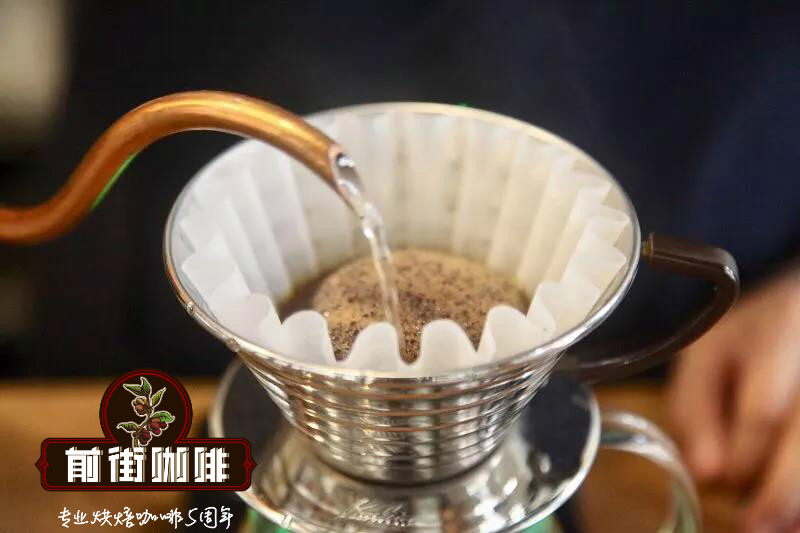
- Brewing Method: Water-to-coffee ratio 1:15, 15g coffee grounds. First pour 25g water, bloom for 25s. Second pour to 120g water, then pause. Wait until the water level in the coffee bed drops to half, then continue pouring slowly until reaching 225g total water. Extraction time around 2:00.
- Analysis: Using a three-stage brewing method to clearly define the front, middle and back end flavors of the coffee. Because the V60 has many ribs and drains faster, pausing during pouring can help extend the extraction time.
FrontStreet Coffee Recommendation
Ethiopia is one of the world's best-known specialty origins, and because it is the birthplace of coffee it holds countless native varieties, a treasure house that lets drinkers follow its flavors faithfully. To begin, the entry-level FrontStreet Washed Yirgacheffe is the natural first choice, with clear jasmine florals and a bright citrus acidity. Yirgacheffe is a small town in southern Ethiopia, spring-like all year, wrapped in mist, cool and humid, where thousands of coffee trees flourish and give rise to that unique interweaving of floral and fruit acidity, with a light, elegant, tea-like body that drinks like a clean, refreshing lemon tea.
Most Ethiopian coffee is grown on a garden model, with each smallholder sending the harvested cherries to a village-level processing station and selling under the name of the production team, which is why so many cooperatives of every size exist, such as the FrontStreet Gudingding, FrontStreet Worka and FrontStreet Konga cooperatives. The Gudingding Cooperative sits in the Worka area at the southeastern tip of Yirgacheffe and was originally part of the Worka cooperative under the Yirgacheffe union YCFCU. As demand for traceability grew, independent single origins were drawn out one by one by coffee hunters around the world, and so in 2012 the roughly 300 member farmers of Gudingding established the Gudingding Cooperative as an independent body. Because the pulp is removed before drying, the FrontStreet Gudingding keeps its inherent aromas clearer and more transparent, showing citrus and lemon tones and an elegant white floral quality, bright and delicate overall.
Unlike washed coffees, a natural coffee first removes broken or moldy fruit and then dries the cherries directly in the sun for two weeks, letting the sugars and essence of the pulp seep fully into the bean; when the moisture content falls to 12%, the hardened pulp, mucilage layer and pod are scraped clean by machine. The extracted beans still pass through density and color testing to eliminate defects, and workers then hand-sort by eye to remove any defective beans that slipped through, with each stage guarding quality. The result is a bean that is clean and refined yet carries a rich, captivating fruit aroma. The FrontStreet Yirgacheffe Red Cherry Project natural shows notes of peach, cocoa, honey and lemon.
The FrontStreet Natural Huakui comes from the Hambella area of Guji, Sidamo, on a farm covering 200 hectares and using traditional natural processing. To stop the cherries from molding or picking up off-flavors such as earth during drying, workers lay the ripe fruit on raised beds in the sun for 21 days, turning it constantly so the beans dry evenly and lose water uniformly; every three to five days the farmers hand-sort out defective and moldy beans. Once the skin has dried hard, a huller removes the hardened skin, and after the green beans are obtained the farmers perform one final sorting for a flawless cup. Because the fruit dries with the pulp and skin for the whole period, a medium-light roast brings out a light fermented wine note, florals, citrus and mango, with a much richer, more complex body, honeyed sweetness, cocoa notes and a touch of spice, a thick body and a long finish.
From the same Sidamo region comes the FrontStreet Sidamo Natural Hamasho. The Hamasho processing station has become a regular winner in Ethiopian green bean competitions thanks to its excellent quality and distinctive flavor, drawing the attention of many coffee lovers. Its coffee is composed mainly of the JARC, or Jimma Agricultural Research Center, 74 series of disease-resistant varieties, and the 74158 has smaller beans with a prominent floral-fruity aroma. The FrontStreet Hamasho 74158 has a captivating fragrance in which notes like perfumed lemon, strawberry and star fruit can be detected, and the entry shows very clear strawberry, star fruit and green grape sweetness before a light floral note gradually emerges.
Unlike the garden model in which farmers plant coffee in their backyards, the Kafa Forest is best known for wild coffee: the trees all grow in shaded conditions at 1,400-2,100 meters, where a pristine eco-system, microclimate, red soil and abundant rainfall provide excellent growing conditions. The FrontStreet Kafa Forest is medium-light roasted; ground, it carries a clear white floral aroma, and the entry has a bright lemon acidity with sweet orange and bergamot, a finish of faint melon and nut, and a green-tea-like body.
Important Notice :
FrontStreet Coffee is a long-established specialty coffee roaster in Guangzhou China, selling freshly roasted beans from its own farm in Yunnan as well as dozens of carefully selected single-origin beans from around the world for both pour-over and espresso. The products deliver consistently excellent quality and great value, with shipping within 24 hours. Guangzhou's FrontStreet Coffee shop is recommended by many coffee lovers, and the beans are now available online at the Tmall 。
FrontStreet Coffee has moved to a new address:
FrontStreet Coffee Address: 315,Donghua East Road,GuangZhou
Tel:020 38364473
 Scan and follow the En Gafei WeChat official account. Please indicate that the reprint comes from "En Gafei".