Brazil Lighthouse Estate Half-Dry Process Yellow Bourbon Brewing Analysis_How to Brew Brazilian Coffee
Brazilian Coffee: A Professional Overview
For more coffee bean knowledge, follow Cafe Style (WeChat public account: cafe_style).
Major Coffee-Growing Regions in Brazil
Minas Gerais - Located in southern Brazil and further divided into the sub-regions of Sul de Minas, Cerrado, Chapada de Minas, and Matas de Minas.
Espirito Santo - Dorobo, with relatively few specialty-grade beans.
Sao Paulo - Home to the port of Santos, through which two-thirds of Brazil's coffee exports ship.
Bahia - In northeastern Brazil, subdivided into Planalto da Bahia and Cerrado da Bahia.
Parana
Rondonia
Brazil's Cup of Excellence (COE) competition is split into two categories: Natural and Pulped Natural. The Natural category was introduced in 2012, while Pulped Natural remains the dominant style, since that was the process on which Brazil originally built its reputation.
Sitio da Torre (Lighthouse Estate)
The estate is owned by Alvaro Antonio Pereira Coli and sits in Carmo de Minas, within the Mantiqueira de Minas region. It grows Yellow Bourbon at an average altitude of 1270m. The cherries are hand-picked, then washed, pulped, and sun-dried to a moisture content of 11.5%. The beans are then rested in conditioning boxes for 30 days before being shipped to Cocarive - Cooperativa Regional dos Cafeicultores do Vale do Rio Verde.
Pulped Natural 2015: 7th place, with 87.91 points
Pulped Natural 2013: 18th place, with 86.59 points
Pulped Natural 2012: 14th place, with 87.03 points
Natural 2013: 5th place, with 89.5 points
FrontStreet Coffee's Brewing Parameter Recommendations
How to Brew Brazilian Coffee Properly [Sitio da Torre Pulped Natural Yellow Bourbon]
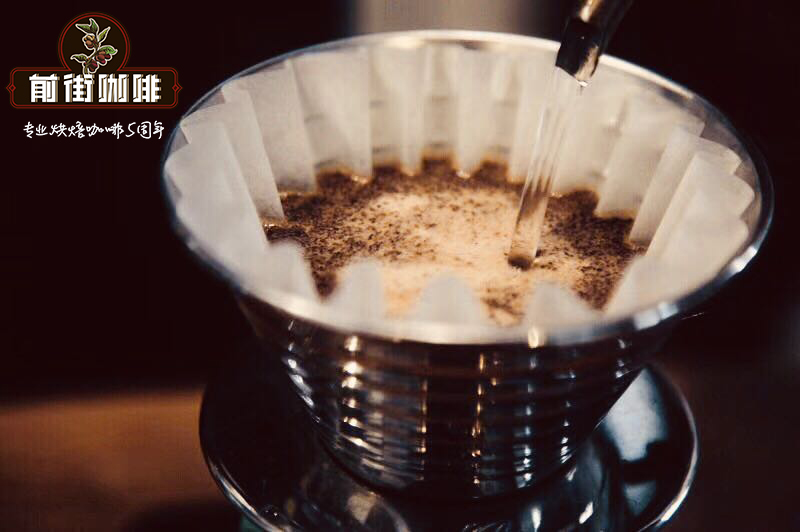
FrontStreet Coffee's pour-over reference: Weigh out 15g of [Sitio da Torre Pulped Natural Yellow Bourbon] coffee and grind it to a medium grind size. The grounds should be slightly coarser than table salt. We use the BG grinder at setting 6A (50% pass rate on the standard sieve), water at 88 degrees C, and a Kono/Kalita dripper for extraction. The recommended coffee-to-water ratio is roughly 1:14.
Pour hot water from the kettle in clockwise circles, starting from the center of the coffee bed. Start the timer as soon as the pour begins and build up to 30g within 15 seconds, then stop. At the 1-minute mark, start the second pour, again in clockwise circles from the center of the bed. Avoid pouring directly along the seam where the grounds meet the filter paper, as this can trigger channeling.
When the circles reach the outer edge of the coffee bed, leave a small margin, then work ring by ring back toward the center. At 2 minutes 10 seconds, bring the total brew weight up to 210g to finish the extraction.
Japanese-Style Iced Pour-Over [Sitio da Torre Pulped Natural Yellow Bourbon]
FrontStreet Coffee's iced pour-over reference for [Sitio da Torre Pulped Natural Yellow Bourbon]:
Brazilian coffee [Sitio da Torre Pulped Natural Yellow Bourbon], medium-dark roast, BG grinder at setting 5R (60% pass rate on the standard sieve).
Use 20g of coffee, 150g of ice, and 150g of hot water. The water temperature should be 1 degree C higher than the standard pour-over recommendation of 88 degrees C. For the standard brew, use the Fuji grinder at 3.5; for the iced version, grind slightly finer at Fuji 3. The recommended coffee-to-(water+ice) ratio is 1:15.
Bloom with 40g of water for 30 seconds.
Then pour in segments: 60g of water in the first segment and 40g in the second. Use a relatively fine but tall pour stream to agitate the bed, making sure the grounds tumble thoroughly. Just be careful not to let the liquid level rise too high or to pour onto the filter paper at the edge.
Total extraction time is about 2.5 minutes (similar to the normal extraction time for a 20g dose).
FrontStreet Coffee Recommendation
As the world's largest coffee producer, Brazil grows an enormous range of coffees. Brazilian beans typically show moderate acidity, and the balance between sweetness, bitterness, and body is excellent, which makes them ideal for medium roasting. A medium roast brings out a prominent nutty aroma and a smooth, mellow cup with a gentle acidity - great as a single origin or as a blend component. If you simply want a taste of what Brazil does best, FrontStreet's Pulped Natural Cerrado Red Bourbon is a classic Brazilian single origin. Cerrado is one of the country's most celebrated growing regions, known for consistently high-quality beans. This FrontStreet Brazilian lot is the Red Bourbon variety, common across South America. At a medium roast it offers rich aromas of creamed peanuts, toast, caramel, and hazelnut, with a rounded mouthfeel, no sharp acidity, and just a light bitter edge. It works beautifully as pour-over, and it also shines through a moka pot, espresso SOE, siphon, or French press.
FrontStreet's other Brazilian single origin, the Queen Estate (Fazenda Rainha) lot, comes from Mogiana, a region close to southern Minas Gerais. The fertile red volcanic soil there feeds the coffee cherries with abundant nutrients, allowing them to develop a full, rich aroma. Some farms in the area still follow traditional operations while others have adopted modern, standardized management, and overall quality has improved dramatically as a result. The Queen Estate beans are the comparatively rare Yellow Bourbon, a natural mutation of Red Bourbon that gives the fruit character a cleaner expression. Brewed as pour-over, in a moka pot, or on a home espresso machine, FrontStreet's Brazil Queen Estate coffee reveals a sugarcane sweetness you won't find from other origins, alongside fruit and chocolate notes.
Brazilian coffee is also a staple of FrontStreet's espresso blend series. Its low acidity, balance, and approachable price make it a go-to base for many specialty espresso recipes. The crema-rich FrontStreet Classic Blend, the nut-forward FrontStreet Premium Blend, the well-rounded FrontStreet Black Cocoa Blend (a barista favorite), and the cafe-focused FrontStreet Commercial Blend all contain Brazilian components. Beyond contributing chocolate and cream aromas, Brazil beans lend a gentle sweet-sour-bitter structure, and their balanced profile makes extraction more stable.
Important Notice :
FrontStreet Coffee is a long-established specialty coffee roaster in Guangzhou China, selling freshly roasted beans from its own farm in Yunnan as well as dozens of carefully selected single-origin beans from around the world for both pour-over and espresso. The products deliver consistently excellent quality and great value, with shipping within 24 hours. Guangzhou's FrontStreet Coffee shop is recommended by many coffee lovers, and the beans are now available online at the Tmall 。
FrontStreet Coffee has moved to a new address:
FrontStreet Coffee Address: 315,Donghua East Road,GuangZhou
Tel:020 38364473
 Scan and follow the En Gafei WeChat official account. Please indicate that the reprint comes from "En Gafei".