Sharing a Brewing Plan for Brazil Da Lagoa Natural Coffee Beans_How to Make Delicious Pour-Over Brazilian Coffee
Origin Information
Country: Brazil
Region: Sul de Minas
Estate Name: Fazenda Da Lagoa
Cultivated Varieties: Acaia, Mundo Novo, Catuai, Yellow Icatu, Yellow Bourbon
Growing Altitude: Approximately 950-1,200 meters
Grade: S17/18
Certification: Rainforest Alliance Certified
Since last year, we have developed a different appreciation for the specialty coffee beans produced in Brazil, from the earliest Cerrado to the Daterra, Passeio and Aurea of today, and more besides.
Brazilian specialty beans are showing increasingly distinctive flavor profiles, and this year we have also launched the newly arrived Fazenda Da Lagoa.
Brazil's main coffee-producing regions are Paraná, São Paulo, Minas Gerais, Rio de Janeiro, Espírito Santo, Bahia and Pernambuco, with the harvest running approximately from June to September. Fazenda Da Lagoa has a 75-year history and sits in Sul de Minas at an altitude of approximately 950-1,200 meters. It now has 220 hectares of planted area, producing an average of 8,000-12,000 bags a year, while also maintaining 600 hectares of native forest reserve.
Cupping Notes
Dry Aroma: Rice fragrance, cedar, drupe shell, cocoa, almonds
Wet Aroma: Cream, chocolate sweetness, cane sugar sweetness
What stood out most during our cupping of this Fazenda Lagoa is its excellent sweetness. It enters the mouth balanced, with a clean feel overall. As for acidity, the sourness is gentle and makes the sides of the tongue water nicely. The aftertaste is pleasant, with hints of tobacco and cedar aroma, making it a well-balanced Brazilian coffee bean.
Brewing Parameters
How to Brew Brazilian Coffee [Fazenda Da Lagoa Natural]?
FrontStreet Coffee Pour-Over Reference: Weigh 15g of Fazenda Da Lagoa Natural coffee powder and grind it medium. The ground particles should be slightly coarser than table salt. We use a BG grinder setting of 6A (50% standard sieve pass rate), water temperature 88°C, extracted with a Kono or Kalita dripper, with a recommended coffee-to-water ratio of around 1:14.
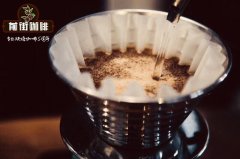
Pour hot water from the pour-over kettle in clockwise circles centered on the middle of the dripper. Start timing when brewing begins. Brew to 30g in 15 seconds, then stop pouring water. When the time reaches 1 minute, perform the second pour. For the second pour, as before, pour in clockwise circles centered on the middle of the dripper. Avoid pouring water where the coffee powder meets the filter paper, to prevent channeling.
Leave one circle of space when you reach the outermost ring of coffee powder, then continue pouring in circles toward the center. At 2 minutes and 10 seconds, brew to 210g to complete the coffee brewing.
Japanese Style Ice Pour-Over [Fazenda Da Lagoa Natural]
FrontStreet Coffee Ice Pour-Over [Fazenda Da Lagoa Natural] Reference:
Brazilian coffee [Fazenda Da Lagoa Natural], medium-dark roast, BG grinder setting 5R (60% standard sieve pass rate).
20g coffee powder, 150g ice cubes, 150g hot water. Water temperature should be 1°C higher than the normal pour-over recommendation of 88°C. Normal grinding uses a Fuji 3.5 setting, while ice pour-over uses something slightly finer, half a setting down, at Fuji 3. The recommended coffee-to-(water+ice) ratio is 1:15.
Bloom with 40g of water for 30 seconds.
Segmented pouring: a first segment with 60g of water and a second segment with 40g. Use a relatively fine but tall water column, applying force to stir and agitate so the coffee powder rolls fully. Take care, however, not to let the liquid level rise too high or hit the edge filter paper.
The entire extraction time is approximately 2.5 minutes, similar to the normal extraction time for 20g of powder.
FrontStreet Coffee Recommendation
If the Da Lagoa cupping notes appeal to you - soft, sweet and low in acidity - FrontStreet has two Brazilian lots worth trying next. The FrontStreet Brazil Cerrado Red Bourbon is a classic single-origin Brazil from the well-known Cerrado region. Medium roasted, it shows creamy peanut, toast, caramel and hazelnut in quantity, feels round on the palate, is not sour and carries a slight bitterness; it works as pour-over and equally well in a moka pot, as an espresso SOE, in a siphon or in a French press. For something rarer, the FrontStreet Brazil Queen's Farm Yellow Bourbon comes from Mogiana, close to Sul de Minas, where fertile red volcanic soil feeds the fruit with plenty of nutrients. The variety is the uncommon Yellow Bourbon, a mutation of Red Bourbon, and it gives a cleaner fruit character: the sugarcane sweetness other regions do not have, alongside fruit and chocolate.
Brazil is also the backbone of most of FrontStreet's espresso recipes. A low-acid, balanced profile at a friendly price makes it the natural first ingredient, which is why the FrontStreet Classic Blend with its rich crema, the FrontStreet Premium Blend with its pronounced nuts, the FrontStreet Black Cocoa Blend, and the FrontStreet Commercial Blend built for coffee shops all include Brazilian beans. Their contribution is not only chocolate and cream aroma but the gentle sweet-sour-bitter balance that keeps extraction stable.
Important Notice :
FrontStreet Coffee is a long-established specialty coffee roaster in Guangzhou China, selling freshly roasted beans from its own farm in Yunnan as well as dozens of carefully selected single-origin beans from around the world for both pour-over and espresso. The products deliver consistently excellent quality and great value, with shipping within 24 hours. Guangzhou's FrontStreet Coffee shop is recommended by many coffee lovers, and the beans are now available online at the Tmall 。
FrontStreet Coffee has moved to a new address:
FrontStreet Coffee Address: 315,Donghua East Road,GuangZhou
Tel:020 38364473
 Scan and follow the En Gafei WeChat official account. Please indicate that the reprint comes from "En Gafei".