How to Adjust Grind Settings for Pour-Over Coffee from Colombia's Santa Marta Sierra Nevada
The coffee-producing country between Colombia's Santa Marta and Sierra Nevada mountains has rich soil and abundant sunlight, making it especially well suited to coffee cultivation and processing. The Santa Marta Sierra Nevada range is a genuine treasure for growing fine coffee. The Sierra Nevada has an unmatched microclimate, balancing sunshine and appropriate rainfall and creating temperature swings between morning and evening that deepen the richness and complexity of the coffee's flavor. The beans are full-bodied with rich flavors, low acidity, and a deep character.
Colombia, Santa Marta, Sierra Nevada (Fair Trade, organic cultivation)
Flavor Characteristics
A delicate mouthfeel with notes of dragon fruit, almond, milk chocolate, and a subtle licorice aftertaste. Medium body and low acidity.
Coffee Background
AsoProKia is short for the Spanish "Asociacion de Productores, Kia." The word "Kia" itself comes from the Arhuaco Creole language and means "nature" or "authentic."
The Arhuaco are an indigenous people of Colombia, an agricultural tribe spread across the dense forests and fertile valleys of northern Colombia. The name was chosen to show the AsoProKia cooperative's harmonious relationship with the Arhuaco people.
Kia organically cultivated coffee, grown with water from the highland streams flowing down from the Santa Marta Sierra Nevada, has its own distinctive flavor and aroma. The coffee grows between 1,300 and 1,800 meters in Pueblo Bello, Cesar.
Cooperative Background
For decades, producers in the Santa Marta Sierra Nevada have made tremendous sacrifices and faced many hardships to cultivate high-quality coffee.
To improve conditions for these farmers, the "Santa Marta Sierra Nevada Rural Producers Association" ("ASOPROAGROCASN") was established with support from the Specialty Coffee Assistance Program of the Departmental Committee of Coffee Growers of Cesar and La Guajira.
The project aims to restore, develop, and protect ecosystems under Japanese Oil Pump Corporation, Japanese Agricultural Standards, and European and American fair market ecological production standards.
While respecting the worldview of the Arhuaco people, our main purpose is to carry out social investment where our growers cultivate Kia coffee without disturbing flora and fauna. With improvement of the Sierra Nevada environment as the primary objective, AsoProKia coffee cultivation proposes a balanced ecosystem and the protection of archaeological and ancestral heritage. We must protect the greatest inheritance that constitutes our land.
How to Brew Colombian Coffee [Santa Marta Sierra Nevada] Perfectly
FrontStreet Coffee Pour-Over Reference
Measure 15 g of Santa Marta Sierra Nevada coffee and grind it to a medium setting. The particles should be slightly coarser than table salt. We use a BG grinder at setting 5R (60% sieve pass rate), water at 89°C, and a V60 dripper, with a recommended coffee-to-water ratio of approximately 1:15.
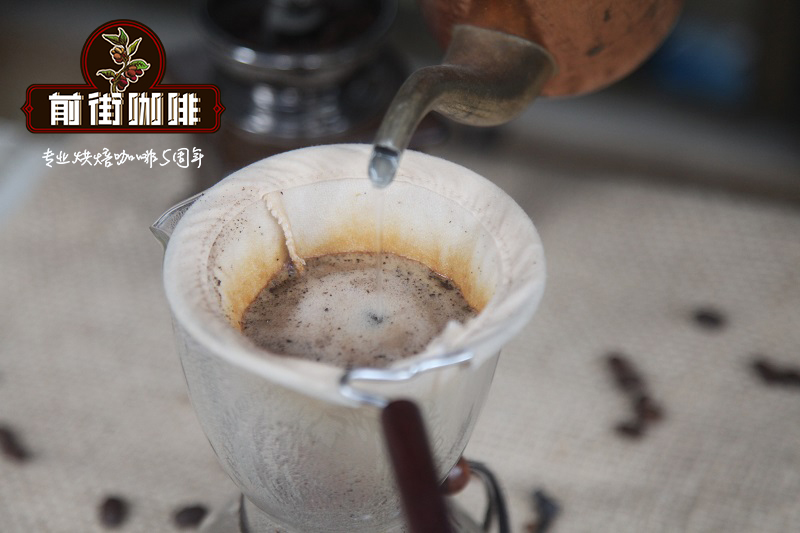
Pour hot water from the pour-over kettle in clockwise circles centered on the middle of the dripper. Start timing when brewing begins. Within 15 seconds, brew the coffee to 30 g, then stop pouring. When the clock reaches 1 minute, pour for the second time. As before, circle clockwise around the middle of the dripper. The stream should not hit where the coffee bed meets the filter paper, to avoid channeling.
When you reach the outermost ring of coffee, leave one ring and continue pouring ring by ring toward the center. At 2 minutes and 20 seconds, brew to 220 g and the coffee is done.
Japanese Iced Pour-Over [Santa Marta Sierra Nevada]
FrontStreet Coffee Iced Pour-Over [Santa Marta Sierra Nevada] Reference
Colombian coffee [Santa Marta Sierra Nevada], light-medium roast, BG grinder setting 5M (67% sieve pass rate).
20 g of coffee, 150 g of ice cubes, 150 g of hot water. The water temperature should be 1°C higher than the normal pour-over recommendation of 90°C. Normal grinding uses a Fuji setting of 3.5, while iced pour-over uses a slightly finer 3. The recommended coffee-to-(water plus ice) ratio is 1:15.
Bloom water amount 40 g, bloom time 30 seconds.
Staged pouring: first stage 60 g of water, second stage 40 g of water. Use a relatively fine but high stream, stirring and striking with force so the coffee tumbles fully. Be careful that the liquid level does not get too high, and do not hit the edge filter paper.
The entire extraction takes approximately 2.5 minutes, similar to the normal extraction time for 20 g of coffee.
FrontStreet Coffee Recommendation
If this Santa Marta Sierra Nevada makes you want to explore Colombia further, the FrontStreet Colombia Huila is the classic next step. Huila, in the southern part of Colombia's central range, is the country's most famous specialty coffee region, a hilly landscape surrounded by mountains where the country's most important rivers meet, bringing abundant water and humidity to plantings above 1,500 meters. Our washed Huila is roasted medium-dark, which draws out dark chocolate and nutty sweetness, a moderate oil content, and a full body. It suits pour-over and French press, and it also makes a fine moka pot or espresso, whether for an Americano or a latte.
For a more modern Colombian experience, try the FrontStreet Colombia Finca La Divisa Sidra. In recent years Colombia has moved beyond its traditional washed processing into experimental methods, and this lot is anaerobically natural: cherries ferment without oxygen and convert into richer tropical fruit aromas. Roasted medium-light, it delivers complex, concentrated notes of passion fruit, grape, apricot, and dried fruit in pour-over, cold brew, drip bags, or a moka pot.
Important Notice :
FrontStreet Coffee is a long-established specialty coffee roaster in Guangzhou China, selling freshly roasted beans from its own farm in Yunnan as well as dozens of carefully selected single-origin beans from around the world for both pour-over and espresso. The products deliver consistently excellent quality and great value, with shipping within 24 hours. Guangzhou's FrontStreet Coffee shop is recommended by many coffee lovers, and the beans are now available online at the Tmall 。
FrontStreet Coffee has moved to a new address:
FrontStreet Coffee Address: 315,Donghua East Road,GuangZhou
Tel:020 38364473
 Scan and follow the En Gafei WeChat official account. Please indicate that the reprint comes from "En Gafei".