How to Brew the Perfect Cup of Colombia La Esmeralda Wush Washed Pour-Over Coffee

I once heard about a Colombian natural process bean with an adorable variety name: Wush Wush.
Since getting into coffee, natural and washed processes have been the most common methods, used by estates or small farmers in essentially every producing country.
Colombia, however, rarely has natural process beans, let alone honey-processed ones.
Colombia Blue Sapphire Estate WUSH WUSH Honey Process
Origin: Colombia
Processing Method: Honey Process
Altitude: 1900-2100 meters
Variety: WUSH WUSH
(The green beans have an almost perfect appearance, with virtually zero defects.)
About the Wush Wush Variety
By all records, Wush Wush is a variety originally from the small town of Wushwush in southwestern Ethiopia. It is a low-yield variety grown mainly around Wushwush and Bonga, which is why the world knows so little about it. All we know is that roughly 30 years ago it took root in Colombia, carefully tended by Colombian smallholder farmers. In the cup it shares many flavor similarities with Geisha, but in texture and acidity it is richer and fuller than Geisha.
How to Brew Colombian Coffee [Blue Sapphire Estate Wush Honey Process] Perfectly
FrontStreet Coffee's Pour-over Reference: Weigh 15g of [Blue Sapphire Estate Wush Honey Process] coffee, grind to a medium setting with particles slightly coarser than table salt. We use a BG grinder setting of 5R (60% standard-sieve pass rate), a water temperature of 89°C, and a V60 dripper, with a recommended coffee-to-water ratio around 1:15.
Pour the hot water from the kettle in clockwise circles centered on the middle of the dripper. Start timing when brewing begins, brew to 30g in 15 seconds, then stop pouring. When the time reaches 1 minute, begin the second pour. For the second pour, again work in clockwise circles centered on the middle of the dripper, and avoid pouring onto the area where the coffee bed meets the filter paper, to prevent channeling.
When pouring over the coffee bed, leave one circle at the outermost edge, then work circle by circle back toward the middle. At 2 minutes 20 seconds, brew the coffee to 220g and finish.
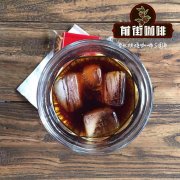
Japanese-style Ice Pour-over [Blue Sapphire Estate Wush Honey Process]
FrontStreet Coffee's Ice Pour-over [Blue Sapphire Estate Wush Honey Process] Reference:
Colombian coffee [Blue Sapphire Estate Wush Honey Process], light-medium roast, BG grinder setting 5M (67% standard-sieve pass rate).
20g coffee, 150g ice cubes, 150g hot water. The water temperature should be 1°C higher than the normal pour-over recommendation of 90°C. Normal grinding uses a Fuji setting of 3.5, while ice pour-over uses a slightly finer setting, half a notch finer, at Fuji 3. The recommended coffee-to-(water+ice) ratio is 1:15.
Bloom with 40g of water for 30 seconds.
Segmented pouring: first segment 60g of water, second segment 40g of water. Use a relatively thin but tall water column and stir firmly to create turbulence and fully agitate the coffee grounds, but be careful not to let the liquid level rise too high, and avoid pouring on the edge filter paper.
The entire extraction time is approximately 2.5 minutes, similar to the normal extraction time for 20g of coffee.
FrontStreet Coffee Recommendation
Wush Wush is often described as a close relative of Geisha, so if its floral, tea-like, and layered style appeals to you, FrontStreet Coffee's Grana Gesha is a fine next stop. It comes from the Genlana Gesha farm on the border of Ethiopia's Kochere and Genlana Abaya regions, a rare estate that grows a single variety. Grown under the shade of a fertile, near-wild forest and dried on raised beds for 14-20 days, it shows bright citrus acidity, elegant ginger-flower aroma, ripe-fruit sweetness, and a delicate, silky body.
For a different, more fruit-forward expression, FrontStreet's Strawberry Candy blend pairs a Panama Gesha with a Costa Rican honey-processed coffee, so it keeps the delicate florals and brings in sweet fruit, and it works well as pour-over, moka pot, espresso, or cold brew.
Important Notice :
FrontStreet Coffee is a long-established specialty coffee roaster in Guangzhou China, selling freshly roasted beans from its own farm in Yunnan as well as dozens of carefully selected single-origin beans from around the world for both pour-over and espresso. The products deliver consistently excellent quality and great value, with shipping within 24 hours. Guangzhou's FrontStreet Coffee shop is recommended by many coffee lovers, and the beans are now available online at the Tmall 。
FrontStreet Coffee has moved to a new address:
FrontStreet Coffee Address: 315,Donghua East Road,GuangZhou
Tel:020 38364473
 Scan and follow the En Gafei WeChat official account. Please indicate that the reprint comes from "En Gafei".