How to Make a Great Pour-Over Coffee with Colombian Antioquia FNC Coffee Beans - How to Get a Rich Crema on Your Pour-Over
How to Brew a Great Pour-Over with Colombian Antioquia FNC Coffee Beans
Coffee Details
Average altitude: 2,000 meters
Region: Colombian Coffee - Antioquia
Farm area: 3.5 hectares
Variety: 75% Castillo, 25% Caturra
Processing method: Washed - depulped, demucilaged and sun-dried
Flavor description: Apple, peach juice, plum, oolong tea, apricot.
Colombia White Peach Oolong Green Bean Testing
The bean size is not large, with few defects, and the appearance is close to that of a traditional washed coffee.
Moisture content: 12%. Density is slightly higher than typical Colombian coffee, possibly related to the growing altitude.
Roasting Strategy
Colombian coffee is usually roasted to a darker degree, but after seeing apple in the flavor description I shortened the development time somewhat and set a medium roast as the plan.
The Roast
Because of the higher hardness and moisture content, I slowed the pace appropriately while extending development. Development ran about 1:30, with first crack essentially complete. To control the roast degree, I reduced the temperature increase after first crack.
Cupping Test
Weight loss: 14%. Roast degree: 69/77. This basically matched the planned strategy.
Cupping
I cupped immediately after roasting, using an EK43 at grind setting 7.5, water at 92C and pure water.
Honestly, given the darker roast degree and my previous overall impressions of Colombian coffee, I did not expect to taste good apple acidity - but the cupping result was a genuine surprise. It differed slightly from the flavor description: the apple flavor was prominent, mixed with grape notes, and overall very clean, with a finish closer to black tea than oolong tea. The profile resembles that of Tim's Tamana, but high-quality apple acidity like this is genuinely rare. All in all, it is quite good, and I would like to try an even lighter roast if I get the chance.
How to Brew Colombian Coffee [Antioquia] Well
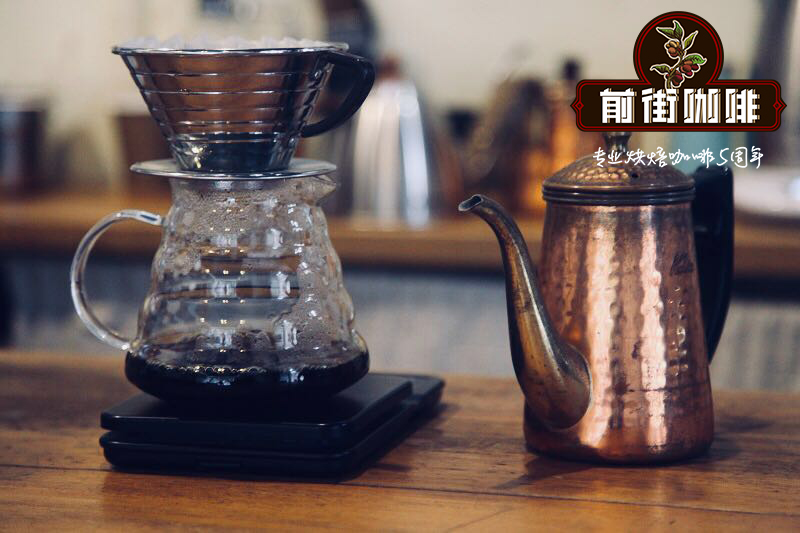
FrontStreet Coffee's pour-over recommendation: weigh 15 g of [Antioquia] coffee powder and grind it medium. The ground particles should be slightly coarser than salt. We use a BG grinder at setting 5R (a 60% standard sieve pass rate), water at 89C, and a V60 dripper for extraction, with a recommended coffee-to-water ratio of about 1:15.
Starting at the center of the filter, pour hot water from the kettle in clockwise circles, and start timing as soon as you begin brewing. Within 15 seconds, brew to 30 g, then stop pouring. At the 1-minute mark, begin the second pour. As before, pour in clockwise circles from the center of the filter, and avoid pouring water onto the area where the coffee bed meets the filter paper, to prevent channeling.
Leave a ring of space when pouring to the outer edge of the coffee bed, then pour circle by circle back toward the center. At 2 minutes and 20 seconds, brew to 220 g and the coffee is done.
Japanese-Style Iced Pour-Over [Antioquia]
FrontStreet Coffee's iced pour-over [Antioquia] recommendation:
Colombian coffee [Antioquia], light-to-medium roast, BG grinder at setting 5M (a 67% standard sieve pass rate).
20 g coffee powder, 150 g ice, 150 g hot water. The water temperature should be 1C higher than the normal pour-over recommendation of 90C. For normal grinding, use a small Fuji at setting 3.5; for iced pour-over, grind slightly finer by half a notch, at a small Fuji setting of 3. The recommended coffee-to-(water plus ice) ratio is 1:15.
Bloom with 40 g of water for 30 seconds.
Segmented pouring: a first segment of 60 g of water, then a second segment of 40 g. Use a relatively fine but tall pour stream to stir vigorously so the coffee bed rolls fully. Be careful not to let the liquid level rise too high, and avoid pouring onto the edge filter paper.
The entire extraction takes about 2.5 minutes, close to the normal extraction time for 20 g of coffee.
FrontStreet Coffee Recommendation
If you enjoy the bright fruit of this Antioquia cup, FrontStreet Coffee's Colombia Frontera Estate Sidra is worth trying next. Processed as a double anaerobic natural and roasted medium-light to protect the original fruit aromas, it opens with jasmine and citrus, then pours out passion fruit, blueberry, grape and apricot in a dense, juice-like stream, with a soft, clean acidity, a touch of spice in the middle and a long cocoa finish. It is equally at home as a pour-over, an espresso SOE or a cold drip, and an iced pour-over in particular highlights its fresh, smooth grape-juice character.
For an everyday cup, FrontStreet's Colombia Huila is a reliable pick. Huila, in the southern part of Colombia's central range, is the country's most famous specialty region, with plantations above 1,500 meters. Roasted medium-dark, it emphasizes dark chocolate, nutty sweetness, moderate oils and a full body - easy to love whether you brew it as a pour-over or a French press, or pull it through a moka pot or espresso machine for an Americano or a latte.
Important Notice :
FrontStreet Coffee is a long-established specialty coffee roaster in Guangzhou China, selling freshly roasted beans from its own farm in Yunnan as well as dozens of carefully selected single-origin beans from around the world for both pour-over and espresso. The products deliver consistently excellent quality and great value, with shipping within 24 hours. Guangzhou's FrontStreet Coffee shop is recommended by many coffee lovers, and the beans are now available online at the Tmall 。
FrontStreet Coffee has moved to a new address:
FrontStreet Coffee Address: 315,Donghua East Road,GuangZhou
Tel:020 38364473
 Scan and follow the En Gafei WeChat official account. Please indicate that the reprint comes from "En Gafei".