How to Brew Colombia Santuario Finca El Placer Yellow Typica Pour-Over Coffee - Why Is My Pour-Over Coffee Bitter?
The Visionary Behind Finca Santuario
For many years Finca Santuario has led Colombia's specialty coffee farms in both technical expertise and cultivation methods. The soul of the farm is its owner, Camilo Merizalde. Born in Valle de Cauca, Colombia, Camilo visited nearby coffee farms as a child and watched adults process coffee. After finishing high school he went to study in the United States, and after graduation worked as a manager at a Colombian food and beverage company, frequently returning home to buy green coffee. Along the way he began asking himself why Colombian coffee so often couldn't match the quality of African and Central American coffee, and why Colombia wasn't counted among the specialty producing countries. While in the United States he researched and read everything he could on coffee cultivation, hoping one day to grow specialty coffee that would amaze the world. At the same time he kept searching Colombia for farms with exceptional microclimates. Finally, in 2000, he found what he considered the finest agricultural land in the department of Cauca. He immediately began a long series of transformations large and small, preparing to realize his ideal coffee farm on what he named Finca Santuario.
Farm Development and Innovation
Camilo's first move was to improve the soil. He planted large quantities of Inga species to feed the soil rich, natural nitrogen, while preserving native plants and fruit trees to supply diverse nutrients. Next, he mapped the farm's terrain and divided it into 266 micro-zones, making it far easier to track and manage coffee growth and microclimate shifts across the estate. Step two was variety selection. From the start Camilo chose to plant low-yield, high-quality heirloom varieties: in November 2002 the first Typica tree went into the ground. Today Finca Santuario has expanded to include many varieties with outstanding cupping performance, Typica, Geisha, Bourbon, and Laurina among them. With altitudes from 1,950 to 2,050 meters, pronounced day-night temperature swings, and volcanic ash soils throughout, the farm is especially well suited to these delicate varieties. Step three was building his own washed processing plant and sun-drying rooms, fitted with equipment that was unusually advanced for Colombia. Camilo first mounted large exhaust fans on both sides of the drying rooms to accelerate air circulation, this prevents over-fermentation of the green beans while keeping drying-room temperatures stable. True to his experimental spirit, he also upgraded the washing equipment in collaboration with 2015 WBC champion Sasa Sestic, using stainless steel tanks and rounded-corner designs to markedly improve quality stability and perceived sweetness.
Recognition and Success
Years of effort paid off when Finca Santuario's first export lot of green beans shipped in 2005. Today the farm is a preferred partner for many competition baristas. Beyond WBC champion Sasa Sestic, 2013 Australian Barista Champion Matt Perger also praised Finca Santuario's beans highly, pairing them with the EK43 grinder, he took second place at that year's World Barista Championship. Through continuous work with these competitors, Camilo keeps testing new methods to raise coffee quality, and every year's cupping reveals fresh flavor expressions and varieties.
Colombia Finca SANTUARIO Yellow Typica
Farm: Finca SANTUARIO
Variety: Red Typica
Processing: Washed, partially sun-dried
Altitude: (1890 - 2010) 2050 meters
Farm Area: 135.4 hectares
Coffee Planting Area: 62.9 hectares
Owner: Camilo Merizalde
City: Cali
Region: Cauca
Country: Colombia
Flavor Description: Plum, chocolate, jasmine
How to Brew Colombia Coffee [Finca Santuario Yellow Typica]?
FrontStreet Coffee Pour-Over Reference: Weigh 15g of Finca Santuario Yellow Typica coffee and grind medium, particles slightly coarser than table salt. We use the BG grinder at setting 5R (60% standard sieve pass rate), water at 89°C, a V60 dripper, and a coffee-to-water ratio of about 1:15.
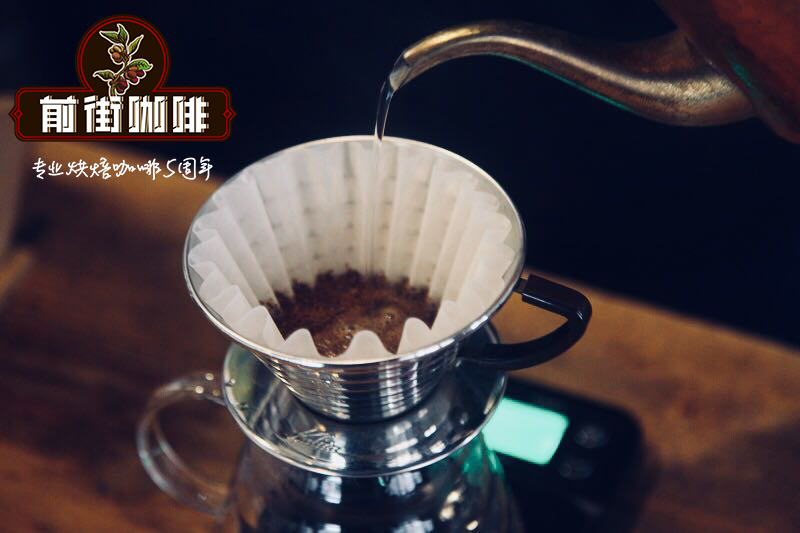
Pour hot water from the kettle in clockwise circles centered on the middle of the bed. Start timing as the brew begins: reach 30g within 15 seconds, then stop. At 1 minute, pour a second time, again clockwise circles around the center. Keep the water flow off the zone where the grounds meet the filter paper to avoid channeling.
When the pour reaches the outermost ring of grounds, leave a ring, then work back toward the center circle by circle. At 2 minutes 20 seconds, reach 220g and the brew is complete.
Japanese-Style Iced Pour-Over [Finca Santuario Yellow Typica]
FrontStreet Coffee Iced Pour-Over Reference:
Colombia Finca Santuario Yellow Typica, light-medium roast, BG grinder setting 5M (67% standard sieve pass rate).
20g of coffee, 150g of ice, 150g of hot water. The water should be 1°C hotter than the standard pour-over recommendation of 90°C. Grind slightly finer than for a hot brew, Fuji setting 3 instead of the usual 3.5. Recommended coffee-to-(water+ice) ratio is 1:15.
Bloom with 40g of water for 30 seconds.
Pour in segments: 60g in the first, 40g in the second. Use a fine but tall water column and agitate vigorously so the grounds roll completely, but keep the liquid level from rising too high and avoid hitting the filter paper at the edges.
Total extraction time is about 2.5 minutes, comparable to a normal hot extraction for 20g of coffee.
FrontStreet Coffee Recommendation
Colombian coffee covers an enormous range, fruit-forward, full-bodied, and aromatically floral lots alike, which is why FrontStreet Coffee's Colombia Huila washed beans are such a reliable everyday choice. Huila, in the south of Colombia's central mountain range, is the country's most famous specialty coffee region: rolling hill country surrounded by mountains, planted above 1,500 meters, with Colombia's most important rivers converging there to supply abundant water and humidity. This lot takes a medium-dark roast that highlights the sweet aroma of dark chocolate and nuts, with moderate body and a rich, rounded mouthfeel. It suits drinkers who want classic Colombian depth rather than bright fruit acidity, and it is wonderfully versatile: excellent as pour-over or French press, and equally at home in a moka pot or espresso machine, Americanos and lattes alike are well within reach.
Important Notice :
FrontStreet Coffee is a long-established specialty coffee roaster in Guangzhou China, selling freshly roasted beans from its own farm in Yunnan as well as dozens of carefully selected single-origin beans from around the world for both pour-over and espresso. The products deliver consistently excellent quality and great value, with shipping within 24 hours. Guangzhou's FrontStreet Coffee shop is recommended by many coffee lovers, and the beans are now available online at the Tmall 。
FrontStreet Coffee has moved to a new address:
FrontStreet Coffee Address: 315,Donghua East Road,GuangZhou
Tel:020 38364473
 Scan and follow the En Gafei WeChat official account. Please indicate that the reprint comes from "En Gafei".