Pour Over Coffee Brewing Guide for Colombia Hacienda Anina Washed Beans
Colombia Hacienda Angelina Washed
Colombia
Colombian coffee comes from well-defined growing regions and yields a wide range of impressive cups. Whether you want a round, heavy mouthfeel or a refreshing, fruity flavor—or something in between—it is most likely a Colombian bean. Colombia's geography is divided in a way that makes it easy to see how coffees from a given region share many characteristics: if you like coffee from one area, you will likely enjoy those from its neighbors too. Colombian coffee trees bear two harvests a year: the main crop and a second crop locally called "mitaca."
CAUCA
CAUCA is best known, among other things, for its coffee cultivation around the Meseta de Popayan, which includes Inza and the city of Popayan. The plateau's high altitude provides favorable growing conditions, and its proximity to the equator, together with the surrounding mountains, shields the coffee from Pacific humidity and the southern trade winds. The result is a very stable climate year-round, and the region's coffee grows in significant volcanic soil. Historically there is a single rainy season, from October to December each year.
Altitude: 1,700-2,100m
Harvest: March-June (main crop), November-December (mitaca crop)
Local farmers grow coffee along the highlands of these ranges, benefiting from diverse climate conditions and varying altitudes. Much of Colombia's coffee industry is made up of small-scale operations. Ringed by majestic mountains that block airflow and moisture from the Pacific as well as the southern trade winds, the region keeps a stable climate, and its closeness to the equator supplies abundant sunlight. That stable climate, plus sufficient sunshine, ensures consistent coffee quality.
How to Brew Colombia Angelina Estate Coffee
FrontStreet Coffee pour-over recommendation: weigh 15g of Angelina Estate beans and grind to medium coarseness (particles slightly coarser than table salt), using BG grinder setting 5R (60% standard sieve pass rate), a water temperature of 89°C, and a V60 dripper, with a recommended coffee-to-water ratio of about 1:15.
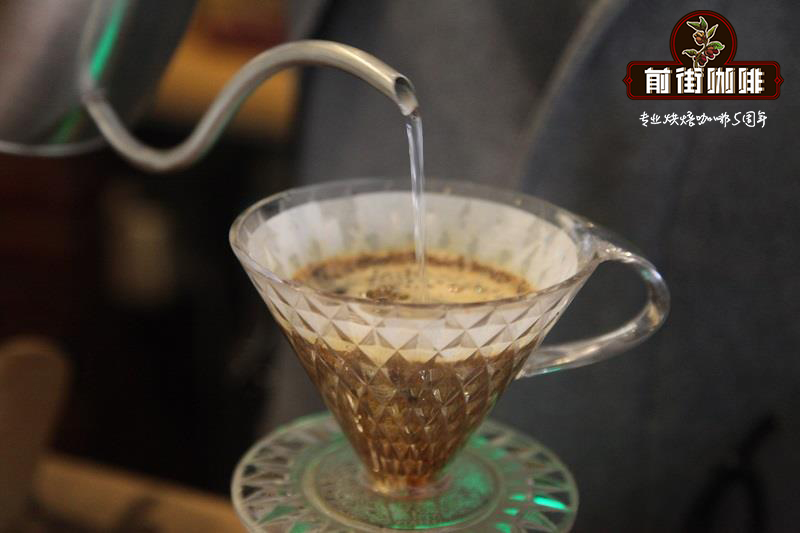
Pour the hot water from the kettle in clockwise circles centered in the filter. Start timing when brewing begins, reaching 30g in 15 seconds, then stop pouring. When the time reaches 1 minute, begin the second pour. As with the first, pour in clockwise circles centered in the filter, keeping the stream off the area where the grounds meet the filter paper to avoid channeling.
Leave a small ring at the outer edge when pouring over the grounds, then continue circling toward the center. At 2 minutes and 20 seconds the coffee should reach 220g, completing the brew.
Japanese-Style Iced Pour-Over: Angelina Estate
FrontStreet Coffee iced pour-over recommendation for Angelina Estate:
Colombia Angelina Estate, light-medium roast, BG grinder setting 5M (67% standard sieve pass rate).
20g of coffee grounds, 150g of ice cubes, 150g of hot water. The water temperature should be 1°C higher than the normal pour-over recommendation of 90°C. For normal grinding use a Fuji grinder at setting 3.5; for iced pour-over grind slightly finer, at Fuji setting 3. The recommended coffee-to-(water + ice) ratio is 1:15.
Bloom with 40g of water for 30 seconds.
Segmented pouring: a first segment of 60g of water, a second segment of 40g. Use a fine but high water stream to stir and impact forcefully so the grounds tumble thoroughly. Be careful not to let the water level rise too high or to pour onto the edge filter paper.
The entire extraction time should be about 2.5 minutes—similar to the normal extraction time for 20g of grounds.
FrontStreet Coffee Recommendation
Colombian coffee is used across a wide range of brewing, from espresso blends to single-origin pour-over, and it spans fruit-acidity profiles, full-bodied profiles, and aroma-forward styles—so there is something to suit almost any drinker. The Huila province, in the southern part of Colombia's Central Cordillera, is the country's best-known specialty region: a hilly area ringed by mountains, planted above 1,500 meters, where Colombia's most important rivers converge and bring abundant water and humidity. To get to know the region, start with FrontStreet Washed Huila, roasted medium-dark to emphasize dark chocolate, sweet nuttiness, moderate oil, and a full body; it works as pour-over or in a French press and also extracts well in a moka pot or espresso machine, holding up in an Americano or latte.
Colombian coffee was traditionally washed, but recent years have brought innovative processing. Anaerobic fermentation is one such new taste experience, known by several names—some call it carbonic maceration—but it is essentially fermentation in a low- or no-oxygen environment, usually in a pressure-resistant stainless-steel tank where temperature, time, pH, and other data can be controlled. Its best-known forms are anaerobic natural and anaerobic washed; FrontStreet Colombia Sidra uses the anaerobic natural method, and after oxygen-free fermentation the coffee develops more tropical-fruit aroma, delivering a complex, intensely fragrant cup of passion fruit, grape, apricot, and dried fruit as pour-over, cold brew, drip bag, or moka pot.
For anyone with a home espresso machine or a moka pot, baristas strongly recommend FrontStreet Specialty Blend, an espresso coffee formulated for café use. It combines the creamy nuttiness of Brazilian coffee with the dark chocolate bittersweetness of Colombian coffee, extracting with a fine, golden crema—ideal with milk for a rich, smooth latte, very forgiving for beginners, and a fine base for Americanos, cappuccinos, mochas, and other standard espresso drinks.
Important Notice :
FrontStreet Coffee is a long-established specialty coffee roaster in Guangzhou China, selling freshly roasted beans from its own farm in Yunnan as well as dozens of carefully selected single-origin beans from around the world for both pour-over and espresso. The products deliver consistently excellent quality and great value, with shipping within 24 hours. Guangzhou's FrontStreet Coffee shop is recommended by many coffee lovers, and the beans are now available online at the Tmall 。
FrontStreet Coffee has moved to a new address:
FrontStreet Coffee Address: 315,Donghua East Road,GuangZhou
Tel:020 38364473
 Scan and follow the En Gafei WeChat official account. Please indicate that the reprint comes from "En Gafei".