Peru Organic & Fair Trade Certified Organic FTO | Norandino Cooperative Northern Highlands Washed
Peru Organic & Fair Trade Certified Organic FTO | Flavor Profile of Northern Highlands Norandino Cooperative Washed Beans
Peru is the land of the ancient Inca Empire, covering an area approximately 35.7 times the size of Taiwan and stretching along the Andes, the highest mountain range in South America. In 1533, 180 Spaniards entered what was known as the City of Gold and carried abundant gold back to Spain. Coffee cultivation began there in the 18th century, with the Andes running across roughly 3/4 of the country. Located in South America, Peru covers more than half the area of Central America and is also the source of the Amazon River. Of Peru's total population of about 28 million, over 200,000 small farmers grow coffee, each with an average cultivation area of less than 2 hectares. Coffee is grown along the eastern slopes of the Andes at altitudes from 1,200 to 1,850 meters.
Peru's coffee production is predominantly small-scale, with each small farmer holding less than two hectares of land, and each hectare producing approximately 3,000 pounds of coffee. Organic cultivation has a very long and quite common history in Peru, largely because farmers have lacked the opportunity or capital to invest in chemical fertilizers, pesticides, and herbicides. In recent years, however, climate change has spread coffee leaf rust across many countries, and organic cultivation has contributed to significant reductions in Peru's production. Peruvian coffee is shade-grown at high altitudes and consists almost entirely of Arabica varieties. Under these slow-maturation conditions the beans develop higher density and considerable flavor variation.
With an annual production of about 3 million bags, all of it Arabica processed by the washed method, Peruvian coffee is exported mainly to the United States and Germany. As much as 98% of Peruvian coffee is grown in forested areas, and most production comes from small farmers working under natural conditions - local farmers can hardly afford chemical fertilizers and pesticides, so the coffee is almost entirely organic. Peru is currently the third largest coffee exporter in South America and the ninth largest in the world. Varieties grown include Typica, Bourbon, Caturra, and Pache.
The Peru Northern Highlands Norandino Cooperative Organic & Fair Trade Certified lot comes from a cooperative formed by small farmers in the northern highlands. The Norandino Cooperative consists of 6,600 small coffee farmers on the western slopes of the Peruvian Andes, each owning an average of only 1.8 hectares, with cultivation altitude averaging 1,200 meters. Fair Trade organizations are the cooperative's second largest customer. It was established in 1995 as Central Piurana de Cafetaleros (CEPICAFE), obtained Fair Trade certification in 1996, and was renamed Norandino in 2014 with the same management and members.
Fair Trade covers many industries and addresses the entire chain, from producers at the source through traders and distributors to end consumers, with every step required to comply with principles of fairness - which makes the certification difficult to obtain. Requirements include ensuring farmers receive reasonable income, that cultivation practices are environmentally friendly, and that traders support improvements in farmers' lives. When farmers achieve a better quality of life, they in turn place greater importance on environmental and industrial sustainability.
In the past, when farmers in equatorial South American countries wanted to expand cultivation to raise income, they would thoughtlessly clear rainforest; since the 1970s, human development has erased 750,000 square kilometers of the Amazon's original rainforest. For the sake of forest sustainability, cultivation practices no longer clear native forests - coffee is instead planted under shade. Today more than half of Peru's coffee is shade-grown, which not only sustains the rainforest but also enhances coffee quality.
Starting in Europe and the Americas, consumer awareness of environmental protection, social justice, and personal health has spread widely. Demand in the world organic market is enormous, and Peruvian small farmers who conscientiously manage organic products enjoy ever broader prospects. The Peruvian government understands that organic agriculture benefits both its people and the state: besides encouraging small farmers to organize into associations and cooperatives, it has planned supporting measures, and today Peru is the fifth largest exporter of organic agricultural products.
Coffee Information
Product Name: Peru Northern Highlands Norandino Cooperative
Country: Peru
Producer: Local small farmer collective
Certification: Organic & Fair Trade Certified (Organic & FTO)
Flavor Characteristics: Nutty, caramel sweetness, creamy smoothness, mild and refreshing, balanced mouthfeel.
Coffee Flavor Profile: Nutty, caramel sweetness, creamy smoothness, mild and refreshing, balanced mouthfeel.
FrontStreet Coffee Recommended Brewing Method:
Dripper: Hario V60
Water Temperature: 90°C
Grind Size: Small Fuji grinder setting 3.5
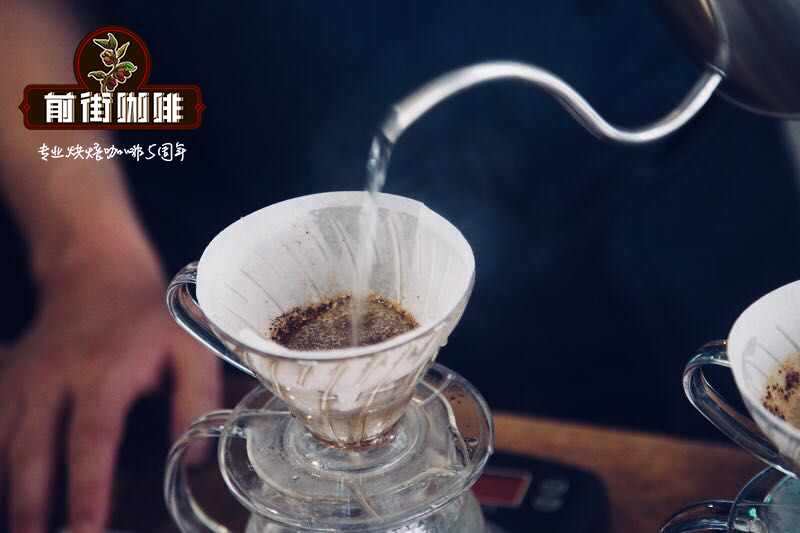
Brewing Method: Water-to-coffee ratio 1:15, 15g of coffee. First pour 25g of water and bloom for 25 seconds. Second pour to 120g, then pause. Once the water level in the coffee bed drops to half, continue pouring slowly to 225g total water. Extraction time around 2:00.
Analysis: The three-stage method clearly separates the coffee's front, middle, and back-end flavors. Because the V60 has many ribs and drains quickly, pausing during the pour helps extend extraction time.
FrontStreet Coffee Recommendation
Washing is a water-based way of processing coffee cherries: floating and sorting, depulping, soaking and fermenting to remove the mucilage, rinsing or further soaking, drying, then hulling. The long soak triggers chemical changes inside the bean and consumes much of its simple sugars (fructose and glucose), lowering sugar content while raising organic acids - which is why washed coffees keep more of the bean's own aromas while showing bright fruit acidity, cleanliness, and freshness.
If you enjoy this washed profile, FrontStreet's Yirgacheffe Worka (Dingding) Cooperative lot is an outstanding example. Because local farmers' harvests are small, cherries are sent to cooperatives for unified processing, and Dingding's skilled team has become famous for especially refined, clean lots. Washed processing highlights jasmine florals and bright citrus acidity; after a medium-light roast the cup also reveals green tea and honey tones, and it suits pour-over, cold brew, and espresso alike.
FrontStreet's Kenya "Little Tomato" is another washed benchmark - Kenya excels at double-washed processing, with an extra round of soaking, rinsing, and drying. The result is an intensely juicy cup of cherry tomato, dark plum, snow pear, black plum, and yellow sugar sweetness, beloved by coffee enthusiasts. And FrontStreet's Jamaica Blue Mountain No.1 shows why washing was born on Jamaica's island climate: removing skin, flesh, and mucilage before drying shortens drying time and yields translucent, low-defect beans with a balanced, hazelnut-cream-chocolate-caramel character in which no single note dominates.
Important Notice :
FrontStreet Coffee is a long-established specialty coffee roaster in Guangzhou China, selling freshly roasted beans from its own farm in Yunnan as well as dozens of carefully selected single-origin beans from around the world for both pour-over and espresso. The products deliver consistently excellent quality and great value, with shipping within 24 hours. Guangzhou's FrontStreet Coffee shop is recommended by many coffee lovers, and the beans are now available online at the Tmall 。
FrontStreet Coffee has moved to a new address:
FrontStreet Coffee Address: 315,Donghua East Road,GuangZhou
Tel:020 38364473
 Scan and follow the En Gafei WeChat official account. Please indicate that the reprint comes from "En Gafei".