How to Make Pour-Over El Salvador Santa Rita Estate Coffee_How to Calculate Water-to-Coffee Ratio for Santa Rita Pour-Over
El Salvador Coffee - Santa Rita Estate
El Salvador is the smallest and most densely populated country in Central America, and most of its regions produce coffee. That alone shows how much coffee means to the country. About 60% of its beans are traditional Bourbon varieties. Bourbon's greatest strengths are a clean, bright, sweet cup with a lightly acidic citrus character, and its derived varieties include Yellow Bourbon, Orange Bourbon, and Red Bourbon. In a market that demands something distinctive from every farm, El Salvador has embraced special processing methods and varietal differences, and drinkers are discovering coffees far more interesting than the well-known ones. Even so, Salvadoran coffee has always been loved for its rich aroma, its sweet brown sugar and honey notes, and its stable, smooth taste.
El Salvador's coffee season runs from November to February of the following year, with new beans typically reaching the market from June to August. The Cup of Excellence finals are usually held in mid-to-late July. Most coffee comes from small and medium-sized farms. Salvadoran farms work closely with international coffee organizations, mainly to raise individual farmers' incomes and improve living standards at home and in their communities. That gives growers an incentive to change how they cultivate and to restore the original natural ecology, so quality gradually improves and consumers become willing to buy Salvadoran coffee - combining consumption with natural ecology in something close to an ideal agricultural model.
Santa Rita Farm, in the southwest, is a model estate producing some of El Salvador's finest coffee. Its owner is a farmer willing to try new things. The natural-process beans launched in 2009 caused a sensation, and later that December the farm selected PB (Peaberry) beans from among the 60 million pounds of coffee it produces, earning a score of 91 points from the professional cupping website Coffee Review. The farm also continually updates its varieties, and Orange Bourbon, Red Bourbon, and Yellow Bourbon are all growing in its gardens. It is well worth watching over the long term.
Santa Rita Estate belongs to the JASAL Group and is situated in the Apaneca Ilamatepec mountain range of Juayua Province in western El Salvador. The local geology consists of sandy loam and volcanic soil, with a humid climate, an average annual temperature of 15°C, and average rainfall over 2000 millimeters. Combined with the dedication and professionalism of the estate managers, that produces some of El Salvador's finest coffee. From planting, pruning, and harvesting through subsequent processing, JASAL has invested heavily across every stage of production, committed to making each batch fully traceable to its source and consistent in the cup.
Many residents of the Santa Rita area work in coffee. Their passion shows up even in the design and hand-painting on the burlap export bags, reflecting the care they bring from planting and production through to final packaging.
How to Brew El Salvador Coffee [Santa Rita Estate] Well?
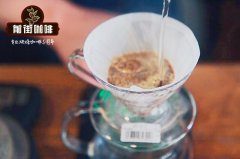
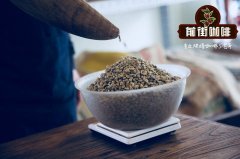
FrontStreet Coffee's pour-over reference: weigh 15g of [Santa Rita Estate] coffee and grind medium. The grounds should be slightly coarser than table salt. We use BG grinder setting 5R (60% standard sieve pass rate), water temperature 89°C, and a V60 dripper.
With the hot water in the gooseneck kettle, draw circles clockwise around the center of the dripper. Start timing when brewing begins and pour to 30g within 15 seconds, then stop. At 1 minute, make the second pour, again circling clockwise around the center. Keep the stream away from where the coffee bed meets the filter paper to avoid channeling.
Leave a ring when you reach the outermost layer of coffee, then work back toward the center circle by circle. At 2 minutes 20 seconds, pour to 220g and the brew is complete.
Japanese Ice Pour-Over [Santa Rita Estate]
FrontStreet Coffee's ice pour-over [Santa Rita Estate] reference:
El Salvador Coffee [Santa Rita Estate], medium roast, BG grinder setting 5M (67% standard sieve pass rate).
20g of coffee, 150g of ice cubes, 150g of hot water. The water temperature is 1°C higher than the normal pour-over recommendation of 90°C. Normal grinding uses a small Fuji setting of 3.5, while ice pour-over is half a setting finer, at small Fuji 3. The recommended coffee-to-(water plus ice) ratio is 1:15.
Bloom with 40g of water for 30 seconds.
Pour in stages, 60g in the first stage and 40g in the second. Use a relatively thin but high stream and stir forcefully so the coffee bed tumbles completely. Be careful not to let the liquid level rise too high, and keep the stream off the filter paper at the edge.
The whole extraction takes about 2.5 minutes, similar to the normal extraction time for 20g of coffee.
FrontStreet Coffee Recommendation
If you brew a lot of pour-over, the dripper you use shapes what you taste, and the V60 rewards coffees with clarity. FrontStreet Gedingding Cooperative is the best place to start: a washed Ethiopian from the Woka area at the southeastern edge of Yirgacheffe, it brings clear citrus, berry, and floral notes with a green-tea sweetness. Its acidity is soft and bright rather than sharp - closer to the natural sweet-tartness of fruit than to anything aggressive - which is why it is such an easy first specialty coffee for people new to hand brewing.
FrontStreet Huakui takes the same fruit-forward direction much further. Its tropical fruit aroma is hard to miss, with strawberry, passion fruit, jackfruit, and even lychee, backed by obvious sweetness and very little bitterness; the body is smooth and juicy, and many drinkers describe it as the coffee that does not taste like coffee. FrontStreet Strawberry Candy, a blend of Panama washed Geisha and Costa Rican raisin-honey coffee, adds a delicate floral note with caramel, raisin, and dried fruit, and works in a moka pot or home espresso machine as well as a dripper. For a heavier, low-acid style in the same lineup, FrontStreet PWN Golden Mandheling is a wet-hulled Sumatran roasted dark, with herbal and dark chocolate aromas over a thick, long body.
For brewing, use around 15g of coffee and a 1:15 ratio. Light, floral beans like the Yirgacheffe and Huakui do best with water at 90-91°C and a medium-fine grind, while the Golden Mandheling wants a coarser grind - coarse sugar - and water at 87-88°C, poured in three stages to keep the body thick without pulling out bitterness.
Important Notice :
FrontStreet Coffee is a long-established specialty coffee roaster in Guangzhou China, selling freshly roasted beans from its own farm in Yunnan as well as dozens of carefully selected single-origin beans from around the world for both pour-over and espresso. The products deliver consistently excellent quality and great value, with shipping within 24 hours. Guangzhou's FrontStreet Coffee shop is recommended by many coffee lovers, and the beans are now available online at the Tmall 。
FrontStreet Coffee has moved to a new address:
FrontStreet Coffee Address: 315,Donghua East Road,GuangZhou
Tel:020 38364473
 Scan and follow the En Gafei WeChat official account. Please indicate that the reprint comes from "En Gafei".