How to Brew Salvador Ataisi Coffee Powder by Pour-Over and the Story of Salvadoran Coffee Beans Characteristics
El Salvador Ataisi: The Story of Salvadoran Coffee and How to Brew It
El Salvador ranks alongside Mexico and Guatemala among the top producers of the Aztec–Maya region, and it jostles with its neighbors for first or second place in Central America. High-altitude Salvadoran coffees are known for large, evenly sized beans and a rich yet mild profile. Like Guatemala and Costa Rica, El Salvador grades its coffee by altitude — the higher, the better. By altitude standard, it splits into three grades: SHG (Strictly High Grown) for high altitude, HEC (High Grown Central) for mid-high altitude, and CS (Central Standard) for low altitude. The country's best-known brand is Pipil — the name the Aztec–Maya peoples gave to coffee itself — which has earned certification from the Organic Certified Institute of America.
Most Salvadoran coffee is grown by smallholder farmers using traditional methods, with nearly 100% shade-grown practices. The harvest runs from November through March of the following year, and every cherry is picked by hand.
Coffee Specifications
Origin: El Salvador, Central America
Altitude: 1,200–1,800 meters
Grade: SHG (Strictly High Grown)
Processing: Washed
Flavor Notes: Nutty chocolate, passion-fruit sweet-tartness, creamy chocolate, a strawberry finish — with a strong, rich body
How to Brew Salvadoran Coffee [Ataisi] Perfectly
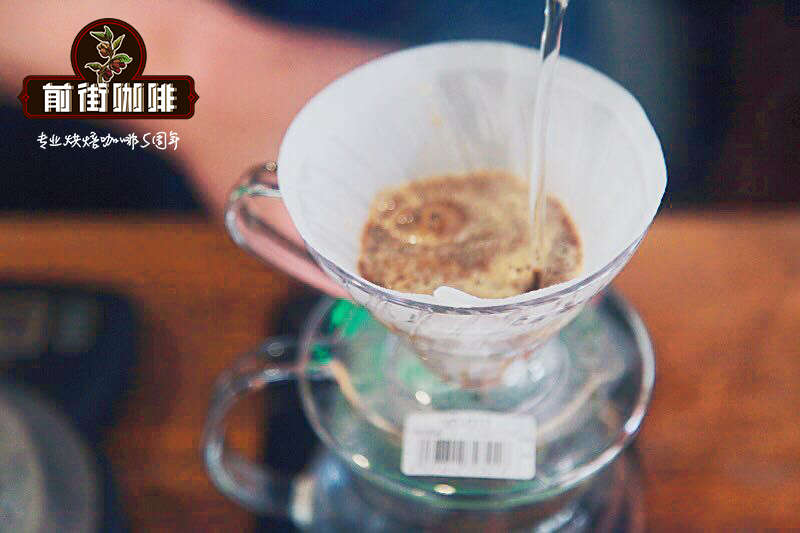
FrontStreet Coffee pour-over reference: Weigh out 15g of Ataisi coffee and grind to a medium coarseness — the particles should sit slightly coarser than table salt. We use a BG grinder at setting 5R (60% standard sieve pass rate), water at 89°C, and a V60 dripper for extraction.
Pour the hot water from your gooseneck kettle in clockwise circles centered on the middle of the coffee bed, starting the timer as you begin. Within 15 seconds, bring the brew to 30g, then stop pouring. When the timer reaches 1 minute, begin the second pour — again clockwise circles from the center, keeping the stream off the seam where grounds meet filter paper to prevent channeling.
When your circles reach the outermost ring of grounds, leave that outer ring alone and spiral inward, circle by circle, toward the center. At 2 minutes 20 seconds the brew should reach 220g, completing the extraction.
Japanese-Style Iced Pour-Over [Ataisi]
FrontStreet Coffee iced pour-over reference:
Salvadoran coffee Ataisi, medium roast, BG grinder at setting 5M (67% standard sieve pass rate).
Dose 20g of coffee, 150g of ice, and 150g of hot water. Set the water temperature 1°C higher than the hot-brew recommendation of 90°C. For normal grinding you would use the small Fuji grinder at setting 3.5; for iced pour-over, go slightly finer at setting 3.
Bloom with 40g of water for 30 seconds.
Pour in segments: 60g in the first segment, 40g in the second. Use a relatively thin but tall water column, agitating forcefully so the grounds tumble fully — but take care not to let the water level rise too high, and keep the stream off the filter paper at the edges.
Total extraction should run about 2.5 minutes — roughly the same as a normal hot extraction for 20g of coffee.
FrontStreet Coffee Recommendation
Since this brew guide leans on the V60, it is worth knowing why that dripper earned its reputation. Hario, the Tokyo company that designed it, was founded in 1921 as a maker of heatproof laboratory glassware; in 2004 it redesigned the V60's prototype into the form we know today, naming it after its 60° cone angle and V-shaped profile, and released it to market a year later. The cone and 60° angle force water to travel through the bed toward the center before dripping below, extending contact time so aroma and flavor extract fully, while the signature single large outlet leaves the flow rate entirely in the brewer's hands — a direct reflection of your pouring control on the final cup.
That fast-draining design makes the V60 a natural home for floral, fruit-forward coffees. FrontStreet Coffee's washed Ethiopia Guddina (Yirgacheffe) is the classic starting point — bright citrus, berries, jasmine florals, and a green-tea-like sweetness — while the natural Ethiopia Huakui pours out strawberry, passion fruit, jackfruit, even lychee, with barely a trace of bitterness. FrontStreet Coffee's "Strawberry Sugar" Geisha blend and its raisin-honey Costa Rica Mozart round out the floral-fruit lineup beautifully.
If you prefer your V60 cup richer and rounder, medium-to-dark roasts still have a place: FrontStreet Coffee's PWN Golden Mandheling delivers low acidity with herbal and dark-chocolate depth, its Brazil Queen Estate balances nuts, cocoa, and caramel sweetness, and Jamaica Blue Mountain No.1 offers that famous equilibrium of cream, caramel, chocolate, nuts, and honey. Whichever direction you choose, rest your beans a few days from roast, grind fresh, and let the V60 show you what the coffee can do.
Important Notice :
FrontStreet Coffee is a long-established specialty coffee roaster in Guangzhou China, selling freshly roasted beans from its own farm in Yunnan as well as dozens of carefully selected single-origin beans from around the world for both pour-over and espresso. The products deliver consistently excellent quality and great value, with shipping within 24 hours. Guangzhou's FrontStreet Coffee shop is recommended by many coffee lovers, and the beans are now available online at the Tmall 。
FrontStreet Coffee has moved to a new address:
FrontStreet Coffee Address: 315,Donghua East Road,GuangZhou
Tel:020 38364473
 Scan and follow the En Gafei WeChat official account. Please indicate that the reprint comes from "En Gafei".