El Salvador Platinum Estate Information and Story Introduction_How to Brew Platinum Estate Bourbon Coffee with Pour-Over
Geography
The Republic of El Salvador lies in northern Central America and is the most densely populated country in the region. It borders Honduras to the north, the Pacific Ocean to the south, and Guatemala to the northwest. The national economy is primarily based on agriculture, with coffee and cotton as the main crops. El Salvador is also one of the birthplaces of ancient Mayan culture, with not only a profound cultural heritage but also magnificent landscapes including volcanoes, highland lakes, and Pacific coastal beaches.
Environment
Salvadoran coffee is 100% Arabica, with 68% being the Bourbon variety. Bourbon coffee typically grows at altitudes between 1,062-1,972 meters. El Salvador's terrain, dominated by unique mountainous highlands, provides an ideal environment for Bourbon coffee cultivation. Meanwhile, El Salvador's suitable temperatures, abundant rainfall, and fertile soil are indispensable natural conditions for nurturing high-quality coffee. Salvadoran coffee, like other typical island-grown beans, shows balanced, smooth flavor with excellent texture.
The Salvadoran farm La Pechuga sits in the Apaneca Ilamatepeq volcanic zone at an altitude of 4,550 feet, making it one of El Salvador's regions producing the most subtle and refined coffees. The rich, fertile volcanic soil and microclimate provide the best growing conditions for coffee. Located at the windward entrance of a volcanic crater valley, coffee trees must withstand strong seasonal winds during growth, resulting in more robust and sweeter coffee fruit development.
La Pechuga has a fascinating and complete ecological chain, with a natural spring emerging in the middle of the farm. It represents El Salvador's most characteristic natural ecological coffee. The farm covers 11 hectares and cultivates El Salvador's national treasure, century-old Bourbon coffee beans. These produce special floral and chocolate notes with a delightful aftertaste, featuring brilliant bright fruit acidity that represents the flavor profile achievable by premium high-altitude Arabica beans.
The main shade trees on this farm are pear trees, Ingas, and local native species, providing relatively cooler temperatures. The farm owner systematically plans agricultural work schedules so that every team member has warm working opportunities. La Pechuga is undoubtedly an outstanding premium coffee farm with excellent and prominent cupping results. Produced under socially and environmentally friendly conditions, the fourth-generation heir has committed to continuing the family's passion and dedication to improving coffee quality, striving for sustainable management of El Salvador's specialty coffee.
Grade Classification
Central American countries such as El Salvador, Guatemala, and Costa Rica all sit in mountainous highland regions. Coffee farms within these countries are located at varying altitudes, making it necessary to classify bean grades by cultivation altitude. Generally, lower-altitude areas have warmer climates, allowing coffee to grow faster. The resulting green beans have lower density, a less hard texture, and relatively poorer quality. In contrast, highland areas have cold climates where coffee grows slowly, producing green beans with high density, a hard texture, and a naturally rich, aromatic flavor accompanied by intense acidity. Therefore, some also classify by "hardness." The grading in these regions can be divided into several categories, with only the first few qualifying as specialty coffee.
Some farms sit on gentle slopes in Pacific coastal regions at altitudes between 984-3,280 feet, known as "Pacific Grade," with lower acidity. Similarly, in places like Mexico, Honduras, and Haiti, specialty coffee grades include Strictly High Grown (SHG), followed by High Grown (HG).
How to Brew Salvadoran Coffee [La Pechuga]?
FrontStreet Coffee's pour-over reference: Weigh 15g of La Pechuga coffee grounds and grind to medium. The ground particles should be slightly coarser than table salt - we use BG grinder setting 5R (60% standard sieve pass rate), water temperature 89°C, using a V60 dripper for extraction.
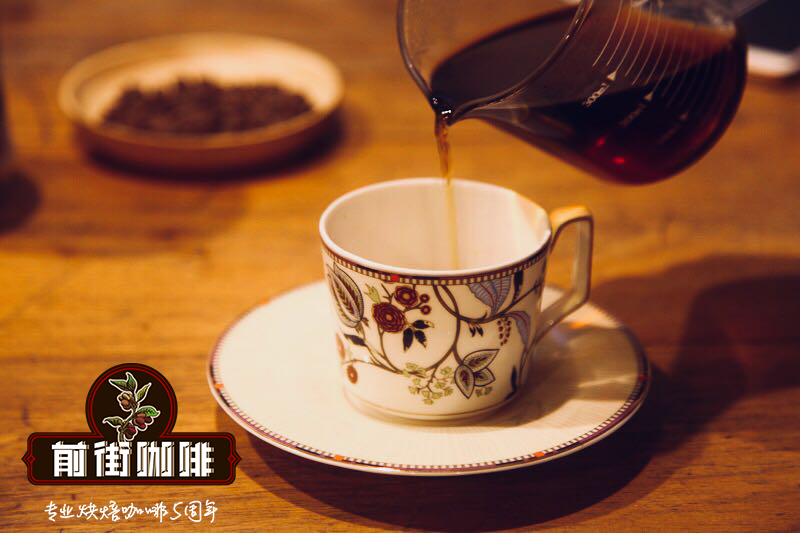
Pour hot water from the pour-over kettle in clockwise circles centered on the middle of the dripper. Start timing when brewing begins, reaching 30g in 15 seconds, then stop pouring. When the time reaches 1 minute, begin the second pour. For the second pour, as before, pour in clockwise circles centered on the dripper middle. Avoid pouring water where coffee grounds meet the filter paper to prevent channeling.
When pouring coffee grounds to the outermost circle, leave one circle of space, then pour back toward the center circle by circle. At 2 minutes and 20 seconds, the coffee should reach 220g, completing the brewing process.
Japanese Ice Pour-Over [La Pechuga]
FrontStreet Coffee's ice pour-over La Pechuga reference:
Salvadoran coffee La Pechuga, medium roast, BG grinder setting 5M (67% standard sieve pass rate)
20g coffee grounds, 150g ice, 150g hot water. Water temperature should be 1°C higher than the normal 90°C recommended for regular pour-over. Normal grinding uses Fuji setting 3.5, while ice pour-over uses a slightly finer Fuji 3.
Bloom water amount: 40g, bloom time: 30 seconds.
Segmented pouring: first segment 60g water, second segment 40g water. Use a relatively fine but high water column, forcefully stirring and impacting to ensure the coffee grounds fully tumble. Be careful not to let the liquid level get too high or touch the edge filter paper.
The entire extraction time should be approximately 2.5 minutes (similar to the normal extraction time for 20g of coffee grounds).
END
FrontStreet Coffee Recommendation
La Pechuga is a Bourbon, and Bourbon is a thread worth following across origins. FrontStreet Coffee's Brazil Queen's Estate is a classic example: a yellow Bourbon from Brazil, the world's largest coffee producer, it is smooth and gently sweet, with a medium roast that brings out cream, peanut, chocolate, toast, and sugarcane notes. It suits a pour-over, a moka pot, or an espresso machine, and like La Pechuga it shows the rounded, balanced character Bourbon is known for.
For those who prefer the floral, fruit-acid end of the spectrum, FrontStreet Coffee's washed Yirgacheffe brings white jasmine, bright citrus and lemon acidity, and a tea-like finish at an approachable price. The two make an easy side-by-side study of how variety and terroir shape a cup.
Important Notice :
FrontStreet Coffee is a long-established specialty coffee roaster in Guangzhou China, selling freshly roasted beans from its own farm in Yunnan as well as dozens of carefully selected single-origin beans from around the world for both pour-over and espresso. The products deliver consistently excellent quality and great value, with shipping within 24 hours. Guangzhou's FrontStreet Coffee shop is recommended by many coffee lovers, and the beans are now available online at the Tmall 。
FrontStreet Coffee has moved to a new address:
FrontStreet Coffee Address: 315,Donghua East Road,GuangZhou
Tel:020 38364473
 Scan and follow the En Gafei WeChat official account. Please indicate that the reprint comes from "En Gafei".