El Salvador Santa Leticia Pacamara Honey Processing Brewing Guide_Pour-over Honey Processed Pacamara
El Salvador Coffee Region - Santa Ana Volcano
El Salvador may be a small country, but never underestimate its coffee. At its peak it was the world's fourth-largest coffee producer, though decades of civil war nearly destroyed the industry. Fortunately, peace has allowed coffee growing to regain its vitality. One ironic benefit of the war years was that farmers left their fields untended and missed the sun-grown Catimor trend that swept the industry over the past two decades — which preserved El Salvador's ancient Bourbon and Typica varieties. In other words, the country still practices the most traditional shade-grown cultivation, a real boost for aroma development. In 2005, El Salvador's hybrid variety Pacamara made a spectacular showing at the Cup of Excellence, leaving many international cuppers unsure how to score it. Unexpectedly, this hybrid not only pushed the boundaries of coffee fragrance and richness, it also raised the international profile of Salvadoran coffee as a whole.
Santa Leticia Estate Pacamara
This lot comes from Santa Leticia Estate, near the town of Apaneca in Ahuachapan Province, run by third-generation coffee farmer Ricardo Valdivieso and his family. In 1870, Ricardo's grandfather purchased the land and named it after his wife, Leticia.
Pacamara
Pacamara is a variety that has risen to prominence in the past decade. It originated in El Salvador — a cross of Pacas and Maragogipe — and became the variety that swept the Cup of Excellence competitions after Geisha, at one point standing as Geisha's most formidable rival. Price-wise, though, Pacamara is far more "affordable" than Geisha. From a flavor standpoint, this writer personally prefers Pacamara for its superior balance.
As the birthplace of Pacamara, El Salvador has no shortage of excellent estates. Santa Leticia sits in the Apaneca volcanic region of western El Salvador at an average altitude of 1,400 meters. The Pacamara grown here is honey-processed, boasting explosive fruit notes while keeping an extremely high degree of balance between acidity and bitterness. The flavor is gentle and long-lasting, with a rich body and excellent sweetness.
How to Brew El Salvador Coffee [Santa Leticia Pacamara Honey Process]?
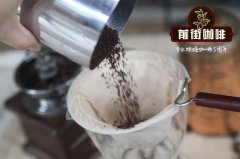
FrontStreet Coffee's pour-over reference: Weigh out 15g of Santa Leticia Pacamara Honey Process coffee and grind to medium — slightly coarser than table salt. We use a BG grinder at setting 5R (60% standard sieve pass rate), water at 89°C, extracted on a V60 dripper.
Pour hot water from the gooseneck kettle in clockwise circles, centered on the middle of the dripper. Start timing as you begin; pour to 30g within 15 seconds, then stop. When the timer reaches 1 minute, begin the second pour. As before, pour in clockwise circles from the center, avoiding the seam where the coffee meets the filter paper to prevent channeling.
When you reach the outermost ring of grounds, leave a margin, then continue spiraling back toward the center. At 2 minutes 20 seconds, reach 220g total and the brew is complete.
Japanese-style Iced Pour-Over [Santa Leticia Pacamara Honey Process]
FrontStreet Coffee's iced pour-over reference for the Santa Leticia Pacamara Honey Process:
El Salvador Santa Leticia Pacamara Honey Process, medium roast, BG grinder setting 5M (67% standard sieve pass rate)
20g of coffee, 150g of ice, 150g of hot water. Set the water temperature 1°C above the usual 90°C for pour-over. Grind slightly finer than the normal setting — Fuji 3 instead of Fuji 3.5.
Bloom with 40g of water for 30 seconds.
Segmented pours: first segment 60g of water, second segment 40g. Use a fine but tall water column with real force to agitate the grounds thoroughly — but take care not to let the liquid level rise too high or wash over the filter paper at the edge.
Total extraction time is roughly 2.5 minutes (similar to a normal 20g pour-over).
FrontStreet Coffee Recommendation
Honey processing was born in Costa Rica, where producers refined the semi-washed method by adjusting how much mucilage is retained and how long the beans dry — giving rise to yellow, red, and black honey tiers. If this Pacamara's honeyed sweetness wins you over, FrontStreet Coffee's Costa Rica Blackberry, made with an extreme black honey process that retains nearly all the mucilage over at least two weeks of slow drying, offers grape, berry, and ripe blackberry flavors behind an intense floral dry aroma.
For a different honey expression, FrontStreet Coffee's Costa Rica Mozart uses raisin honey processing — the cherries are pre-dried on raised beds before depulping, retaining 100% of the mucilage — yielding osmanthus, pineapple, and raisin sweetness that shines in pour-over, cold brew, or even a moka pot.
Important Notice :
FrontStreet Coffee is a long-established specialty coffee roaster in Guangzhou China, selling freshly roasted beans from its own farm in Yunnan as well as dozens of carefully selected single-origin beans from around the world for both pour-over and espresso. The products deliver consistently excellent quality and great value, with shipping within 24 hours. Guangzhou's FrontStreet Coffee shop is recommended by many coffee lovers, and the beans are now available online at the Tmall 。
FrontStreet Coffee has moved to a new address:
FrontStreet Coffee Address: 315,Donghua East Road,GuangZhou
Tel:020 38364473
 Scan and follow the En Gafei WeChat official account. Please indicate that the reprint comes from "En Gafei".