Is Starbucks Yirgacheffe Chelelektu Coffee Good? Yirgacheffe Coffee Brewing Guide
Is Starbucks Yirgacheffe Chelelektu Coffee Good?
Ethiopia is the largest Arabica-producing country in Africa. All two thousand-plus varieties under Arabica descend from the oldest Typica, which was transplanted from Ethiopia to Central and South America or Asia and then mutated. Ethiopia is a genetic treasure trove of Arabica, with an estimated at least 2,000 varieties. Ethiopian authorities claim, however, that less than 5% of the Arabica varieties within the country have been deeply studied and confirmed in terms of morphology and habits.
Chelelektu Coffee Story
Chelelektu is located in the Kochere production area of Yirgacheffe, about eighteen kilometers in a straight line southwest of Yirgacheffe town. Starting from Yirgacheffe town and heading south, the elevation climbs continuously. At a three-way intersection, taking the right path leads toward Chelelektu, while the left path southeast reaches Gedeb and Woka.
The coffee berries come from approximately 500 local small-scale family coffee farmers. These smallholders average less than 2 hectares of coffee each, with planting altitudes ranging from about 1,800 to 2,050 meters. The varieties are mainly a mix of Typica and Heirloom (local native varieties). Evaluated by the ECX (Ethiopian Commodity Exchange) as the highest grade G1, the green beans are excellent in appearance, consistency, freshness, dry aroma, and flavor. The aroma is remarkably rich, showing the regional character of Yirgacheffe: an elegant, captivating flower-like perfume fragrance, with florals, bright citrus fruit acidity, lemon, berries, and sweet-and-sour honey aromas.
Ethiopia has five specialty coffee producing regions - Yirgacheffe, Sidamo, Harar, Limu, and Lekempti (or Gimbi) - plus four general commercial bean regions: Djimmah, Illubabor, Teppi, and Bebeka.
Basic Information of Chelelektu
The image above shows the actual Chelelektu coffee beans without any filters; there may be some differences due to lighting.
Origin: Africa, Ethiopia, Yirgacheffe, Kochere
Altitude: 1800-2050 meters
Variety: Heirloom, Ethiopian native variety
Acidity: Low
Body: Medium
Flavor: Lavender-like aroma, with flavors of strawberry, orange, and caramel
Processing Method: Natural processing (Chelelektu places great emphasis on natural processing, which stands out impressively in cupping. The thickness of the berries stacked on the drying racks is properly controlled, and different breathable materials are used as the base layer according to the drying stage. During drying, extensive manual labor is used to pick out defective and unripe beans, and the movable racks can be adjusted according to sunlight and weather. Under 15-21 days of continuous, careful nurturing, fascinating, uniformly colored dried berries are created, along with the clear jasmine aroma of high altitude and rich fruit flavors.)
How to Brew Yirgacheffe Coffee [Chelelektu] Well
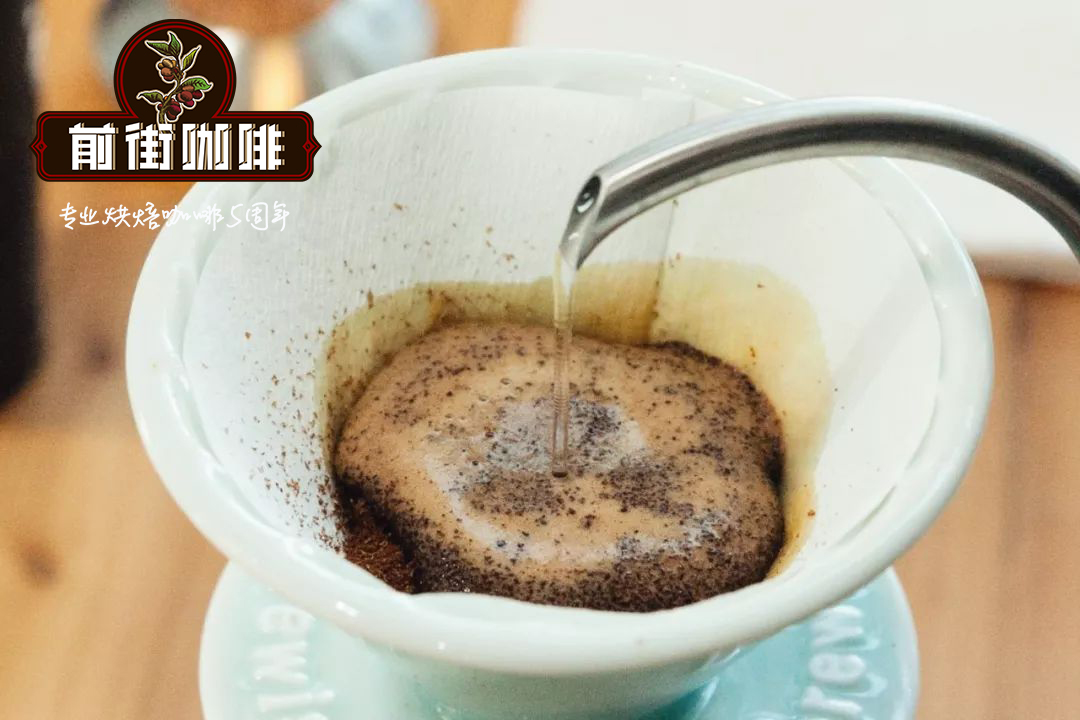
FrontStreet Coffee's pour-over reference: weigh 15g of Chelelektu Yirgacheffe coffee and grind it medium. The particles should be slightly coarser than table salt. We use a BG grinder setting of 5R (standard sieve pass rate 60%), water temperature 90 degrees, and a V60 dripper.
Pour the hot water from the kettle in clockwise circles centered on the middle of the filter cup. Start timing when brewing begins. Brew to 30g in 15 seconds, then stop pouring. When the time reaches 1 minute, pour for the second time, again in clockwise circles centered on the middle of the filter cup. The water stream should not hit where the grounds meet the filter paper, to avoid channeling.
When brewing to the outermost ring of coffee grounds, leave one ring of space, then continue circle by circle toward the center. At 2 minutes and 20 seconds, the coffee should be brewed to 220g, completing the process.
Japanese-Style Ice Pour-Over [Chelelektu Yirgacheffe]
FrontStreet Coffee's ice pour-over reference for Chelelektu Yirgacheffe:
Yirgacheffe coffee Chelelektu Yirgacheffe, light-medium roast, BG grinder setting 5M (standard sieve pass rate 67%).
20 grams of powder, 150 grams of ice, 150 grams of hot water. The water temperature should be 1°C higher than the recommended 91°C for normal pour-over. Normal grinding uses a Fuji 3.5 setting, while ice pour-over uses half a notch finer - Fuji 3.
Bloom with 40 grams of water for 30 seconds.
Pour in segments: 60 grams of water for the first segment, 40 grams for the second. Use a relatively fine but high water column, stirring forcefully to ensure the grounds roll fully. Be careful not to let the liquid level get too high, and avoid hitting the edge of the filter paper.
The entire extraction time is approximately 2 and a half minutes (similar to the normal extraction time for 20 grams of powder).
END
FrontStreet Coffee Recommendation
If this Yirgacheffe profile appeals to you, these are the FrontStreet Ethiopian beans we suggest.
FrontStreet Washed Yirgacheffe Staple - the classic introduction to the region, and the first specialty bean for many drinkers thanks to its friendly price. It is known for white jasmine, bright citrus and lemon acidity, and a tea-like body. Yirgacheffe is a town in southern Ethiopia's Sidamo region at roughly 1700-2100 meters, with the trees planted above 1800 meters - one of the highest coffee regions in the world. Its distinctive white florals and lemon-citrus acidity made the name a byword for a whole style of Ethiopian coffee.
FrontStreet Gudingding Cooperative - the Yirgacheffe town area splits into many small zones and villages, and several experienced cooperatives there produce even finer coffee. The standout is Gudingding, from Gudingding village in the Woka area at the southeastern end of Yirgacheffe. Originally part of the Woka Cooperative under the YCFCU union, it was later singled out as a single-origin site by coffee hunters around the world. Its traditional washed process gives a cup with no bitterness, fresh and bright citrus and lemon acidity, and jasmine fragrance.
FrontStreet Sun-Dried Red Cherry - also from Yirgacheffe, this uses fully ripe red cherry natural processing, picking only fully mature, sound fruit that is screened a first time and then dried on raised beds. The cherries are turned every 2-3 hours in the first days to prevent uneven heating and over-fermentation, and after three to five weeks of drying the outer pulp is removed and the beans stored. Because the fruit dries with the pulp, it keeps the typical Yirgacheffe character while adding natural tropical fruit, with citrus acidity, berry juice, honey sweetness, and a creamy smoothness.
Important Notice :
FrontStreet Coffee is a long-established specialty coffee roaster in Guangzhou China, selling freshly roasted beans from its own farm in Yunnan as well as dozens of carefully selected single-origin beans from around the world for both pour-over and espresso. The products deliver consistently excellent quality and great value, with shipping within 24 hours. Guangzhou's FrontStreet Coffee shop is recommended by many coffee lovers, and the beans are now available online at the Tmall 。
FrontStreet Coffee has moved to a new address:
FrontStreet Coffee Address: 315,Donghua East Road,GuangZhou
Tel:020 38364473
 Scan and follow the En Gafei WeChat official account. Please indicate that the reprint comes from "En Gafei".