Dark Roast Yirgacheffe Moka Black Beauty Brewing Tips_What are the Flavor Characteristics of Dark Roast Yirgacheffe?
Yirga Cheffe
Yirga Cheffe is a small town in Ethiopia sitting at close to 2,000 meters. This area has been wetland since ancient times, and Lakes Turkana, Abaya and Chamo give it a humid, mild climate. Walk the mountain paths and mist wraps around you while gentle breezes blow steadily. In the old language the place was called Yirga Cheffe, where Yirga means "to settle down" and Cheffe means "wetland." As well as a place where people make their homes, it is the cradle of the magical crop itself. Thousands of coffee varieties thrive and propagate here, and moisture, sunlight and soft wind nurture Yirga Cheffe's delicate, smooth regional character, woven through with floral and fruity aromas.
Yirga Cheffe was originally cultivated by European monks and later managed by surrounding coffee communities or cooperatives. The trees are not planted in large plots but scattered freely across the land, in forests, fields and even around people's homes, growing quietly and in harmony. Perhaps that is what creates Yirga Cheffe's unique, charming flavour: intense floral and fruity aroma, rich yet pleasant acidity, a smooth mouthfeel, and a sweetness as bright as fruit juice. Some call it a "smiling maiden" — and who wouldn't love a maiden as fresh and lively as morning dew in the sun?
Yirga Cheffe Coffee Grading
Washed Yirga Cheffe grading: Grade 1, Grade 2
Natural Yirga Cheffe grading: Grade 1, Grade 3, Grade 4, Grade 5
Ethiopia's grading system is not based on bean size but on the proportion of defective beans in the total green coffee. Grade 1 is the highest level — Yirga Cheffe with the lowest defect rate and most excellent quality, and therefore the highest price.
How to Brew Yirga Cheffe Coffee [Moka Black Beauty] Well?
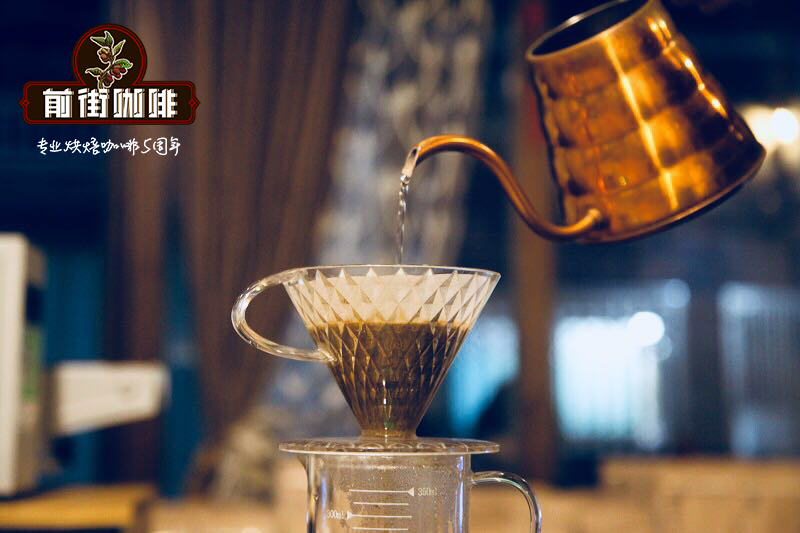
FrontStreet Coffee's pour-over reference: weigh 15g of [Moka Black Beauty] coffee and grind it medium. The particles should be slightly coarser than table salt. We use BG grinder setting 5R (60% standard sieve pass rate), a water temperature of 85°C and a V60 dripper.
Using hot water from the kettle, draw clockwise circles with the centre of the dripper as the focal point. Start the timer as you begin, brew to 30g within 15 seconds, then stop pouring. When the clock reaches 1 minute, pour the second time, again in clockwise circles centred on the middle. Keep the stream off the seam where the coffee bed meets the filter paper, to avoid channelling.
Leave one circle when you reach the outermost ring of coffee, then pour circle by circle back toward the centre. At 2 minutes and 20 seconds, pour to 220g to finish the brew.
Japanese-style Iced Pour-over [Moka Black Beauty]
FrontStreet Coffee's iced pour-over [Moka Black Beauty] reference:
Yirga Cheffe coffee [Moka Black Beauty], dark roast, BG grinder setting 5M (standard sieve pass rate 67%).
20g of coffee, 150g of ice cubes, 150g of hot water. The water temperature should be 1°C higher than the normal pour-over recommendation of 85°C. Normal grinding uses the Fuji setting 3.5; iced pour-over uses a slightly finer half setting, Fuji 3.
Bloom with 40g of water for 30 seconds.
Segmented pouring: a first segment of 60g of water, a second of 40g. Use a relatively thin but high water stream and stir forcefully so the coffee bed rolls fully, but be careful not to let the liquid level rise too high or hit the filter paper at the edge.
The whole extraction takes about 2.5 minutes, similar to the normal extraction time for 20g of coffee.
FrontStreet Coffee Recommendation
If Yirga Cheffe is what you've come for, FrontStreet Coffee's washed Yirgacheffe house coffee is the classic place to start. Known for white jasmine, bright citrus and lemon acidity, and a tea-like body, it is also easy on the wallet, which is why it has become so many people's first specialty bean. Yirga Cheffe itself sits in Sidama in southern Ethiopia at roughly 1,700-2,100 meters, with the trees planted above 1,800 meters, making it one of the highest coffee regions in the world; in 2010 its fame grew so great that the Ethiopian Commodity Exchange separated it from Sidama, which is how the Yirgacheffe we all know came to be.
For a more polished washed cup, FrontStreet Coffee's Gutingding Cooperative is worth seeking out. Yirgacheffe splits into many small areas and villages, and several experienced co-ops there turn out even better coffee. Gutingding sits at the southeastern end of Yirgacheffe in the Worka area, once part of the Worka cooperative under the YCFCU umbrella, before traceability-minded buyers singled it out as a single origin. It follows the most traditional washed processing, often called the last pure land of washed Yirgacheffe, and it has none of the traditional bitterness: fresh, bright citrus and lemon acidity with jasmine fragrance.
If you would rather have the fruit side of the region, FrontStreet Coffee's sun-dried Red Cherry uses an all-red-cherry natural process, picking only fully ripe, sound fruit. After a first sort at the mill, the cherries dry directly on raised beds, turned every 2-3 hours in the first few days to prevent uneven heat and over-fermentation. After three to five weeks of sun-drying, the outer pulp is scraped off depending on weather and temperature and the beans are moved to storage. Because the fruit dries with the pulp still on, the cup holds both the typical Yirgacheffe character and the tropical fruit of a natural: citrus-like acidity, berry juice, honey sweetness and a creamy smoothness.
Important Notice :
FrontStreet Coffee is a long-established specialty coffee roaster in Guangzhou China, selling freshly roasted beans from its own farm in Yunnan as well as dozens of carefully selected single-origin beans from around the world for both pour-over and espresso. The products deliver consistently excellent quality and great value, with shipping within 24 hours. Guangzhou's FrontStreet Coffee shop is recommended by many coffee lovers, and the beans are now available online at the Tmall 。
FrontStreet Coffee has moved to a new address:
FrontStreet Coffee Address: 315,Donghua East Road,GuangZhou
Tel:020 38364473
 Scan and follow the En Gafei WeChat official account. Please indicate that the reprint comes from "En Gafei".