Pour-Over Washed Yirgacheffe Konga - What Equipment is Best & Is the Konga Pour-Over Coffee Delicious?
Konga (also often translated as "Kongjia") is actually a cooperative within the Yirgacheffe coffee-producing region of Ethiopia. The coffee beans from the Konga Cooperative have emerged as rising stars in recent years. If you search for "Konga" on the Coffee Review website, you will find as many as 24 entries with cupping scores above 90 points.
This year (2017), they even achieved a high score of 94 points. Today, let us take a closer look at this exceptional cooperative.
Konga Cooperative Overview
The Konga Cooperative is one of the 26 cooperatives under the Yirgacheffe Coffee Farmers Cooperatives Union (YCFCU). The well-known Gedeb Cooperative is also among them.
YCFCU was established in June 2002, with all 26 cooperatives located in the Gedeo region of southern Ethiopia, a very famous and important coffee-producing area in Ethiopia. Today, it represents over 50,000 coffee farmers, meaning more than 300,000 families.
The Konga Cooperative was founded in 1994. It was named after the nearby Konga River. The cooperative encompasses 1,556 small-scale coffee farming households. These small farmers typically cultivate coffee on areas smaller than 1.25 hectares, at altitudes between 1,800 and 2,000 meters. The coffee varieties are mainly a mix of Typica and local Heirloom varieties.
Unique Terroir and Processing
What makes Konga special is the red soil where the coffee beans are cultivated. This red soil is rich in iron and reaches a depth of 1.5 meters. Deep soil provides richer nutrients, and the high iron content benefits coffee beans significantly, because iron is a micronutrient that helps plants produce chlorophyll, which is very beneficial for photosynthesis. This allows plants to absorb more energy and produce better fruit. The red soil is undoubtedly one of the key factors that enable the Konga Cooperative to produce delicious coffee beans.
The Konga Cooperative has its own washing station, and the washing process is quite meticulous. Fresh, ripe coffee cherries first go through a pulping machine to remove the outer skin. The pulp and mucilage are then removed during the fermentation process. After fermentation is complete, the beans are washed with clean spring water to remove the fermented mucilage layer. In Konga, the parchment beans are placed on shaded raised beds for 10 to 12 days of drying, reducing the moisture content to 12%. Afterwards, the beans are moved to a warehouse for grading and packaging, then sold to exporters who introduce them to the international coffee market.
Flavor Profile
In addition to the typical fruity characteristics of Yirgacheffe, the washed batches we have cupped recently all feature a very pleasant honey pomelo tea flavor. The acidity is just right, with a hint of lime aroma, complemented by blueberry sweetness. This sweet-and-sour taste is precisely what makes Konga so captivating.
It also has a clean mouthfeel and is easy to brew on an American-style coffee maker to achieve your desired flavor. Some batches can even be traced back to specific small farmers, allowing you to experience the different charms of Konga.
How to Brew Yirgacheffe Konga Coffee
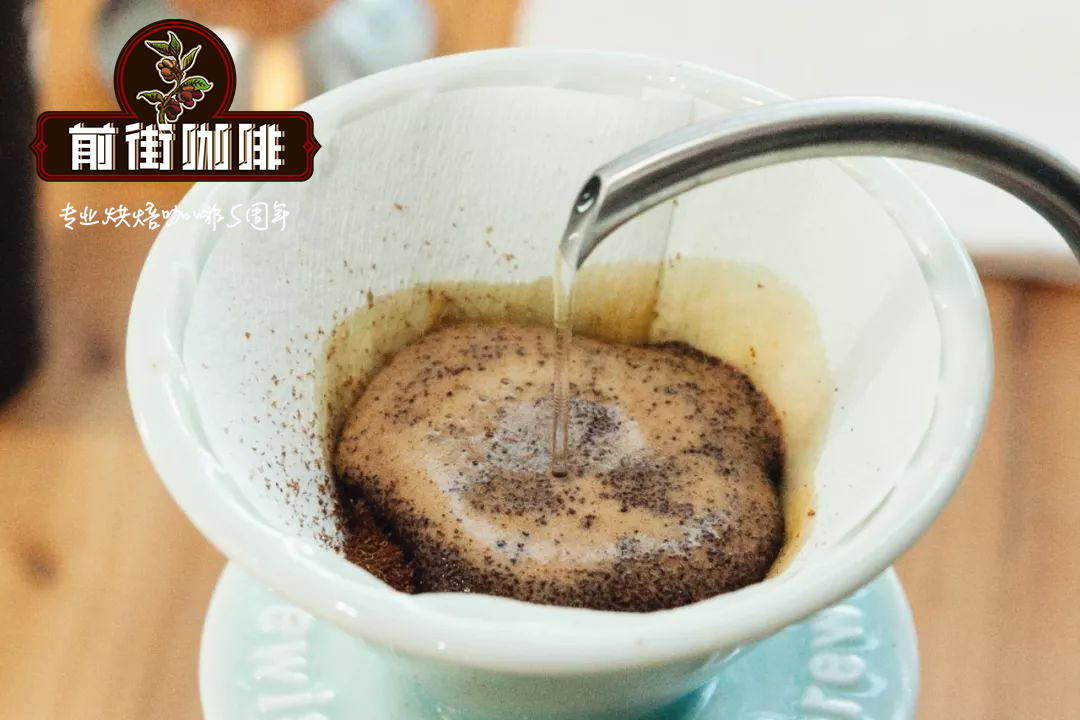
FrontStreet Coffee Pour-Over Reference: Weigh 15g of Konga coffee grounds and pour into a grinder for a medium grind. The ground particles should be slightly coarser than table salt. We use a BG grinder setting of 5R (standard sieve pass rate 60%), a water temperature of 90°C, and a V60 filter for extraction.
Using the hot water from the pour-over kettle, draw circles clockwise with the filter center as the focal point. Start timing when brewing begins. In 15 seconds, brew the coffee to 30g, then stop pouring water. When the time reaches 1 minute, begin the second pour. Similar to the first pour, draw circles clockwise with the filter center as the focal point, avoiding pouring water on the area where the coffee grounds meet the filter paper, to prevent channeling.
Leave a ring of space when pouring to the outer edge of the coffee grounds, then draw circles back toward the center. At 2 minutes and 20 seconds, brew the coffee to 220g. The brewing process is then complete.
Japanese-Style Iced Pour-Over Konga
FrontStreet Coffee Iced Pour-Over Konga Reference:
Yirgacheffe Konga, light to medium roast, BG grinder setting 5M (standard sieve pass rate 67%).
20g of coffee grounds, 150g of ice cubes, 150g of hot water. The water temperature should be 1°C higher than the normal pour-over recommendation of 91°C. For normal grinding use the small Fuji grinder setting 3.5, while for iced pour-over grind slightly finer at small Fuji setting 3.
Bloom with 40g of water for 30 seconds.
Pour in stages: first pour 60g of water, second pour 40g of water. Use a relatively thin but high water column to forcefully stir and impact, allowing the coffee grounds to tumble fully. Be careful not to let the liquid level get too high, and avoid pouring onto the edge filter paper.
The entire extraction time is approximately 2.5 minutes, similar to the normal extraction time for 20g of coffee grounds.
FrontStreet Coffee Recommendation
Konga's honey pomelo tea sweetness and clean, fruity cup make it a fine introduction to washed Yirgacheffe. FrontStreet Coffee's washed Yirgacheffe daily bean captures the same family of flavors, with white jasmine florals, bright citrus and lemon acidity, and a tea-like body at an approachable price. FrontStreet's washed Gedinging Cooperative coffee, from the Woka area at Yirgacheffe's southeastern end, brings fresh citrus and lemon acidity on a base of elegant white florals. And if you want to explore the fruitier side of Yirgacheffe for iced pour-over, FrontStreet's natural Yirgacheffe Red Cherry offers peach, cocoa, honey, and lemon from fully ripe, hand-selected cherries.
Important Notice :
FrontStreet Coffee is a long-established specialty coffee roaster in Guangzhou China, selling freshly roasted beans from its own farm in Yunnan as well as dozens of carefully selected single-origin beans from around the world for both pour-over and espresso. The products deliver consistently excellent quality and great value, with shipping within 24 hours. Guangzhou's FrontStreet Coffee shop is recommended by many coffee lovers, and the beans are now available online at the Tmall 。
FrontStreet Coffee has moved to a new address:
FrontStreet Coffee Address: 315,Donghua East Road,GuangZhou
Tel:020 38364473
 Scan and follow the En Gafei WeChat official account. Please indicate that the reprint comes from "En Gafei".