Ethiopia Sidamo Guji Mekanesa Natural Coffee Pour-Over Tutorial - How to Brew Mekanesa Coffee Beans for Optimal Flavor
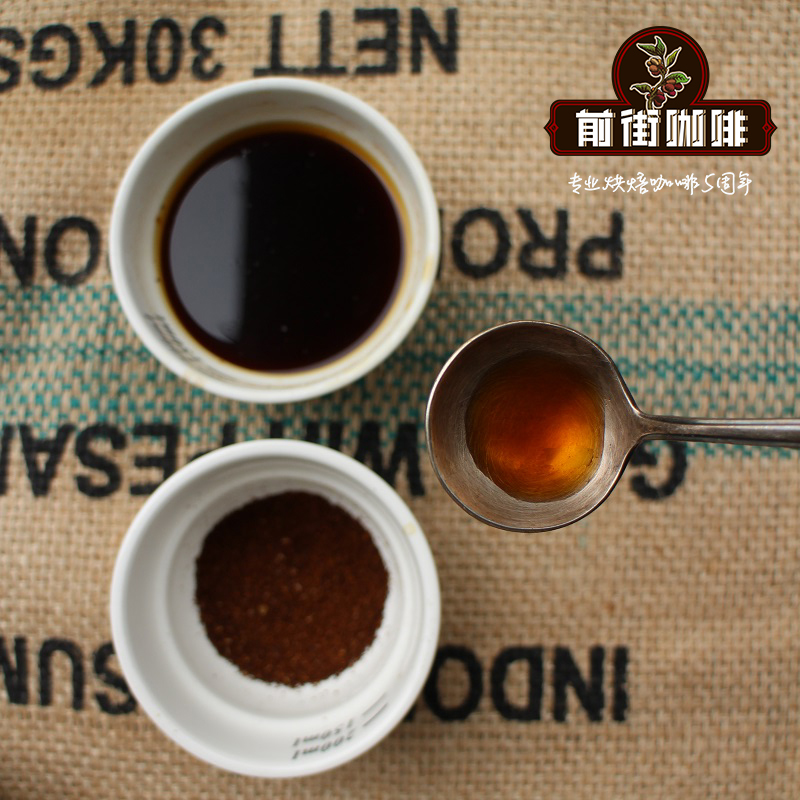
2018 Ethiopia Sidamo Guji Makanissa Natural
Region: Sidamo Guji
Origin: Kercha
Processing Station: Makanissa Processing Station
-
The Makanissa washing station is located in Kercha town (Woreda Kercha) in the Guji production area of the Sidamo Coffee Valley.
Most local smallholder farmers have only a few hundred coffee trees on average and cannot afford pesticides or chemical fertilizers. The harvested red cherries are sent directly to this Makanissa washing station.
The station sits at high altitude with very low temperatures. The washed process here requires 48 hours to complete fermentation and washing, followed by 15 days of slow sun-drying to finish the green beans.
Fertile soil, excellent varieties, quality management and the high-altitude location where the green beans dry slowly at low temperatures all come together here, so it is no exaggeration to call this a super premium bean.
- Ethiopia Makanissa Washing Station Natural
Hundreds of smallholders near Makanissa deliver cherries to the washing station daily. On average a smallholder owns less than 1 hectare of land. Most of the coffee is grown organically, with organic compost very common, and tree density is generally less than 1,500 trees per hectare.
The varieties planted by nearby farmers are mostly improved Certo and local Wolisho, along with coffee trees from forest wild varieties transplanted to small farms. These different varieties are usually grouped together as Ethiopian Heirloom, an umbrella term for local native Typica variants and improved old varieties.
Producing excellent natural coffee is a difficult challenge. Every detail must be watched carefully during production, with no room for negligence. The producer of this coffee, the owner of a private processing station in Shakisso, aims to produce the highest grade of natural coffee, G1. They set up cherry collection stations near the villages to secure fruit quality while making it easy for farmers to deliver cherries, and any immature or overripe cherries are eliminated to achieve sweet, clean flavors. Cherries for natural processing are typically harvested later in the season, which makes it easier to obtain perfectly ripe fruit.
The first stage of natural processing is critical. Cherries must be spread in a thin layer on drying beds to avoid fermentation flavors. They need to reach the so-called raisin stage within a few days, at about 25% moisture content. When turning the cherries, great care must be taken not to damage the fruit skin.
In the second stage, from 25% down to 12% moisture, the layer can be thicker. Continuous turning is required during the day, allowing the cherries to rest only at noon and at night. Any negligence during production can result in mold and undesirable flavors. Overall it is a very time-consuming, laborious process to obtain the finest natural coffee. The two stages together take approximately 15-18 days.
When lightly roasted, this Sidamo coffee first reveals grapefruit and preserved peach flavors. As the temperature gradually falls, sucrose sweetness spreads across the palate. Finally, tasted at room temperature, the flavor transforms to something like orange juice, rich and juicy with moderate acidity and very smooth. It is an excellent choice for those new to light roast coffee.
How to Brew Sidamo Coffee [Guji Makanissa Natural] Well?
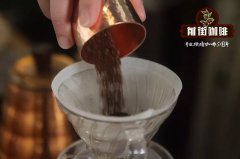
FrontStreet Coffee pour-over reference: measure 15g of Guji Makanissa Natural coffee and grind to a medium setting. The particles should be slightly coarser than table salt. Use a BG grinder setting 5R (60% standard sieve pass rate), 90°C water and a V60 dripper.
Using hot water from the pour-over kettle, draw circles clockwise with the center of the filter as the focal point. Start timing when brewing begins. Brew to 30g in 15 seconds, then stop pouring. When the time reaches 1 minute, pour the second time. During the second pour, again draw circles clockwise around the center of the filter. Avoid pouring water where the coffee grounds meet the filter paper, to prevent channeling.
Leave one circle of space when pouring to the outermost layer of grounds, then work circle by circle toward the center. By 2 minutes and 20 seconds, brew to 220g to complete the extraction.
Cold Brew [Guji Makanissa Natural]
FrontStreet Coffee cold brew reference for Guji Makanissa Natural:
Sidamo coffee Guji Makanissa Natural, light to medium roast, BG grinder setting 4B, grind level 3, 20g beans, 87°C water, steep for 3 minutes in a Chemex pot, then cold brew with ice water, total water volume 200ml.
END
FrontStreet Coffee Recommendation
For the natural Ethiopian style this coffee belongs to, FrontStreet's Yirgacheffe Red Cherry is a whole-cherry natural: only fully ripe, sound cherries are selected, given a first screening at the mill and then dried on raised beds for three to five weeks, turned every 2-3 hours in the first few days, before the outer pulp is removed by machine. Because the fruit dries with the pulp still on, it keeps the classic Yirgacheffe character while adding tropical fruit aroma, with citrus-like acidity, berry juice, honeyed sweetness and creamy smoothness. If you want something bolder, FrontStreet's Huakui comes from the Hambela area of Guji, Sidamo; the 200-hectare farm uses traditional natural processing, drying ripe cherries on raised beds for 21 days with constant turning and manual removal of defective fruit every three to five days. Roasted medium-light, it shows a light fermented wine aroma, floral notes, citrus and mango, a much richer and more complex body with honeyed sweetness, cocoa notes and a touch of spice, and a long finish. FrontStreet's Sidamo Natural Hamasho, a regular on Ethiopian green bean competition lists, is built mainly on JARC's disease-resistant 74 series, with the small-beaned 74158 leading on floral and fruity aroma; it smells of perfume lemon, strawberry and star fruit, then opens into strawberry, star fruit and green grape sweetness with delicate florals emerging behind.
Important Notice :
FrontStreet Coffee is a long-established specialty coffee roaster in Guangzhou China, selling freshly roasted beans from its own farm in Yunnan as well as dozens of carefully selected single-origin beans from around the world for both pour-over and espresso. The products deliver consistently excellent quality and great value, with shipping within 24 hours. Guangzhou's FrontStreet Coffee shop is recommended by many coffee lovers, and the beans are now available online at the Tmall 。
FrontStreet Coffee has moved to a new address:
FrontStreet Coffee Address: 315,Donghua East Road,GuangZhou
Tel:020 38364473
 Scan and follow the En Gafei WeChat official account. Please indicate that the reprint comes from "En Gafei".