The Story of Panama Boquete La Esperanza Estate - How Much Water for 15g Pour-Over La Esperanza Star Estate Coffee
The Origin of Geisha Coffee
Before Panamanian coffee gained international recognition, Geisha was carried from the small town of Gesha in southwestern Ethiopia to Costa Rica by Don Pachi. From there, Geisha traveled the southern route into Panama - and for that, coffee drinkers are grateful. These trees grow at very high altitudes and feature beautiful, slender leaves; their cherries and green beans are also relatively slender compared to other top-quality high-altitude coffees.
The coffee offers moderate body, sweet and multi-layered tropical fruit flavors, rose-like aromatics, and a memorable aftertaste.
La Esperanza Estate
Situated at 1400-1600 meters, La Esperanza Estate produces between 300-700 bags a year. Processing is mostly completed on the farm, using washed processing with sun-drying, and the removed husks, pulp, and mucilage are recycled as fertilizer. The estate plants 60% Caturra, 20% Catuai, and 20% Typica and other varieties. Its most famous lot is Geisha, which won the championship at the 2008 BEST OF PANAMA competition. Many local trees serve as shade - orange trees and tropical fruits like lemons and grapefruits - to nourish the soil. The estate also protects a vast tropical rainforest reserve and at least three mountain water wells, with abundant rainfall averaging 3200mm a year. Daily temperatures run 16-23°C, and nights 14-20°C.
What sets La Esperanza apart is its people: a PhD botanist, three professional cuppers, and 100 full-time staff, currently managing six estates. The estate is owned by the Herrera brothers, whose grandfather ran a coffee farm in the Trujillo region of Colombia before it gradually declined. The brothers left Colombia but never abandoned the dream of returning home to run a coffee plantation.
Upon returning, the first estate the Herreras purchased was La Esperanza in Trujillo - very close to their grandfather's original farm - which now serves as the regional headquarters. It is 100% organic, growing the Colombia and Castillo varieties along with Caturra and over 14,000 organic Geisha trees. They went on to buy four more estates in Trujillo and Caicedonia to the north, and together with La Cardeida estate in Boquete, Panama - rented in 2005 - they now manage six estates covering 213 hectares of coffee.
Cafe Granja La Esperanza's estates span eight distinct microclimate regions across Colombia's three mountain ranges. That gives their botanists superb opportunities to experiment with different microclimates and soil profiles, various processing methods, and many varieties - combining scientific rigor, entrepreneurial sharpness, and a genuine commitment to quality. They design different processing steps and specifications for different microclimates and varieties, and from seedling cultivation to export, they track all data through 95 data points.
The team led by chief botanist Hernando Tapasco has set up weather stations across the estates to track weather data and guide harvest decisions; farm data is collected continuously and analyzed weekly. After each harvest, they compare weather data, production figures, and cupping results to find the correlations. Geisha pickers receive strict training to take only mature cherries, and they are paid by the day rather than by weight as at other estates - so no one rushes unqualified cherries into the basket to hit a quota. Half the harvesters have more than six years of experience. Once picked, cherries go to the central processing plant within La Esperanza, where each Geisha batch is marked and processed separately, with a three-day pre-drying phase on the sun-drying area before moving to drying towers. Quality control is ruthless: among the 40,000-45,000 Geisha trees at Cerro Azul, only 5-7,000 produce beans worthy of the Cerro Azul brand.
La Esperanza's experimentation with varieties seems endless. Besides the organic Caturra that originally occupied most of La Esperanza's land, they grow Geisha, organic Geisha, Mocha, Bourbon (red, yellow, and Tekisik), Laurina, Pacamara, San Bernardo, and Pache - bringing the same seriousness wineries devote to grape varieties into coffee cultivation. After Geisha, the Pacamara, Bourbon, and Laurina from La Esperanza keep surprising and delighting the specialty coffee community.
The effort has paid off. As early as the 2008 "Best of Panama," La Cardeida - then rented by La Esperanza - took the championship with a high score of 93.16. And in the 2012 Coffee of the Year Triple Crown, the three estates primarily growing Geisha each placed: Cerro Azul second, Las Magaritas third, and the Buenos Aires experimental estate seventh.
Brewing Guide
How to Brew Panama Coffee [La Esperanza] Well?
FrontStreet Coffee's pour-over reference: weigh 15g of La Esperanza coffee and grind to medium-coarse - the particles slightly coarser than table salt. We use the BG grinder at setting 5R (60% standard sieve pass rate), water at 90°C, and a V60 dripper.
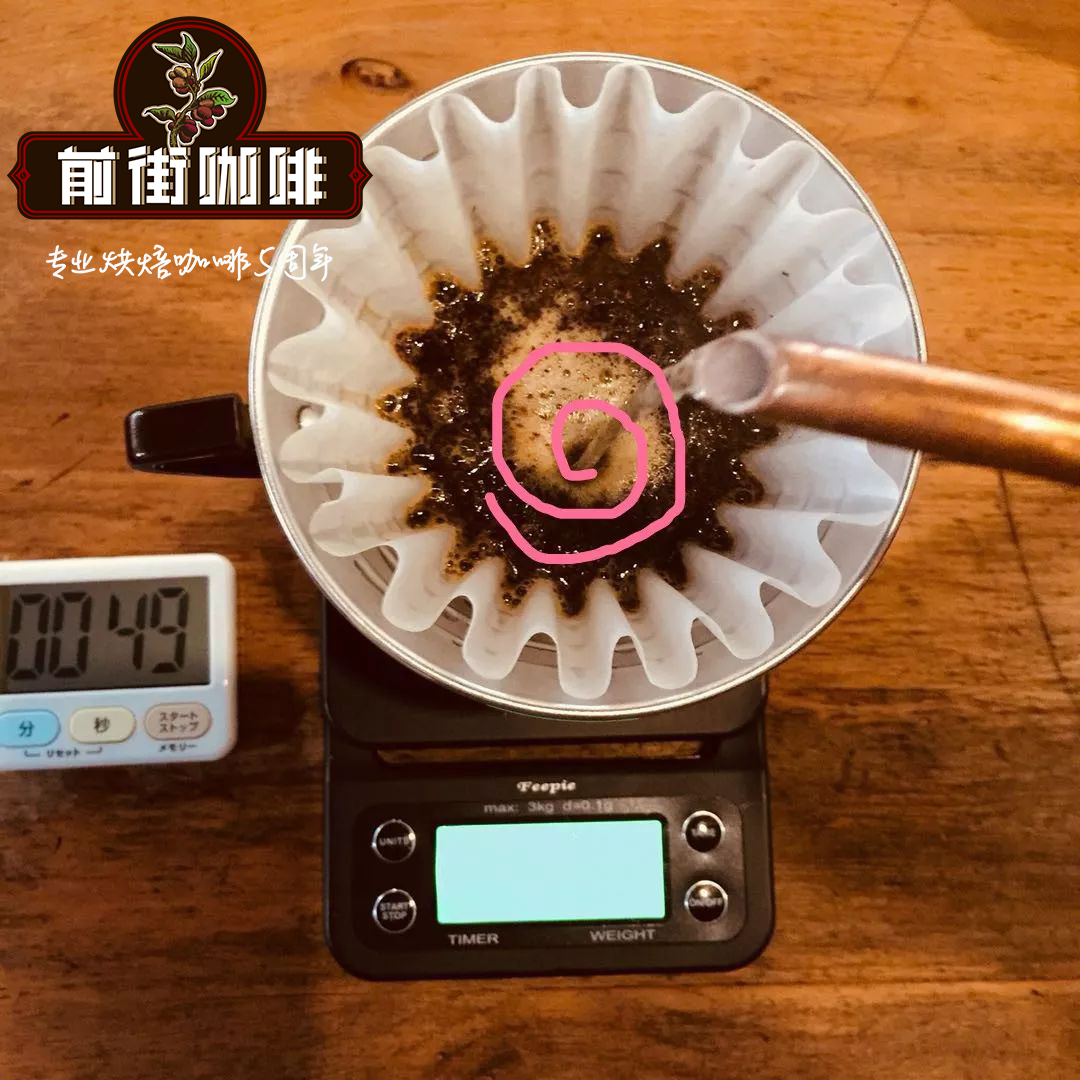
Pour the hot water from your gooseneck kettle in clockwise circles centered on the dripper. Start timing as brewing begins, pour to 30g within 15 seconds, then stop. At 1 minute, begin the second pour - again clockwise circles centered on the dripper, avoiding the area where the coffee meets the filter paper to prevent channeling.
Leave a ring of grounds at the outer edge, then pour circle by circle toward the center. At 2 minutes 20 seconds, the total should reach 220g, completing the brew.
Cold Brew [La Esperanza]
FrontStreet Coffee's cold brew [La Esperanza] reference:
Panama coffee [La Esperanza], light-medium roast, BG grinder setting 4B, grind size 3, 20g of beans, 87°C water temperature, pre-infusion for 3 minutes in a Chemex brewer, then cold brew with ice water, total water volume 200ml.
FrontStreet Coffee Recommendation
If La Esperanza's Geisha story has you dreaming of Panama, FrontStreet's Boquete Gesha is the accessible way in: an entry-level Panamanian Gesha that lets you taste the classic high-grade profile - orange-blossom sweetness, an oolong-tea-like texture, delicate fruit acidity, and clearly defined layers - without the collector's price. For the very top of the pyramid, we carry both Esmeralda labels: the Red Label ("Esmeralda Special," grown at 1600-1800 meters, each batch cupping above 90 points and drawn from a single plot like the Harimu micro-lot) and the Green Label ("Private Collection," a blend of the estate's high-altitude plots with excellent value for money).
For the Ethiopian side of the Geisha family, our Geisha Village Gold Label (Gesha 1931, 10% of the estate's output, refined natural process) and Red Label (Gori Gesha, 15% of production, 88+ SCA points, fully traceable single-terroir lots) showcase what the original forests produce, while the medium-light roasted Genlana Estate Geisha from Yirgacheffe offers bright citrus acidity, elegant ginger-flower aroma, and ripe fruit sweetness at a friendlier price - a superb everyday Geisha.
Important Notice :
FrontStreet Coffee is a long-established specialty coffee roaster in Guangzhou China, selling freshly roasted beans from its own farm in Yunnan as well as dozens of carefully selected single-origin beans from around the world for both pour-over and espresso. The products deliver consistently excellent quality and great value, with shipping within 24 hours. Guangzhou's FrontStreet Coffee shop is recommended by many coffee lovers, and the beans are now available online at the Tmall 。
FrontStreet Coffee has moved to a new address:
FrontStreet Coffee Address: 315,Donghua East Road,GuangZhou
Tel:020 38364473
 Scan and follow the En Gafei WeChat official account. Please indicate that the reprint comes from "En Gafei".