Pour-Over Techniques | How to Choose a Pour-Over Kettle? 7 Secrets to Selecting the Perfect Kettle
Professional Coffee Knowledge Exchange
More coffee bean information, brewing guides, and tasting notes from FrontStreet Coffee.
The Art of Pour-Over Coffee
Part of what makes pour-over coffee so fascinating — beyond the pleasure of tasting the cup itself — is watching the elegance, patience, and precision a barista displays while handling the pour-over kettle. That makes choosing the right kettle genuinely important. To do good work, first know your tools: before buying a kettle, take an honest measure of your own skills and needs, and learn the structure and characteristics of each design so you can find the one that fits you. Below are seven points of hard-won experience in selecting pour-over kettles, offered for your reference.
Seven Key Factors for Choosing a Pour-Over Kettle
1. Appearance
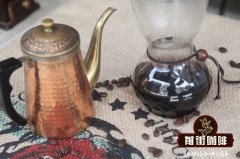
Pick a color you love — it makes the whole ritual more enjoyable. Beyond the natural metal finishes of stainless steel and copper, painted and enamel-coated kettles open up a much wider palette.
2. Heating Methods
If the water in your kettle drops below brewing temperature, you will need to reheat it. Induction cooktops and gas stoves are the usual heat sources, but since kettles vary in material, read the manufacturer's instructions carefully before buying.
3. Material Thickness and Characteristics
Thickness determines how well the kettle holds and conducts heat. Thicker material retains heat better and conducts it well, dissipating it faster, while also equalizing temperature between the body and the spout more effectively.
4. Kettle Body
Most pour-over kettles are narrow at the top and wide at the base. The proportions of the body directly affect water pressure and pouring stability.
5. Spout Curvature
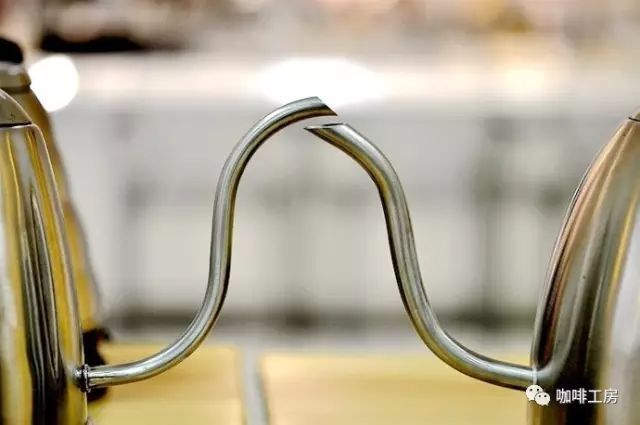
Every bend the water travels through softens the pouring force and smooths the flow. Body shape and spout curvature work together: the KALITA narrow-mouth stainless steel kettle (700ml), with its tall, slender body, uses a nearly 90-degree double curve in the spout to tame the pour, while the stockier KALITA palace narrow-mouth kettle (900ml) gets by with a gentler spout angle.
6. Spout Inner Diameter
Narrow-mouth versus wide-mouth — this determines flow rate, stability, and pouring force.
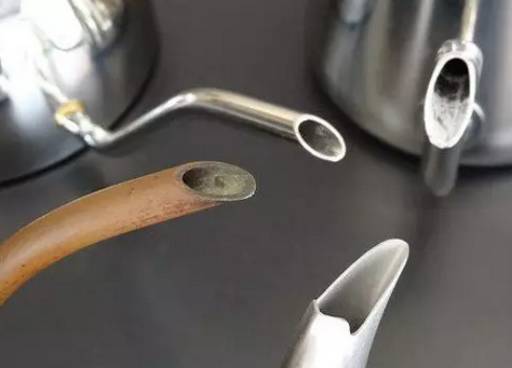
7. Spout Opening
Flat-cut or crane-style.
★ Narrow-mouth kettles are all flat-cut. The flow is easy to control, which makes them the natural choice for beginners, though they limit how much you can vary your pouring technique. Example: KALITA narrow-mouth stainless steel kettle (700ml).
☆ Crane-style narrow-mouth spouts offer good flow control and far more room for technique, but they take practice to master. Example: Moon Rabbit Mark pour-over kettle (700ml).
★ Wide-mouth flat-cut spouts produce a large, smooth flow, but throttling down to a thin stream takes practice — tricky for beginners. Example: Moon Rabbit Mark Noda enamel pour-over kettle.
☆ Crane-style wide-mouth spouts deliver a big, concentrated flow, ideal for high-volume brewing. Example: KALITA big-bird pour-over kettle.
Popular Pour-Over Kettles
HARIO Long-Spout Cloud Kettle 1L/1.2L
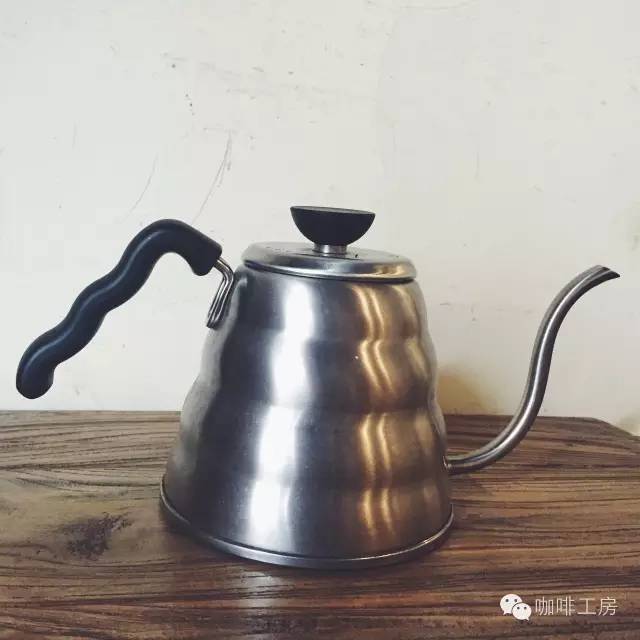
Reference price: 220-400 yuan depending on size
Practicality: Widely called the most-used pour-over kettle in cafes. Lightweight, with a handle that stays completely cool, and a charming cloud-inspired design that makes the handle feel like an extension of your hand.
Material: Stainless steel
Recommended pour-over method: Fast pour
Barista's notes: The water flow runs relatively coarse, and pulling off a fine stream takes skill. HARIO's best-seller is the V60 brewer, whose modern, minimalist design pairs beautifully with its premium metal, glass, and ceramic construction. The large-diameter design gives the coffee bed room to expand as hot water is poured. The V60 set includes the dripper, a measuring spoon, filter papers, and a coffee server — a great gift for a coffee lover, or a treat for yourself.
Bonavita Goose-Neck Narrow-Mouth Wooden Handle Pour-Over Kettle
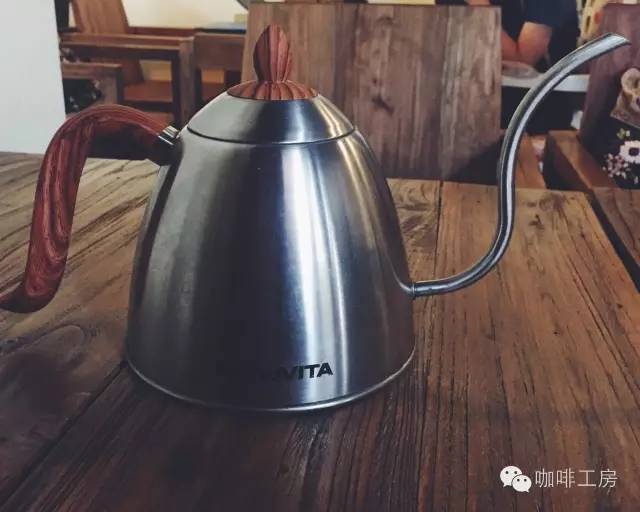
Reference price: 268-288 yuan
Practicality: Works on induction cooktops and gives you precise control over flow speed, volume, and direction, with smooth lines, a comfortable grip, and an elegant look.
Material: Stainless steel
Recommended pour-over method: Slow pour
Barista's notes: The flow is gentle enough that even beginners can manage it — a very forgiving kettle overall. Beginners should generally start with a narrow-mouth kettle (inner diameter above 6mm). The professional gooseneck fine-point spout controls flow speed effectively at a moderate rate.
HARIO Copper Pour-Over Coffee Kettle
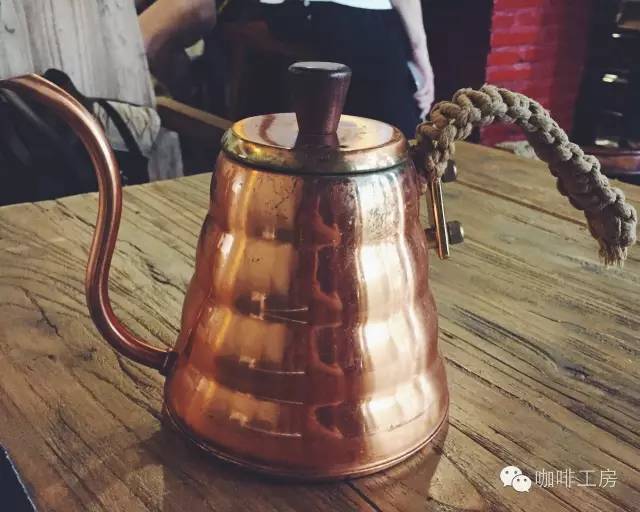
Reference price: old version discontinued; 800-900 yuan
Practicality: The spout curve can pivot up and down without shifting the pour's center. Copper conducts heat superbly and dissipates it evenly, and the silhouette is graceful. The discontinued old version has collectible value.
Material: Copper (the new version adds a heat-resistant handle)
Recommended pour-over method: Suitable for nearly all methods
Barista's notes: The flow takes some getting used to and the handle heats up, but with practice you can switch between large and small pours at will. In practiced hands the stream can be whisper-thin — a natural fit for Japanese-style pour-over.
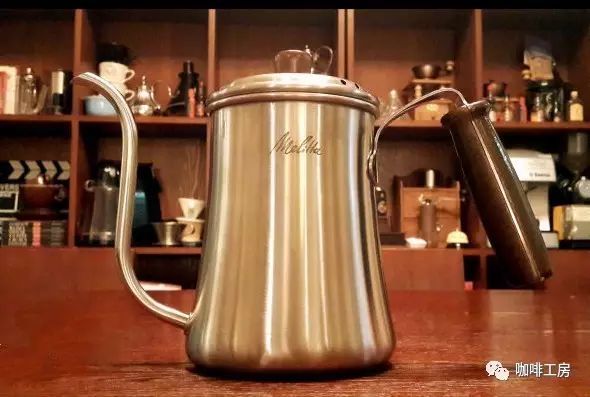
Melitta Pour-Over Kettle
Melitta has a long history in pour-over coffee and remains a market leader. Coffee lovers worldwide agree that pour-over is the purest and most convenient way to brew, and Melitta's clean, contemporary design makes it easy to pull a rich, authentic cup.
Reference price: around 400 yuan
Practicality: The large body looks a bit bulky, but the high, upward-curving crane-beak spout delivers excellent flow control.
Material: Stainless steel
Recommended pour-over method: Slow-percolation brewing
Barista's notes: The 1.3L wide-mouth spout keeps flow force strong when brewing multiple servings, increasing agitation of the grounds and creating strong brewing convection for a more complete extraction. The solid wood handle is very comfortable to hold. A genuinely user-friendly, large-capacity kettle — recommended for commercial use.
Kalita Elephant Trunk Pour-Over Kettle
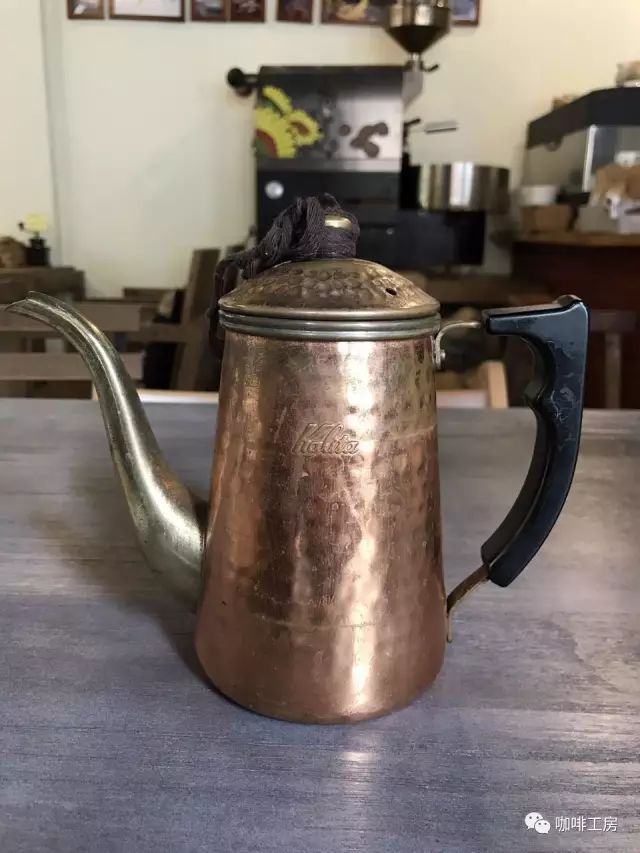
Reference price: 800-900 yuan
Practicality: Copper conducts heat superbly and dissipates it evenly, and the stately silhouette lends the user a certain gravitas.
Material: Copper
Recommended pour-over method: Japanese pour-over
Barista's notes: The Kalita 1L's neck doesn't rise in one smooth line; instead it forms a triangular streamline from body to spout tip, gradually gathering and increasing in curvature, which throttles the flow. The pouring force is far gentler than the kettle's bold looks suggest.
The Wave series has brought new energy to the traditional pour-over scene worldwide. It comes in two sizes and three materials (ceramic in the large size only). The Wave's unique flat-bottom design shortens the distance between dripper and server during extraction.
Reference price: 450 yuan
Practicality: The whole kettle carries a wave motif, and the handle grips firmly between the fingers for very stable operation.
Material: Stainless steel
Recommended pour-over method: Slow-percolation brewing.
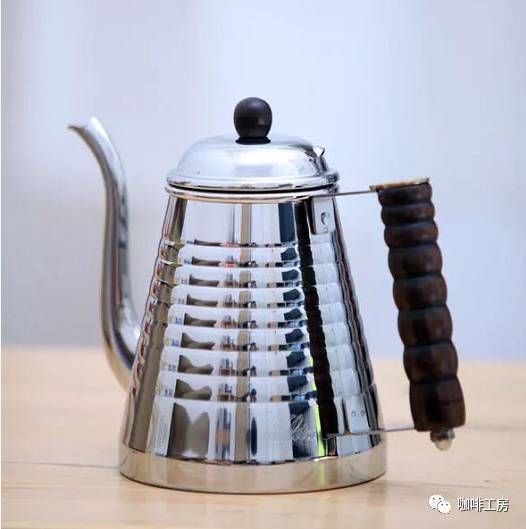
Barista's notes: As with the Elephant Trunk, the Kalita 1L neck forms a triangular streamline from body to spout tip, gradually increasing curvature and limiting flow speed — the pour is much gentler than the bold appearance implies.
Types of Pour-Over Kettles
Setting aside a few extreme wide-spout designs, kettles on the market today fall into these categories:
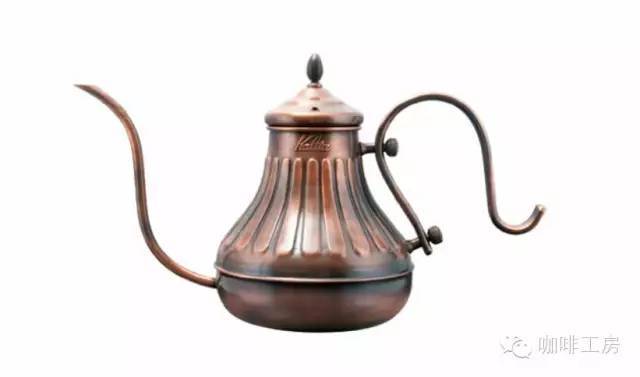
1. Narrow-mouth kettle (inner diameter 4-5mm)
Representative: Kalita POT 900 copper kettle. The long, thin spout keeps the flow fine and stable even if your hand shakes or the kettle tilts, but it also means the stream hits with real force when you open up the volume.
2. Narrow-mouth kettle (inner diameter above 6mm)
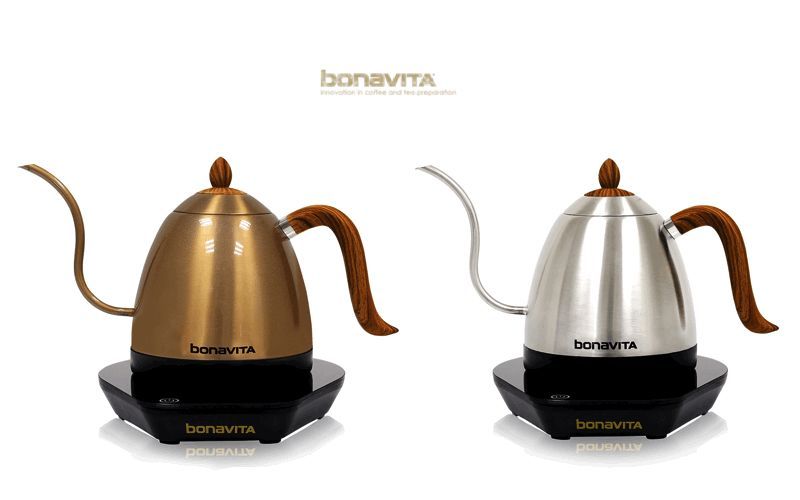
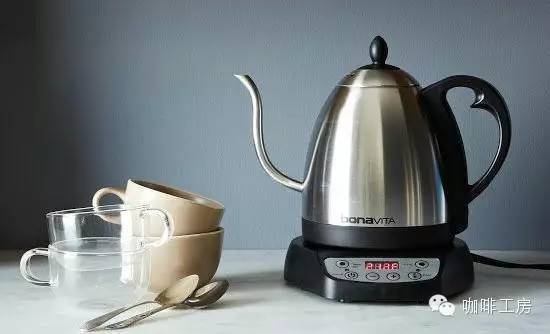
Representative: Bonavita temperature-controlled pour-over kettle. Imported UK Strix temperature control holds water temperature to within plus or minus 1 degree Celsius, and the professional gooseneck fine-point spout gives precise command of flow speed, volume, and direction. The base offers temperature adjustment, keep-warm, and memory functions.
3. Flattened wide-mouth spout
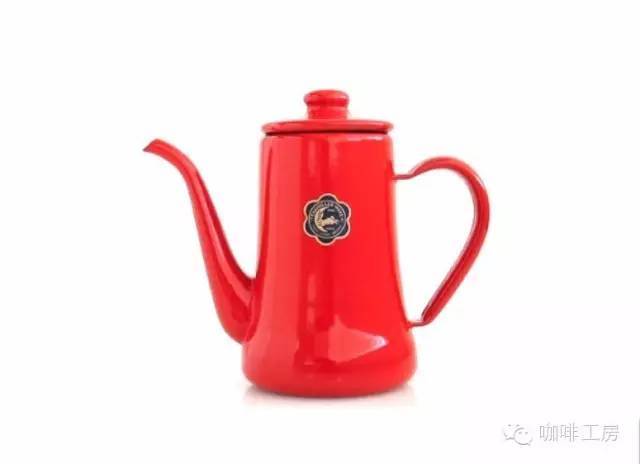
Representative: enamel porcelain kettles. A large column pours smoothly and gives you fine control over flow thickness, but thin streams are hard to hold, and a careless tilt can dump the whole contents at once.
4. Wide-mouth crane spout
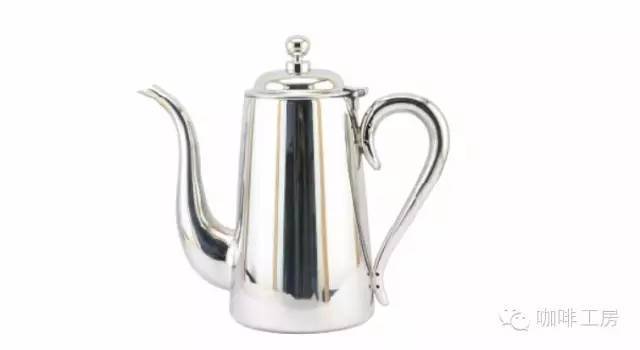
Representative: Taguchi Mamoru coffee master pour-over kettle. The pour is far gentler than the imposing looks suggest — well suited to slow-percolation brewing.
5. Big-bird style
Representative: Kalita coffee expert enamel kettle.
In the hand it feels similar to pointed crane spouts, but it can deliver much larger columns of water, covering a wider pour area and adapting to different grind sizes. The trade-off is that sloppy control quickly produces an uneven stream, so it demands real skill from the brewer.
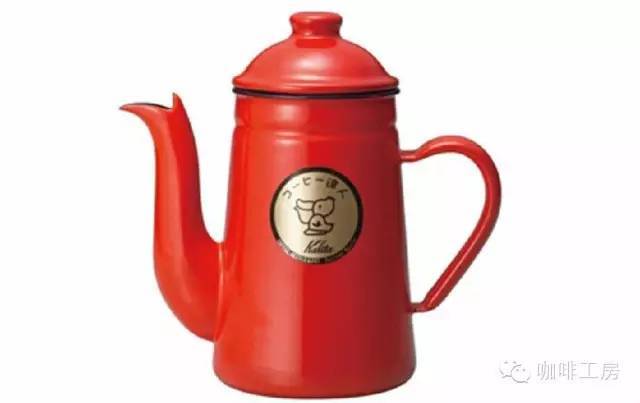
The enamel kettle's large spout opening, thick low neck set close to the body, does little to limit flow speed. One lapse and the water gushes out or the pour breaks. Compared with ordinary kettles, it is considerably harder to control.
TAKAHIRO
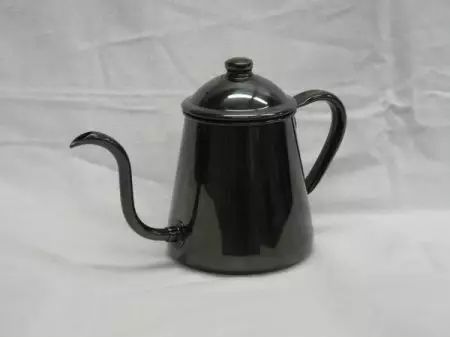
TAKAHIRO, nicknamed the "cheating kettle," comes from Japan. Its output is so steady that the joke goes even a beginner can pour like they're cheating. Pour-over styles divide broadly into fast pour and slow pour: a fast pour finishes everything, bloom included, within about 2 minutes, while a slow pour generally runs past 3 minutes. Technique-wise there is continuous steady pouring and drip pouring — both demand good water control, and this kettle makes the flow so manageable that even novices find it easy.
Plenty of coffee professionals recommend this kettle, and I was eager to introduce it here — not just for its looks, but because it earned rave reviews from the day it launched. Its origin story is charmingly simple: it was born from a customer's remark, "Isn't there a finer stream of hot water for brewing coffee?" Thus this ultra-narrow-mouth kettle came into being — elegant, refined, and a genuine tabletop weapon.
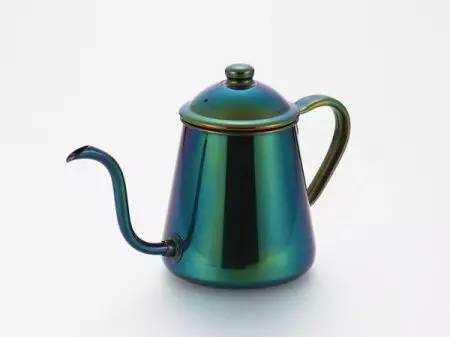
TAKAHIRO comes in many colors and finishes, the most famous being the matte black. It is so popular that sellers joke it is out of stock eight seasons a year.
Puppy Mark
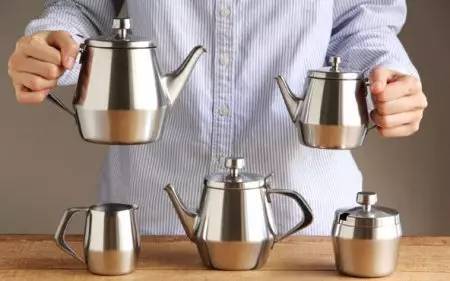
Puppy Mark fits heat-resistant resin inside the handle to prevent burns, and its distinctly shaped spout has made it a very popular style in Japan. The Puppy Mark line dates to 1951 and is made of 18-8 stainless steel with real heft — it sits solidly in the hand. It is a steady seller that doubles nicely as a tea kettle.
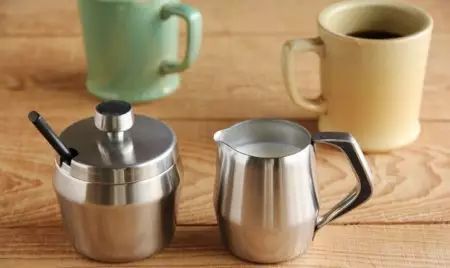
The common Puppy Mark range includes one-person, two-person, and five-person kettles, plus matching sugar bowls and creamers, widely used in Japanese cafes and restaurants and a lovely touch on the dining table.
Aizawa Workshop
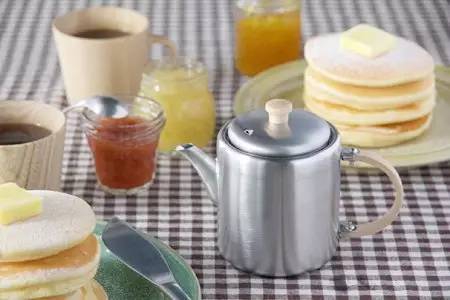
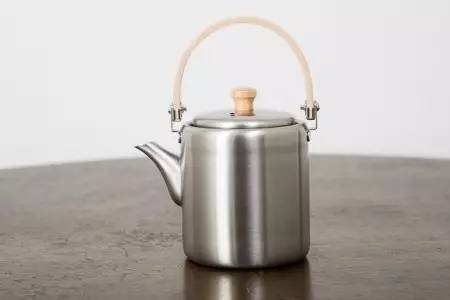
Strictly speaking a tea kettle, but plenty of people press it into service as a pour-over kettle — it is a fixture on the tables of food lovers and connoisseurs alike. Founded in 1922, Aizawa Workshop is a venerable maker of metal tableware that has always combined machine production with hand craftsmanship, flexibly turning out practical, beautiful products shaped by users' needs. Beyond kettles, the workshop is also celebrated for its copper cutlery.
Conclusion
There is no shortage of pour-over kettles to choose from, but the right one is the one that matches the way you like to brew. There is no absolute best — only what suits you best!
FrontStreet Coffee Recommendation
A kettle is only half the equation — the beans matter just as much. For the bright, aromatic side of pour-over, FrontStreet recommends washed Ethiopian Yirgacheffe: clean, luminous notes of jasmine and citrus with a tea-like finish, ideally suited to the V60's fast, expressive extraction. For something fruitier, the natural-process FrontStreet Huakui (Aricha) bursts with tropical fruit — strawberry, passion fruit, jackfruit — while the classic FrontStreet Guodingding cooperative lots show off the Yirgacheffe profile at its most elegant: white floral, orange, and green tea. Fans of deep, heavy cups should reach instead for FrontStreet PWN Golden Mandheling, a wet-hulled Sumatran with low acidity and a rich body of herbs, dark chocolate, and roasted hazelnut.
FrontStreet's standard pour-over reference: 15g of coffee at a 1:15 ratio, ground to about fine-granulated sugar (roughly 80% pass on a No. 20 sieve), with water at 90-91°C in a V60. Bloom with 30g of water for 30 seconds, pour to about 125g within the first minute, then finish to about 225g by 1:35, drawing down in roughly 2 minutes to 2 minutes 10 seconds. Whichever kettle you choose, a bean this good will make the technique worth practicing.
Important Notice :
FrontStreet Coffee is a long-established specialty coffee roaster in Guangzhou China, selling freshly roasted beans from its own farm in Yunnan as well as dozens of carefully selected single-origin beans from around the world for both pour-over and espresso. The products deliver consistently excellent quality and great value, with shipping within 24 hours. Guangzhou's FrontStreet Coffee shop is recommended by many coffee lovers, and the beans are now available online at the Tmall 。
FrontStreet Coffee has moved to a new address:
FrontStreet Coffee Address: 315,Donghua East Road,GuangZhou
Tel:020 38364473
 Scan and follow the En Gafei WeChat official account. Please indicate that the reprint comes from "En Gafei".