Bolivian Coffee Estate Coffee Beans - Bolivian Waliki Java Coffee Beans Flavor Characteristics and Story

Latin America offers a huge variety of single-origin coffees and is very active in the specialty market - think Brazil, Costa Rica, Colombia. But today FrontStreet Coffee wants to spotlight a genuinely niche producing country: Bolivia. We believe this region has enormous potential, so this article explores the characteristics and stories of Bolivia's coffee-growing regions.
Bolivia Coffee History
Bolivia is a landlocked country in South America, bordering Brazil and Colombia. It is far less developed than its neighbors and remains one of the poorest countries in Latin America. Beyond lacking ports, government corruption has also deepened the country's poverty. And yet Bolivia's capital, La Paz, sits at over 3,600 meters - the highest capital city in the world - which makes the country, in principle, very well suited to growing Arabica coffee.

Bolivian coffee traces back to 1880, when production was essentially controlled by the owners of large farms north of La Paz. In 1991, the government promoted a plan for indigenous people to take up coffee cultivation, but quality was never the priority.
The reason: coca was legal to grow in Bolivia at the time, and with government encouragement, coca leaves earned four times the profit of coffee - with far less effort. Many farmers abandoned coffee, some giving up their farms entirely. It was against this backdrop that the land in Bolivia's coffee regions suffered severe damage: coca cultivation demands heavy chemical pesticides and fertilizers, which ravage the soil. After a few years of coca, the ground becomes barren and can barely grow anything.

As early as 2000, the United States strongly supported Bolivian agriculture, but as the Bolivian government later backed coca cultivation, relations with the U.S. deteriorated and the program was suspended. Only after the end of Bolivia's anti-drug campaign did coffee cultivation plans restart, and U.S. assistance resumed - the Cup of Excellence (COE) competition, for example, was held with USAID support.
But the good times didn't last. After 2009, Bolivia's COE was canceled: the national government, strongly anti-American, no longer wanted USAID funding development programs in the country, and no other funding source existed for the COE program.

Then, in 2013, leaf rust arrived - and in that single year Bolivia lost 50% of its coffee production. Combined with the earlier coca policy, Bolivia's coffee output has fallen 70% over the past decade, reducing it to a minor producing country.
That's part of why Bolivian beans are less famous than their neighbors'. But the country's coffee regions have gradually begun focusing on specialty coffee, and FrontStreet Coffee believes Bolivian beans still have great potential - which is exactly why we've introduced Bolivian Java coffee beans.
Bolivia Coffee Regions
The most famous region in Bolivia today is La Paz, which includes sub-regions such as Caranavi, Yungas, and Inquisivi.
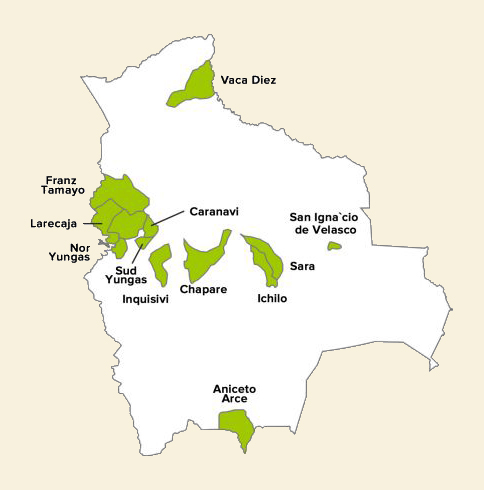
Yungas Province
Located northeast of La Paz city, within Caranavi province, Yungas ranges from 800-1800m in altitude, with vast forests stretching down the eastern slopes of the Andes and fertile land. Its rainy, humid, warm climate makes it highly favorable for coffee. The region is also famous for the "Death Road" - the Yungas Road, known as "the world's most dangerous road." Today, 95% of Bolivia's coffee is produced here.
Bolivia Coffee Bean Varieties
The main varieties grown in Bolivia are Typica, Caturra, Catuai, and Catimor, with the harvest running from July to November. But among the Bolivian samples FrontStreet Coffee obtained, after cupping comparisons we ultimately chose to launch a Java coffee bean from Waliki Estate. In cupping, this Java shows grape-like soft fruit acidity, raisin fermentation notes, and a chocolate-nut aftertaste - flavors that truly represent Bolivia's character. That's why we chose it.

Java Variety Coffee Beans
In Bolivia, Java beans are called "long bean varieties" for their elongated shape; their formal name is simply Java. It's a fascinating variety - the name alone signals a strong connection to Indonesia's Java island. In fact, Java originated from coffee trees in Ethiopia's original forests, collected by local ethnic groups and carried through Yemen to Indonesia, where it was named Java. It was long assumed to be a Typica variant, but genetic comparison revealed that Java is actually the Ethiopian variety Abysinia.
From Indonesia, Java first spread to the nearby Timor island groups, then to Cameroon in East Africa, where it was first released to farmers in 1980. Its arrival in Central and South America came under breeding expert Benoit Bertrand, who introduced it through CIRAD to Costa Rica in 1991 - though the first Latin American country to officially recognize the Java variety was Panama.
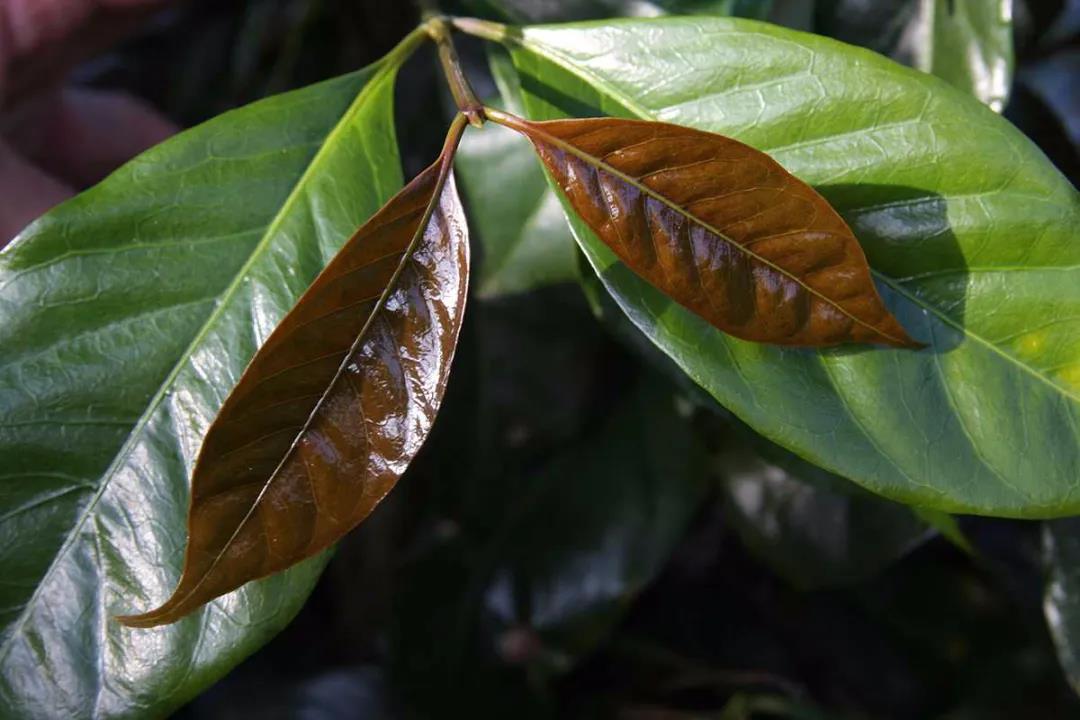
Java's fruits and seeds are very long, the young shoots bronze-colored, and the plant tall but low-yielding. It resists leaf rust and coffee berry disease strongly, making it ideal for small farmers. And through cupping, FrontStreet Coffee found this Java's outstanding flavors rival Geisha's - one more reason we decided to introduce it.
Next, let's look at the flavor characteristics and processing of this Bolivian Java.
FrontStreet Coffee Bolivia Waliki Estate Java Coffee Beans
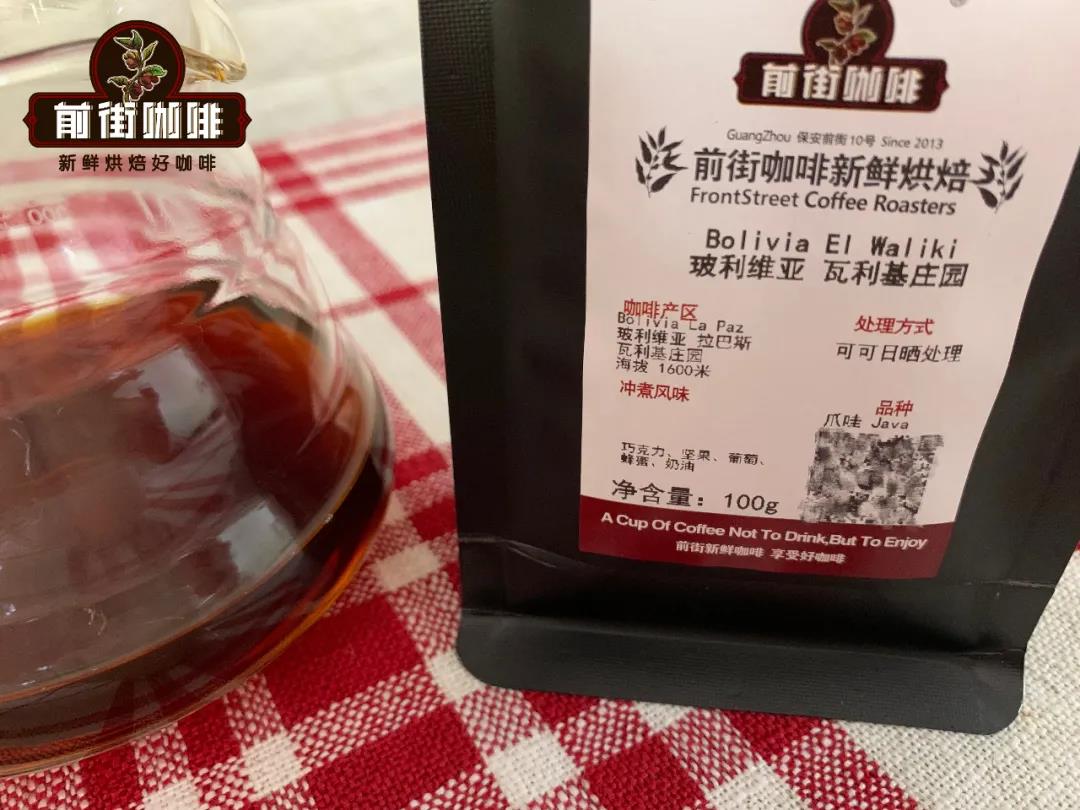
Region: La Paz
Altitude: 1600 meters
Variety: Java
Processing: Cocoa Natural Processing
Flavor: Fermentation notes, grape, nuts, light floral notes, honey, cream
Waliki Estate
Worth mentioning: Bolivia's early neglect of coffee kept quantities low, yet FrontStreet Coffee specifically selected this Java from Waliki Estate - partly for the variety's uniqueness, and partly because we saw the estate's professionalism and attention to quality.
The name comes from a local greeting meaning "How is everything?" - the answer being "All good," or "Hakuna Matata."
Waliki Estate lies in the Bolivia Linda colony, about 10 kilometers outside the town of Caranavi in La Paz, tucked into dense, steep valleys. It covers about 3.62 hectares at 1600 meters - an altitude that ensures the cherries mature slowly, concentrating their sugars and making the coffee sweeter. The estate is owned by the Rodriguez family, whose family business, Agricafe, produces coffee from its own estates and sources quality small-batch crops from small producers across the Yungas region.
Waliki Estate Coffee Processing Method
As noted, Waliki takes cultivation seriously. During harvest, the estate hires pickers from the Bolivia Linda community, trained to select only ripe cherries, and runs multiple picking passes through the season so every cherry comes off the tree at optimal maturity.
The estate also uses crates, which protect the cherries in transit and allow air to circulate around them, preventing premature fermentation. After selection and weighing, the cherries are carefully washed and laid out on raised African drying beds, turned every hour. After about a week, the cherries move into cocoa dryers - hence the name "Cocoa Natural Processing."
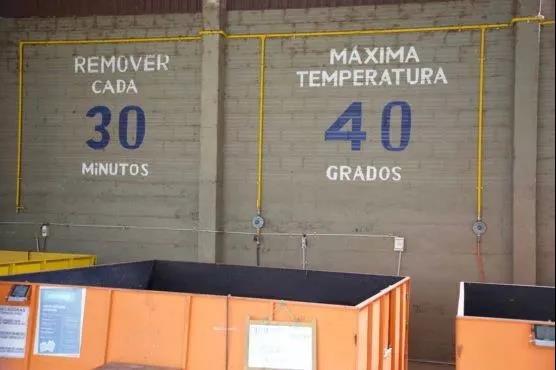
Cocoa Natural Processing Flow
The Rodriguez family's relentless experimentation revealed that cocoa dryers can dry coffee slowly and continuously at low temperature, minimizing the impact of weather. The beans rest in large steel barrels at temperatures not exceeding 40 degrees Celsius for about 35 hours, turned every 30 minutes. After drying, the beans travel to La Paz to rest, then are dehulled at Agricafe's dry mill, La Luna - where careful mechanical dehulling and sorting are supplemented by hand sorting under ultraviolet and natural light.

That's why this Bolivian Java is so excellent. FrontStreet Coffee runs extensive roasting and brewing tests before launching any new bean, to ensure we present the coffee's flavor at its best. Here are the roasting and brewing parameters for this Bolivian Java.
FrontStreet Coffee Roasting Notes
Bolivia Java: To highlight the sweetness of the natural process and its cocoa aroma, our roaster extends the development period to build sweet, delicious flavors. Taking the Yangjia 800N as an example, with 500g of green beans:
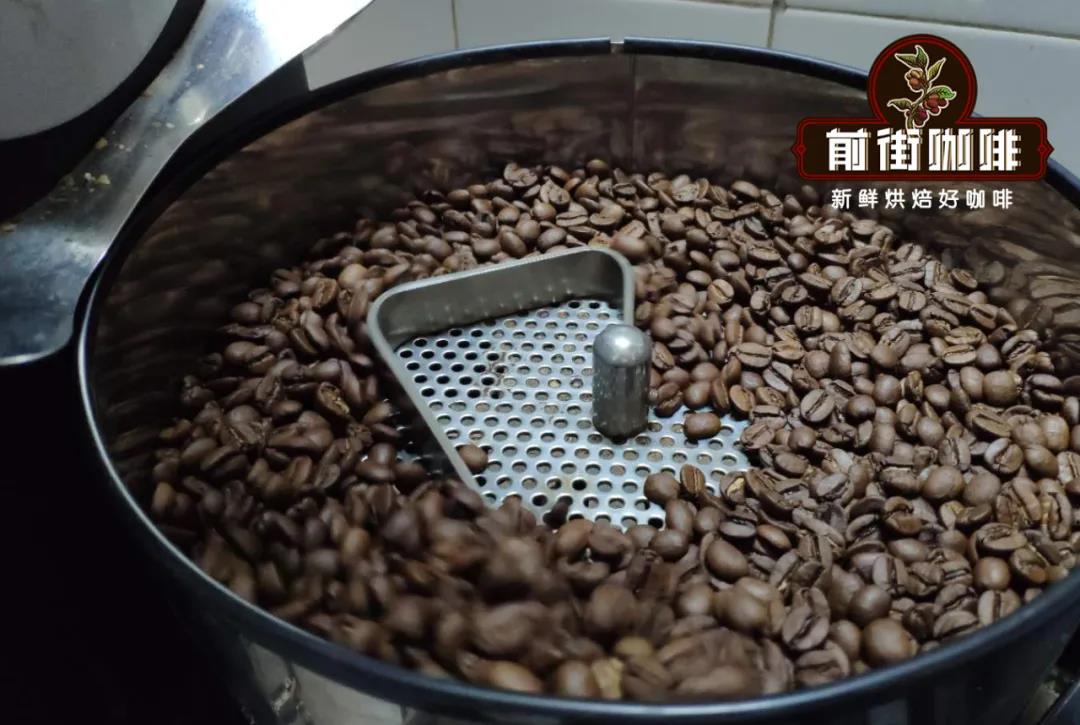
Preheat to 170°C, heat at 120, damper at 3. Turning point at 1'36"; when the temperature reaches 111°C, open the damper to 4 and raise heat to 140. At 151.1°C the bean surface yellows, the grassy smell disappears completely, and the drying stage begins. At 7'56", wrinkles and dark speckles appear on the bean surface and the toast smell clearly shifts to coffee aroma - the prelude to first crack - so open the damper to 5. Listen carefully now. First crack begins at 10'18". Develop for 1'00" after crack, then drop the batch at 190°C.
FrontStreet Coffee Cupping Report

[Bolivia Java] The dry aroma carries hazelnut fragrance. On entry come the sweetness of cream, hazelnut, and almond, plus the sweet-sour tones of citrus and tropical fruit, with a winey fermented aroma.
FrontStreet Coffee Brewing Notes
Dripper: HARIO V60
Water Temperature: 90 degrees
Coffee-to-Water Ratio: 1:15
Grind Size: Fine-sugar texture

FrontStreet Coffee uses segmented extraction: bloom with 30g of water for 30 seconds, then pour in small circles up to 125g and pause. When the water level drops and the bed is about to be exposed, continue pouring to 225g and stop. Once the bed is about to emerge again, remove the dripper (timing starts from the bloom). Total extraction time: 2'00".

Bolivia Java Coffee Flavor Description: On entry, distinct sweet-sour notes of citrus, lime, and hawthorn, with fruit chocolate and vanilla cream in the aftertaste. As the temperature drops, sweet orange emerges; when fully cooled, a light maple sweetness with the aftertaste of jasmine tea and rose tea, and a persistent sucrose sweetness.
FrontStreet Coffee Recommendation
If the cocoa-natural creativity of Waliki Estate appeals to you, don't overlook Brazil - another Latin American powerhouse where process innovation thrives. FrontStreet's Brazil Cerrado Red Bourbon is a classic semi-natural (pulped natural) coffee from one of the region's most respected growing zones: medium roasted, it shows creamy peanut, toasted bread, caramel, and hazelnut aromas, a rounded palate without sourness, and just a light bitter note. It shines as pour-over and adapts just as easily to moka pot, single-origin espresso, siphon, or French press.
For a rarer Brazilian experience, try our Brazil Queen Estate Yellow Bourbon from Mogiana, near Southern Minas, where fertile red volcanic soil builds the cherries' full aroma. A natural mutation of Red Bourbon with a cleaner fruit character, it reveals a sugarcane sweetness no other origin can match, alongside fruit and chocolate notes. And if you simply want Brazil at the heart of a dependable espresso, our Classic, Premium, Black Cocoa, and Commercial blends all use Brazilian beans for their chocolate and cream aromatics, gentle sweetness and acidity, and extraction that stays stable cup after cup.
Important Notice :
FrontStreet Coffee is a long-established specialty coffee roaster in Guangzhou China, selling freshly roasted beans from its own farm in Yunnan as well as dozens of carefully selected single-origin beans from around the world for both pour-over and espresso. The products deliver consistently excellent quality and great value, with shipping within 24 hours. Guangzhou's FrontStreet Coffee shop is recommended by many coffee lovers, and the beans are now available online at the Tmall 。
FrontStreet Coffee has moved to a new address:
FrontStreet Coffee Address: 315,Donghua East Road,GuangZhou
Tel:020 38364473
 Scan and follow the En Gafei WeChat official account. Please indicate that the reprint comes from "En Gafei".