The Difference Between Drip Bag Coffee and Instant Coffee - How to Brew a Convenient Cup of Coffee at Home
The Easiest Coffee Choices: Instant vs. Drip Bag Coffee
The most convenient coffee options are instant coffee and drip bag coffee. So what are the differences between them?
Three-in-One Coffee Contains 20 Times More Calories Than Ground Coffee
The convenience of three-in-one instant coffee has helped "drinking coffee" grow more popular.
Yet many people who drink three-in-one instant coffee never look closely at quality. Because three-in-one coffee is cheaper than ground coffee, consumers can't expect high quality from a low-priced product. Over time, some people stop caring about what they're actually drinking.
Have you ever wondered what's really in that convenient, quick-brewing instant coffee?
1. Your "Sugar-Free" Coffee is Actually High-Fat
Daily calories from fat should account for only 10-20% of total calories and never exceed 30%. When a product's fat-calorie ratio goes above 30%, it enters the dangerous "high-fat" range.
Whether it's three-in-one or two-in-one coffee, the fat content ratio is almost always too high.
Even more surprising, behind "sugar-free" two-in-one coffee hides a "high-fat" truth. You might assume sugar-free two-in-one is the healthier choice, but the numbers speak for themselves. The fat calories in two-in-one coffee all exceed 30%, and Manabe Classic Sugar-Free Two-in-One and UCC Charcoal Roasted Two-in-One both have fat-calorie ratios above 50%. Compared with drip bag coffee, which contains almost no fat, your coffee choice directly determines your fat intake.
2. Convenient Three-in-One and Two-in-One Coffee Contains 60-80% Creamer and Sugar
Creamer, sugar, and coffee beans all contain carbohydrates. Comparing carbohydrate content (sugar density), we find that the carbohydrate ratio in three-in-one and two-in-one coffee is 6-8 times higher than in drip bag coffee. The difference comes from the sugar and creamer.
Take drip bag coffee as an example: its sugar density is 0.1, meaning that in a 10-gram coffee packet only 1 gram is carbohydrate, and that comes from the coffee itself.
Three-in-one and two-in-one coffee are a completely different story. The sugar density of three-in-one coffee reaches 0.7-0.8, meaning that in a 20-gram serving of three-in-one coffee, 12-16 grams are carbohydrates, mostly from sugar and creamer — almost like a sugary beverage.
Two-in-one coffee adds no sugar, but creamer also contains carbohydrates. So its sugar density is slightly lower than three-in-one, still around 0.6, with only UCC's Charcoal Roasted Two-in-One coming in lower (sugar density 0.4).
Even without accounting for serving-size differences, single-serving packages of various three-in-one brands can carry 1.6 times more calories. Compared with drip bag coffee, the calorie difference exceeds 20 times.
For example, UCC Original Blend Convenience Brew Coffee (drip bag style) has only 4 calories, while UCC Select Blend Three-in-One has 78.6 calories — a 20-fold difference. Seattle Instant Mantenin and Benesong Classic Mantenin both exceed 90 calories, with differences reaching 23 times.
Calorie density means the calories produced per gram of food. If the density exceeds 4, it counts as a high-calorie food.
Research findings:
▼ The calorie density of every three-in-one coffee brand exceeds the standard.
▼ Two-in-one coffee shows polarization. While UCC and Benesong Sugar-Free Two-in-One have lower calorie densities (3.8 and 3.2 respectively), Nestlé and Brilong Two-in-One soar above 5.
▼ Drip bag coffee has calorie densities ranging only from 0.4 to 0.6.
3. Unable to Verify Coffee Quality and Content
In fact, whether three-in-one or two-in-one, instant coffee powder suffers from insufficient aroma from the very start. The most important thing about drinking coffee is its aroma, but that aroma is destroyed during the freeze-drying process, leaving only a bitter, burnt taste.
Estimating factory price at one-quarter of retail, suppose a pack of three-in-one coffee costs 12 yuan, making the factory price 3 yuan. After subtracting packaging costs (1 yuan) and accounting for sugar, creamer, and profit, the coffee itself probably costs only 0.5 yuan. But brewing a 120cc cup of ground coffee takes 7-10 grams of coffee beans. One pound (454 grams) of coffee beans can brew 45 cups. If one pound of coffee beans costs 400 yuan, then one cup of coffee uses 9 yuan worth of beans. So it comes down to a ratio of 9 yuan to 0.5 yuan worth of coffee — in other words, the cost of ground coffee is 18 times that of three-in-one coffee.
And once ground and mixed with sugar and creamer, three-in-one coffee makes it impossible to judge coffee quality.
Would choosing three-in-one coffee made with Arabica beans guarantee better quality? Not necessarily. Variety doesn't guarantee quality, since quality also depends on harvesting techniques and quality control. Choosing Arabica is certainly better, but you can't confirm whether its content is 100% or only 5-10%.
So how can we judge the amount of coffee content? According to food hygiene management regulations, when a food contains two or more ingredients, they should be listed in descending order of content. The most-used ingredient comes first, the least-used last.
Analyzing the contents of various brands' three-in-one and two-in-one products, they either list "creamer, sugar, coffee" or "sugar, creamer, coffee." Only Seattle Instant Latte and Mocha Blend Three-in-One have coffee as the first ingredient.
For two-in-one coffee, only UCC Charcoal Roasted Two-in-One and Mocha Sugar-Free Latte Two-in-One have coffee as the main ingredient. The rest all list "creamer, instant coffee."
4. Besides Creamer and Sugar, There's Also Starch and Flavorings
The biggest problem with three-in-one coffee is the creamer. Most three-in-one ingredients are creamer, sugar, and instant coffee — seemingly simple, but creamer actually contains glucose syrup, hydrogenated vegetable oil, sodium caseinate, stabilizers, emulsifiers, anti-caking agents, and other artificial additives.
Beyond the complex composition of creamer, "three-in-one" coffee is really "six-in-one" or even "seven-in-one." Some products also add coloring, flavorings, salt, and more, while others include maltodextrin, dextrin fiber, and other starch additives to increase thickness. For example, Benesong Classic Mantenin Sugar-Free Two-in-One contains the sweetener maltitol. During the plasticizer incident, various syrups and emulsifiers became frightening artificial additives, and some sugar substitutes carry health controversy too. If you want to eat real food, it's best to stay away from artificial additives.
5. How to Brew a Good Cup of Coffee Yourself?
When we really don't have time and want a quick cup of three-in-one or two-in-one coffee, are there smarter, healthier ways to drink it?
If you want to brew your own coffee, coffee experts suggest mastering the following three points.
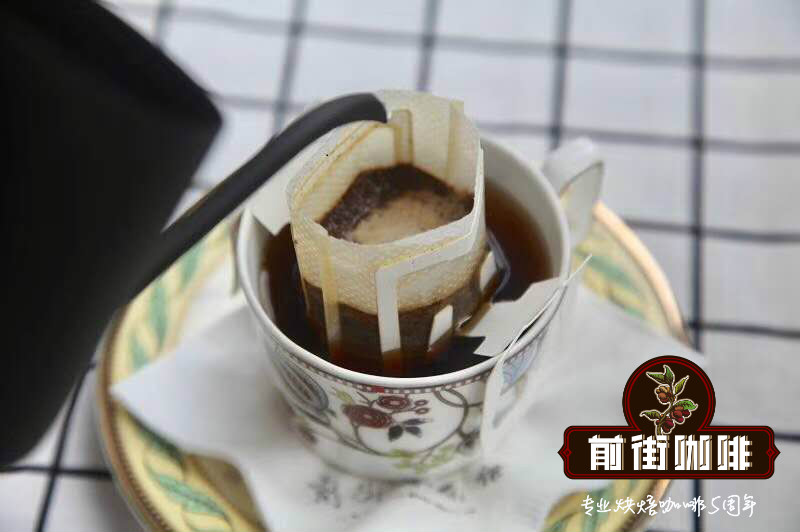
Drip Bag Coffee
1. Choose drip bag coffee with simple ingredients. Drip bag coffee is a convenient option for people without the time or equipment to brew. Still, it's best to buy hang-drip bags made by coffee shops. Compared with large food manufacturers, coffee shops have smaller markets and less inventory, so the coffee powder is fresher. Before drinking, you can also check the powder for anything unusual and smell for any rancid odors.
2. The smart filter cup uses drip brewing principles, saving time and requiring no technique practice. When you don't have time to brew slowly, you can use a smart filter cup — similar to a traditional coffee filter cup but with a latch at the bottom. Just place filter paper, add coffee powder, pour hot water and stir, wait 1 minute, place the filter cup on a mug, and press the latch to start dripping. Within 5 minutes, you can brew 2-4 servings of coffee.
3. For those who can't get used to black coffee, it's best to choose good sugar and milk and add them in moderation.
As for milk, fresh milk is the first choice.
If none of the above methods suit you and you still want to buy three-in-one or two-in-one instant coffee, check whether coffee is listed as the first ingredient on the food label, and confirm there are no additives other than creamer and sugar.
FrontStreet Coffee Recommendation
If you want the convenience of instant without giving up real coffee, a drip bag is the answer. FrontStreet's drip bag coffees are made from Arabica beans, so you get both flavor and a cleaner cup. A drip bag is simply coffee ground and sealed into its own little packet: tear it open, hang the two "ears" over your mug, and pour in hot water. Apart from the extra steps, it is essentially the same as a pour-over, so you can pick by flavor — and coffees fall into three broad groups: fresh and floral, tropical and fruity, and rich and full-bodied.
For the floral, refreshing style, FrontStreet's Yirgacheffe Gedeb drip bag is a great start. The coffee comes from Ethiopia's famous Yirgacheffe region and is washed after picking; in 1972 Ethiopia brought in Central and South American washing technology to raise quality, which made Yirgacheffe's jasmine florals and bright citrus-lemon acidity all the more transparent. Grown at 1900–2300 meters from local Heirloom varieties (Gedeo Zone, G1), it shows citrus, berries, lemon, sugarcane, and green tea, with low bitterness and a clean, lifted acidity that is perfect for beginners.
For tropical fruit, try FrontStreet's Natural Huakui drip bag, one of the best-selling products. It carries clear tropical-fruit aromas with a black-tea finish, high sweetness, low acidity, and little bitterness. Grown in Ethiopia's Guji region above 2300 meters, it ripens under a wide day-night temperature swing that packs more flavor compounds into the cherry, and after harvest it is carefully natural processed to lift the sweetness further.
And for a roasted, comfortingly rich cup, reach for FrontStreet's Indonesian Mandheling drip bag. Mandheling, also called Sumatra coffee, is one of the world's best-known Arabicas. Unlike the fruity acidity of African coffees, it brings its own herbal, spicy, woody character, which a dark roast amplifies into deep notes of spice, nuts, chocolate, and caramel — strong yet not bitter, sweet and full-bodied, and ideal for anyone who doesn't care for acidity.
Important Notice :
FrontStreet Coffee is a long-established specialty coffee roaster in Guangzhou China, selling freshly roasted beans from its own farm in Yunnan as well as dozens of carefully selected single-origin beans from around the world for both pour-over and espresso. The products deliver consistently excellent quality and great value, with shipping within 24 hours. Guangzhou's FrontStreet Coffee shop is recommended by many coffee lovers, and the beans are now available online at the Tmall 。
FrontStreet Coffee has moved to a new address:
FrontStreet Coffee Address: 315,Donghua East Road,GuangZhou
Tel:020 38364473
 Scan and follow the En Gafei WeChat official account. Please indicate that the reprint comes from "En Gafei".