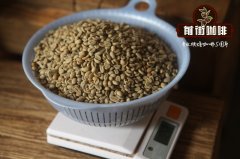
Costa Rica Western Valley Orange County | Infinity Estate Yellow Honey Process Villasarchi Variety Flavor Profile
Professional coffee knowledge exchange. For more coffee bean information, follow Coffee Workshop (WeChat official account: cafe_style).
Costa Rica West Valley Orange County | Finca Sin Limites Yellow Honey Process Villasarchi Flavor
Finca Sin Limites was founded jointly by Jose Jaime Cardenas Rojas and two sisters of his family, Maribel Barrantes Zuniga and Kattia Barrantes Zuniga. Seven years ago, the sisters pooled their resources to build a fully integrated micro-washing station that processes only coffee harvested by their own family. The farm itself dates back to 2005, and for them the processing facility was a major investment. Why build one? As Jose explains, pursuing coffee quality means taking every step into account - from harvesting through processing and grading, the entire chain affects quality! If they simply sent their harvested cherries to a cooperative during peak season, they could not make specific requests to their own standards. So, to produce exceptional coffee of limitless quality, he brought the family together to create this micro-mill and named it Finca Sin Limites - "without limits." The farm is located in the Orange County area of the West Valley.
Finca Sin Limites was established in 2005, founded jointly by Jose Jaime Cardenas Rojas and his family members Maribel Barrantes Zuniga and Kattia Barrantes Zuniga. Seven years ago, the sisters pooled their resources to build a fully integrated micro-washing station that processes only coffee their own family harvests.
After taking complete control of all post-harvest processing and carefully managing every stage, Finca Sin Limites placed 13th in the inaugural 2007 Costa Rica Cup of Excellence (CoE) national competition. When I served as a judge during the semifinals, this particular sample caught my attention - I believed it genuinely had Top 10 potential. And when the winners were announced, I discovered it came from a farm we had already been buying from, which was naturally thrilling. Sure enough, in the 2008 Cup of Excellence, Finca Sin Limites improved dramatically, earning the national runner-up spot!
Typically, before the Cup of Excellence awards ceremony, farmers who reach the finals are invited to meet with the international judges. Having cupped Finca Sin Limites samples back in 2006, I spoke with Jose at length during the post-competition farmer meetings of the 2007 competition. He even joked that if you win, you've profited - since it's the same harvest batch either way.
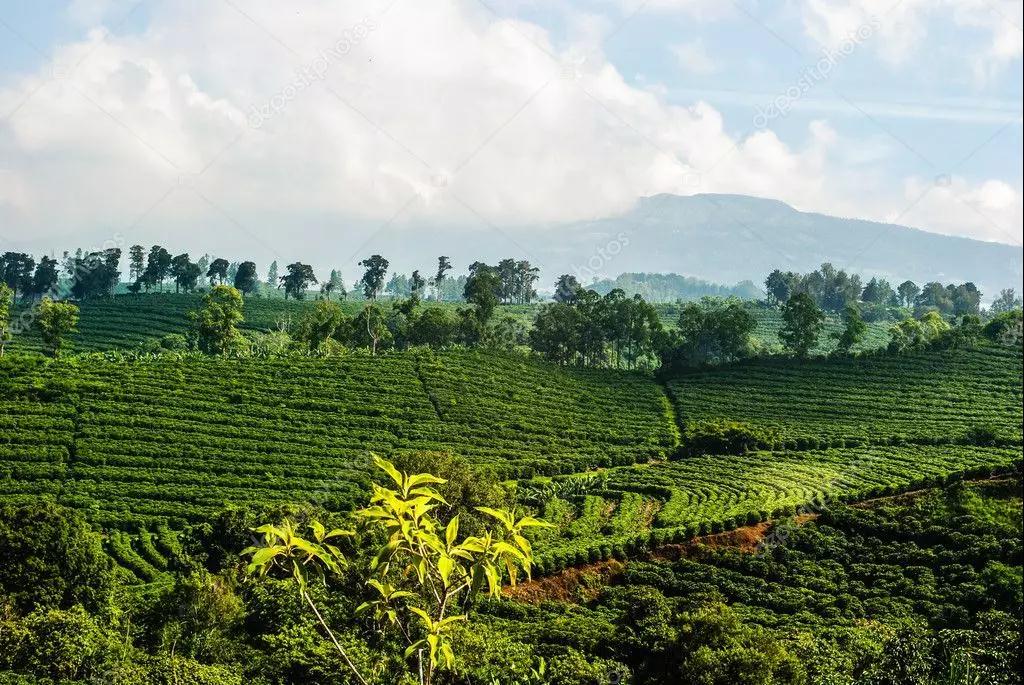
Costa Rica was the first country in Central America to cultivate coffee, with a long history and a complete system running from production all the way to sales. Sitting on the Central American isthmus, the country has numerous volcanoes and enjoys natural advantages in sunshine and fertile land. Its climate is moderated by Pacific and Atlantic currents and sea breezes, and the coffee it produces reflects the character of the local microclimates and terroir. Both in quality and quantity, Costa Rican coffee has earned consistent worldwide recognition and is regarded as one of the world's fine coffees. The country has two hundred years of coffee-growing history, first planted on the slopes of the Poas and Barva volcanoes in what is today the Central Valley. Its seven main coffee-growing regions stretch from northwest to southeast along the inland central plateau.
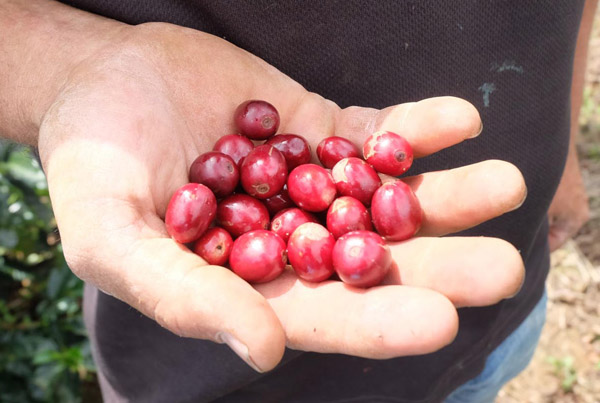
The farm's owner, Jaime - who is both producer and mill owner - named the micro-mill "Sin Limites" to symbolize his expectation of limitless improvement in quality. Jaime is an enthusiast of honey process coffee. After the cherry skin is removed, the beans are sun-dried on raised beds with the mucilage still attached, drying completely so that the beans absorb the fruit's sweetness through the parchment. The result is a full, smooth, syrupy flavor and texture. Jaime has led Costa Rican honey process coffee into new territory: his lot took second place in the 2008 Costa Rica Cup of Excellence and has maintained an excellent performance level ever since. Although the farm covers just one small hectare, it runs a Gaviota 2500 pulping machine and commands genuine respect as a micro-mill that also processes cherries for neighboring smallholder farmers. With advanced equipment, the machines can be calibrated to the processor's vision - removing the skin and setting the degree of mucilage retention - while also cutting water use during processing and minimizing environmental impact. By adjusting the machine, Jaime produces red honey and yellow honey lots from the Villasarchi variety he grows, depending on how much mucilage is left on. Villasarchi is a hybrid developed in the town of Sarchi after the Bourbon variety reached Costa Rica, bred to adapt to high-altitude growing conditions. It suits the farm's moderate shade and organic farming methods, with elegant fruit acidity and prominent fruit sweetness as its defining traits.
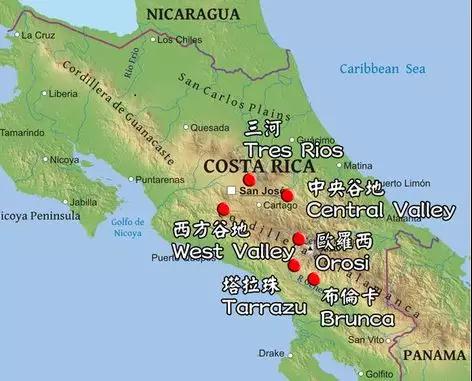
Costa Rica's volcanic terrain provides fertile volcanic ash, mild and suitable temperatures, and stable, abundant rainfall - all factors that have made coffee one of the country's flagship crops. The seven producing regions are Tarrazu, Tres Rios, Orosi, Central Valley, West Valley, Turrialba, and Brunca.
Flavor Profile
Distinct vanilla sweetness, a rich, oil-coated mouthfeel, excellent sweetness, a citrus juiciness, white grape, stone fruits and blackberry, tea-like notes, a fruity sweet aroma, an essential-oil-like lingering aftertaste, floral notes, layered aromatics, maple syrup, vanilla sweetness, lemon, chocolate, and berries.
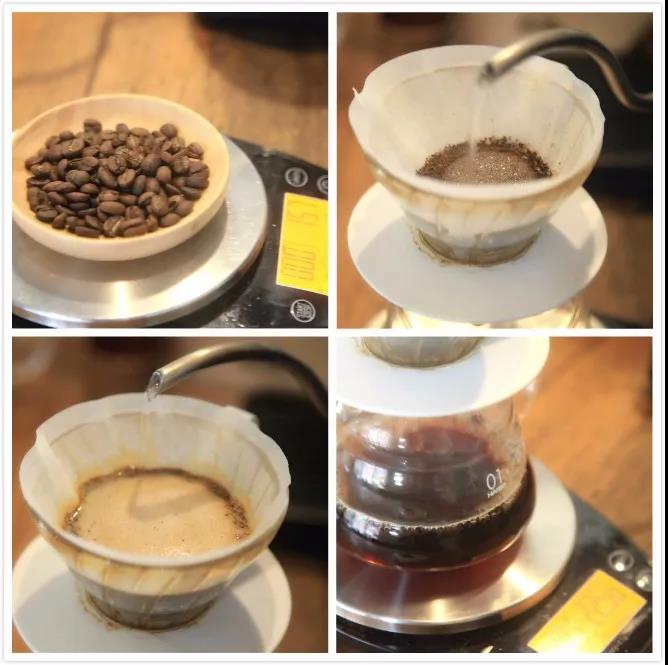
FrontStreet Coffee Brewing Recommendation:
Dripper: Hario V60
Water Temperature: 90 degrees C
Grind Size: Fuji Royal grinder at setting 3.5
Brewing Method: 1:15 coffee-to-water ratio with 15g of coffee. First pour 25g of water and bloom for 25 seconds. Second pour to 120g, then pause. Once the water level in the coffee bed drops to half, continue pouring slowly until you reach 225g total. Extraction time is approximately 2:00.
Analysis: The three-stage pour clearly delineates the coffee's front, middle, and back-end flavors. Because the V60 has many ribs and drains quickly, pausing during the pour helps extend the extraction time.
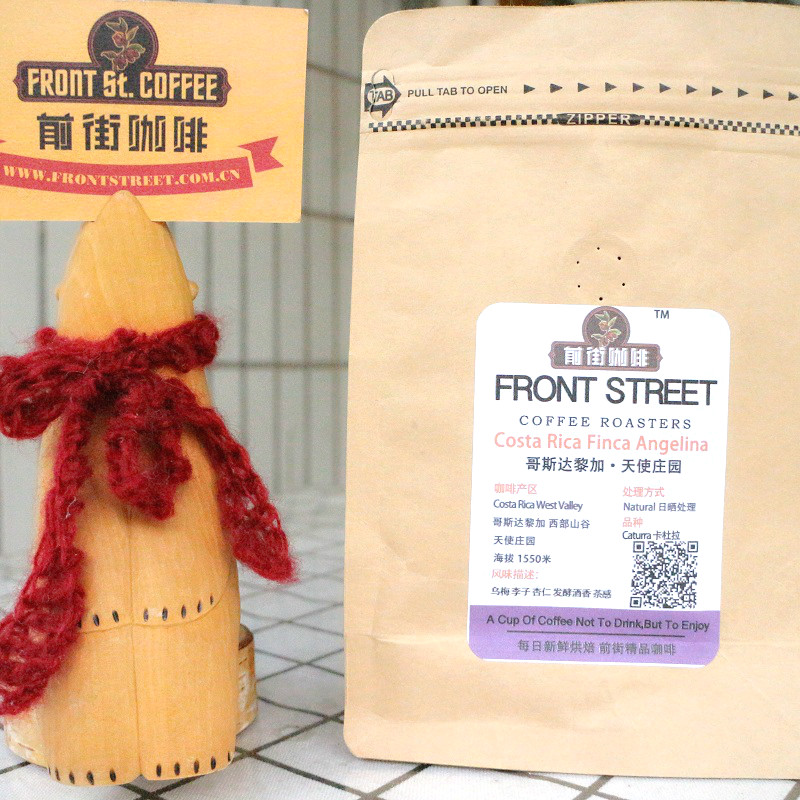
FrontStreet Coffee Recommendation
Honey processing grew out of the pulped natural (half-washed) method - a way of drying green coffee after removing the cherry skin. It shortens the drying period while solving the off-flavors caused by improper fermentation. FrontStreet's Cerrado lot is a classic Brazilian pulped natural coffee with clear notes of cream, peanut, nuts, and chocolate. Brazil's success caught Costa Rica's attention: producers there borrowed the pulped natural method and refined it - varying how much mucilage is retained and how long the drying lasts - into the honey process. That, in turn, branched into the more finely differentiated black honey, red honey, yellow honey, and white honey styles.
FrontStreet's Blackberry coffee uses a distinctive black honey process - a method that removes almost none of the mucilage. Drying takes far longer, at least two full weeks, and the beds are shaded to keep the harsh sun from drying the beans too fast, ensuring the sugars convert fully. During drying, the beans must be turned at irregular intervals to prevent uneven heating and over-fermentation, which is why black honey demands so much more labor. Roasted medium-light, the black-honey Blackberry releases an intense fresh-floral fragrance when ground, and in the cup you'll find the distinctive flavors of grape, berry, and ripe blackberry.
For something different, try FrontStreet's Mozart. Besides the standard honey styles, some estates have pioneered the raisin honey process - an improved version that breaks away from the traditional yellow, red, and black honey methods. In raisin honey processing, the whole cherries are pre-dried on raised beds for at least three days until they resemble raisins, and only then are the skin and pulp removed and the remaining honey process steps completed. Its hallmark is retaining 100% of the mucilage, which raises the difficulty considerably - by FrontStreet's analysis, it requires strict control of timing and is even harder than black honey. Raisin honey processing brings the coffee a richer sweetness of hot dried fruit. However you brew it - pour-over, cold brew, or moka pot - Mozart delivers the distinctive aromas of osmanthus, pineapple, and raisins.
Important Notice :
FrontStreet Coffee is a long-established specialty coffee roaster in Guangzhou China, selling freshly roasted beans from its own farm in Yunnan as well as dozens of carefully selected single-origin beans from around the world for both pour-over and espresso. The products deliver consistently excellent quality and great value, with shipping within 24 hours. Guangzhou's FrontStreet Coffee shop is recommended by many coffee lovers, and the beans are now available online at the Tmall 。
FrontStreet Coffee has moved to a new address:
FrontStreet Coffee Address: 315,Donghua East Road,GuangZhou
Tel:020 38364473
 Scan and follow the En Gafei WeChat official account. Please indicate that the reprint comes from "En Gafei".