Common Issues in Pour-Over Coffee | Water Flow, Water Stream Practice, Grind Size Selection, Iced Coffee Making
Common Coffee Brewing Questions and Solutions
Hello, everyone! When you brew coffee you often run into small problems. Yesterday we covered beginner issues in Part 1 of our common coffee questions. Today we continue:
Q&A One

Are there other ways to make iced coffee besides cold drip?
Do you think cold drip is the only way to get iced coffee? Not at all! There are many ways to make iced coffee, and cold drip is just one kind of cold brew. Besides cold drip, there is also cold brew, Japanese-style iced coffee, iced pour-over, and more.
Like cold drip, cold brew takes time and patience. You grind the beans, add room-temperature water, and leave it in the refrigerator for about 12 hours, then simply strain out the grounds and drink. Unlike cold drip, coffee made this way has a lighter mouthfeel and cleaner flavors.
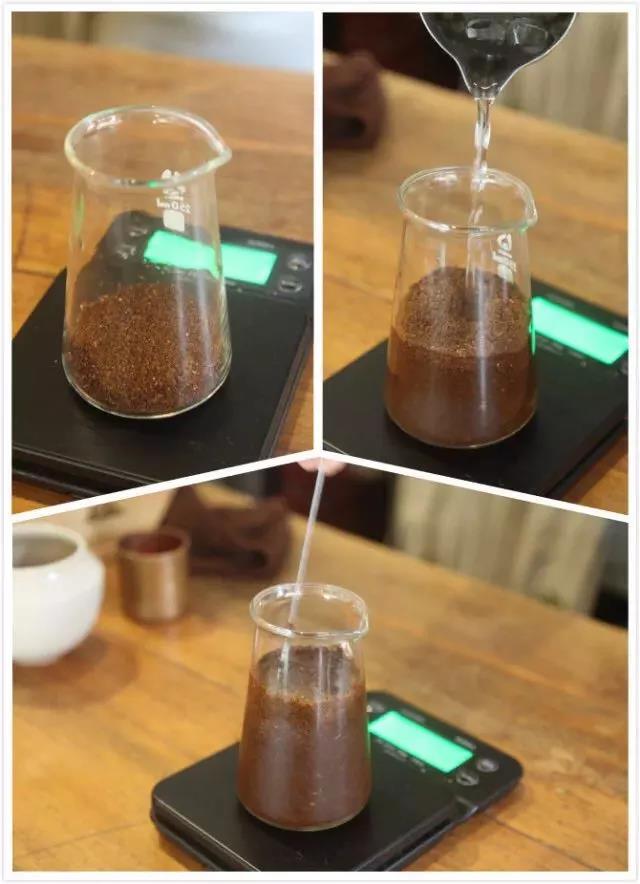
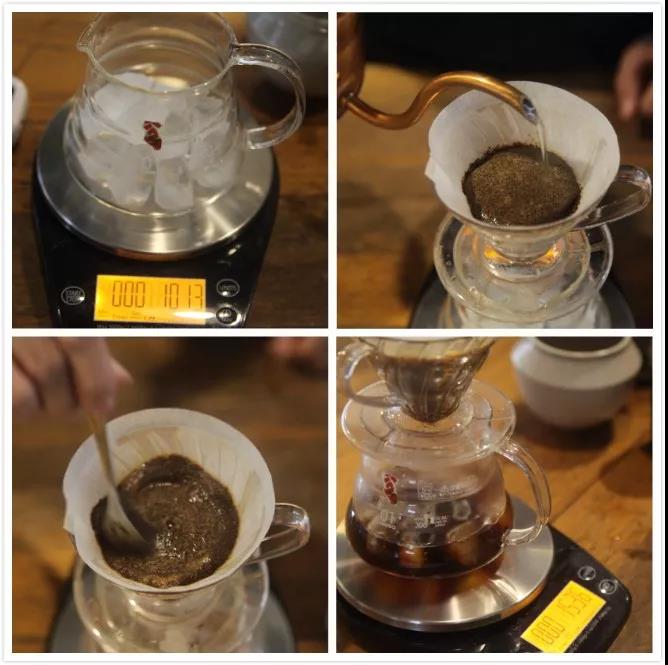
Japanese-style iced coffee is prepared much like a normal pour-over, except you cut the usual hot water in half and replace it with ice cubes.
Brewing Parameters:
- Test Coffee Beans: Costa Rica Red Wine Natural Process (5th day after roasting)
- Brewing Method: Iced pour-over
- Grind Size: 4A (BG)
- V60, 18g coffee, water temperature 91°C, water-to-coffee ratio close to 1:14 (100g ice in the server)
- 50g of water for bloom, bloom time 40s (stir during this period)
- Then add water to 152ml; shake well after brewing until the ice melts completely (total water 100+50+102=252g)
Iced Water Brew:
Brewing Parameters:
- Test Coffee Beans: Costa Rica Sweet Orange Estate (5th day after roasting)
- Brewing Method: Pour-over
- Grind Size: 4A (BG)
- V60, 18g coffee, water temperature 91°C, water-to-coffee ratio close to 1:14
- 50g of water for bloom, bloom time 40s (stir during this period)
- Add 252ml of 2°C water, stirring continuously as you pour; shake well after brewing (total water 50+202=252g)
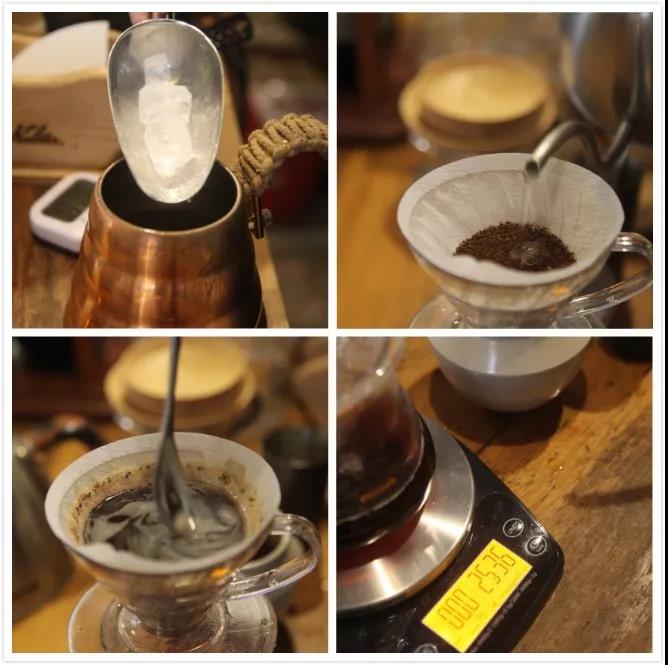
Iced pour-over means blooming first with hot water, then brewing with iced water. Because the extraction rate of ice water is relatively low, though, you need to extend the time to three minutes.
Q&A Two

Why do beans need to be ground coarser when they produce sharp acidity after extraction? Isn't sharp acidity a sign of under-extraction?
Sharp acidity in espresso does not come only from under-extraction. When a shot is under-extracted, the sharpness has a watery feel because extraction is incomplete, pulling only surface and easily extracted compounds.
A long extraction time can also produce sharp acidity, because the surface becomes over-extracted while the interior stays under-extracted, giving sharp acidity followed by bitter and astringent notes.
Q&A Three

What causes coffee grounds not to expand during blooming?
Sometimes watching the little "hamburger" rise during blooming brings a mysterious joy, but not every bean forms one. Blooming simply releases gas from the coffee particles while creating uniform gaps that let water pass through quickly and evenly, which allows thorough extraction.
Factors Affecting Bloom Expansion:
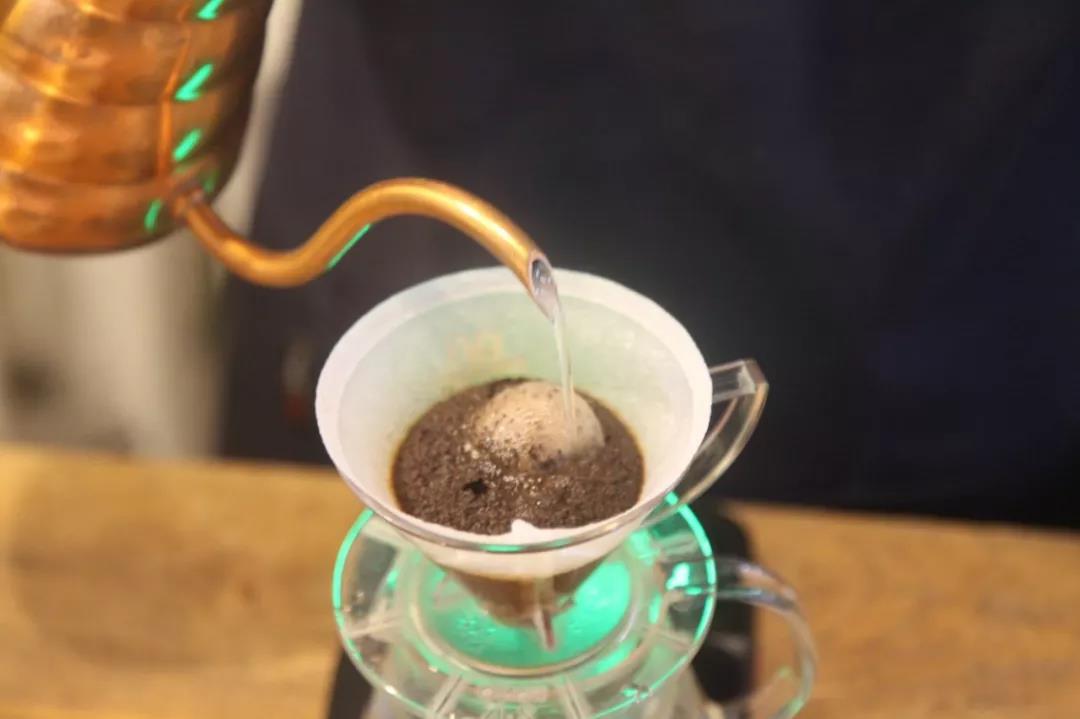
- Freshness of the coffee beans. Blooming is for degassing. If beans are stored too long after roasting, the carbon dioxide inside the bean's cells escapes naturally, and the "hamburger" during blooming will be faint or may not appear at all.
- Roast level of the coffee beans. Lighter roasts have less caramelization than dark roasts, producing fewer metabolic byproducts and therefore weaker respiration, so a subtler bloom—or no "hamburger" at all—is normal.
- Grind size of the coffee powder. Ground too coarsely, the coffee has less contact area with the water, which naturally weakens the degassing effect.
Q&A Four

One last question: what makes for a good coffee bed in pour-over?
Should the bed be concave or flat after brewing? This is a common question among pour-over enthusiasts.
In practice, we more often see concave beds when brewing only a coin-sized area in the center, while methods that fully extract the whole bed produce flat beds.
My typical bed for light and light-medium roasts looks like this:
The difference comes from pouring technique and range. Here is how I understand it: as long as you extract a delicious cup, even a convex bed is acceptable! The prerequisite is uniformity, which signals even water distribution and even extraction. If one side of the bed is higher than the other, or the surface is uneven, the water flow impact is uneven, and the extraction will be uneven too.
Another question that comes up often lately is why some people's beds show no pits after brewing, and why the grounds at the edges fall down.
My typical bed for dark roasts looks like this:
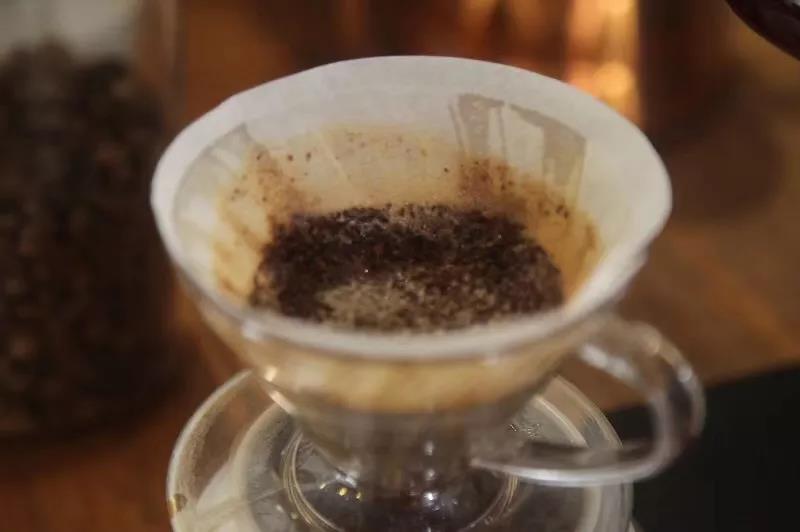
My personal view on whether grounds should cling to the filter paper during pour-over:
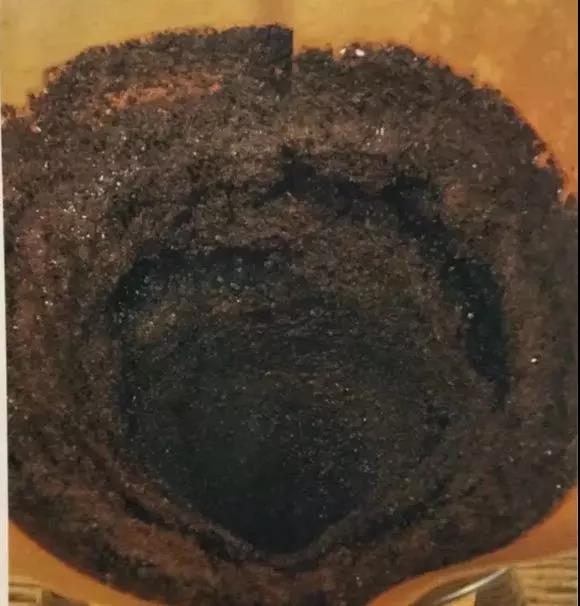
For light to medium roasted beans, I prefer all the grounds to take part in extraction (even extraction means the same time in water), so the ideal state for even extraction is a level bed with nothing clinging to the filter paper.
For medium to medium-dark roasts, I will choose grounds that cling to the filter paper, appearing to have small pits or a slight collapse in the center. I begin with a stable, gentle, fine stream that does not disturb the bed, reducing convection for thorough extraction.
So how do you achieve uniform water flow? One word: practice!
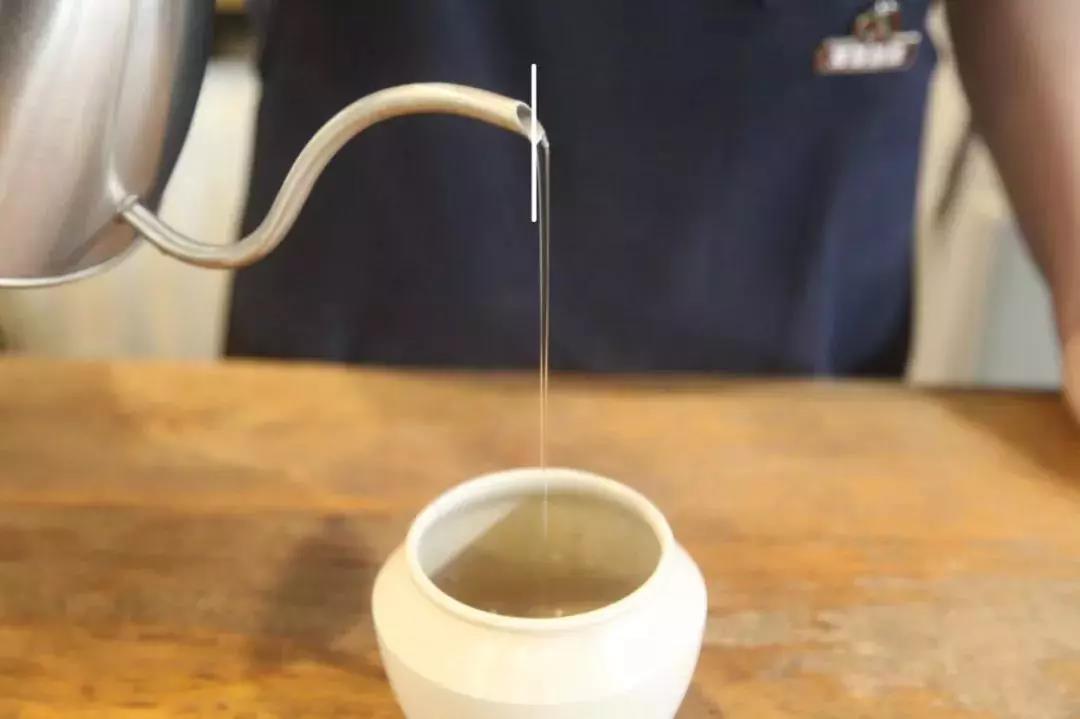
How should you practice?
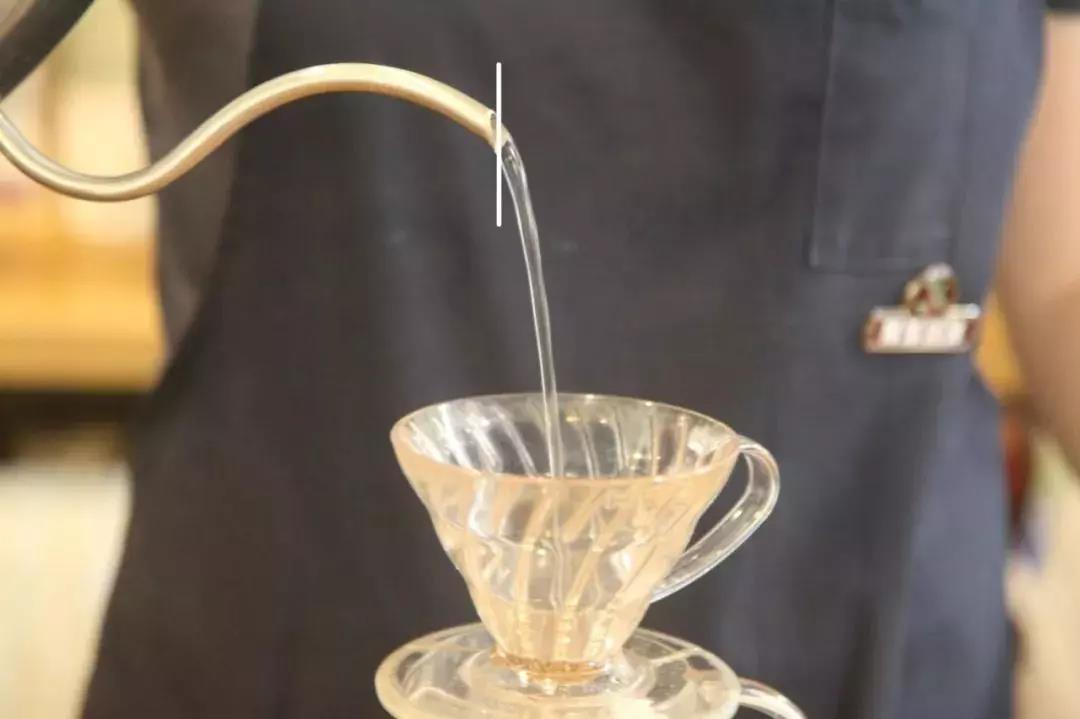
First, practice the stability of your flow, trying to fill a mug consistently with the same-size stream. Note that the stream should be perpendicular to the table surface, not following a parabolic trajectory.
Then, building on that, practice pouring within a coin-sized circle, paying attention to circling in parallel without sudden ups and downs, which would create uneven water pressure.
What if your pour-over kettle tends to "splash" water in a parabolic trajectory? What should you do?
As the image above shows, when a parabolic stream reaches the near point of the kettle, the lower flow actually washes roughly the middle layer. When it circles to the far point, it almost reaches the filter paper! So I suggest that anyone who has bought this type of kettle, or is used to a parabolic flow, consciously pull back a little, keeping the final landing point of the water near the center. That way, you won't have one side extracting normally while the other washes against the filter paper.
That is all for today's topic. Feel free to reach out with any questions or suggestions—FrontStreet Coffee will do our best to answer them!

FrontStreet Coffee Recommendation
Cold brew tends to amplify floral and fruity notes while muting woody and roast-driven aromas, so a light-to-medium roast is the best choice for showing a bean's character. If you like a floral-forward iced coffee, FrontStreet Sun-Dried Huakui is the one to buy: grown in Ethiopia, coffee's birthplace, it is processed naturally, so the beans absorb a great deal of sweetness and aroma from the pulp and skin, and as cold brew it shows magnolia, cream strawberry, dried mango, guava, and black tea. For a full, juice-like cold brew, FrontStreet Kenya Tomato is the go-to—its sweet-sour cherry tomato, snow pear, black plum, and smoked plum character comes through fully in cold extraction, with low bitterness and full acidity that turns especially refreshing over ice. FrontStreet Kenya Tomato comes from Kenya's Thika region, from the well-bred SL28 and SL34 varieties, and uses the region's distinctive K72 double-wash processing, which lets the green beans show their own flavor to the fullest; a medium-light roast then converts the aroma precursors into more complex notes, giving the coffee its rich fruit character.
Because cold brew usually uses more grounds than pour-over, it makes sense to favor affordable, drinkable beans over expensive high grades—or to blend for both flavor and value. FrontStreet Strawberry Candy is a good example: it combines the representative Panama Geisha variety with a honey-processed Costa Rican coffee, one bringing delicate rose and orange, the other the sweet aroma of grape, dried blueberry, and strawberry gummy, for a rich, layered cup. As cold brew it is sweet-sour and lively, and if left to ferment and settle a little it even takes on a fruit-wine quality. If you love the passion fruit, grape, apricot, and dried-fruit sweetness of FrontStreet Colombia Sidra but find the cost too high, blend it 1:2 with FrontStreet Costa Rica Tarrazu: you still get Sidra's floral-fruit character and Tarrazu's refreshing citrus acidity in the cold brew, at a much better value.
Washed Yirgacheffe is another fine cold brew choice. As the most representative African coffee, Yirgacheffe has won over a large following with its floral and fruit notes; the washed version in particular has a clean, bright sweet-sour profile, an affordable everyday price, and broad brewing flexibility—pour-over, siphon, French press, or cold brew all work well, making it a go-to single-origin for any home brewer. FrontStreet Gudingding is the most representative of the washed Yirgacheffe beans, with excellent quality that suits cold brew especially well, showing very sweet berry notes, layering, and honey.
Important Notice :
FrontStreet Coffee is a long-established specialty coffee roaster in Guangzhou China, selling freshly roasted beans from its own farm in Yunnan as well as dozens of carefully selected single-origin beans from around the world for both pour-over and espresso. The products deliver consistently excellent quality and great value, with shipping within 24 hours. Guangzhou's FrontStreet Coffee shop is recommended by many coffee lovers, and the beans are now available online at the Tmall 。
FrontStreet Coffee has moved to a new address:
FrontStreet Coffee Address: 315,Donghua East Road,GuangZhou
Tel:020 38364473
 Scan and follow the En Gafei WeChat official account. Please indicate that the reprint comes from "En Gafei".