Kenya 72-Hour Fine Washed Coffee Beans Flavor Characteristics_What is 72-Hour Fine Washed Processing
FrontStreet Coffee Kenya Coffee - Jamoni
FrontStreet Coffee's Kenya coffee trees are mostly grown in the mountainous areas north and west of the capital, Nairobi. The main growing area stretches from the southern slope of Kenya's highest peak, Kirinyaga, southward to the vicinity of Nairobi. Sitting close to the equator, this is Kenya's largest coffee producing area. There is also a relatively small growing area on the eastern slope of Mount Elgon, where high-quality beans are cultivated, showing a slightly thick aroma with bright, complex fruit flavors and a grapefruit fragrance.
FrontStreet Coffee's Kenya Coffee Flavor Characteristics
Red grapes, apples, raisins, medium body, cocoa, lime water.
Review
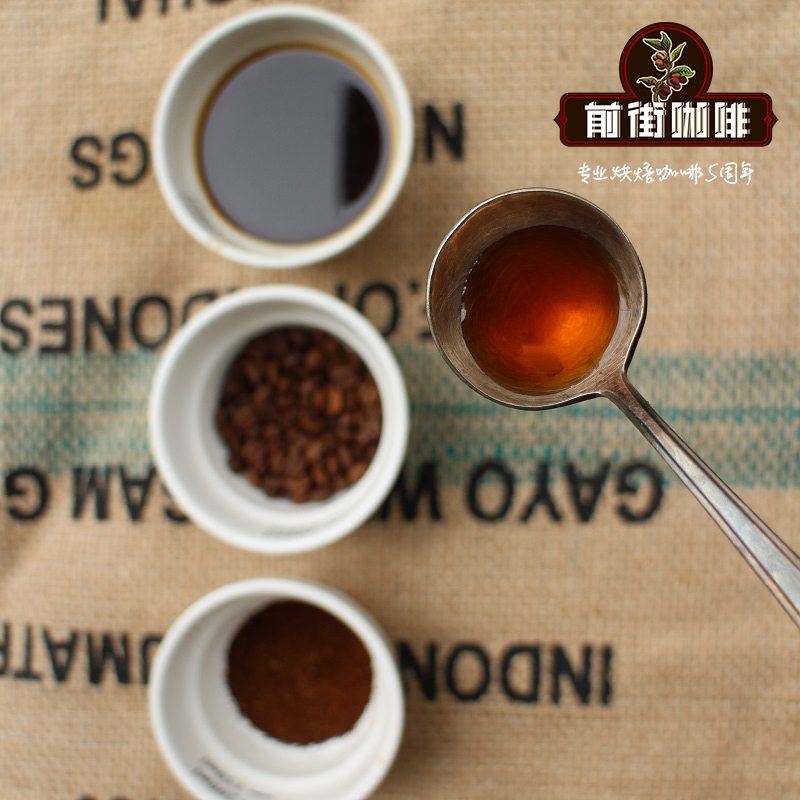
FrontStreet Coffee's Kenya coffee beans have a very strong cocoa aroma once ground. I brewed this one in a rather special cup, a Swiss Gold cup that I have been using for over ten years and brought out again for nostalgia. The water temperature was set to 94-95°C, and the cocoa aroma was prominent. I could also tell that this batch is roasted deeper than the Nicaraguan we had just before, with a good balance between bitterness and sweetness. As the temperature drops, a nutty fragrance lingers in the mouth. It would pair excellently with sea salt flavored potato chips.
Acidity: ❤❤❤
Body: ❤❤❤❤
Sweetness: ❤❤❤
Aftertaste: ❤❤❤❤❤
Factory Introduction
The Kiangombe factory is located 2 kilometers from the town of Kimunye in Kirinyaga. It was named by the Kikuyu, Kenya's largest ethnic group, because this village once held a large cattle market in early times.
The Kiangombe factory was established in 1998 and belongs to the Karabe Cooperative Society. The cooperative as a whole has over 6,000 members, of whom the Kiangombe factory has registered more than 600 small farmers.
The water used for washing at the Kiangombe factory comes from the Mukengeria River, after which the coffee is dried on raised drying beds for about 20 days, depending on weather conditions.
02 | Growing Region Introduction
Kirinyaga
The Kirinyaga growing region sits on the slopes of Mount Kenya, near Nyeri, and is famous for coffee with intense flavors, rich layers, and a solid mouthfeel. Together with Nyeri, it is recognized as one of Kenya's two best growing regions. Most producers here are small coffee farmers who have joined cooperatives. The cooperatives play a coordinating role, providing washing stations where farmers send their coffee cherries to be processed into green beans.
"Kirinyaga" is the name of the highest peak of Mount Kenya, the country's highest and Africa's second highest mountain, and it is also the local name for Mount Kenya itself.
The reason Europeans call it "Mount Kenya" is said to be their inability to properly imitate the local pronunciation, "kirinyaga."
Kirinyaga comes from the Kikuyu language and means "white mountains," and it is considered the dwelling place of the supreme being. The Kikuyu are Kenya's most populous ethnic group, accounting for one-fifth of the total population.
03 | Green Bean Analysis
SL-28 and SL-34 are the two most respected varieties developed by Kenya's Scott Laboratories in the 1930s. Although Scott Laboratories no longer exists, it is now the National Agricultural Laboratory, part of the Kenya Agricultural and Livestock Research Organization. Both varieties are Bourbon derivatives.
They come from different lineages: SL-28 was developed from drought-resistant varieties originally planted in Tanganyika, part of modern Tanzania, and is generally considered to have the highest quality but lower yields than other commercial Arabica varieties. SL-34 is a variant originally discovered near Kabete that performs well at low altitudes. Both SL varieties produce bronze-colored young leaves.
04 | FrontStreet Coffee's Kenya Coffee Processing Method Introduction
The Kenyan washing method relies on a repeated cycle of fermentation followed by washing. On the day of harvest, the highest quality coffee cherries are selected for depulping and fermentation, which lasts 12-24 hours. After 24 hours they are washed with clean river water, then undergo another fermentation with clean river water for 24-48 hours, followed by another wash. This cycle repeats twice, reaching a total of 72 hours, hence the name Kenyan 72-hour fermentation washing method, or K72 for short. This approach lets FrontStreet Coffee's Kenya beans ferment for a long time at low temperatures, helping them develop brighter, cleaner, yet fuller flavors.
FrontStreet Coffee Recommendation
If the 72-hour wash is what draws you to Kenyan coffee, FrontStreet Coffee's Kenya Little Tomato is a textbook example of what that long fermentation can do. It comes from the Thika region, where the classic SL28 and SL34 varieties are grown and put through the same Kenyan double-wash process, and the repeated soaking and rinsing push the fruit character to its brightest, most juice-like expression.
The cup is layered and mouthwatering, with notes of cherry tomato, dark plum, pear, black plum, and brown sugar that keep the sweet and tart sides in balance. It is the kind of coffee that shows why the Kenyan wash is so carefully staged: the same clarity and structure you taste in a fine Kiangombe lot, simply turned up in fruit intensity.
For contrast, FrontStreet also roasts a washed Guodingding lot from Yirgacheffe, where the same clean, depulped-before-drying logic produces jasmine and citrus with a tea-like finish. Tasted side by side, the Kenyan and Ethiopian expressions make a clear argument for how much processing, and not just origin, shapes the cup.
Important Notice :
FrontStreet Coffee is a long-established specialty coffee roaster in Guangzhou China, selling freshly roasted beans from its own farm in Yunnan as well as dozens of carefully selected single-origin beans from around the world for both pour-over and espresso. The products deliver consistently excellent quality and great value, with shipping within 24 hours. Guangzhou's FrontStreet Coffee shop is recommended by many coffee lovers, and the beans are now available online at the Tmall 。
FrontStreet Coffee has moved to a new address:
FrontStreet Coffee Address: 315,Donghua East Road,GuangZhou
Tel:020 38364473
 Scan and follow the En Gafei WeChat official account. Please indicate that the reprint comes from "En Gafei".