Coffee Growing Regions | An Introduction to Kenya's Coffee Regions and Classification System

Kenya: Origin and Geography
Kenya, officially the Republic of Kenya, sits in eastern Africa with the equator crossing its central region and the Great Rift Valley running north to south. It borders Somalia to the east, Tanzania to the south, Uganda to the west, Ethiopia and Sudan to the north, and the Indian Ocean to the southeast. The country is defined by highlands averaging 1,500 meters, and Mount Kenya (Kirinyaga Peak) in the central region rises to 5,199 meters with snow-capped summits - Africa's second-highest mountain.
Altitude, Latitude, and Geology: The equator runs through Kenya, placing the country within 10 degrees of latitude north and south. As a tropical growing region, Kenya sees two rainy seasons a year and therefore two harvests: 60% concentrated from October to December, the remaining 40% from June to August. Coffee is grown primarily in volcanic soil at elevations of 1,600-2,100 meters, from around the capital Nairobi up into the Mount Kenya region. That altitude is ideal for flavor development: cooler mountain temperatures slow growth, letting aromatic compounds develop fully, producing more pronounced fruit acidity and harder, denser beans. This fertile, crescent-shaped coffee belt is the main source of Kenya's premium beans.
Coffee is Kenya's second-largest export product after tea.
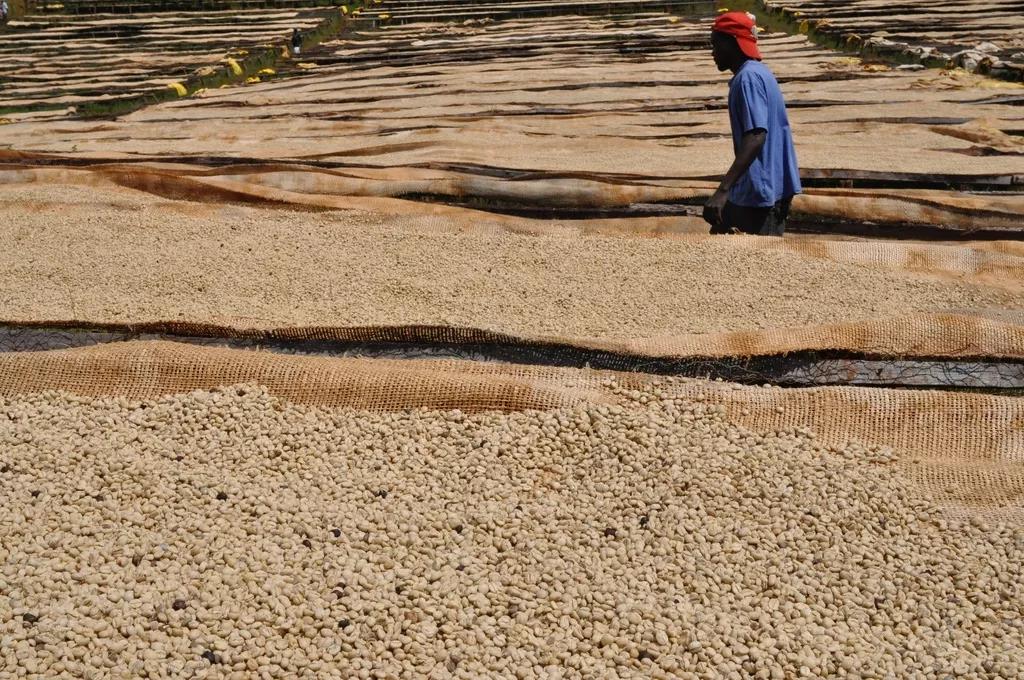
African coffee origins are renowned worldwide for their captivating acidity and aroma, and Kenya is no exception. Perched on the equator in East Africa - the Indian Ocean to its east, Ethiopia to its north, Tanzania to its south - Kenya stands as one of East Africa's coffee powerhouses and an irreplaceable producing nation.
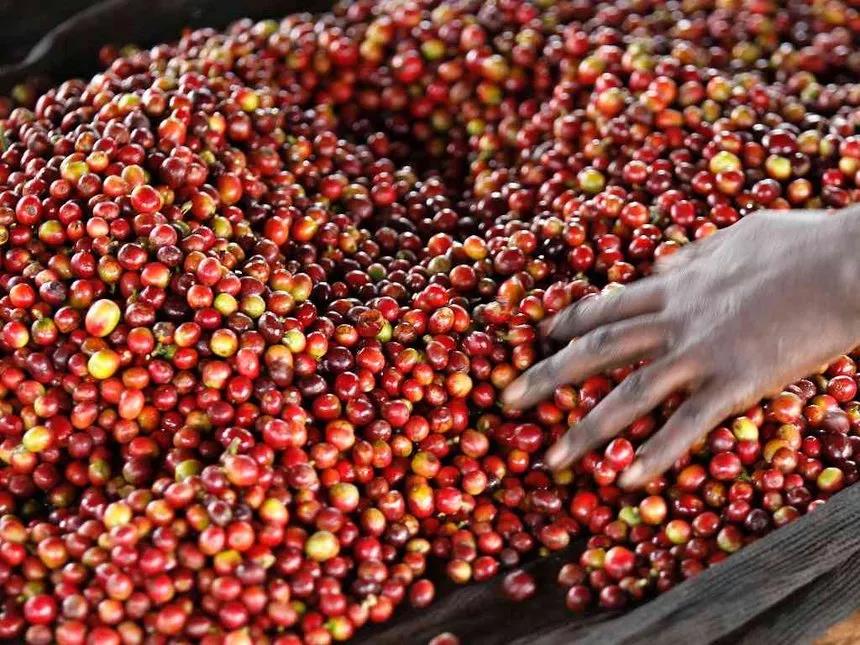
Kenya's two rainy seasons sustain two harvests each year: 60% of the crop from October to December and 40% from June to August. Coffee grows primarily in volcanic soil at 1,600-2,100 meters, from around the capital Nairobi up to the Mount Kenya region. The altitude is ideal for flavor development - cooler temperatures slow the growth so aromatics fully develop, giving more pronounced fruit acidity and harder bean density - and this fertile crescent of coffee land is the main source of Kenya's premium beans.
In Kenya, coffee is the second-largest export product after tea.
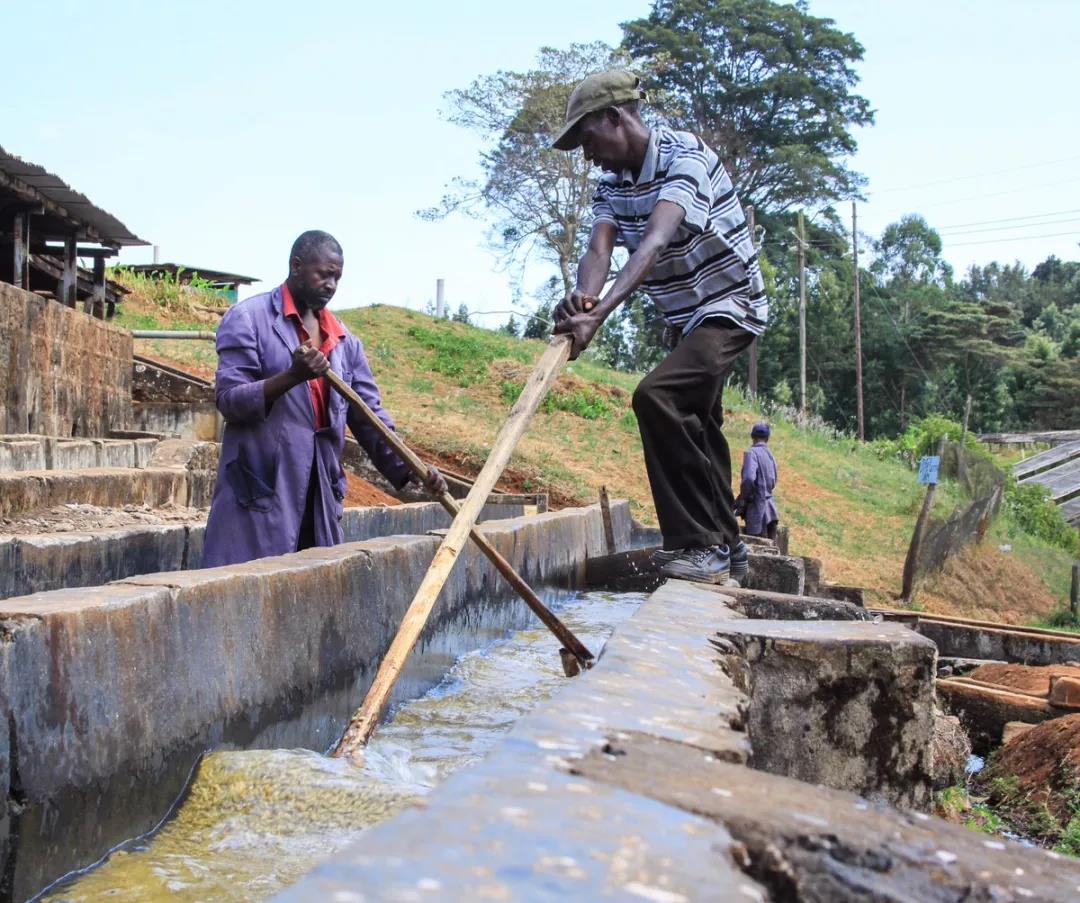
Kenya Coffee History
In 1878, the British introduced coffee to the continent, establishing plantations in Kenya during the 19th century; at that time, Ethiopian coffee beverages reached Kenya via South Yemen. But it was not until the early 20th century that Bourbon coffee trees were brought to Kenya by the St. Austin Mission.
After Kenya gained independence in 1964, the coffee industry continued to build on this foundation and became world-renowned for quality. Notably, Kenya established an auction system that avoided the exploitation of small farmers seen in other producing countries - the so-called "fair trade coffee" movement traces its origins to this context.
The Kenya Auction System
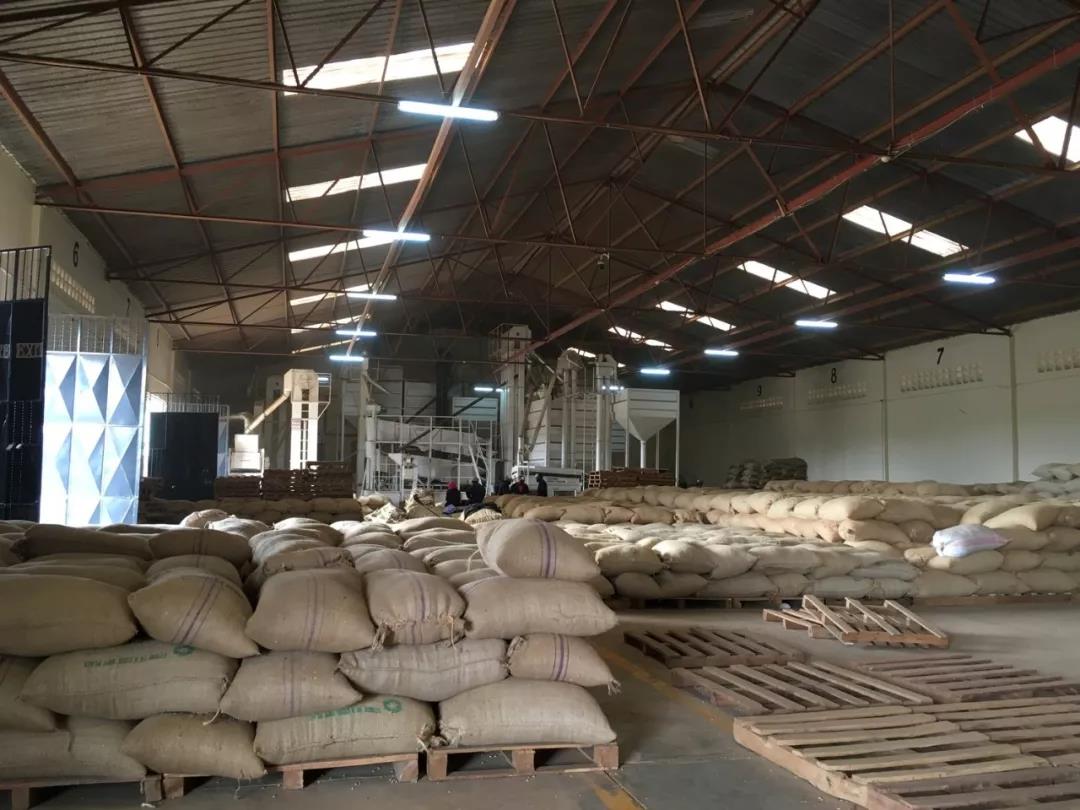
Most Kenyan coffee is graded and inspected by the Kenya Coffee Board before being sold at auction. The public auction system dates back to before 1934 and operates through an agency structure: Kenya has 50 licensed agents who send samples to their clients for cupping, and clients bid on preferred lots through their agents. Over time, however, the system seemed to reward middlemen while squeezing farmers' incomes, so in 2006 Kenya opened the door to 32 independent sales agents who could deal directly with foreign buyers without going through the auction.
Both routes must meet the Kenya Coffee Board's standards for quality, storage, and bank guarantees. The two systems run in parallel, and after years of development the result is the most transparent auction distribution system in coffee: better coffee commands higher prices through cupping, which encourages more cooperatives and farms to take part.
Kenyan coffee trades through two main channels:
- The Nairobi Coffee Exchange auction (central auction system), through which 85% of beans are traded.
- Direct trade (often called the "second window"), through which the remaining 15% are sold.
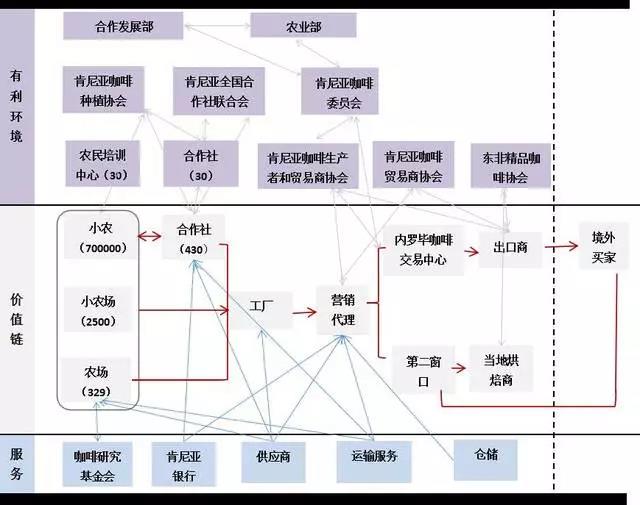
Kenya Coffee Trading Process
Model 1: Nairobi Coffee Exchange Auction
Since the auction system's establishment in the 1930s, the vast majority of Kenyan coffee has traded this way. Auctions are held every Tuesday during the harvest season, having evolved from an "open outcry" system in which each trader bids by pressing an electric trigger. Thanks to competition among agents, prices for high-quality, sought-after lots can soar.
Model 2: Direct Trade
Direct trade lets farmers and buyers - roasters or importers - negotiate a price ahead of or during the harvest, independent of the auction. Some exporters also buy directly from associated marketing agents or factories, using the previous week's auction prices for specific grades as a negotiating reference. For farmers producing exceptional coffee, direct trade can mean meaningfully higher income.
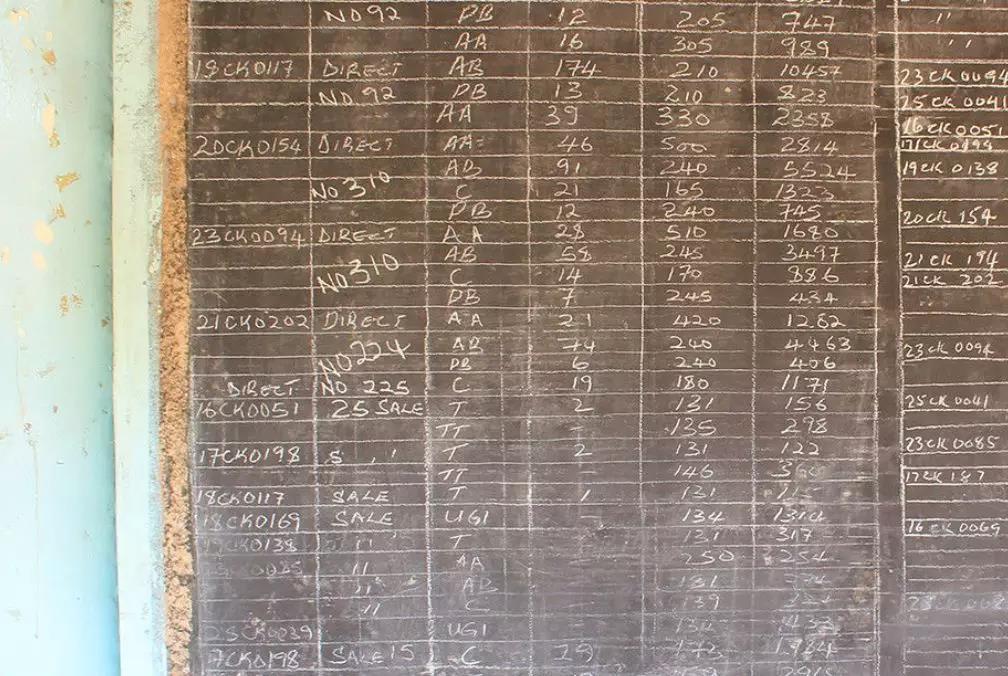
Kenyan coffee comes from two main growing models: plantations, covering 3,300 farms across 40,000 hectares, and estates with 3,000 small holdings (50 hectares each), together about 25% of Kenya's coffee-growing land. The remaining 75% consists of 270 cooperatives in which 700,000 small-scale farmers cultivate 120,000 hectares.
Smallholder cooperatives began building factories and washing stations in the 1960s, letting them process coffee to the same standard as the large plantations. Today those factories serve up to 2,000 members each, and Kenyan coffee's quality remains recognized worldwide.
Kenya Coffee Varieties
The common Kenyan varieties are SL28, SL34, French Mission Bourbon, and Ruiru 11.
SL-28 & SL-34
As early as the 1930s, the Kenyan government commissioned Scott Labs to select varieties suited to the country. After individual numbering and screening, SL-28 and SL-34 were chosen - both descended from Bourbon, with SL-34 able to grow at slightly lower altitudes.
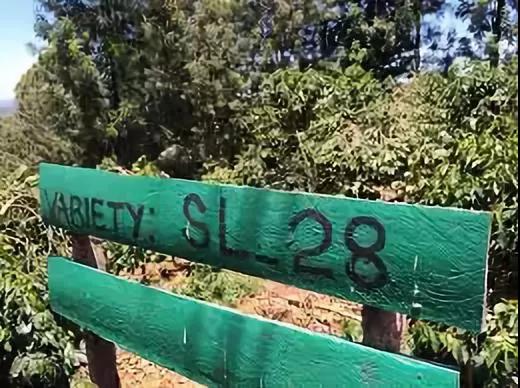
SL28 carries mixed heritage from French Mission, Mocha, and Yemen Typica; the original breeding goal was to mass-produce beans combining high quality with disease and pest resistance.
Although SL28's yields never met expectations, its copper-colored leaves and broad bean shape produce wonderful sweetness, balance, and complex, varied flavors, along with its distinctive citrus and black plum character.

SL34 tastes similar to SL28 but with a heavier, richer, cleaner mouthfeel, complex acidity, and a lovely sweet finish. Its heritage runs through French Mission, Bourbon, and more Typica lineage. The beans look much like SL28's, but the tree copes better with sudden heavy rains.
In practice, SL28 earns the higher praise - typically blackcurrant-like acidity and complex flavors - while SL34, though slightly behind, still impresses with its fruit. Together the two account for 90% of Kenya's production and are generally recognized as the face of Kenyan coffee.
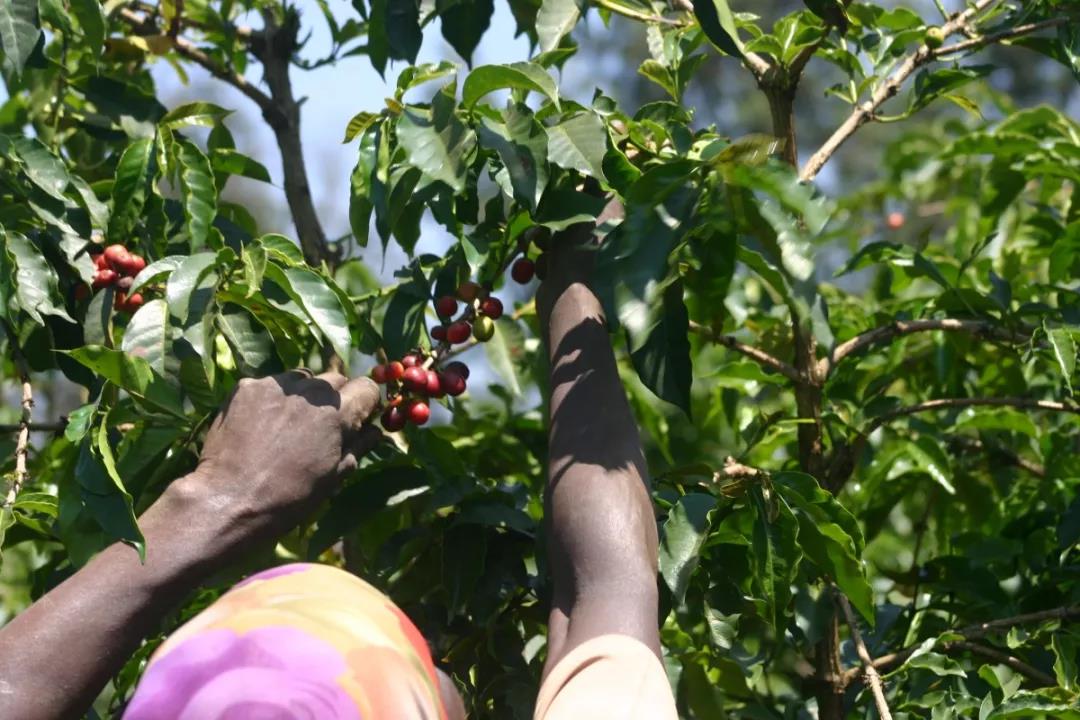
French Mission
Around 1892-1893, French missionaries brought Bourbon trees to Kenya. This original Bourbon stock is called the French Mission varietal; it escaped scientific improvement during cultivation and preserves Bourbon's most original flavors.
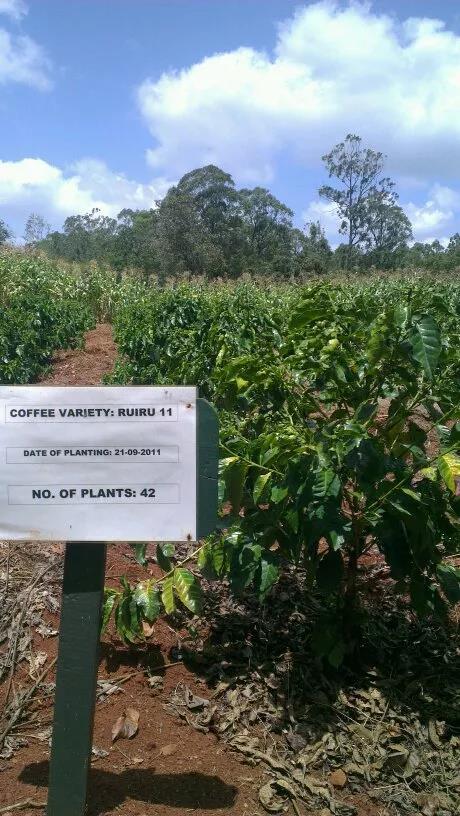
Ruiru 11
Ruiru 11 is a hybrid developed by Kenya in 1985 that prioritizes yield over quality - a cross of Arabica and Robusta. To date it has not been considered specialty coffee; suppliers specializing in fresh roasted specialty coffee generally do not carry it, though some importers of premium coffee sometimes mix it into blends to reduce cost. As with the natural mutations above, its flavor depends heavily on the specific terroir.
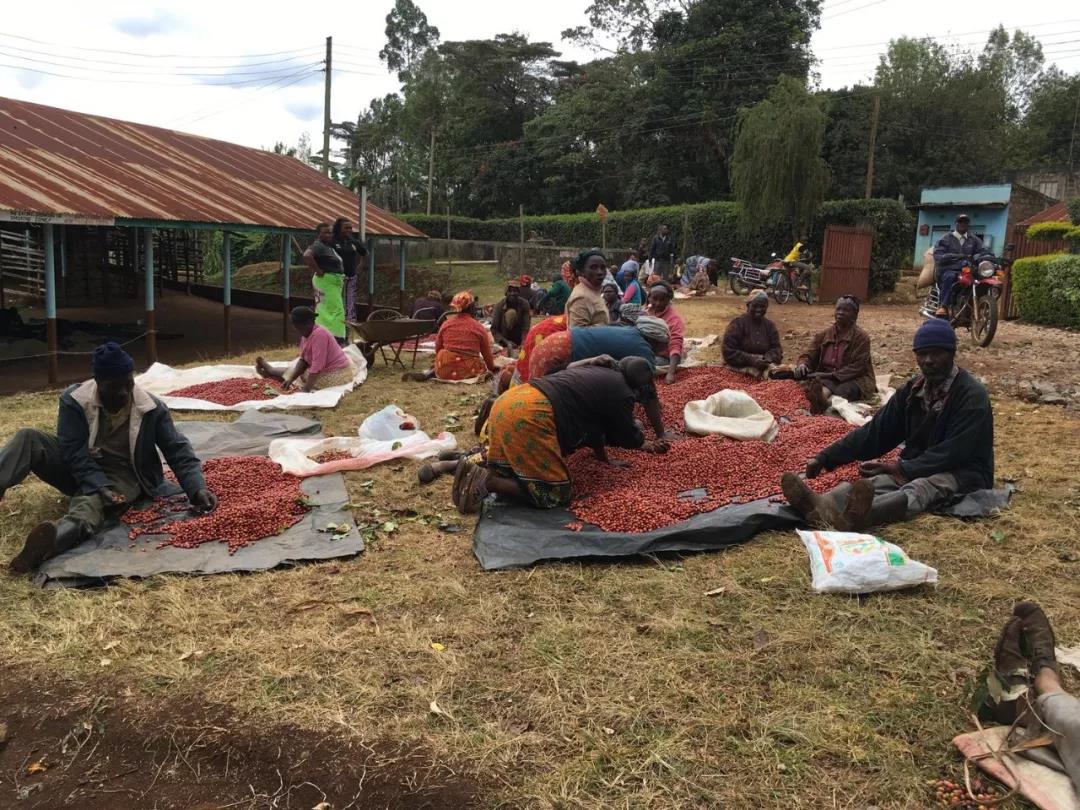
Kenya Coffee Grading
Kenyan beans are strictly graded, mainly by bean size, shape, and hardness, from high to low: AA or AA+, AB, PB, C, E, TT, T. Size serves as the basis, with cup quality as a supplementary reference.
Size Grading
AA is a commodity grade name referring primarily to bean size: AA denotes larger beans, generally green coffee above 17 mesh (17 mesh = sieve aperture diameter 6.75mm). AA covers screen sizes 17 and 18; AB covers 15 and 16.

AA Plus (AA+): AA grade with particularly excellent cup quality (flavor, mouthfeel)
AA: Screen size 17-18
AB: Screen size 15-16, making up the majority of production
C: Smaller than AB
TT: Lighter-weight beans blown out by air screeners from AA and AB lots
T: Lighter-weight beans blown out by air screeners from C grade lots
E: Elephant bean - large mutant beans formed by two beans fused together, also called elephant ear
UG: Anything not meeting the above standards
PB: Peaberry, classified by shape and unrelated to flavor weight

Flavor Grades
In order: TOP, PLUS, FAQ (Fair to Average Quality - may contain some slight defective beans, but flavor is unaffected).
FrontStreet Coffee Roasting Suggestions
Kenyan beans are relatively hard. Start with a hotter charge, with yellowing occurring around 5 minutes, then reduce heat to enter the Maillard reaction. At 178°C, reduce heat again to prolong the Maillard stage. When first crack begins, heat absorption is strong, so FrontStreet Coffee recommends maintaining heat through this phase to prevent stalling. Extending development through first crack helps temper acidity and develop flavor.
Kenya Processing Methods
Just as honey processing is associated with Costa Rica and wet-hulled processing with Indonesia, any discussion of Kenyan coffee must mention the K72 process.
The Kenyan 72-Hour Fermented Washed Process

Originating in Kenya, this method alternates fermentation and washing in repeated cycles. Processing begins on harvest day: the highest-quality cherries are selected for pulping and fermentation. Fermentation runs 24 hours, after which the beans are washed in clean river water. They then ferment for another 24 hours in fresh water, and are washed again. After this cycle repeats 3 times - 72 hours in total - the result is the Kenyan 72-Hour Fermented Washed process, abbreviated K72.
First Wash and Fermentation
After harvest, cherries are sorted by water-flow density: high-density (heavy) beans sink while low-density beans float, so only fully ripe, high-quality fruit - which sinks - is selected for processing.
Once selected, the cherries are depulped and washed and soaked, letting the pectin mucilage clinging to the green beans ferment. Pectin's natural sugars and alcohols play a crucial role in developing the coffee's sweetness, acidity, and overall flavor. Fermentation lasts up to 24 hours, removing 80-90% of the pectin while preserving the flavors within the beans.
Second Wash and Fermentation

Next comes the second wash and fermentation. After cleaning, the beans soak again in water for 24-48 hours; this step increases proteins and amino acids, creating complex, delicate layers of acidity. Finally the remaining pectin is removed and the beans move to raised drying racks.

That fermentation again runs up to 24 hours, removing 80-90% of the pectin while preserving the flavors inside the beans. Once all remaining pectin is gone, the beans are transferred to raised racks for sun drying - typically 5-10 days depending on the weather.
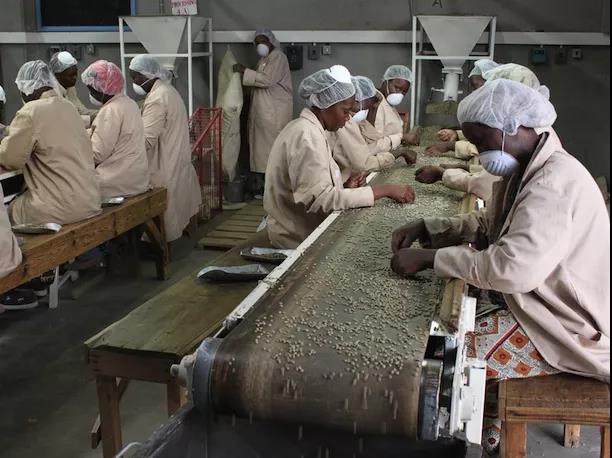
Kenya Coffee Growing Regions
Kenya's coffee is famous for seven main areas: Thika, Kirinyaga, Mt. Kenya West, Nyeri, Kiambu, Ruiri, and Muranga, with the foothills of Mt. Kenya and the Aberdares as the core producing zones.
Coffee differs considerably from county to county - Kenya is divided into 47 counties - and the trees mostly grow at altitudes of 1,400-2,000 meters with two harvests a year. The regions include Ruiri, Thika, Kirinyaga, Mt. Kenya West, Nyeri, Kiambu, and Muranga. For example, Embu coffees are balanced with citrus, chocolate, and apple notes and lively acidity; Nyeri coffees show white grape, juicy grapefruit, and cherry-tomato flavors, brimming with fruit and caramel sweetness.
Kenya's Main Coffee Growing Regions
NYERI
Located in central Kenya, Nyeri sits in the shadow of the dormant volcano Mount Kenya, whose red soils nurture the country's finest coffee. Agriculture dominates here and coffee is the main crop; smallholder cooperatives are more common than large estates. The region has two harvests, but main-season coffee is usually of higher quality.
Altitude: 1,200-2,300 meters
Harvest Period: October-December (main season), June-August (secondary season)
Varieties: SL-28, SL-34, Ruiru 11, Batian

MURANG'A
Part of Central Province, this region counts about 100,000 coffee farmers. Missionaries settled here early because the Portuguese barred them from the coast. It benefits from volcanic soil like Nyeri, and smallholders outnumber estates.
Altitude: 1,350-1,950 meters
Harvest Period: October-December (main season), June-August (secondary season)
Varieties: SL-28, SL-34, Ruiru 11, Batian
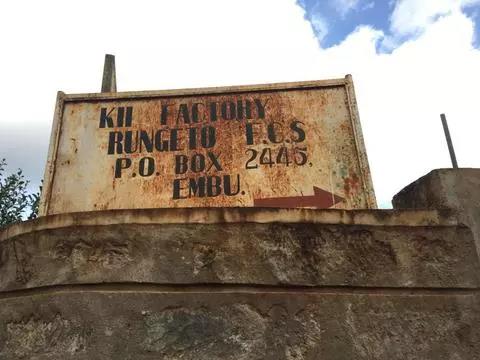
EMBU
Near Mount Kenya, named after the city of Embu, this region has about 70% of its population in small-scale agriculture. Tea and coffee are the leading cash crops; nearly all coffee comes from smallholders, and output is relatively small.
Altitude: 1,300 meters
MERU
Coffee here is mostly grown by smallholders on the foothills of Mount Kenya and the Nyambene Hills; the name refers to the magnetic field area and the Meru people who live there. In the 1930s they were among the first Kenyans to produce coffee, thanks to the Devonshire White Paper of 1923, which affirmed the rights of people of African descent in Kenya.
Altitude: 1,300-1,950 meters
Harvest Period: October-December (main season), June-August (secondary season)
Varieties: SL-28, SL-34, Ruiru 11, Batian, K7
KIAMBU
This central region holds the highest coffee-growing areas, though some high-altitude trees suffer from dieback disease and cease growing. The zone takes its name from Nakuru town; both estates and smallholders cultivate coffee here, though production is relatively small.
Altitude: 1,850-2,200 meters
Harvest Period: October-December (main season), June-August (secondary season)
Varieties: SL-28, SL-34, Ruiru 11, Batian
KISII
In southwestern Kenya, not far from Lake Victoria, this is a relatively small producing area with most beans coming from small producer cooperatives.
Altitude: 1,450-1,800 meters
Harvest Period: October-December (main season), June-August (secondary season)
Varieties: SL-28, SL-34, Blue Mountain, K7
TRANS-NZOIA, KEIYO & MARAKWET
This small western region has developed in recent years. Mount Elgon provides an altitude advantage, most coffee comes from estates, and cultivation is often a diversification move for farms that previously grew only corn or dairy.
Altitude: 1,500-1,900 meters
Harvest Period: October-December (main season), June-August (secondary season)
Varieties: Ruiru 11, Batian, SL-28, SL-34
KIRINYAGA
Situated on the slopes of Mount Kenya near Nyeri, Kirinyaga is known worldwide for coffee with intense, layered flavors and a solid mouthfeel. Together with Nyeri, it is recognized as one of Kenya's two finest producing regions. Most producers are smallholders belonging to cooperatives, which play a unifying role and operate washing stations where farmers deliver cherries for processing into green beans.
The name originally referred to Mount Kenya itself; under British colonial rule the name was deemed hard to remember and the mountain was renamed Mt Kenya, no longer called Kirinyaga.
Mount Kenya is Africa's second-highest peak. Though in the tropics, its summit is often snow-covered - "Kirinyaga" means "white peak" in the language of the Kikuyu, Kenya's most populous ethnic group (one-fifth of the total population), who regard it as the dwelling place of gods and call it "white mountains." The mountain is both a United Nations protected area and a favorite tourist destination, with wildlife gathering on the surrounding foothills and grasslands.
Altitude: 1,300-1,900 meters
Harvest Period: October-December (main season), June-August (secondary season)
Varieties: SL-28, SL-34, Ruiru 11, Batian
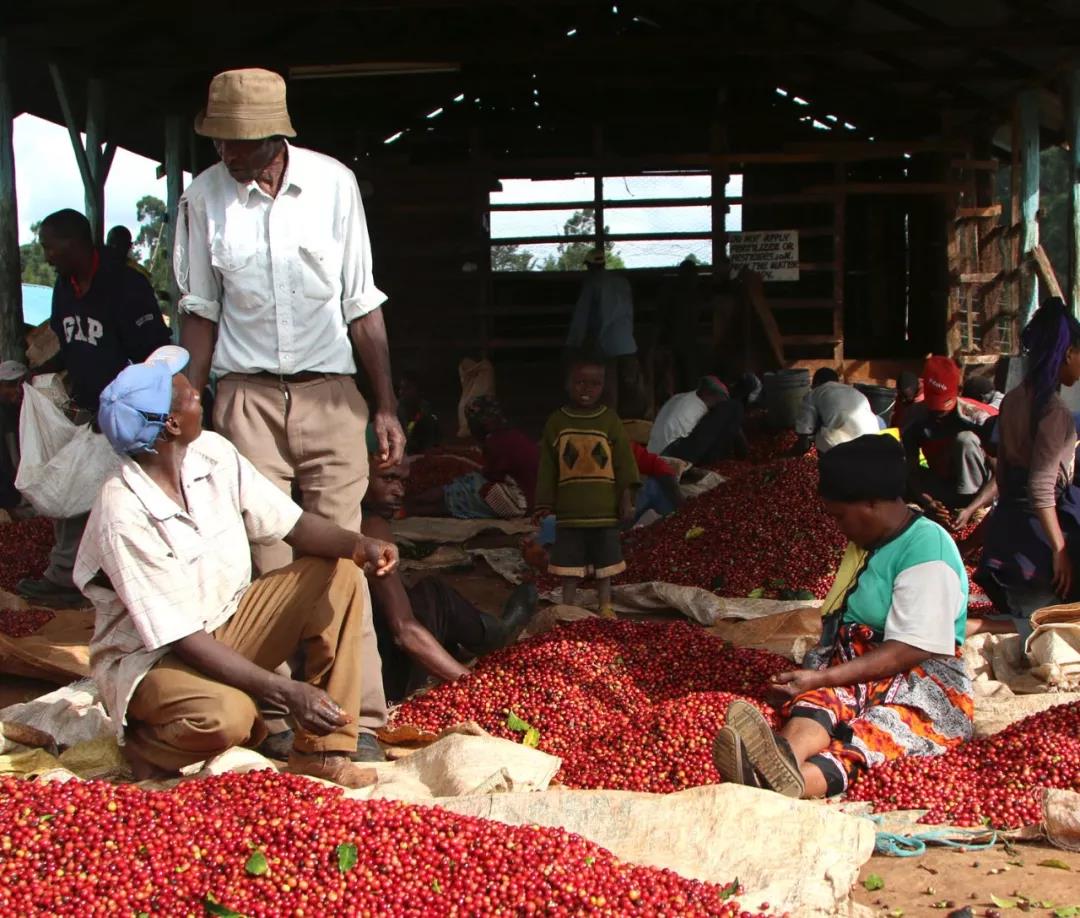
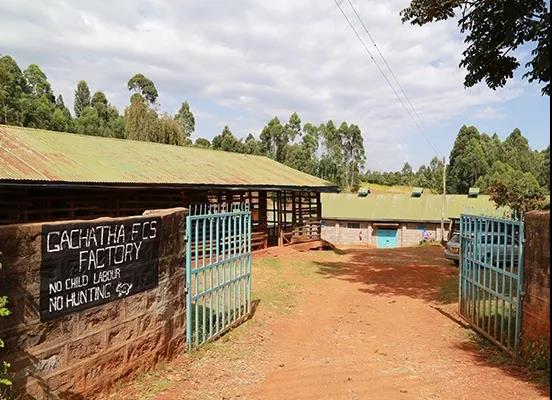
Coffee farms here are mostly small operations producing several hundred kilograms a year. Depending on transport distance and purchase prices, farmers decide whether to sell their fruit to nearby coffee factories. Plots are so small that land is often measured by the number of trees, which means producers can pick strategically and deliver the ripest cherries to local washing stations. The factories generally have abundant water for fine washed processing, including long freshwater soaking that consolidates Kenya's signature flavor profile.

FrontStreet Coffee Kenyan Coffee Introduction
Kenyan Coffee Factory Introduction
Kenya Karogoto
Region: Nyeri
Processing Factory: Karogoto Factory
Altitude: 1,800 meters
Varieties: SL28, SL34
Cooperative: Tekangu FCS
Producers: Cooperative member smallholders
The Karogoto washing factory - along with the Tegu and Ngunduru washing factories - belongs to TEKANGU Farmers Cooperative Society. It lies in the town of Karatina, south of Mount Kenya and 20 kilometers southeast of Nyeri, administered by Nyeri County in Central Province. The factory currently has 1,054 farmers with 201 acres of cultivated land, annual rainfall of 1,500mm, and average temperatures of 12-27°C, on fertile volcanic red soil rich in mineral phosphorus and well drained. The local farmers, from the Kikuyu tribe, harvest fully ripe fruit for washed processing, then slow-dry it for 2-3 weeks to 10-12% moisture before sending it to the nearby Sagana dry mill for hulling.

Entry is fresh and clean with cherry-tomato and berry acidity and excellent transparency. As the cup cools, the acidity picks up tea notes and caramel aroma - altogether very refreshing.
Kenya Hania Estate
French Mission Bourbon - Natural Process
Country: Kenya
Region: Thika
Processing Factory: Hania Estate (Chania Estates)
Altitude: 1,525 meters
Variety: French Mission Bourbon
Processing Method: Natural Process
The dry aroma shows natural fermentation, dried fruit, and vanilla. On sipping: caramel, vanilla, and mixed fruits with a solid juice sensation; the finish brings berries, rich jackfruit, and coffee-flower aromas. The overall impression is wild African regional character - a complex, hard-to-resist cup best enjoyed in small sips.
Kenya Asali TOP AA
Country: Kenya
Region: Thika
Processing Factory: Asali Honey Factory
Altitude: 1,550-1,750 meters
Soil: Volcanic soil
Grade: AA TOP
Varieties: SL-28, SL-34
Processing Method: 72-hour washed
The factory was established in 1975 and counts over 1,600 coffee farmer members, each owning an average of about 180 coffee trees. The main local varieties are SL28, SL34, and Ruiru 11. The wet aroma shows ripe tomato and florals; the entry brings cherry tomato and black plum with bright acidity and a clean mouthfeel. Medium body with prominent mid-palate sweetness and juice sensation; the finish has berry aroma and brown sugar sweetness with a note of green tea.
FrontStreet Coffee Brewing Suggestions
Because FrontStreet Coffee roasts this bean medium-light, we brew it with a higher water temperature and a faster-flowing dripper: the heat pulls out its bright acidity, while the quick-draining V60 keeps the higher temperature from tipping into over-extraction.
Coffee-to-water ratio: 1:15
Coffee grounds: 15g
Total water: 225ml
Water temperature: 91°C
Grind size: Fine-sugar texture | EK43s setting 10 (80% pass-through on the #20 standard sieve)

First pour 30g of water for a 30-second bloom, then pour 95g more (scale reads about 125g), finishing within about 1 minute. When the water level drops to two-thirds of the coffee bed, pour the remaining 100g (scale reads about 225g), finishing within about 1 minute 40 seconds. Extraction completes at 2'00" - remove the dripper.
Brewing flavors: Black plum and cherry tomato on entry; strong, solid acidity with prominent mid-palate sweetness and a juicy sensation; berry aroma and brown sugar sweetness on the finish, with green tea.
FrontStreet Coffee Recommendation
Kenya's berry-bright cup has a natural counterpart in Ethiopia, coffee's birthplace and home to countless heirloom varieties. For a gentle introduction to East African florals, FrontStreet Coffee's washed Yirgacheffe offers clear jasmine and bright citrus acidity with a light, elegant, tea-like body - like a clean lemon tea. The FrontStreet Coffee Guodingding Cooperative, an independent cooperative founded in 2012 with about 300 member farmers in the Worka area at the southeastern edge of Yirgacheffe (originally part of the YCFCU's Worka cooperative), is depulped before drying, so its citrus and lemon tones and elegant white florals come through with unusual clarity.
If you want the natural-process side, the FrontStreet Coffee Natural Red Cherry - defect-free cherries sun-dried for two weeks until the flesh's sugars infuse the beans and moisture drops to 12%, then hulled and passed through density, color, and hand-sorting checks - shows peach, cocoa, honey, and lemon. The FrontStreet Coffee Natural Huakui from the Hambella area of Guji, Sidamo (a 200-hectare farm; cherries dried 21 days on raised beds and hand-sorted every 3-5 days), roasted medium-light, layers light fermented wine, florals, citrus, and mango over thick honeyed sweetness, cocoa, and spice with a long finish. For something more exotic, the FrontStreet Coffee Hamasho 74158 from a winning Sidamo washing station - mostly the JARC 74-series variety 74158 - smells of perfume lemon, strawberry, and starfruit, with sweet strawberry, star fruit, and green grape in the sip; and the medium-light Kaffa Forest coffee, grown wild at 1400-2100 m under shade, brings white florals, bright lemon acidity, sweet orange and bergamot, and a green-tea-like finish.
Important Notice :
FrontStreet Coffee is a long-established specialty coffee roaster in Guangzhou China, selling freshly roasted beans from its own farm in Yunnan as well as dozens of carefully selected single-origin beans from around the world for both pour-over and espresso. The products deliver consistently excellent quality and great value, with shipping within 24 hours. Guangzhou's FrontStreet Coffee shop is recommended by many coffee lovers, and the beans are now available online at the Tmall 。
FrontStreet Coffee has moved to a new address:
FrontStreet Coffee Address: 315,Donghua East Road,GuangZhou
Tel:020 38364473
 Scan and follow the En Gafei WeChat official account. Please indicate that the reprint comes from "En Gafei".