Ethiopian Gesha Village Estate Brand - CHAKA Sun-Dried Gesha: What Does It Taste Like?
For more premium coffee knowledge, please follow our official WeChat account: FrontStreet Coffee
What is Chaka Coffee?
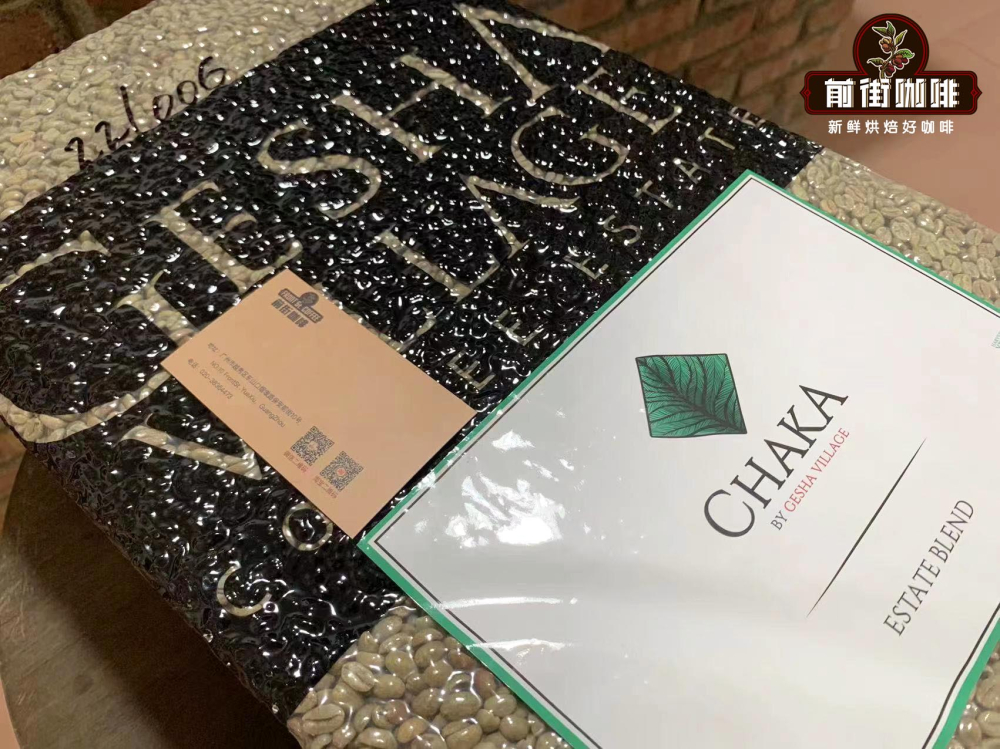
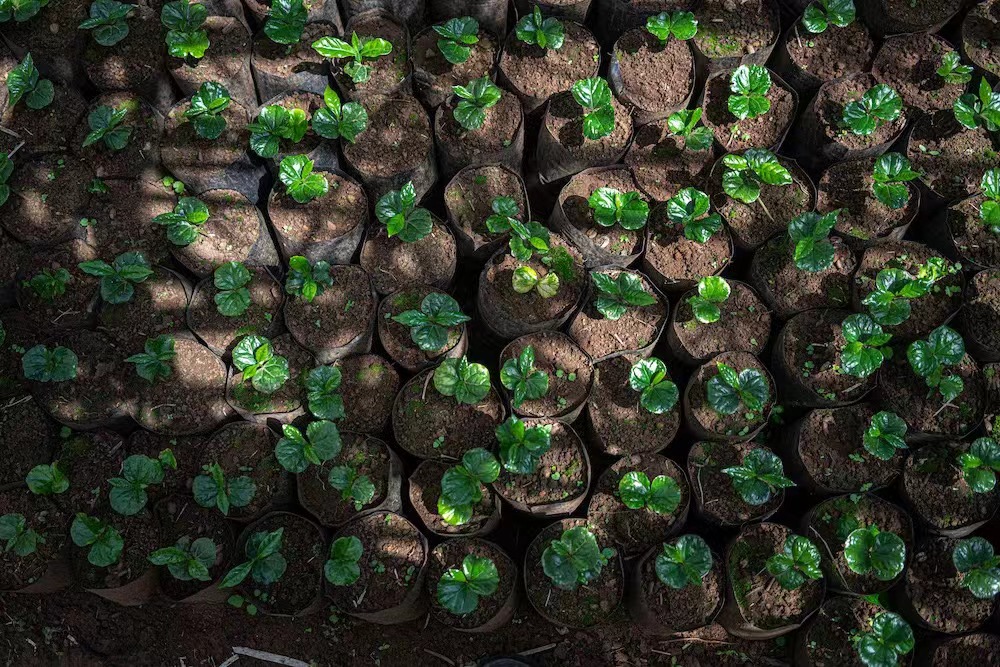
Chaka is a limited-edition specialty brand produced under Gesha Village in Ethiopia. In 2011, Gesha Village set up a nursery in Bench Maji, the gateway to Ethiopia's native Gesha forest, just 20 kilometers away. There the team carefully raised seedlings, transplanted and cultivated them while following the best agronomic practices, and began selecting the better-tasting varieties, cutting the original six down to three: Gori Gesha, Gesha 1931, and Illubabor.
Chaka grows from the original varieties found in the Gori Gesha forest. This quality-first approach allows the trees at Gesha Village Estate to reach their inherent potential, producing coffee with astonishing flavors.

Gesha Village Estate Ethiopia
Before he met Willem Boot, Adam Overton had a vague dream of buying a farm in Ethiopia and growing the world's most delicious coffee variety: Geisha.
Why Ethiopia? Because Ethiopia is said to be the birthplace of Geisha. In the last century, Geisha seeds were carried out of the depths of its pristine forests and eventually made their way to Panama. It was not until the early 2000s that Geisha became a variety that amazed the world. Adam's wife, Rachel Samuel, is also Ethiopian.

The Journey Begins
Adam had no coffee-growing experience whatsoever. He worked in documentary filmmaking and Rachel was a professional photographer. In 2007 the couple were commissioned to shoot a coffee documentary in Ethiopia. From then on they fell in love with coffee and became determined to buy a coffee plantation.
In 2009 they met Willem Boot. Three years earlier, Willem Boot had bought La Mula in Panama in order to grow Geisha. To learn from his experience, the couple flew from Ethiopia's capital to Panama's coffee region to visit La Mula. Since Geisha had appeared in Best of Panama and become a sought-after local variety in the early 2000s, Willem Boot had hoped to trace the origin of Geisha in Ethiopia's vast pristine forests. He had organized several exploration teams, and although the results were not ideal, he never gave up.
Finding the Perfect Location
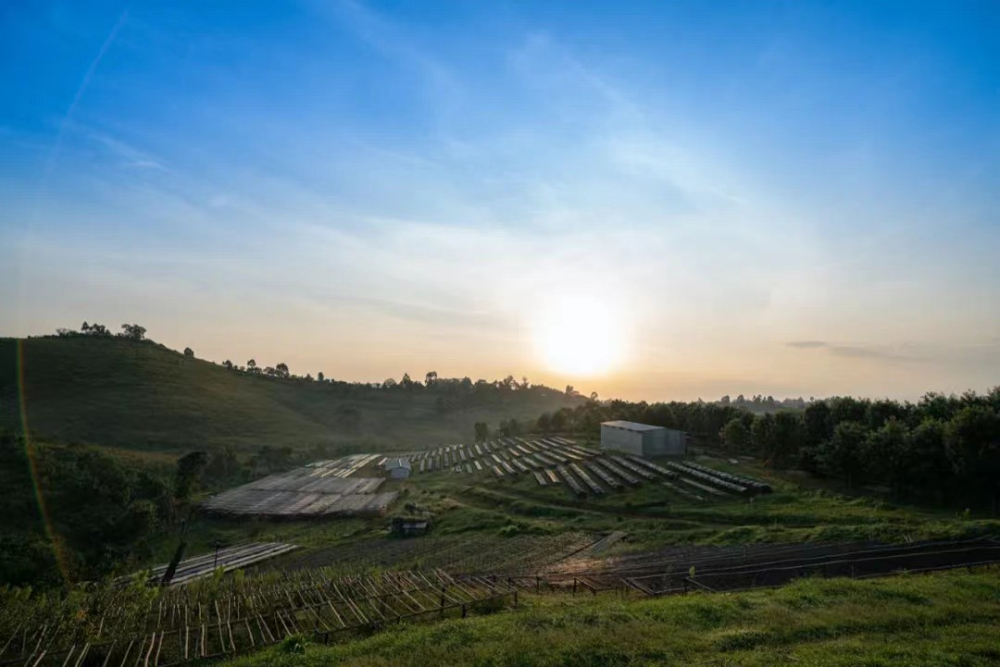
Learning from Willem Boot was a major turning point for Adam and Rachel's dream and strengthened their determination to establish their own Geisha estate. Because they lived in Addis Ababa, Ethiopia's capital, they first looked at nearby locations with better access to labor and transport. But meeting the conditions for growing Geisha—altitude, microclimate and everything else—kept pushing them further afield, until they finally reached Ethiopia's most remote southwestern region, on the border with Sudan.
That region is Bench Maji, at least a two-day drive from Addis Ababa. Nearby lie several villages called "Gesha," considered the most likely birthplace of Geisha. Bench Maji was cut off from the world, with few outsiders entering until roads were built a few years ago. The local Meanit indigenous people have their own language.
The Unique Environment of Bench Maji
Compared with other western producing regions, Bench Maji is adjacent to Kaffa, the birthplace of coffee. Its greatest characteristic is extremely high forest coverage. Coffee production in Bench Maji is overseen by farmers who, out of respect for the natural ecosystem, take care to minimize intervention in these forests—occasionally removing old coffee trees or poorly growing plants and replacing them with new seedlings from the same wild forest.

Establishing Gesha Village Estate
Accompanied by locals, Adam and Rachel climbed high into the mountains. The moment they saw the place they fell in love with the land: extremely high altitude of 1900 to 2100 meters, abundant rainfall, suitable temperature patterns, and rich, undeveloped pristine forest soil. They had found a coffee-growing ecosystem that had existed for a very long time, with ancient coffee trees. After three years of searching, they finally set foot on their dreamland, and they gave it a simple name: "Gesha Village Coffee Estate."
In October 2011, construction on the farm began. Willem Boot served as their consultant and flew out to the estate. What he saw looked less like a thriving farm than like camping on grassland. To guard against lions, watchtowers were built for early warning. To explore the forest, AK-47 rifles were needed against dangerous wild animals, and the team was accompanied by indigenous people carrying spears.

Discovering Wild Gesha
Almost at the same time, however, there was a breakthrough in finding suitable Gesha varieties to plant. Willem Boot and Adam discovered wild Gesha in a pristine forest not far from the estate that was very similar in form to Panamanian Geisha—the coffee cherries and the branch growth patterns were comparable. The growing environment was deeply shaded by trees, with thousands of coffee shrubs growing densely and coffee flowers blooming profusely. The air was filled with an unbelievably strong white fragrance. Willem Boot recalled feeling as if he were "in heaven."
The forest they discovered was called the Gori Gesha wild coffee forest, just 20 kilometers from the estate. Adam believed this forest was the same source from which the famous Panamanian Geisha was collected in 1930. Willem Boot also believed these trees were very similar to the Geisha he had planted at La Mula, with Gesha beans showing both green and bronze tips. In February 2012, Willem Boot returned to the estate again, and the estate's Gesha varieties were finally settled.

Building the Estate Infrastructure
Soon afterward, Adam and Rachel established their own washed processing station and laboratory near the forest. The estate grows only Geisha varieties. After studying the standardized planting methods of some Geisha estates in Panama, they numbered and recorded the different planting plots in detail for later organization and flavor tracing.
What's the Relationship Between Gesha Village Gesha and Panamanian Geisha?
According to FrontStreet Coffee's research, the native coffee varieties at Gesha Village are also called Gesha, but they can really only be considered "wild Gesha," different from the Panamanian Geisha we are familiar with. The two words differ by just one letter, the "i," which is itself a detail used deliberately to distinguish them.
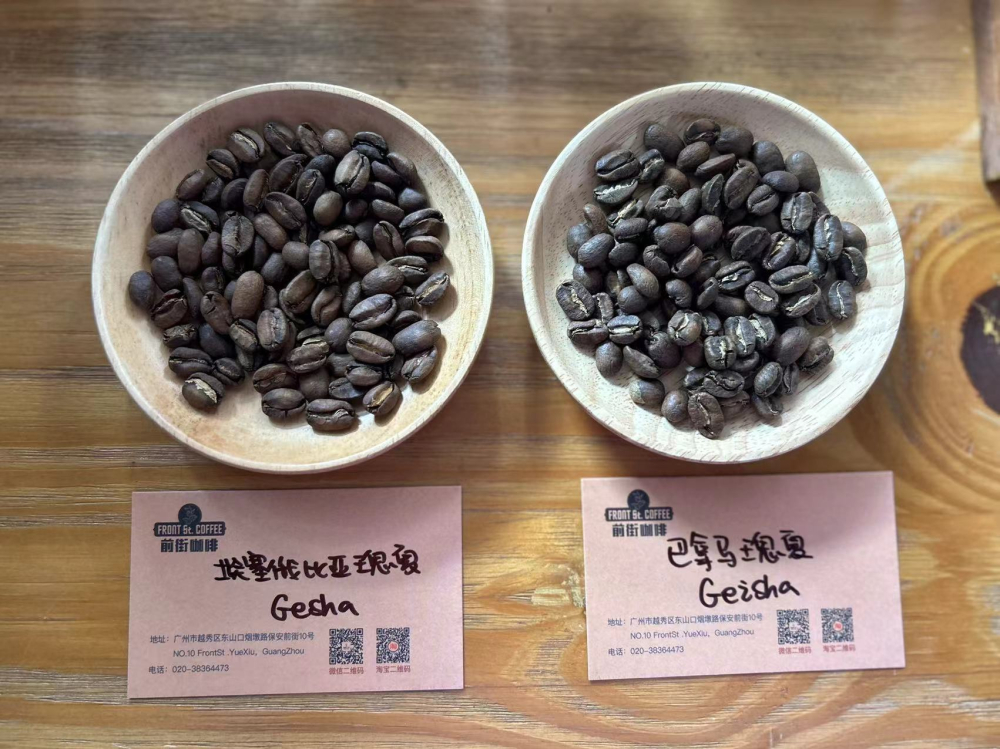
The difference between the two lies in this: Gesha grown in Central and South America traces back to "geisha T2722," cataloged by Costa Rica's CATIE as a fungal-resistant variety. After years of artificial cultivation and adaptation to climate and growing environment, it developed a set of stable characteristics. Through cupping, FrontStreet Coffee observed that "geisha T2722" coffee beans from Panama are generally larger, with a unique shape that is long, plump and bulging in the middle. When brewed, they often show delicate fruit acidity and charming floral notes, depending on the terroir.
Ethiopian Gesha, by contrast, is an untamed native variety. Its raw-bean characteristics and flavor profile sit closer to Ethiopian native varieties (Heirloom). When brewed, it typically presents citrus acidity and almond flavors with a distinct tea-like quality. And as FrontStreet Coffee mentioned at the start, Gesha Village grows three different varieties: Gori Gesha, Gesha 1931, and Illubabor Forest.

The Three Varieties of Gesha Village
The first two are the ones most people know. Gesha 1931 was selected by the estate owner from among many varieties in the forest, using Panamanian Geisha as a prototype and choosing on the basis of plant morphology, bean shape, particle size and cupping flavor. Gori Gesha, meanwhile, is the Gesha variety the team harvested when they explored the Gori Gesha forest in 2011—hence the name.
As for the last variety at Gesha Village, Illubabor was discovered and selected in the Illubabor forest in 1974 and is likewise a unique Ethiopian coffee variety. Through Gesha Village's official website, FrontStreet Coffee found that this naturally disease-resistant variety is planted mainly in two plots on the estate: DIMMA (altitude approximately 1966-2019 meters) and GAYLEE (altitude 1916-1982 meters).

FrontStreet Coffee's Gesha Village Chaka Processing Methods
Gesha Village's Chaka coffee beans come in two versions, one natural processed and one washed processed. FrontStreet Coffee did a comparative cupping of both. Compared with natural processing, washed coffee has higher acidity and better clarity, but its complexity and layering do not match natural processing. The natural processed Chaka has stronger berry aromas and complex fruit sweetness.

FrontStreet Coffee therefore chose the natural processed Chaka for retail. Although washed Chaka carries the distinctive flavor of coffees from the Ethiopian producing region, natural processed Chaka has a fuller, richer mouthfeel that leaves a stronger impression and suits a wider range of everyday extraction methods such as pour-over and cold brew, often with excellent results.
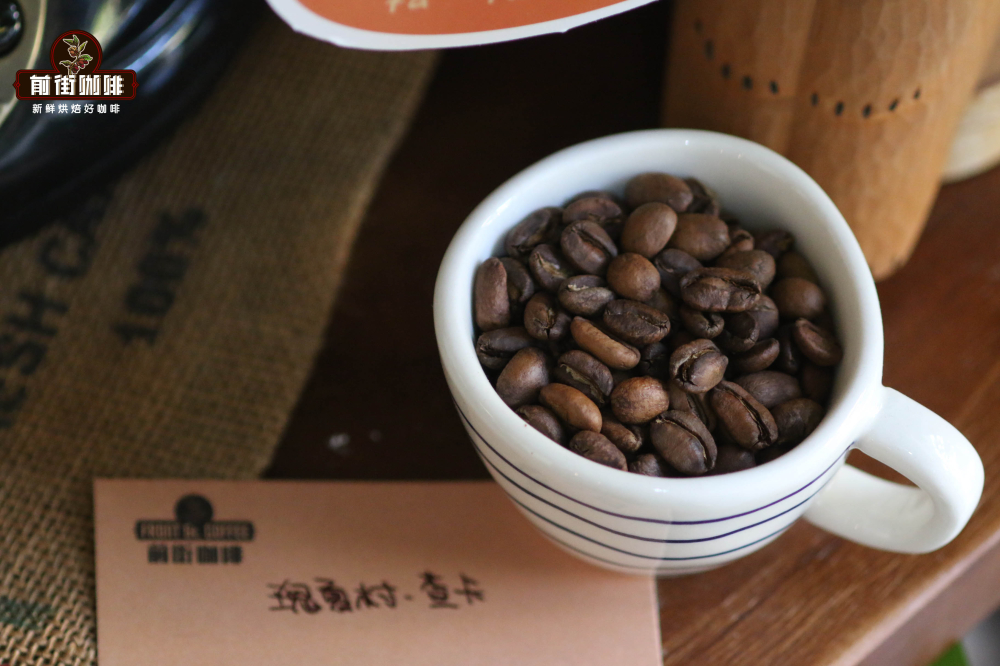
Gesha Village Estate · FrontStreet Coffee's Chaka
Region: Ethiopia · Bench Maji
Estate: Gesha Village Estate
Altitude: 1900-2100m
Processing: Natural Process
Varieties: Gori Gesha, Gesha 1931, Illubabor
How to Brew FrontStreet Coffee's Gesha Village Chaka for Best Taste?
To preserve the unique bright acidity of Ethiopian coffee beans, FrontStreet Coffee used a medium-light roast. Coffee beans from high-altitude regions have inherently denser structures, and because the roast is shorter, the bean structure has not changed much, which makes the substances in the coffee harder to extract. When brewing medium-light roast beans, therefore, FrontStreet Coffee recommends a medium-fine grind, the texture of coarse sugar (Chinese No. 20 standard sieve, 80% pass rate).

Use 15g of coffee grounds with a V60 dripper, water at 90-91°C, a 1:15 coffee-to-water ratio, and a three-pour technique.

Bloom with twice the weight of the coffee grounds—that is, 30g of water for 30 seconds. The bloom is needed so the grounds can release their internal carbon dioxide, which makes the following extraction more stable. Pour in a small circular stream to 125g, then continue pouring to 225g and stop. Remove the dripper once the water has finished dripping. Time from the start of the pour, for an extraction time of 2'10". Then pick up the whole cup, shake it well, and pour it out to taste.

Flavor Profile of FrontStreet Coffee's Gesha Village Natural Chaka Coffee Beans
Lemon-like fresh acidity, a berry-juice sweetness with full body, honey-cream smoothness, and a finish of oolong tea-like sweetness.
FrontStreet Coffee Recommendation
If Chaka's natural-process, medium-light style is what you are after, FrontStreet's own Gesha Village line is the natural next step. FrontStreet's Gesha Village Gold Label is grown from the Gesha 1931 variety, accounts for about 10% of the estate's total output, and is the estate's top coffee outside its auctions; it is given a refined natural process, and the cup is complex and layered, with a distinctive dry fragrance and a lingering finish. FrontStreet's Gesha Village Red Label is the Gori Gesha variety, makes up about 15% of production, scores 88 or above on the SCA 100-point scale, and is released as a single-terroir series with full traceability for every lot, including the farm block name, variety and processing date. For an easier entry into Ethiopian Gesha, FrontStreet's Grenada Gesha comes from the Genlana Gesha farm in Yirgacheffe; the fruit is hand-picked fully ripe and dried on raised beds for 14-20 days, and a medium-light roast brings out bright citrus acidity, elegant ginger flower and ripe fruit sweetness with the fine, lingering finish that marks the Gesha variety.
Ethiopian Gesha is a dense, medium-light-roasted bean that tends to sink and clog the drain hole if you grind too fine, so FrontStreet suggests a grind of about fine sugar, a 1:16 ratio, 15g of coffee in a small Hario V60, and water at 91°C. Bloom with 30g of water for 30 seconds, pour in a slow circular stream to 125g, wait until the water in the bed has dropped halfway, then pour again to 225g; the whole extraction should finish in about 2'10" to 2'20".
Important Notice :
FrontStreet Coffee is a long-established specialty coffee roaster in Guangzhou China, selling freshly roasted beans from its own farm in Yunnan as well as dozens of carefully selected single-origin beans from around the world for both pour-over and espresso. The products deliver consistently excellent quality and great value, with shipping within 24 hours. Guangzhou's FrontStreet Coffee shop is recommended by many coffee lovers, and the beans are now available online at the Tmall 。
FrontStreet Coffee has moved to a new address:
FrontStreet Coffee Address: 315,Donghua East Road,GuangZhou
Tel:020 38364473
 Scan and follow the En Gafei WeChat official account. Please indicate that the reprint comes from "En Gafei".