Flavor Characteristics of Hacienda La Esmeralda Geisha Red, Green, and Blue Label Coffee Beans - What Do Green and Red Labels Mean?
Geisha coffee from Panama's La Esmeralda Estate is one of the top estates in the specialty coffee world, known throughout the industry. FrontStreet Coffee believes that both its role as the discoverer and promoter of Geisha flavor and its many record-breaking auction results lie behind La Esmeralda's current success. Despite the exceptional quality of La Esmeralda's Geisha, FrontStreet does not recommend that newcomers to coffee start there. Precisely because these coffees are so good, other coffees can seem ordinary by comparison afterward, which FrontStreet considers unhelpful for developing a sense of coffee flavor.
With the vast number of coffee varieties worldwide, starting with the most popular options is by no means mediocre. FrontStreet believes the most important thing is to build your own flavor recognition system, which will help as you gradually explore coffee. Many people, though, find it confusing to distinguish between La Esmeralda's different Geisha lines. FrontStreet will focus mainly on the Green Label to explain the estate's grading system.
Panama La Esmeralda
After taking part in the 2004 Panama Coffee Cupping Competition and achieving overnight fame, La Esmeralda won the same competition for several consecutive years.
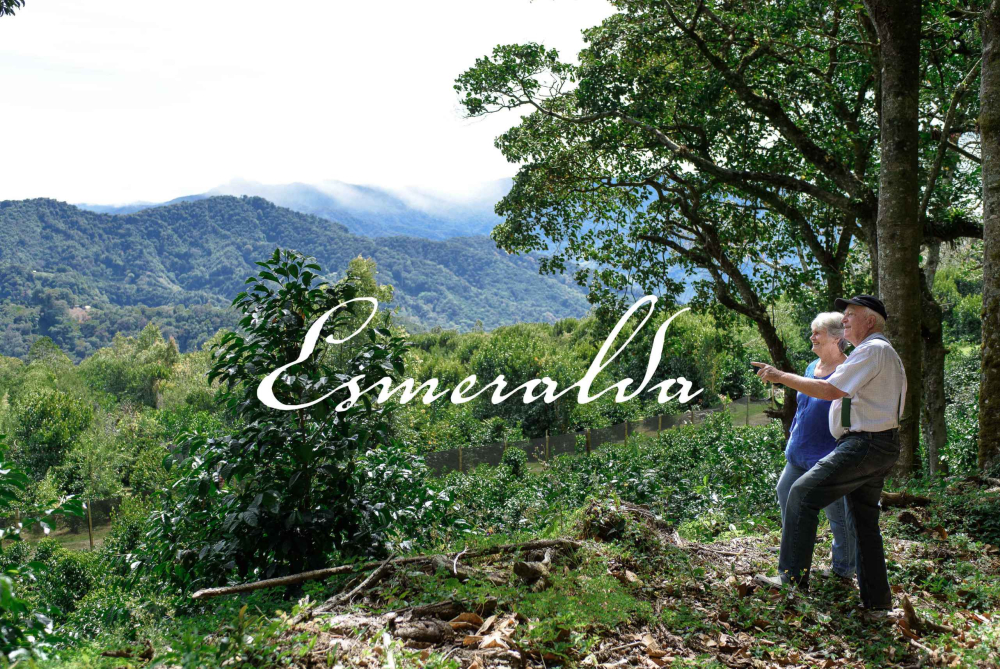
In 1964, the Swedish-American financier Rudolph A. Peterson retired, moved to Panama, and purchased La Esmeralda Estate in Boquete, focusing mainly on dairy farming. Having previously served as president of Bank of America, he was a major figure in finance at the time. Rudolph bought Hacienda La Esmeralda mainly for vacations and later retirement, and probably did not anticipate that the estate would become world-famous and even come to represent Panama's specialty coffee.
In 1973, his son Price Peterson earned a Ph.D. in neurochemistry in the United States but returned to Boquete to help his father manage the farm. After Price took over, he divided the market into three major brands based on altitude, microclimate, cup quality, and planted varieties: Esmeralda Special, Diamond Mountain Grows, and Palmyra. In 2012, Geisha was added as a fourth brand.
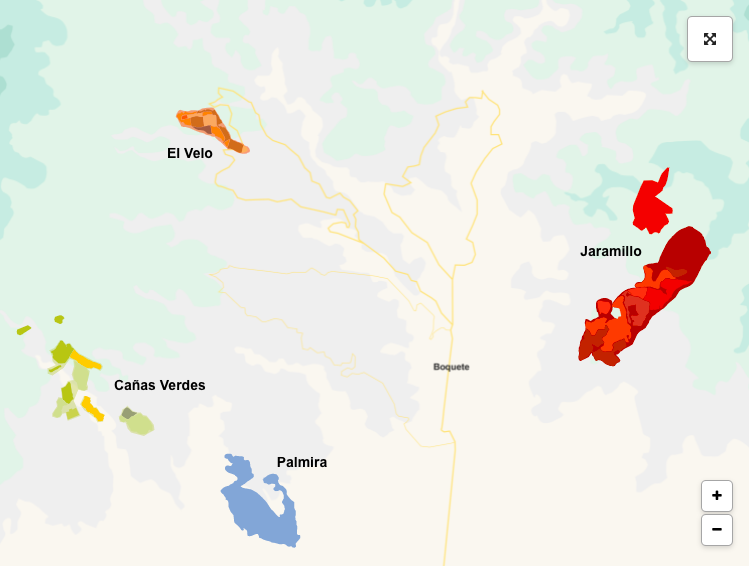
La Esmeralda Estate includes 4 farms: Canas Verdes, El Velo, Jaramillo, and Palmira. All coffee beans go to the post-processing facilities at these farms. The Peterson family first purchased the Palmira farm. According to FrontStreet's latest information, La Esmeralda acquired a new estate in 2022 named "Spring Estate," which sits at higher altitude and will be used to grow Geisha.
Differences Between La Esmeralda's Red, Green, and Blue Labels
After years of experimentation, La Esmeralda found that only Geisha beans harvested from trees growing above 1,400 meters display the variety's characteristic flavors. The main grading is therefore based primarily on growing height, supplemented by actual cupping results, sorting Geisha beans into red, green, and blue grades.
Red Label
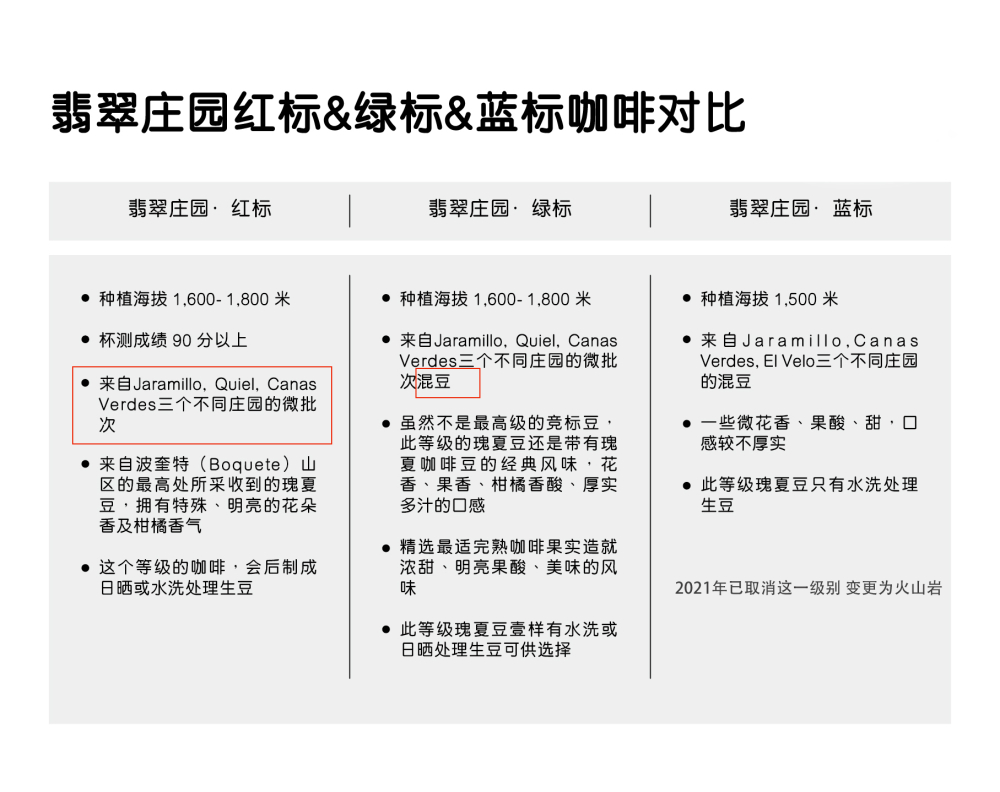
Esmeralda Special's single-estate Geisha is what we commonly know as Red Label. It is selected from Geisha grown at 1,600-1,800 meters with cupping scores above 90 points, produced from Jaramillo, Canas Verdes, and El Velo.
Red Label consists of Geisha lots from designated plots that are auctioned at La Esmeralda's independent auctions. There are also non-auction Red Labels on the market today, which are in fact Geisha beans from the same plots that were not submitted for auction and instead circulated commercially. There are only subtle quality differences between auction and non-auction beans, and it cannot be guaranteed that auction beans taste better than non-auction ones.

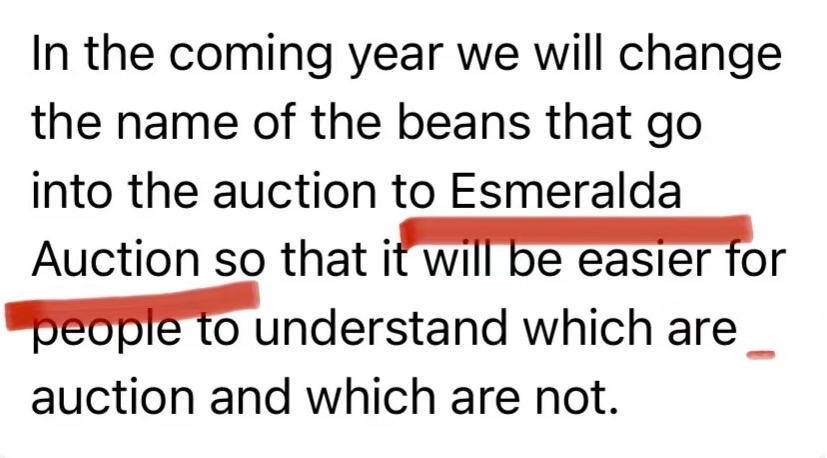
Because some merchants sell non-auction Red Label beans to consumers under auction Red Label labels, since auction prices are significantly higher, FrontStreet has exclusive information that La Esmeralda recognizes the difficulty of distinguishing auction from non-auction Red Label and will implement clearer differentiation.
Currently, FrontStreet's bean shelf features a non-auction Red Label Geisha from La Esmeralda, processed with the slow natural method. FrontStreet's La Esmeralda Red Label Geisha comes from the Mario plot of the Jaramillo farm. Jaramillo is the "discovery site" of Geisha flavor, and Geisha from the Mario plot has stood out in many auctions over the years.
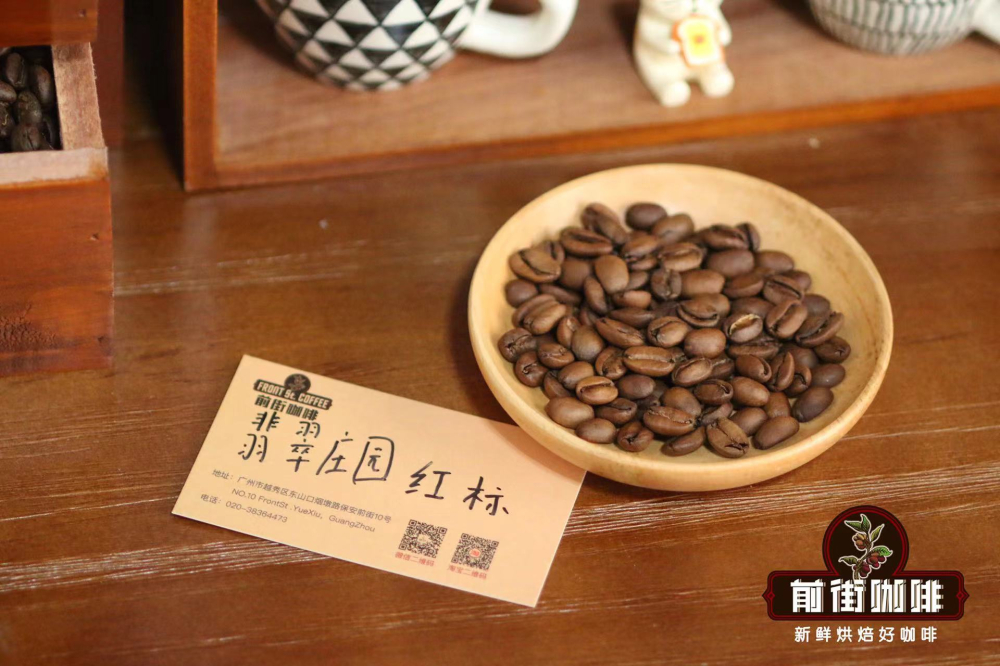
FrontStreet Coffee: Panama La Esmeralda Red Label Geisha Coffee Beans
Region: Boquete, Panama
Estate: La Esmeralda
Plot: Mario
Altitude: 1700+ meters
Variety: Geisha
Processing Method: Slow Natural
The slow natural method gives FrontStreet's Mario plot Red Label Geisha excellent acidity and prominent sweetness, with rich fruit flavors and white floral aromas. The flavor is more intense, and the mouthfeel more substantial. After tasting this bean, FrontStreet's baristas could not help but exclaim, "It's heavenly!"
Green Label
Private Collection, commonly known as Green Label, consists of non-auction lots that are still Geisha of excellent quality. Selected from Geisha grown at 1,600-1,800 meters, these are micro-lot blends from different plots including Jaramillo and Canas Verdes.
Because a blending model is used without detailed plot specifications, Green Label can sometimes taste very similar to Red Label, while the next lot may differ.

Although Green Label is not as high-grade as Red Label, it still possesses the classic Geisha flavors: floral aroma, fruit fragrance, citrus acidity, and a thick, juicy mouthfeel. FrontStreet's bean shelf features a washed Green Label Geisha. Because it is washed, it can express La Esmeralda's most basic terroir. Through comparisons between natural and washed La Esmeralda Green Labels, FrontStreet found that the washed version is overall fresher, more natural, bright, and refreshing than the natural, a coffee one never tires of. Compared to the natural Red Label it has a different character, and in terms of price FrontStreet's washed Green Label Geisha offers excellent value.
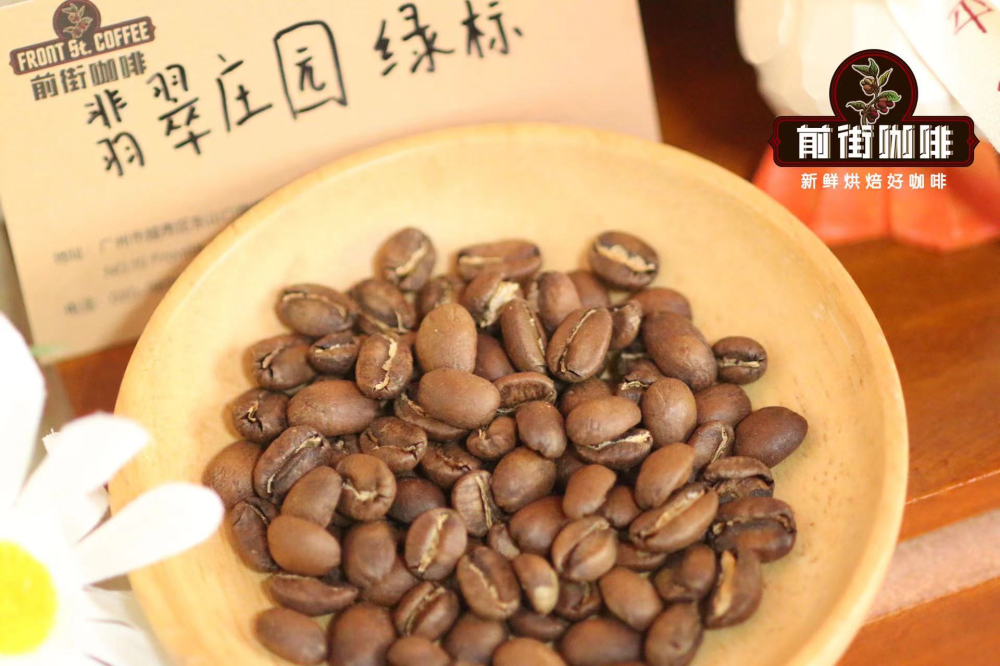
FrontStreet Coffee: Panama La Esmeralda Green Label Geisha Coffee Beans
Region: Boquete
Estate: La Esmeralda
Altitude: 1600-1800 meters
Variety: Geisha
Processing Method: Washed Process
Blue Label
Geisha 1500 is the brand commonly known as Blue Label Geisha. It is selected from blends grown at 1,400-1,500 meters from three different plots: Jaramillo, Canas Verdes, and El Velo. The flavor has subtle floral notes, fruit acidity, and sweetness, with a less thick mouthfeel. Blue Label Geisha was initially available only as washed, but in 2020 a natural-processed Blue Label Geisha was also released. In 2021, La Esmeralda discontinued the Blue Label brand.
In the second half of 2021, a Panama Geisha bean named Las Rocas appeared. According to the information, this green coffee comes from the Boquete region. After FrontStreet's verification, it turned out to be from La Esmeralda's Blue Label Geisha lot.
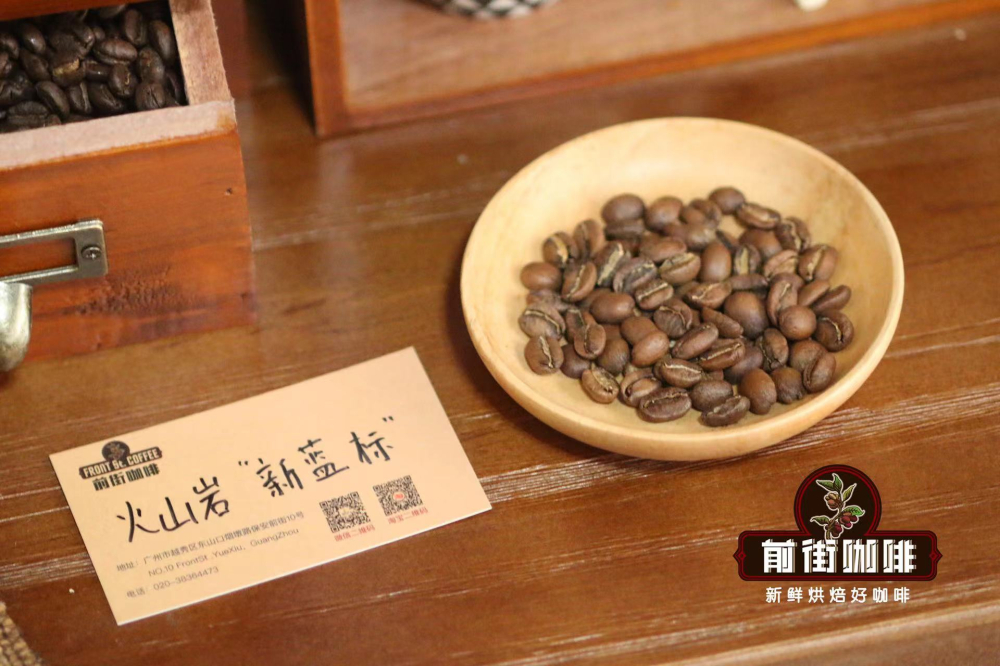
FrontStreet Coffee: Panama Volcanic Rock Geisha Coffee Beans
Region: Boquete, Panama
Estate: La Esmeralda
Altitude: 1500+ meters
Variety: Geisha
Processing Method: Washed Process
For anyone curious and wanting to try Panama Geisha, this entry-level bean is a perfect way to experience its charm.
How to Brew Panama Geisha Coffee Beans for the Best Taste
Panama Geisha beans are all specialty grade. To do justice to your precious Panama Geisha, you should naturally do your best to brew a delicious cup. Many customers at FrontStreet's stores, holding their newly purchased Geisha, ask the baristas how FrontStreet brews it.
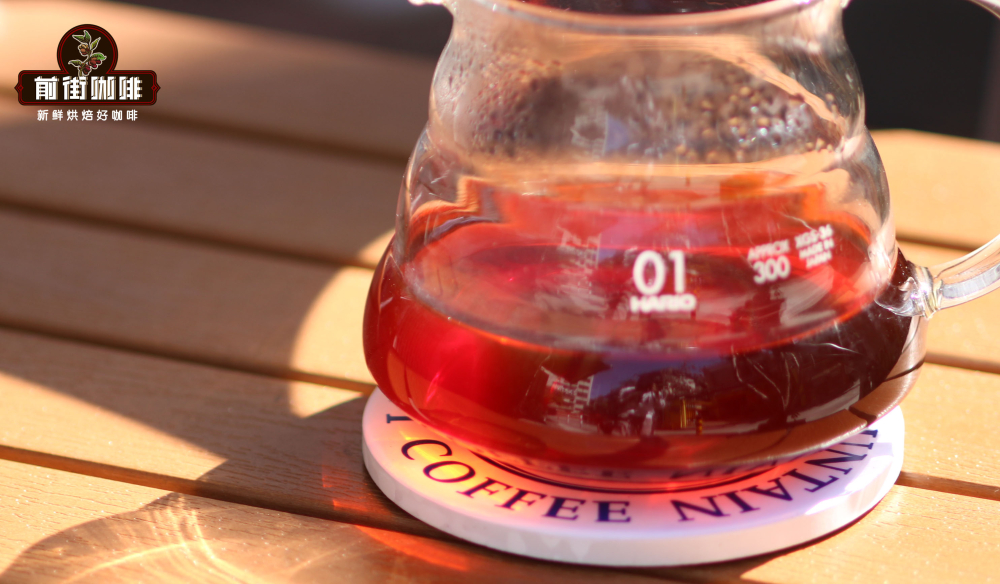
FrontStreet recommends using freshly roasted beans to maximize the coffee's rich flavors. Beans shipped by FrontStreet are all roasted within 5 days, because FrontStreet deeply understands how much freshness affects flavor. FrontStreet's roasting philosophy is "Freshly Roasted Good Coffee," ensuring every customer receives the freshest coffee on delivery. The resting period is about 4-7 days, so when customers receive their coffee it is at peak flavor.
Here, FrontStreet briefly introduces two methods for brewing Geisha: extraction with a siphon brewer, and the method commonly used at FrontStreet's stores. FrontStreet will use the washed Green Label Geisha as an example.
Siphon Brewer
A siphon brewer extracts through pressure difference. First, heat the water in the lower chamber to boiling, then insert the upper chamber, creating a high-pressure state in the lower chamber. Due to the pressure difference between the chambers, hot water rises to mix with the coffee grounds in the upper chamber for extraction.
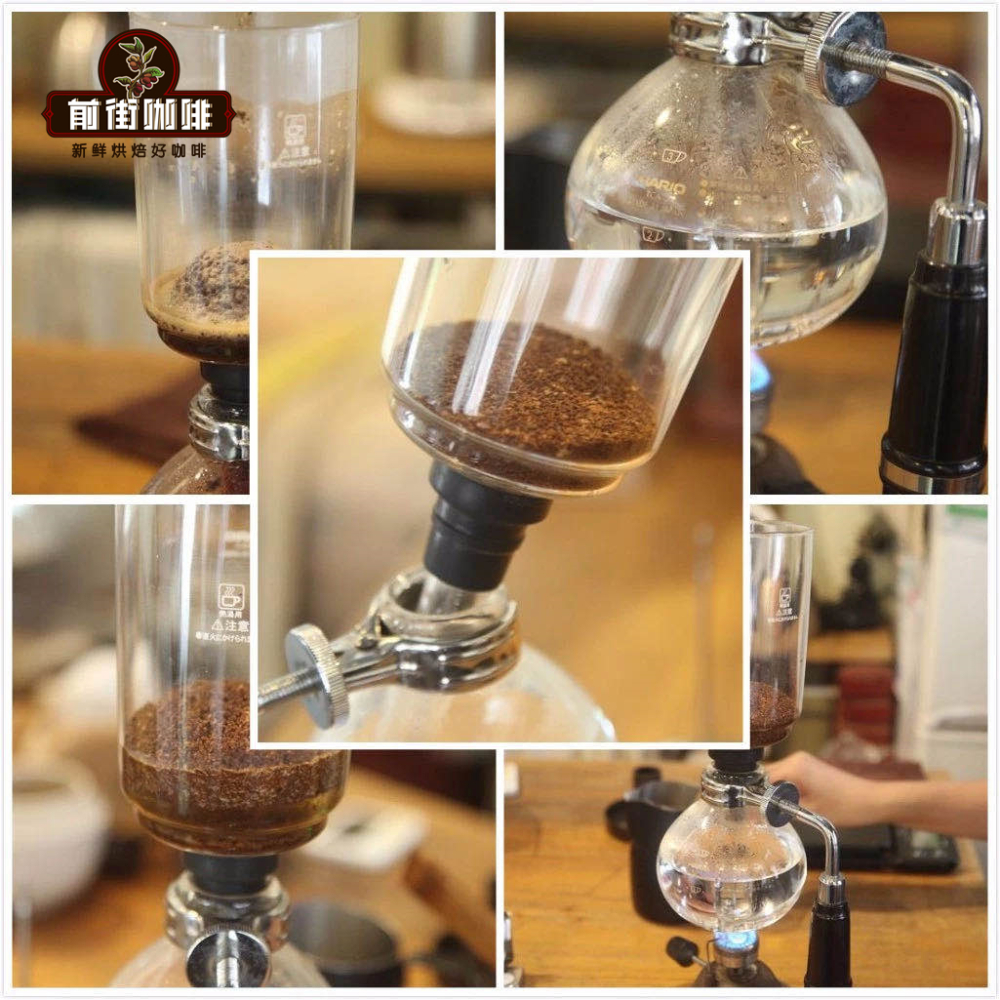
After extraction ends, remove the heat source from the lower chamber, instantly reducing the pressure difference. The siphon effect then draws the coffee back down to the lower chamber. To speed the return, wipe the lower chamber with a wet cloth, which further reduces the pressure difference.
Parameters and Technique
Water temperature: 90°C; Grind: 80% pass-through rate on China standard #20 sieve; Brew ratio 1:10; Pour 200g of water into the lower chamber. When the water reaches 90°C, add the coffee grounds and stir ten times to ensure full contact between grounds and water. Steep for 30 seconds, then stir five times to increase extraction. At 50 seconds, remove the heat source and stir. (Start the timer when the grounds are added.) Total extraction time: 1'12".
Flavor: Floral, citrus, orange peel, peach, tea-like notes, with tea fragrance in the aftertaste. The citrus acidity is quite prominent and balanced in the mouthfeel.
V60 Dripper
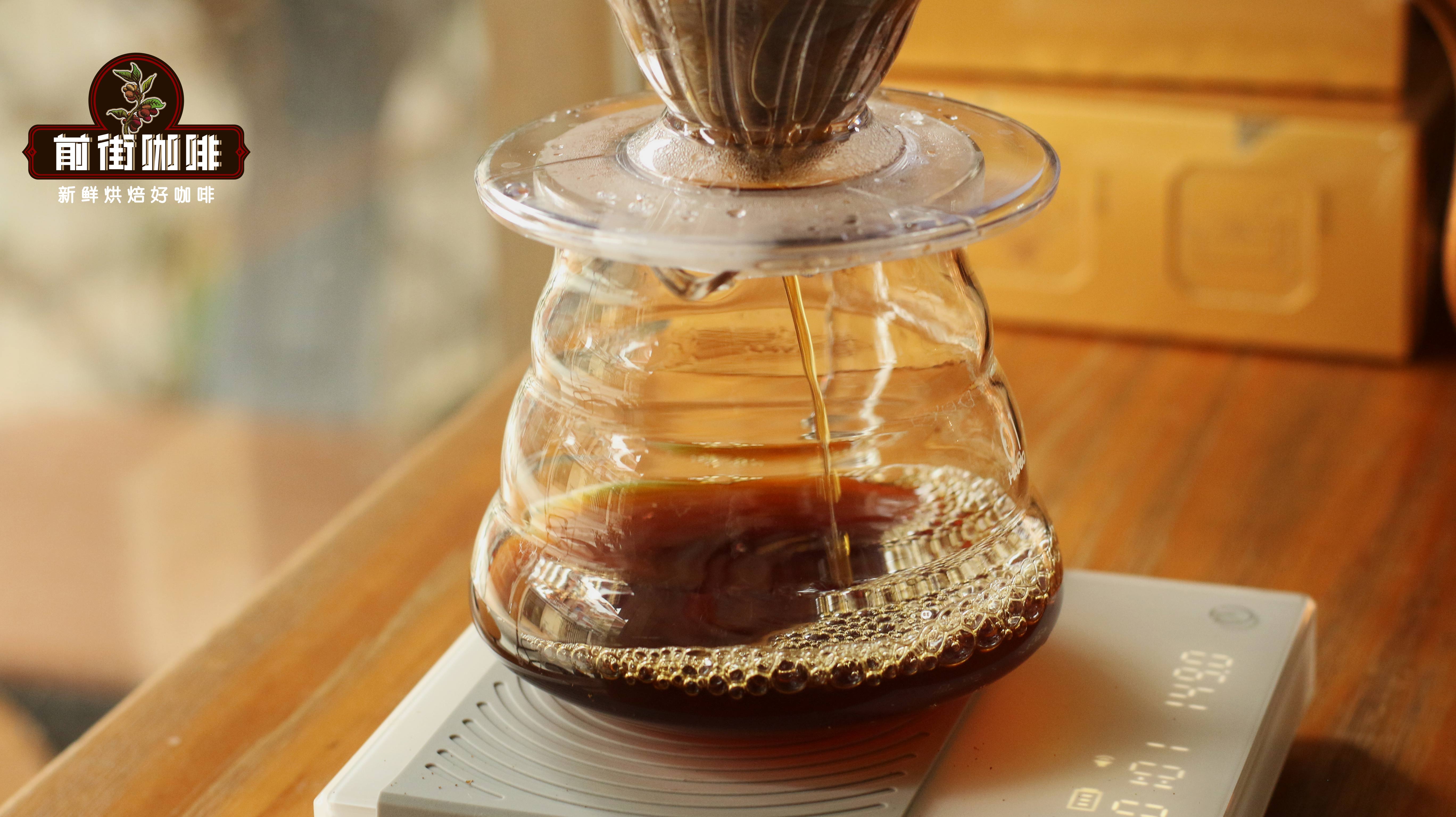
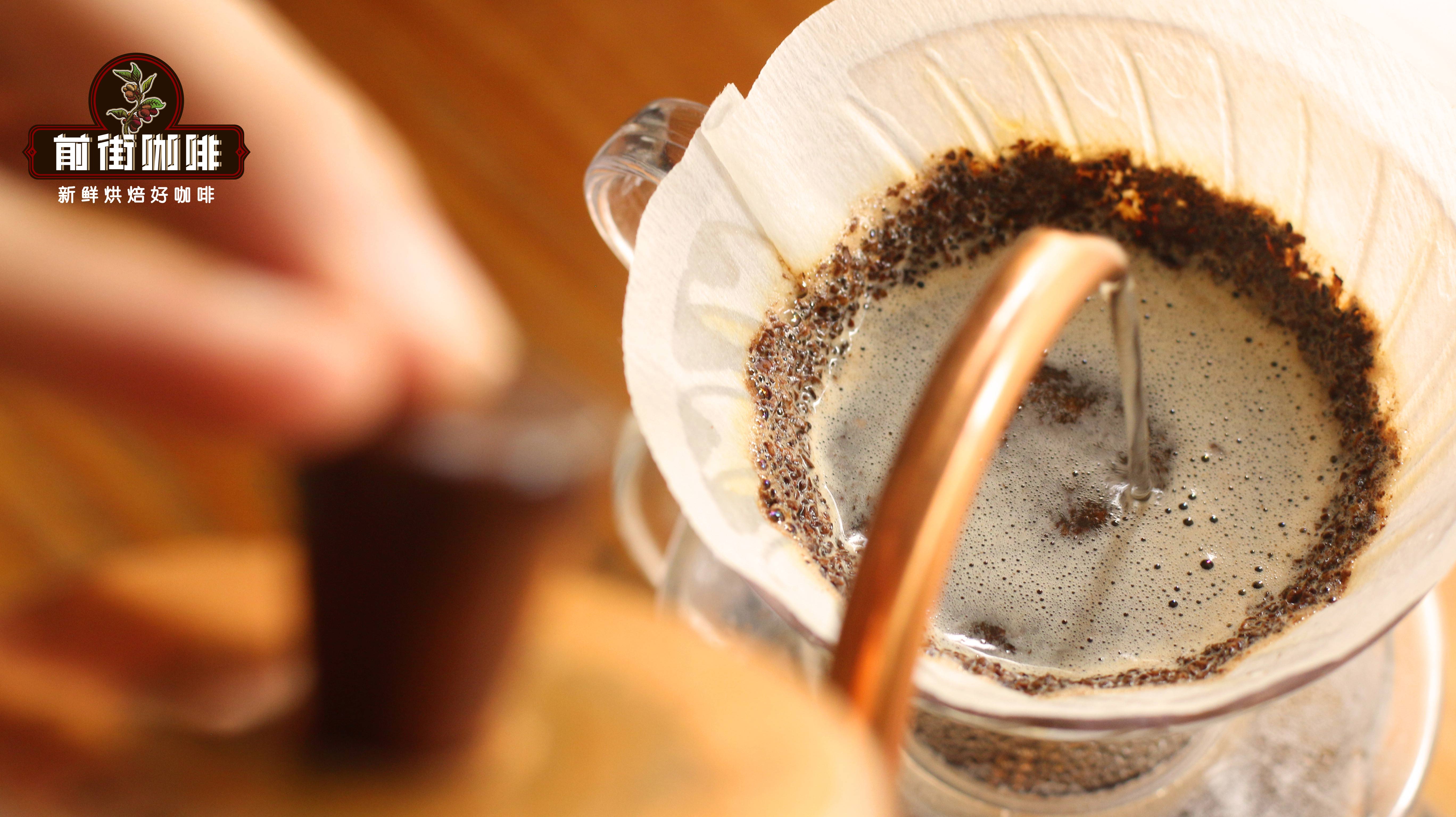
The V60 dripper is designed around the speed at which the water level descends, letting coffee particles extract better with faster flow. Its internal ribs use a curved vortex structure that helps accelerate the flow, extending from the bottom to the top and indicating smooth exhaust. The curved ribs lengthen the water's path, extending the contact time between coffee particles and water.
Parameters and Technique
Water temperature: 91°C; Grind: 80% pass-through rate on China standard #20 sieve; Brew ratio 1:16; Use 30g of water for a 30-second bloom, then pour in stages to 130g. When the water level is about to expose the coffee bed, continue pouring to 240g. When the bed is about to be exposed again, remove the dripper. (Start the timer at the bloom.) Total extraction time: 2'00".
Regular readers of FrontStreet's articles might wonder why FrontStreet usually uses a 1:15 ratio but uses 1:16 when brewing Panama Geisha. At 1:15 the coffee flavors become too concentrated, while 1:16 lets more flavors develop, making pleasant notes like florals clearer and more distinguishable.
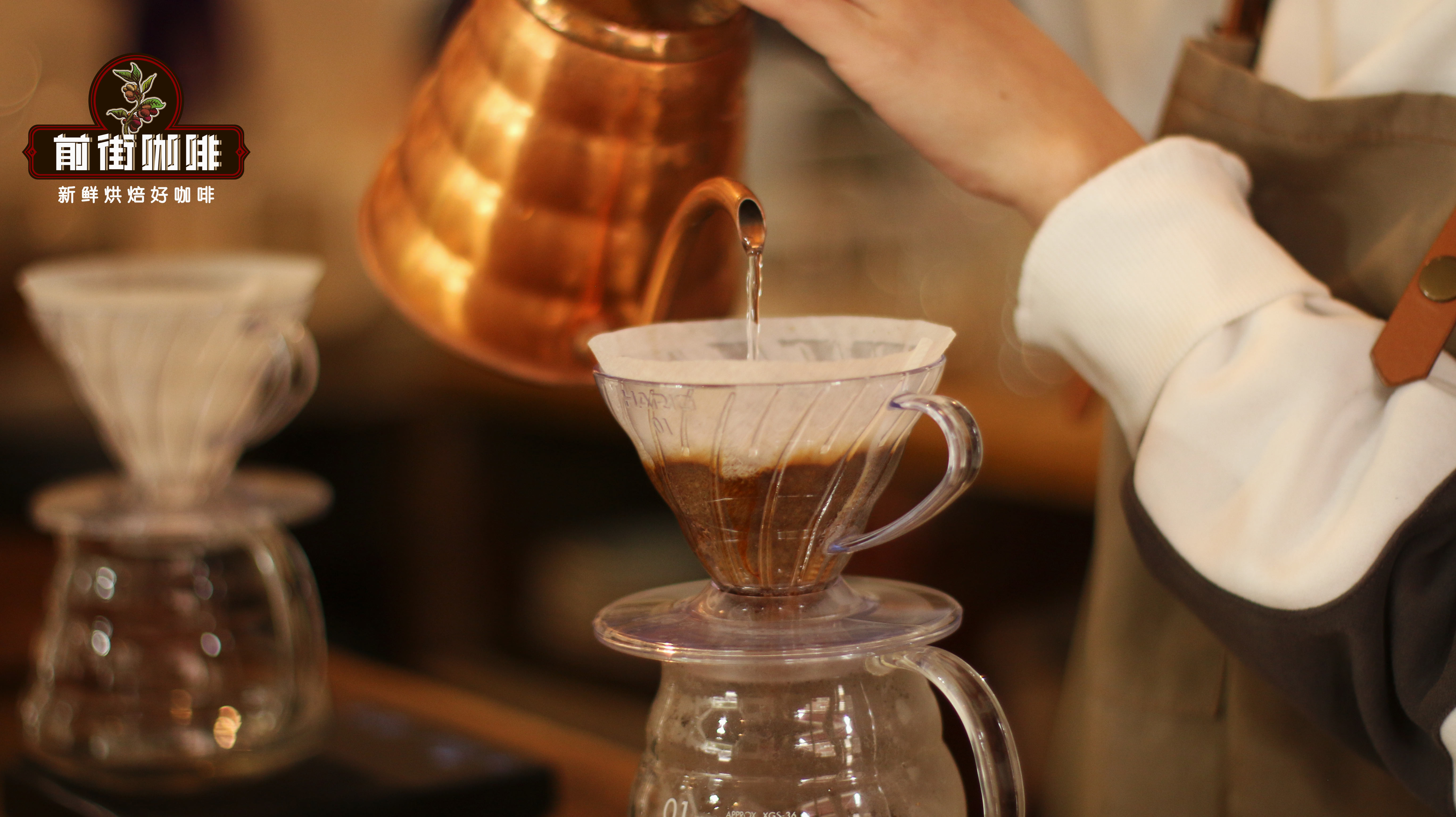
Flavor: Floral, orange peel, almond, tea-like notes, with a cream fragrance in the finish and noticeable sweet-and-sour notes.
Through experiments with these two methods, FrontStreet believes that if you want a cup of Green Label Geisha with rich flavor layers and a refreshing mouthfeel, try the V60 dripper; if you want a mellow Green Label Geisha, try the siphon brewer.
When it comes to describing coffee flavor, FrontStreet believes everyone will have their own interpretation. What FrontStreet truly wants to do is guide newcomers to specialty coffee in finding a connection between coffee and their palate, developing sensory perception. This process is like a form of training, a conscious development. When our sensitivity is enhanced, we can let go of the pursuit of specific flavors and instead use a more open attitude to experience the richness and changes in coffee, feeling the beauty of a cup more purely.
FrontStreet Coffee Recommendation
Geisha is a single variety, but its different origins show strikingly different faces, and FrontStreet's Geisha lineup is organized around exactly that. FrontStreet's Emerald Red Label and Green Label Geisha both come from the estate that made the variety famous. The Red Label, officially Esmeralda Special, is grown at 1,600-1,800 meters, with every lot cupped above 90 points and each lot carrying its own number, drawn from a single plot, which lets buyers choose a lot by subtle flavor preference. The Green Label, officially Private Collection, blends lots from several plots instead of one and emphasizes the estate's signature high-altitude Geisha character, which also makes it considerably more affordable and excellent value.
Away from Panama, FrontStreet's Boquete Geisha is the entry point for anyone who wants to try the famous flavor at a friendly price; it delivers the classic orange-honey charm of a high-quality Panamanian Geisha, with an oolong tea quality, delicate fruit acidity, and clear layers. FrontStreet's Geisha Village Gold Label and Red Label come from Ethiopia's Geisha Village, which applies similarly strict grading. The Gold Label belongs to the Geisha 1931 variety and accounts for 10% of the village's production, making it the village's top coffee outside its auction, often chosen by competitors; it is refined sun-dried and shows complex, rich flavor. The Red Label belongs to the Gori Gesha variety, accounts for 15% of production, and scores 88 or above on the SCA 100-point scale; as a single-terroir series, every lot carries full traceability, including farm block name, variety, and processing date. FrontStreet's Grana Estate Geisha is a rarer case from Ethiopia's Yirgacheffe area, a farm that grows a single variety, showing bright citrus acidity, elegant ginger-lily aroma, and ripe fruit sweetness after a medium-light roast.
For brewing, FrontStreet suggests 15g of coffee in the small Hario V60 with a 1:16 ratio and water at 91°C. Grind to about the texture of caster sugar, close to the point where 78% passes a China standard #20 sieve, since Geisha is a hard, medium-light roasted bean that tends to sink and clog the drain hole. Pour 30g to bloom for 30 seconds, then a low, slow circular second pour to 125g, wait until the bed has dropped halfway, and finish with another slow circular pour to 225g. Total drawdown runs about 2:10 to 2:20, which keeps the floral top notes and the tea-like finish intact.
Important Notice :
FrontStreet Coffee is a long-established specialty coffee roaster in Guangzhou China, selling freshly roasted beans from its own farm in Yunnan as well as dozens of carefully selected single-origin beans from around the world for both pour-over and espresso. The products deliver consistently excellent quality and great value, with shipping within 24 hours. Guangzhou's FrontStreet Coffee shop is recommended by many coffee lovers, and the beans are now available online at the Tmall 。
FrontStreet Coffee has moved to a new address:
FrontStreet Coffee Address: 315,Donghua East Road,GuangZhou
Tel:020 38364473
 Scan and follow the En Gafei WeChat official account. Please indicate that the reprint comes from "En Gafei".