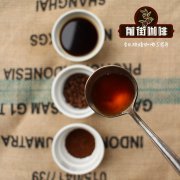
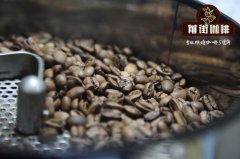
PWN Golden Mandheling Coffee Bean Variety Wet-Hulled Processing Pour-Over Mandheling Flavor and Taste Characteristics

When asked for a coffee with heavy body and rich texture, FrontStreet Coffee's baristas always point to our Indonesian Mandheling. Veteran coffee lovers know, though, that most Mandheling carries a distinctive earthy flavor - a big reason some people avoid it. So why do our baristas recommend the Golden Mandheling from Indonesia? Because FrontStreet Coffee's Golden Mandheling differs sharply from regular Mandheling: its flavor is far cleaner, free of the earthy taste, showing instead silky chocolate richness and a continuous sweet aftertaste - which is why it is loved by coffee enthusiasts in many countries. This article takes a closer look at it.

FrontStreet Coffee · PWN Golden Mandheling Coffee Beans
Country: Indonesia
Region: Gayo Mountain, Aceh, Sumatra
Altitude: 1100-1600m
Variety: Ateng
Processing Method: Wet-hulled
Flavor: Toasted bread, nuts, pine, caramel, herbal
The Golden Mandheling sold at FrontStreet Coffee's store was newly launched in 2020. Unlike the PWN Golden Mandheling we carried in earlier years, the latest lot comes from the Gayo Mountain area of Aceh, Sumatra, whereas the previous one was produced around Lake Tawar. What is this coffee like? According to FrontStreet Coffee's cupping and brewing tests of the latest harvest, it shows more toasted-bread flavor and a slightly richer texture than previous Golden Mandheling lots.

FrontStreet Coffee has often written that three things make a great coffee: region, variety, and processing. Here is how the Golden Mandheling measures up on each.
FrontStreet Coffee Golden Mandheling Region
Mandheling coffee is produced mainly on Sumatra, Indonesia's largest island. Near the equator with a classic tropical rainforest climate - hot, humid, and rainy - it suits Arabica well.

Indonesia's altitude is limited, however, so the land suitable for high-quality Arabica is limited too. Only about 25% of Indonesian coffee is Arabica, because Arabica needs high altitude for its best flavor; the other 75% is Robusta, which tolerates lowlands. Sumatra holds the highest coffee elevations in the country.
Sumatran Mandheling is Indonesia's most famous specialty coffee. The island's humidity and limited water resources rule out traditional sun-drying or washed processing - so local farmers developed the unique wet-hulled method. It dramatically shortens drying time and keeps green bean quality stable, improving efficiency, and it also gives Indonesian Mandheling its signature herbal note.
PWN Company: The Excellence of Mandheling Coffee
When it comes to the best Mandheling, PWN is the undisputed leader. PWN's full name is N.V. Pawani Medan, a trading and export company founded by a Chinese family from Quanzhou, Fujian, based in the major port city of Medan, Sumatra. Since 1957 it has exported rubber, cassia seed, cloves, patchouli oil, and of course Sumatran coffee beans to Japan.
FrontStreet Coffee's PWN Golden Mandheling is produced by this company. The Japanese have long loved Mandheling and apply exacting standards: the coffee must pass four rounds of manual selection to remove defective beans before processing and packing. The "Golden" name comes from a folk story - when producers were sorting flawless green beans, they noticed the beans glinted golden in the sunlight, and the name stuck.
Even with Japanese devotion, the "Golden Mandheling" name was trademarked first by Indonesia's Pawani company, making it exclusive to PWN - which was also among the first to sell Mandheling to Japan. Through cupping, FrontStreet Coffee found our Golden Mandheling shows stronger sweet aftertaste and cane-sugar character than our other Mandheling lots, with a very clean texture - which is why we brought it to our customers.
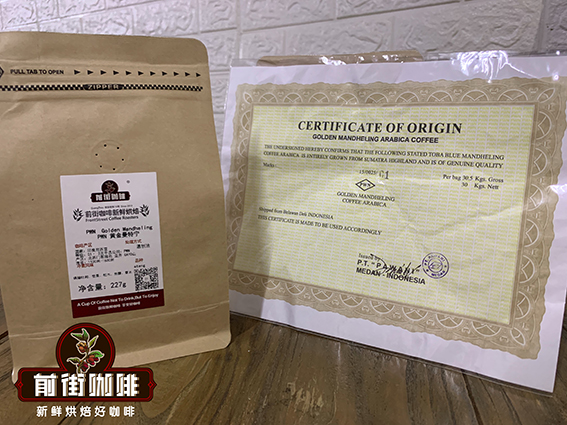
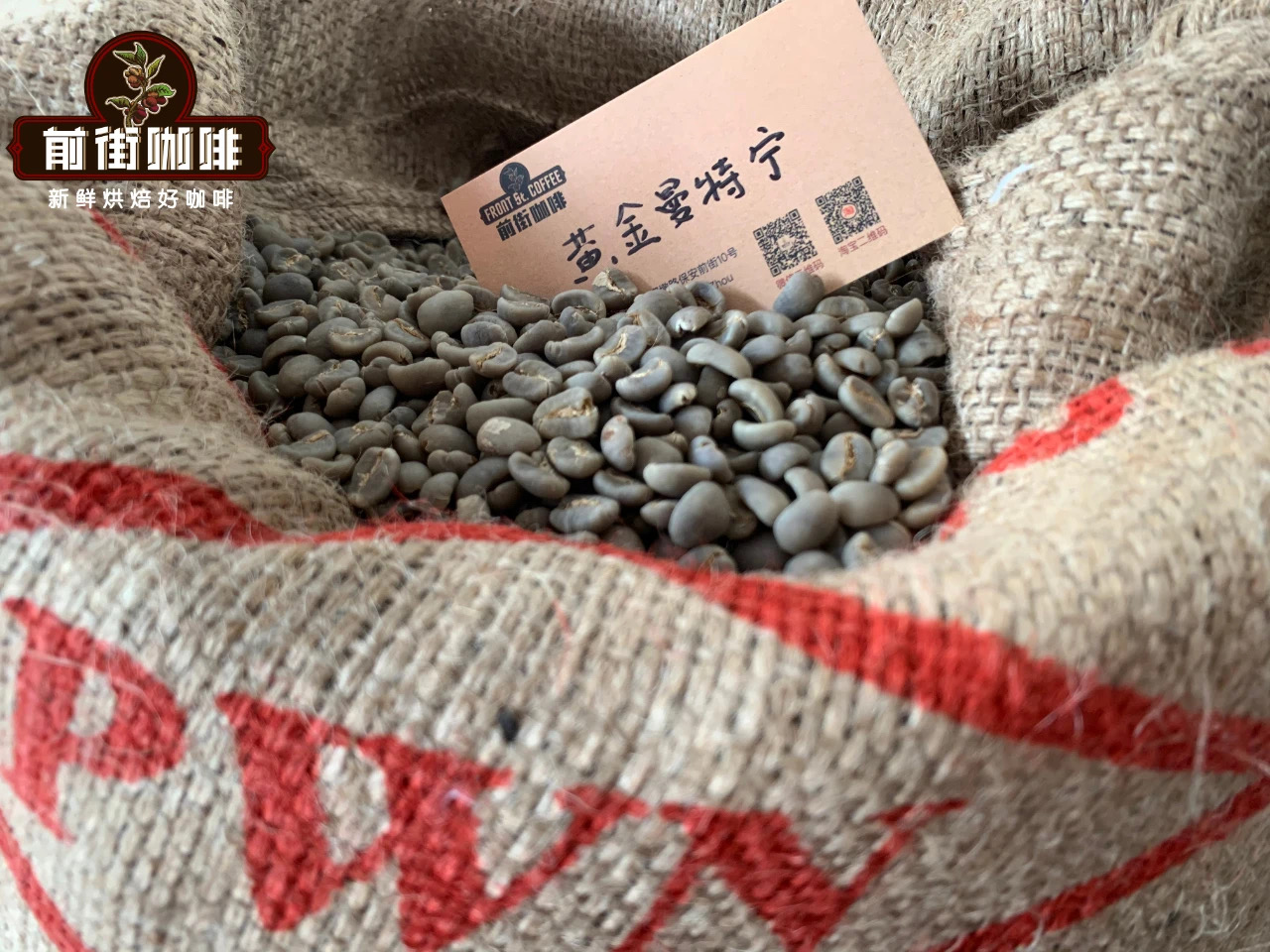
PWN Golden Mandheling green beans are not easy to source because production is limited, and plenty of unscrupulous shops pass off regular Mandheling as Golden. Trained cuppers can taste the difference, but for beginners the simplest check is to ask the merchant for green bean sacks bearing PWN markings or the factory certificate that accompanies the beans. PWN's Golden Mandheling also undergoes three manual selections and one machine selection, so the beans are beautiful, uniform, and brew into a noticeably cleaner cup.

FrontStreet Coffee's PWN Golden Mandheling is absolutely genuine. It was originally expected to reach our store in October 2020, but pandemic shipping constraints from Indonesia meant it arrived a month later than planned.
Aceh Gayo Mountain Region
PWN chose a new region this time: Aceh's Gayo Mountain, at the northernmost tip of Sumatra. Coffee cultivation there centers on the town of Takegon and the mountains near Lake Tawar, at production altitudes averaging 1,100-1,600 meters, and the quality has always been excellent. Political instability once made exports difficult; in recent years, as conditions stabilized, Aceh's coffee has flourished - with quality surpassing even the Lintong region. That is high praise for Gayo Mountain cherries, and Golden Mandheling, Indonesia's top coffee brand, lives up to it.

FrontStreet Coffee PWN Golden Mandheling Processing Method
The flavor of this coffee depends not only on PWN's insistence on quality fruit but also on the unique wet-hulled process - the source of its famous herbal note. Here is how it works.
Wet-Hulled Processing Step by Step:
1. Harvesting
March to May and September to December are Sumatra's harvest seasons. With the rise of specialty coffee and the "full red cherry" program, more and more farmers now pick only fully red cherries.

2. Depulping and Fermentation
During harvest, farmers deliver the morning's cherries to depulping workshops each afternoon, where skin and pulp are removed to make wet parchment coffee.

The parchment coffee ferments, usually 12-36 hours depending on conditions, then dries. During harvest season, sacks of drying parchment coffee lie outside every home - this is their coffee income. The removed skin and pulp are composted into fertilizer; plantations using such ecological fertilizer earn extra credit when applying for organic certification.
3. Hulling and Drying
Once the parchment coffee's moisture falls to 35-40%, farmers bag it in 40kg or 80kg woven sacks and send it to processing factories for hulling, then continue drying the naked green beans to about 15% moisture.

4. Machine and Hand Selection
At 14-15% moisture the beans go through machine selection to remove impurities and sort by size, then head to hand-sorting warehouses, where workers with sharp eyes and deft hands pick out any remaining defects.

FrontStreet Coffee PWN Golden Mandheling Variety
This year's PWN Golden Mandheling uses a different variety than the Typica of previous years: the local Ateng. Ateng may sound unfamiliar, but it is Indonesia's local name for Catimor. FrontStreet Coffee believes PWN chose it partly for volume, because Catimor - a hybrid of the Robusta-derived Timor Hybrid and Caturra, a Bourbon dwarf mutation - is high-yielding and disease-resistant, hence cost-effective.
Ateng (Catimor)
Catimor is not pure Arabica but a cross of the Timor Hybrid (Robusta-derived) and Caturra. First developed in 1959 and promoted widely in Brazil in the 1970s-1980s, its disease resistance and yield earned it a firm place among Central and South American varieties - especially as coffee leaf rust outbreaks recurred there.
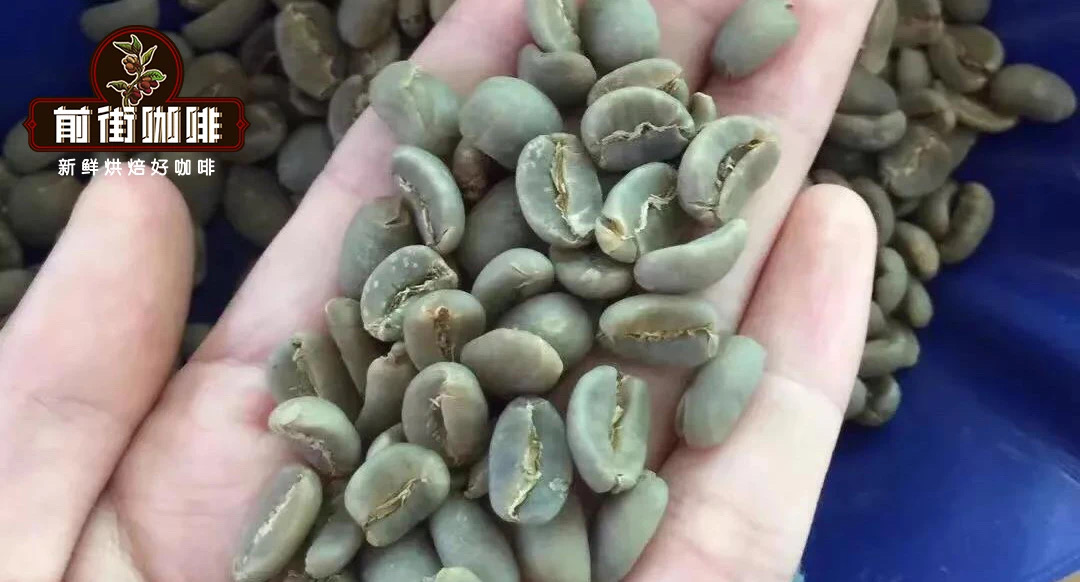
Its traits: high yield, compact plants suitable for dense planting, and reddish-brown new leaves. Fast maturation and heavy cropping demand ample fertilizer and shade. By FrontStreet Coffee's understanding, its lifespan is short, averaging only about ten years.
Now, FrontStreet Coffee's roasting and brewing notes for this coffee.
FrontStreet Coffee Roasting Analysis
FrontStreet Coffee's PWN Golden Mandheling shows quality herbal notes with stronger caramel sweetness, calm and elegant fruit acidity, rich sweetness, thick body, and wild spice. Generally, our Lintong Mandheling is best roasted past second crack to mute off-flavors, but the Golden Mandheling already offers good clarity and sweetness before second crack - more room for roasting interpretation.

Charge the drum at 200°C with the air damper at 3. After 1 minute, cut heat to 160°C, damper unchanged. At 5'40" and 148°C the bean surface turns yellow, the grassy aroma disappears completely, and drying is done: reduce heat to 140 and open the damper to 4.
Around 9'40", wrinkles and dark spots appear on the surface and the toast aroma turns unmistakably to coffee - the prelude to first crack. Listen carefully: at 9'54" first crack begins. Reduce heat to 60 and open the damper fully (lower the heat carefully - never so far that the cracks stop), then drop the beans at 204.5°C.
FrontStreet Coffee Brewing Recommendations
To highlight this coffee's rich, clean fragrance we brew it in a KONO dripper (invented to mimic flannel and brew a full-bodied cup). For a medium-dark roast, choose a medium-coarse grind: a 1:15 coffee-to-water ratio with 15g of coffee and 88°C water. Reducing the ratio pushes the texture even richer.

Brewing process: Pour slowly and keep the bed as level as possible; avoid shaking the dripper (shaking compresses the grounds and hinders degassing during the bloom). First, pour 30g of water in small circles at the center for a 30-second bloom - the bed will swell into a "hamburger" shape. Second, pour 120g in circles from the center outward, keeping the kettle close to the bed and moving slowly to avoid over-agitating. Finally pour 100g for the last stage, and finish once all the coffee has drained into the server. Total extraction time: 2 minutes.
FrontStreet Coffee Recommendation
Sumatra is Indonesia's largest coffee island and the heartland of Mandheling: the northern provinces of Aceh and North Sumatra, at higher elevations, grow most of the country's Arabica, which locals simply call Mandheling.
Two Mandheling Homelands
The Aceh region centers on the Gayo mountains near Lake Tawar, ringed by thousands of hectares of vegetation - a rising region whose Mandheling is delicate in aroma and bright in the cup. The traditional home is Lintong, around Lake Toba in North Sumatra, where diverse flora, suitable elevations, the special wet-hulled process, and local microbial fermentation create the classic Mandheling profile: intense aroma, thick body, and powerful flavor.
Why Wet-Hulled?
Indonesia's rainy season overlaps with coffee harvest, so sun-drying whole cherries is nearly impossible. Sumatra's answer: remove skin and pulp first, wash briefly, dry partway, then hull off the parchment while the beans are still half-dry, exposing the green beans directly to air to speed the whole process. Since the 1970s this method has defined Mandheling's unique flavor.
What Makes Golden Mandheling "Golden"
Among Mandhelings, Golden Mandheling is the perfectionist's choice. FrontStreet Coffee's PWN Golden Mandheling starts from beans above an 18-screen size, requires fewer than 3 defects per 300g sample to meet the top G1 grade, and then passes three rounds of hand sorting to strip out remaining defects - lifting the cup's cleanliness and sweetness to another level. Such strict standards also mean limited supply, which is exactly why PWN Golden Mandheling stands at the top of the Mandheling family.
Important Notice :
FrontStreet Coffee is a long-established specialty coffee roaster in Guangzhou China, selling freshly roasted beans from its own farm in Yunnan as well as dozens of carefully selected single-origin beans from around the world for both pour-over and espresso. The products deliver consistently excellent quality and great value, with shipping within 24 hours. Guangzhou's FrontStreet Coffee shop is recommended by many coffee lovers, and the beans are now available online at the Tmall 。
FrontStreet Coffee has moved to a new address:
FrontStreet Coffee Address: 315,Donghua East Road,GuangZhou
Tel:020 38364473
 Scan and follow the En Gafei WeChat official account. Please indicate that the reprint comes from "En Gafei".