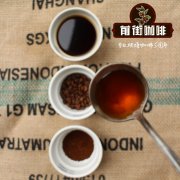
Flora de Antigua Region | Bella Carmona Estate | Washed Bourbon, Caturra SHB EP Grade Flavor
Professional Coffee Knowledge Exchange
For more coffee bean information, please follow Coffee Workshop (WeChat official account: cafe_style)
La Flor de Antigua | Bella Carmona Estate | Washed Bourbon and Caturra SHB EP — What Does It Taste Like?
The Antigua valley is ringed by three volcanoes, and the Bella Carmona Estate sits on the southern slope of Agua Volcano, rooted in fertile, well-draining volcanic soil. Annual rainfall there runs from 1,800 mm to 2,300 mm, and the days are hot while the nights are cool and dry, creating a wide day-night temperature swing — an ideal microclimate for producing outstanding coffee. The estate grows Bourbon, Typica, and Caturra, with the plants cultivated under shade so they receive just the right amount of sunlight. This La Flor lot comes from Bella Carmona and is processed the traditional way: fully washed and sun-dried on raised beds. It is graded SHB, grown at 1,600–1,800 meters, and consists of Caturra and Bourbon. Quality control starts with the careful selection of varieties planted and continues with strict supervision through every stage of green bean processing, so that only the finest lots are shipped out.
Every step of production is designed around sustainability and an environmentally friendly ecosystem. All of the coffee is shade-grown, and particular attention has gone into building eco-friendly washing facilities: the wastewater from washing is channeled into sedimentation tanks, where the residues decompose and are later reused as fertilizer. Ripe red cherries are hand-picked and trucked to the washing station. After depulping, the beans ferment in washing tanks, are rinsed thoroughly clean, and are then laid out on raised beds to dry in the sun. Once the moisture content of the parchment drops to the right level, the beans are carefully bagged and moved to warehouses to rest until they reach their optimal flavor balance; only then are they hulled and prepared for export. The hulling mill sits inside the estate itself, so the entire process can be monitored end to end and quality assured. The combination of volcanic soil, balanced rainfall and sunshine, and traditional farming methods yields a coffee with rich flavor, a thick body, crisp acidity, and excellent balance.
Before you reach the entrance of Bella Carmona Estate, a sign for the Bella Vista mill stands to the right of the gate to welcome visitors. Between the occasional birdsong and the picturesque jungle scenery, you'll find yourself wishing you could linger in this forest-like coffee garden for a few more days just to breathe in the fresh air.
The village itself is enclosed by three volcanoes: Fuego, Agua, and Acatenango. The recent Guatemalan eruption everyone has heard about was Fuego, which lies between the Antigua and Acatenango regions, and it claimed countless lives. Growing coffee around active volcanoes takes real courage. The estate's soil is rich volcanic earth, exceptionally well suited to coffee cultivation. And who would guess that this beautiful estate and mill — so impressive today — was once devastated by volcanic ash and left unusable? After a long, gradual rebuilding effort, the estate is now immaculately organized. Stand at the mill and you won't see a tangle of pipes anywhere, because they all run underground, using water to carry the cherries to the other end of the facility for depulping, washing, and the rest of the processing.
"La Flor" evokes an intense floral fragrance — the "flower goddess." Inside the estate there is also a high-end cabin, and below it sits a receiving tank built specifically for coffee cherries: workers unload bag after bag of ripe red cherries from trucks and pour them into the tank for storage.
Head over to the planned cherry-drying fields and, from a distance, they look like golden terraces. Each small golden plot carries its own label, and dedicated staff patrol continuously, recording the drying temperature. Whenever one section exceeds the standard, the parchment is moved to a spot with the right temperature to keep turning and drying. Watching the workers rake the beans nonstop, you realize this constant turning is what allows the cherries to dry evenly. In the distance, a new "golden house" — a greenhouse-style drying structure — is under construction and expansion. It is filled with golden parchment beans; every drying rack is custom-built, each holding 20–30 kilograms, and each turn requires two people working together to rotate the layers. Each rack has 6 tiers. Freshly depulped, washed, and fermented coffee goes on the bottom tier first, then is moved steadily upward until the top tier has dried to the target moisture, at which point it can be bagged and stored separately. The estate keeps introducing new varieties to broaden its flavor range, and this visit was no exception — the team brought back wonderful coffees for everyone to taste.
Variety: Bourbon, Caturra
Grade: SHB EP
Region: Antigua
Altitude: 1,600 - 1,800 m
Processing Method: Washed
Reference Flavor: Intense floral aroma, caramel, lemon, sweet finish
Specifications:
SHB EP / Washed
Recommended Brewing:
Dripper: Hario V60
Water Temperature: 90°C
Grind Size: Fuji Mini Mill grind setting 3.5
Brewing Method: Water-to-coffee ratio 1:15 with 15 g of ground coffee. First pour 25 g of water for a 25-second bloom. Second pour to 120 g, then stop; wait until the coffee bed has drained to half, then resume pouring slowly up to 225 g. Total extraction time around 2:00.
Analysis: The three-pour structure cleanly separates the front, middle, and finish of the cup. Because the V60's many ribs drain quickly, pausing the pour helps stretch out the extraction.
FrontStreet Coffee Recommendation
Washed processing is the traditional way of handling coffee cherries with water, and it is the method behind some of the most celebrated clean-cup coffees in the world. The typical steps are flotation, depulping, soaking and fermenting to remove the mucilage, washing or extended soaking, drying, and finally hulling to release the green bean. Because washed coffees spend a long time in water, chemical changes take place inside the bean that consume much of its simple sugars (fructose and glucose), lowering the sugar content while raising the level of various organic acids. The result: washed coffee tends to preserve the bean's own inherent aroma while showing bright fruit acidity and a clean, fresh character.
FrontStreet Coffee's Yirgacheffe G1 Worka Chelbesa "Gudongding" (Dodong) Cooperative lot is a shining example. Most people know Yirgacheffe, but fewer know that because local smallholder yields are tiny, farmers send their cherries to cooperatives for centralized processing and sale. FrontStreet's Gudongding Cooperative lot comes from just such an accomplished processing team in Gudongding village — so skilled and so precise in its craft that the coffee was "discovered" and made famous for its exceptionally delicate, clean profile. Thanks to the washed process, this lot showcases jasmine florals and bright citrus acidity at their fullest; at a medium-light roast it also unfolds notes of green tea and honey, and it works beautifully as pour-over, cold brew, or espresso.
If you prefer a heavier, juicier cup, FrontStreet Coffee's Kenya "Little Tomato" AA is one of the best washed representatives you can find, built on Kenya's signature double-washed (double-fermented) processing: the beans go through flotation, a first soak, washing to strip every trace of mucilage from the surface, a second soak, drying, and hulling. All that repeated rinsing and soaking pushes a vivid, juice-like quality to the extreme — cherry tomato, dark plum, snow pear, black plum, and raw sugar in a sweet-tart, mouthwatering cup that coffee enthusiasts adore. And for balance above all, FrontStreet Coffee's Jamaica Blue Mountain No.1 owes its fame to washing too: on a small island with shorter sunshine hours, washing was invented precisely to strip skin, pulp, and mucilage before drying, cutting drying time and producing beans with a bright, translucent color and very low defect rates. It guarantees Blue Mountain's rich aroma while the brew reveals pure hazelnut, cream, chocolate, and caramel in a perfectly balanced cup where nothing dominates and nothing is missing.
Important Notice :
FrontStreet Coffee is a long-established specialty coffee roaster in Guangzhou China, selling freshly roasted beans from its own farm in Yunnan as well as dozens of carefully selected single-origin beans from around the world for both pour-over and espresso. The products deliver consistently excellent quality and great value, with shipping within 24 hours. Guangzhou's FrontStreet Coffee shop is recommended by many coffee lovers, and the beans are now available online at the Tmall 。
FrontStreet Coffee has moved to a new address:
FrontStreet Coffee Address: 315,Donghua East Road,GuangZhou
Tel:020 38364473
 Scan and follow the En Gafei WeChat official account. Please indicate that the reprint comes from "En Gafei".