How to Pour Over Geisha Coffee? Flavor Profile and Origins of Geisha Coffee
Professional Coffee Knowledge Exchange
The Legendary Geisha Coffee
If you are a coffee enthusiast, Geisha is surely no stranger to you.
If you are just stepping into the world of specialty coffee, it is time to understand this legendary variety.
Named Geisha coffee, does it come from Japan? In fact it has absolutely nothing to do with Japanese geisha culture. It is simply that the original name of the variety sounded similar to "geisha," so it was rendered as Geisha coffee. In China it is known as Guisha coffee.
Geisha coffee was originally a wild coffee variety growing in southwestern Ethiopia. In 1963 it was brought to coffee estates in the Boquete region of Panama. Because of its poor yields and tall trees, it was planted as a windbreak beside the coffee estates.
2004 was the year that changed Geisha coffee's destiny.
That year, the son of a coffee estate owner, preparing for the national coffee competition, searched through the estate's coffee trees for plants to test and unexpectedly discovered Geisha coffee.
In the competition Geisha took first place with its strong, complex flavors, making a stunning debut. One judge described it as "God's Cup," and it went on to win first place for four consecutive years.
At auction, Geisha coffee has also broken many high-price records.
Compared with typical Panamanian coffee, Geisha's distinctive character leaves a deep impression. It is filled with jasmine-like aromas, with fruity acidity and the sweetness of orange, lemon and honey, on a clean, light mouthfeel.
Slightly acidic but not bitter, full of floral and fruit aromas, it is no wonder some describe it as "coffee that doesn't taste like coffee."
Geisha is of the Typica variety, originating from Geisha Mountain in Ethiopia. It was introduced from Costa Rica to Panama in 1963, but because of its low productivity no farmers were willing to grow it. Until two years ago, Daniel Peterson unexpectedly discovered this coffee on his farm. Panama is the only country that produces Geisha coffee. Today the two estates producing Geisha are Esmeralda Special and Don Pachi, but Geisha production is extremely scarce.
After completing a four-peat at B.O.P, the Esmeralda estate has hosted its own single-estate global online auction since 2008, the "King of Geisha" Red Label auction, which draws specialty coffee buyers from around the world. This July the Esmeralda estate set a new record high of $601 per pound at auction. Over 13 years, the auction price of Esmeralda's Geisha coffee has risen more than 20-fold.
FrontStreet Coffee suggests roasting Geisha to around the first crack, which preserves its floral and fruit aromas as well as its pleasant citrus acidity, creating rich layering.
Cupping Characteristics
Extremely lush and delicate sweet floral aromas, especially jasmine and coffee flowers, with a distinct lemon-lime citrus acidity. Rich fruit and light candy flavors, soft, rich, delicate and light chocolate notes. A coffee with obvious pedigree and a very approachable character.
FrontStreet Coffee recommends a cake cup to enhance the richness of Geisha's mouthfeel. The entry brings citrus acidity with rose tea-like aromas.
FrontStreet Coffee is a roastery in Guangzhou with a small shop but diverse bean varieties, where you can find both famous and lesser-known beans, and it also provides online store services.
FrontStreet Coffee Recommendation
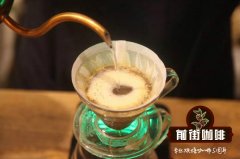
Geisha spans a wide range of styles and prices, and FrontStreet covers several of them. At the top, FrontStreet's Esmeralda Estate Red Label Geisha, officially "Esmeralda Special," is grown at 1,600-1,800 meters; every lot must cup above 90 points and carries its own number, and each batch comes from a single plot such as Jaramillo, so buyers can choose a lot for its finer flavors. FrontStreet's Esmeralda Estate Green Label Geisha, originally "Private Collection," blends batches from several plots to express the estate's signature high-altitude Geisha character at a friendlier price. For a first taste of the famous Geisha profile, FrontStreet's Boquete Washed Geisha is an estate-level entry Geisha grown at 1,600 meters on volcanic ash soil, offering the classic Panamanian orange-blossom honey character with oolong-tea body and delicate fruit acidity in clear layers. FrontStreet suggests a fine granulated-sugar grind, about 78% through a China standard #20 sieve, and 91°C water; use 15g of coffee, a small Hario V60 and a 1:16 ratio, then brew in three stages: a 30g bloom for 30 seconds, a second pour to 125g, wait for the bed to drop halfway, then continue to 225g, finishing in about 2 minutes 10 seconds to 2 minutes 20 seconds. Geisha also makes a fine SOE; using FrontStreet's Genlana Estate Geisha, roasted medium, pull 20g of coffee at a 1:2 ratio in 25 seconds for 40g of espresso, then add 200g of hot water for an Americano with orange, nut and blueberry notes, or 200g of milk for a latte with a creamy shortbread texture.
Important Notice :
FrontStreet Coffee is a long-established specialty coffee roaster in Guangzhou China, selling freshly roasted beans from its own farm in Yunnan as well as dozens of carefully selected single-origin beans from around the world for both pour-over and espresso. The products deliver consistently excellent quality and great value, with shipping within 24 hours. Guangzhou's FrontStreet Coffee shop is recommended by many coffee lovers, and the beans are now available online at the Tmall 。
FrontStreet Coffee has moved to a new address:
FrontStreet Coffee Address: 315,Donghua East Road,GuangZhou
Tel:020 38364473
 Scan and follow the En Gafei WeChat official account. Please indicate that the reprint comes from "En Gafei".