Characteristics of Honduras Santa Barbara Coffee Region_Introduction to Major Coffee Growing Areas in Honduras
Honduras Coffee Beans, Sagastume Family Parainema Variety
Country: Honduras | Region: Santa Barbara | Cooperative: San Vicente Processing Plant | Producer: Sagastume Family | Processing: Washed | Variety: Parainema
Roast Level: Very Light Roast | Flavor Profile: Floral / Orange / Vanilla / Maple Syrup / San Marzano Tomato | Flavor Description: Uplifting floral and orange aromas, syrupy sweetness, delicate acidity, smooth aftertaste.
When Central American coffee comes up, enthusiasts may immediately think of Guatemala, Costa Rica, or Panama. Yet El Salvador, Nicaragua, and Honduras are significant coffee producers as well, and today Honduras' coffee industry is quietly revealing its brilliance, with beans that have reached genuine specialty standards.
Geographical Location
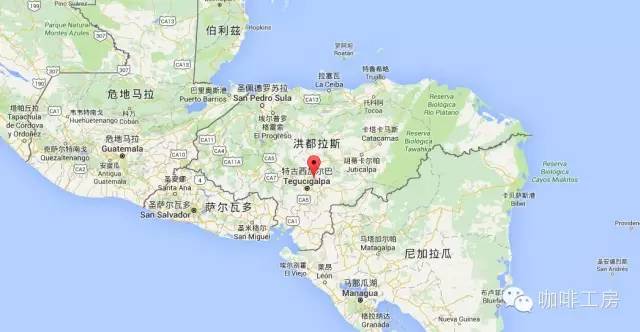
Honduras lies in northern Central America, bordering the Caribbean Sea to the north and the Pacific's Fonseca Bay to the south. It borders Nicaragua and El Salvador to the east and south, and Guatemala to the west, with mostly mountainous, highland terrain. The tropical climate brings moderate temperatures and abundant rainfall, an ideal home for coffee.
It was the 1975 Brazilian frost disaster, which crushed Brazil's harvest and slashed global supply, that gave Honduras its opening. Production surged from 500,000 bags to 1.8 million bags, all completely sold out. Since then, Honduran coffee production has truly taken off.
Regional Distribution
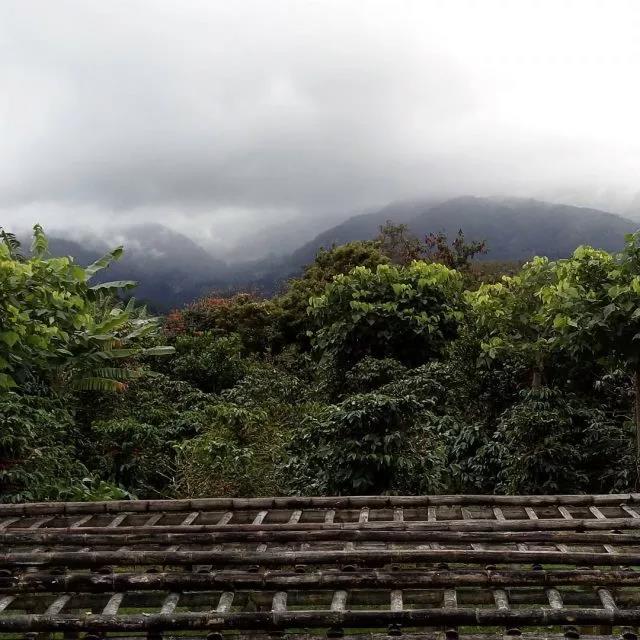
Honduran coffee comes from six major regions spread across the west and south: Santa Barbara, El Paraíso, Copán, La Paz, Comayagua, and Olancho. Average cultivation altitude is above 1,100 meters. The varieties are Arabica: 69% is graded HG "High Grown," 12% SHG "Strictly High Grown," and 19% CS. Main varieties include Typica, Bourbon, Caturra, Villa Sarchi, and Lempira.
Honduras thus produces two kinds of quality coffee: "High Grown" cultivated at 1,000–1,500 meters, and "Strictly High Grown" at 1,500–2,000 meters, the country's highest grade, most of which is exported to the United States and Germany.
Flavor Profile
The flavor is excellent, rich and mellow, and well suited to blending. Honduras coffee's most noticeable trait is its soft, mellow mouthfeel, occasionally with a slight sweetness and low acidity. Among Central American origins, it is known for black-berry flavors and caramel sweetness with medium body; some batches even show black pepper and tobacco-leaf notes.
FrontStreet Coffee's Recommended Roasting Method
Honduran beans are hard beans with medium moisture content and fairly uniform size. As a general rule, to develop Honduras' mellow flavor character, hard beans need at least a medium roast. Working within that range, we've designed medium, medium-dark, and second-crack curves.
FrontStreet Coffee recommends keeping detailed records before roasting, bean moisture content, density, origin, processing method, plus the roasting room's temperature and humidity, and planning your roast curve accordingly. Record the chemical and physical changes during the roast as well; it will help you understand the final results and refine your curve.
Processing Methods
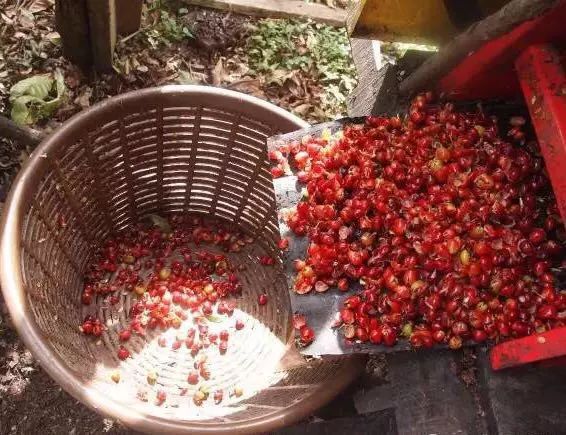
Honduran beans are relatively large, uniform, and evenly colored with a glossy appearance. For harvesting convenience, farmers prune the trees to no more than 150 centimeters, taller trees would need ladders, which is slow and can damage branches. Because each cherry ripens at its own time, quality depends on hand-picking followed by selection of ripe fruit; a single branch may need several weeks of repeated harvesting.
Quality Honduran coffee is washed processed. First comes a soaking step, where defective cherries float and are skimmed off. The good fruit then goes into a depulper, which removes the skin mechanically; the depulped cherries are machine-sorted again, with larger fruit generally indicating better maturity. Natural sun drying follows, which is why the cup always carries a light fruity aroma.
Honduran coffee reveals layered flavors depending on roast degree: a medium roast maximizes sweetness, while a dark roast deepens bitterness without erasing it. Medium roasting generally gives the best taste, with rich, distinctive aromas, highly favored among Honduras coffee enthusiasts.
FrontStreet Coffee Recommendation
As the world's largest coffee producer, Brazil offers an enormous range of coffees. Brazilian beans carry moderate acidity, and the balance of sweetness, bitterness, and body is excellent, ideal for a medium roast, after which nutty aromas abound and the cup tastes mellow with a faint acidity. They work as single origins or in blends alike.
FrontStreet Brazil Cerrado Red Bourbon: If you just want a taste of Brazil, buy FrontStreet's pulped-natural Cerrado, a thoroughly classic Brazilian single origin. Cerrado is one of Brazil's best-known growing regions, famous for high-quality beans. This one is Red Bourbon, common across South America; at a medium roast it shows concentrated cream, peanut, toasted bread, caramel, and hazelnut aromas, with a rounded, non-acidic body and only a light bitter edge. It works for pour-over as well as Moka pot, SOE espresso, siphon, and French press.
FrontStreet Brazil Fazenda Rainha Yellow Bourbon: FrontStreet's other Brazilian single origin, Fazenda Rainha, comes from Mogiana near southern Minas, where fertile red volcanic soil feeds the cherries into full, aromatic development. Part of the region sticks to traditional farming while the rest has adopted modern, standardized management, greatly improving local quality. Fazenda Rainha is the rare Yellow Bourbon, a Red Bourbon mutation with cleaner fruit character. Through pour-over, Moka pot, or a home espresso machine, you'll taste a sugarcane sweetness found in no other origin, alongside fruit and chocolate notes.
FrontStreet Espresso Blend Series: Low acidity, balanced flavor, and an approachable price have made Brazil the backbone of many espresso formulas. FrontStreet's crema-rich Classic Blend, nut-forward Specialty Blend, well-rounded Black Cocoa Blend (recommended by many baristas), and the shop-focused Commercial Blend all contain Brazilian beans. Beyond chocolate and cream aromas, Brazil contributes gentle sweet-sour-bitter balance, and that even keel supports extraction stability.
Important Notice :
FrontStreet Coffee is a long-established specialty coffee roaster in Guangzhou China, selling freshly roasted beans from its own farm in Yunnan as well as dozens of carefully selected single-origin beans from around the world for both pour-over and espresso. The products deliver consistently excellent quality and great value, with shipping within 24 hours. Guangzhou's FrontStreet Coffee shop is recommended by many coffee lovers, and the beans are now available online at the Tmall 。
FrontStreet Coffee has moved to a new address:
FrontStreet Coffee Address: 315,Donghua East Road,GuangZhou
Tel:020 38364473
 Scan and follow the En Gafei WeChat official account. Please indicate that the reprint comes from "En Gafei".