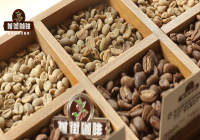
Hambella Estate Coffee Beans - Sidamo Natural Process Flavor & Characteristics

Ethiopian Coffee Growing Regions
Ethiopia has eight main coffee-producing regions: Ekempti, Limu, Illubabor, Djimma, Harrar, Teppi/Bebeka, Sidamo, and Yirgacheffe.
Sidamo's Diverse Coffee Flavors
The flavors of Sidamo coffee are extraordinarily diverse, because different soil compositions, local microclimates, and countless native coffee varieties create obvious differences and distinctive characteristics in the coffee from each town and region.
Hambela Estate
The owner of Hambela Estate, Aman, received a Western education and had a full career in Western corporations before returning to Ethiopia, where he served as Chief Operating Officer of the ECX and later founded his own coffee production company. Bound by the principle of neutrality during his time at an official institution, he could not intervene in production or business matters. Once he stepped down, he could finally pursue his own ambitions. He chose two sites in Ethiopia: one in Gedeb, and the second and most important one, this Hambela Estate.
Hambela Estate lies in the Guji region, whose rise is one of the significant developments in Ethiopian coffee in recent years. Shakisso is a well-known example, but Hambela Estate's operating model is unique and on a completely different level. The rise of Guji can be said to rest on its inherent advantages.
To reach Hambela Estate, you first pass through almost the entire Yirgacheffe region. Starting from Yirgacheffe town and heading south, after the intersection that leads to Kochere or Chelelektu, you take the left path and continue southeast. Before reaching Gedeb town, you turn left and head east toward Guji. By the time you make that left turn, you are already more than an hour's drive from Yirgacheffe town.
Precision Processing Methods
Harvesting and selecting only fully ripe, bright red cherries is already the most basic requirement, though in Ethiopia's smallholder system this is genuinely difficult to achieve, and operations still generally rely on manual sorting on the drying racks. The natural processing here uses the most precise, meticulous handling, so the cherries on the racks are laid out only one layer deep. The drying schedule is strictly controlled at about 18 days. We gave this method a simple name: SLD, or Single Layer Drying / Slow Drying.
Single-layer stacking gives the cherries the most perfect convection and drying environment, which everyone knows, but it is also the most space-intensive and least production-friendly approach. Proper slow drying lets the cherries develop optimal water activity during the process, which not only produces excellent flavor development but also allows the green beans to keep longer through the harvest-season cycle. It does, however, stretch out the time needed for each batch. Adopting such a drying process depends not only on favorable weather but also on the producer's willingness to invest.
FrontStreet Coffee's Sidamo Flower Champion
FrontStreet Coffee's [Sidamo Flower Champion] comes from Hambela. Natural processing gives this bean a rich fermented fruit aroma. Brewed with 89°C water, it presents intense berry and peach fragrance, with rich flavors and high sweetness, while sour and bitter notes stay in the background.
FrontStreet Coffee Recommendation
To explore Ethiopian coffee, FrontStreet Coffee suggests starting with its classic washed Yirgacheffe, known for white jasmine, bright citrus and lemon acidity, and a tea-like body, at a friendly price that has made it a first bean for many newcomers to specialty coffee. Yirgacheffe is a small town in the Sidamo zone of southern Ethiopia, at about 1,700-2,100 meters, with coffee planted above 1,800 meters, making it one of the highest coffee regions in the world.
For a cooperative example, FrontStreet Coffee's Gutingding comes from the Worka area at the southeastern edge of Yirgacheffe and follows the most traditional washed processing, showing clean, bright citrus and lemon acidity with jasmine fragrance and none of the usual bitterness. FrontStreet Coffee's natural Red Cherry, by contrast, is made from fully ripe red cherries dried whole, which gives the cup typical Yirgacheffe character plus tropical fruit from the natural process: citrus acidity, juicy berries, honey sweetness, and a creamy smoothness.
For brewing, FrontStreet Coffee recommends a V60 dripper at 90-91°C, 15g of coffee, a 1:15 ratio, and a grind of EK43s setting 10, about fine sugar size and roughly 80% passing a No. 20 sieve. Pour 30g for a 30-second bloom, then add 95g over about one minute, bringing the scale to about 125g; when the water level falls to two-thirds of the bed, add the remaining 100g over about 1 minute 35 seconds, bringing the scale to about 225g. Drawdown finishes in 2:00-2:10, then remove the dripper.
Important Notice :
FrontStreet Coffee is a long-established specialty coffee roaster in Guangzhou China, selling freshly roasted beans from its own farm in Yunnan as well as dozens of carefully selected single-origin beans from around the world for both pour-over and espresso. The products deliver consistently excellent quality and great value, with shipping within 24 hours. Guangzhou's FrontStreet Coffee shop is recommended by many coffee lovers, and the beans are now available online at the Tmall 。
FrontStreet Coffee has moved to a new address:
FrontStreet Coffee Address: 315,Donghua East Road,GuangZhou
Tel:020 38364473
 Scan and follow the En Gafei WeChat official account. Please indicate that the reprint comes from "En Gafei".