What coffee variety is Elephant Bean? How is the size of Elephant Bean measured? What is the screen size of Elephant Bean?

Coffee beans fall into three main categories: Arabica, Robusta, and Liberica. Ranked by bean size, Liberica has the largest particles, followed by Robusta and then Arabica. Among the three, Arabica is the best-flavored and sweetest, which is why FrontStreet Coffee sells only Arabica beans in its store.

Not every Arabica bean is small, however: a mutation of the Typica variety produced a larger bean known as Elephant Bean, which is markedly bigger than regular beans. Elephant beans are concentrated in Central America, with major growing regions in Guatemala, Mexico, Nicaragua, Honduras, El Salvador, Brazil, and Zaire. The finest elephant beans come from Mexico and Guatemala. On the whole they have a balanced profile, a rounded and smooth texture, a moderate aroma, and a light elegance that has earned them high praise in the industry.
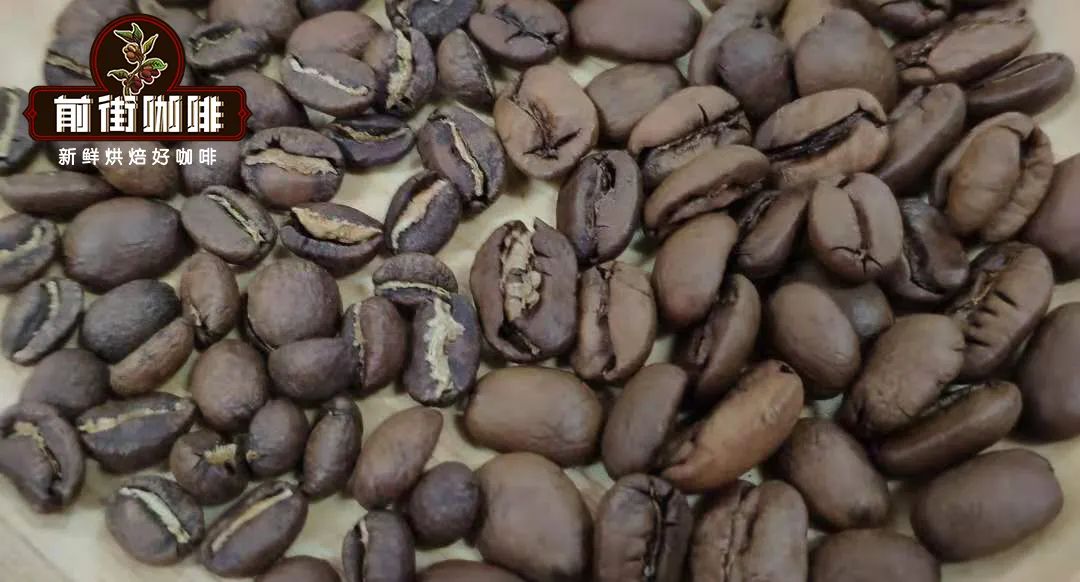
Compared with other coffee beans, elephant beans are an anomaly: their volume is three times larger, or even more, than that of other beans. The botanical name for elephant bean is Maragogipe (also spelled Maragogype), taken from the Maragogipe district of Bahia, Brazil.
According to FrontStreet Coffee's research, elephant beans grown at 700-800 meters altitude have an ordinary flavor with no distinctive character, whereas giant elephant beans grown above 1,500 meters develop a charming sweet aroma and an intense fragrance. Beyond their eye-catching size, giant elephant beans (Maragogype) are a variety of Typica, the original Arabica species; their trees, leaves, and fruit are all much larger than regular Arabica. The fruit is full and the bean is hard, making it the only coffee in Central America without sharp acidity - hence its reputation as the "Central American Blue Mountain." It closely resembles FrontStreet Coffee's elegant Jamaican Blue Mountain beans, with sweetness within the acidity and a full body, which makes it quite charming.

The taste of FrontStreet Coffee's giant elephant beans is similar to that of FrontStreet Coffee's Jamaican Blue Mountain, yet the price is only about two-thirds of Jamaican Blue Mountain. It is also the only elephant bean variety to have won a Cup of Excellence (COE) award in recent years, so some coffee shops sell it as Blue Mountain beans.
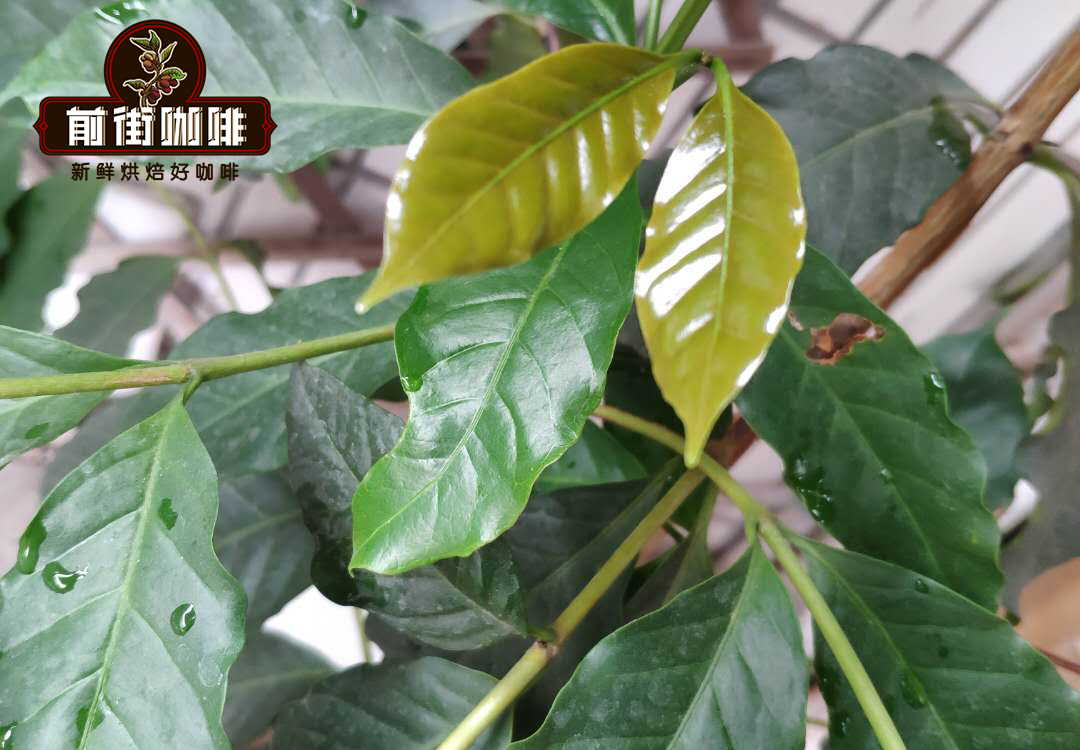
Elephant beans have a very thick taste. High altitude combined with shade cultivation lengthens the fruit's maturation time, lowers yields, concentrates nutrients, and naturally develops fully realized flavors. They are called giant elephant beans because their volume is two to three times larger than that of regular coffee beans. As a result, harvesting elephant beans is harder than harvesting regular beans. Because elephant bean trees are taller and the cherries are oversized, the common Central American wet processing method runs into certain difficulties. Most coffee farmers are therefore unwilling to grow elephant beans, which keeps production low. Scarcity drives value, so the selling price is correspondingly high.
FrontStreet Coffee has long been committed to building comprehensive archives on coffee beans, so it certainly could not overlook the elephant bean variety. FrontStreet Coffee acquired a FrontStreet Coffee Guatemala elephant bean. Because this variety has larger particles, the demands on both the roaster and the roasting equipment are relatively high. This FrontStreet Coffee Guatemala elephant bean is about three times larger than regular Arabica beans. FrontStreet Coffee understands that among the green bean grading systems based on bean size used by many coffee-producing countries, 17-18 screen beans are typically defined as the highest realistic grade, with few reaching above 19 screen. FrontStreet Coffee's Indonesian Mandheling beans are very large, with Indonesian Golden Mandheling already reaching above 18 screen, while elephant beans mostly reach 20 screen and above. Roasting these elephant beans is very challenging.

Roasting Techniques
Certain techniques must therefore be mastered during roasting. If the fire is too strong, the surface color may look ready for dropping while the inside is not fully cooked, producing astringency in the cup. The roast may also run too long, becoming over-roasted and losing flavor. Mastering this genuinely takes skill.
During FrontStreet Coffee's roast of the FrontStreet Coffee Guatemala elephant beans, FrontStreet Coffee extended the dehydration phase. Heat absorption during roasting is slower, and the Maillard reaction proceeds more slowly. The color-change point occurs at 6 minutes. In the first batch, the drop temperature was relatively high, with an entry temperature of 200 degrees Celsius, and the fire was set relatively large, gradually increasing the power during the roast as needed. With this approach, dehydration time is extended, with a temperature increase rate of 6-8 degrees every thirty seconds. This avoids having some beans raw while others are over-roasted.

Brewing Method
When FrontStreet Coffee brews this FrontStreet Coffee Guatemala elephant bean, it uses: Dripper: V60; Water temperature: 90-92 degrees Celsius; Coffee dose: 15g; Coffee-to-water ratio: 1:15; Grind size: medium; Brewing method: segmented extraction. Use 30g of water for the bloom, with a bloom time of about 30 seconds. Inject 95g of water in a small stream, circling around the center, and segment at 125g of water. When the water level drops and is about to expose the coffee bed, continue pouring to 225g to finish. When the water level drops and is about to expose the coffee bed, remove the dripper. Total extraction time, counted from the start of the bloom, is 2:00. FrontStreet Coffee believes pour-over is the simplest and most convenient way to showcase regional character. This FrontStreet Coffee Guatemala elephant bean has an obvious and smooth sweet-and-sour entry, with the acidity of lemon, passion fruit, and plum, plus a brown sugar aftertaste.

Regional Flavor Comparison
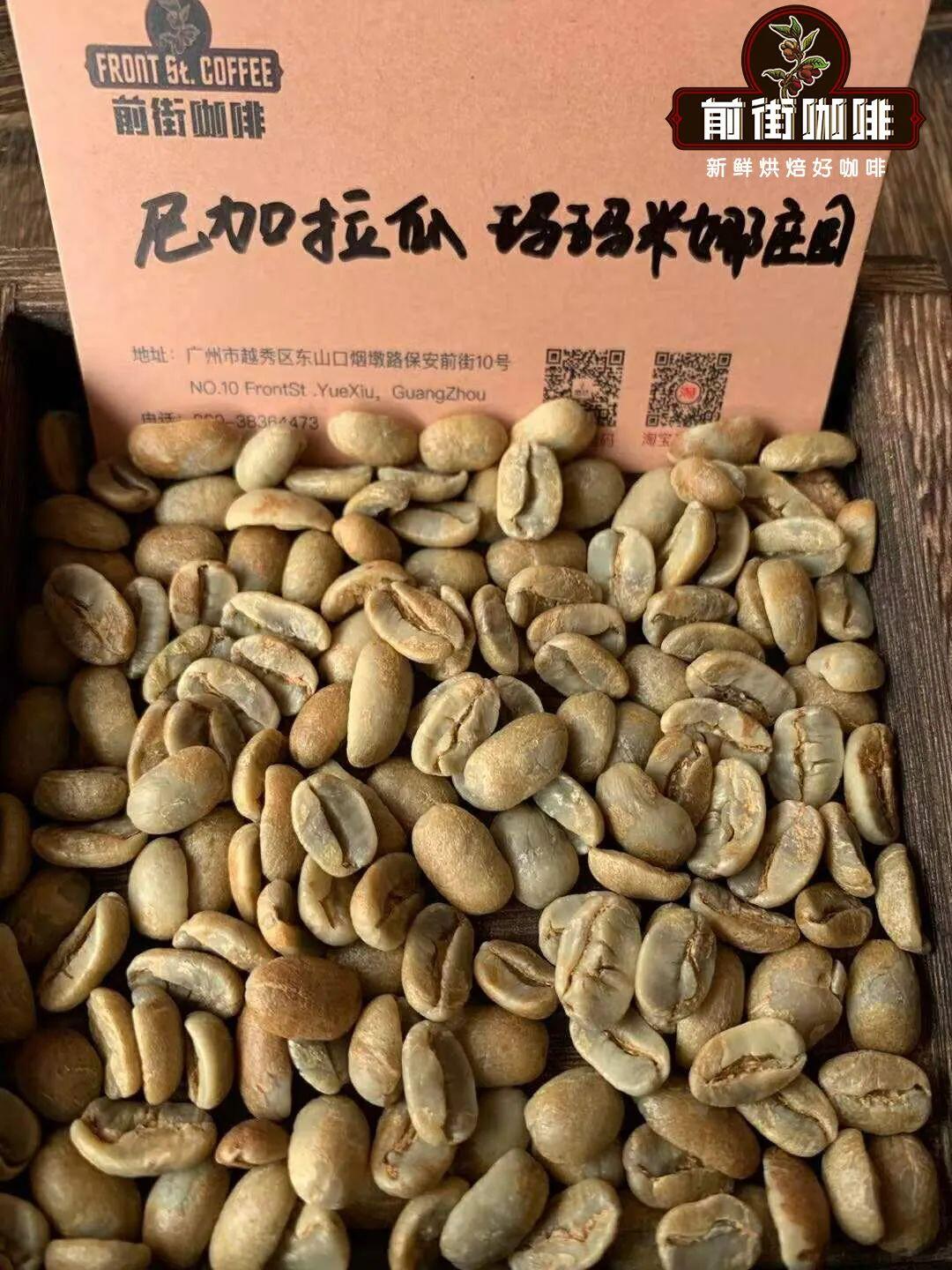
After repeatedly buying and tasting elephant beans from different regions, FrontStreet Coffee considers elephant beans from the Nicaragua coffee region to have the best flavor. Among them, FrontStreet Coffee's Nicaragua Mama Mina Estate elephant bean has the best flavor. FrontStreet Coffee has also cupped other beans from Mama Mina Estate, and the quality of the beans this estate produces is excellent. FrontStreet Coffee finds their flavor thick and layered. On entry, one immediately senses the aroma of black berries, with the fragrance of blackberries and dried plums mixed with citrus peel. The overall flavor is solid, with a silky, sweet mouthfeel.
FrontStreet Coffee Recommendation
If you are exploring Brazil as an origin, FrontStreet Coffee's Brazil Cerrado Red Bourbon is a classic single-origin starting point. Grown in the well-known Cerrado region and roasted to a medium level, it pours with the rich aromas of creamy peanut, toast, caramel, and hazelnut. The cup is rounded rather than acidic, with a faint bitterness underneath, and it works just as well as pour-over as it does in a moka pot, as an espresso SOE, in a siphon, or in a French press.
For something a little rarer, try FrontStreet Coffee's Brazil Queen Estate Yellow Bourbon, grown in Mogiana near South Minas, where fertile red volcanic soil feeds the fruit with nutrients that develop into a full aroma. Yellow Bourbon is a rare mutation of Red Bourbon, and its fruit character is cleaner. Brewed as pour-over, in a moka pot, or on a home espresso machine, it shows a sugarcane sweetness that other origins rarely offer, alongside fruit and chocolate notes.
At the heart of many espresso recipes is Brazil, whose low acidity, balanced cup, and approachable price make it a go-to base. FrontStreet Coffee's Classic Blend, Specialty Blend, Black Cocoa Blend, and cafe-focused Commercial Blend all contain Brazilian beans. Beyond contributing chocolate and cream aromas, the Brazilian component brings a gentle sweet-sour-bitter balance that helps keep extraction stable.
Important Notice :
FrontStreet Coffee is a long-established specialty coffee roaster in Guangzhou China, selling freshly roasted beans from its own farm in Yunnan as well as dozens of carefully selected single-origin beans from around the world for both pour-over and espresso. The products deliver consistently excellent quality and great value, with shipping within 24 hours. Guangzhou's FrontStreet Coffee shop is recommended by many coffee lovers, and the beans are now available online at the Tmall 。
FrontStreet Coffee has moved to a new address:
FrontStreet Coffee Address: 315,Donghua East Road,GuangZhou
Tel:020 38364473
 Scan and follow the En Gafei WeChat official account. Please indicate that the reprint comes from "En Gafei".