Kenyan Coffee Bean Flavors | Kenyan Coffee Grade Classification System | Kenyan Coffee
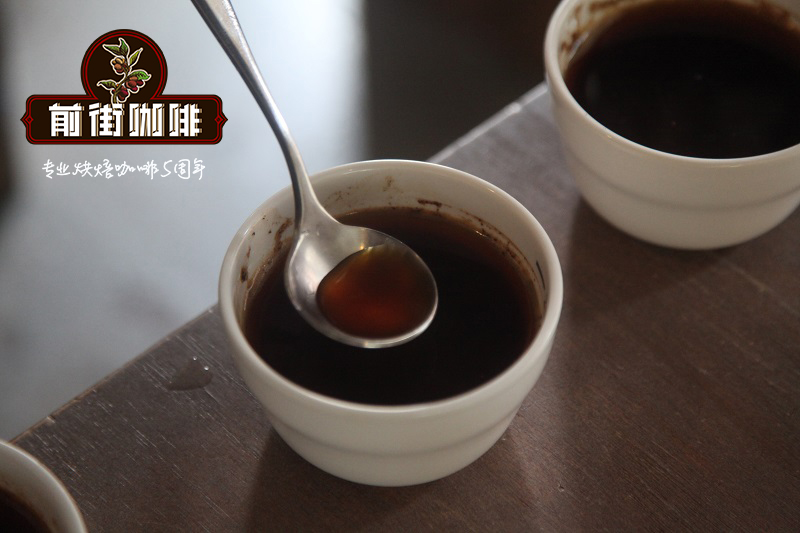
Kenya, located in East Africa near the equator, grows high-quality Arabica beans. The beans are thick and rounded, graded into seven levels by size, with taste divided into six grade specifications from top to bottom. Among coffee tasting recommendations, "Kenya AA" is highly acclaimed and respected, with a slightly acidic, rich flavor that is very popular among Europeans, especially in the UK, where Kenyan coffee has overtaken Costa Rican to become one of the most popular coffees.
Kenyan Coffee Varieties
In the professional coffee field, when Kenya comes up, SL34 and SL28 cannot be overlooked. This is Kenya's unique naming system. Since the 1930s, the Kenyan government has collaborated with the internationally renowned Scott Laboratory (abbreviated SL) on a series of variety improvement programs, improving varieties from the French Mission Bourbon from Tanzania and Mocha from Yemen in the hope of cultivating drought-resistant, high-yield plants. Although varieties #28 and #34 had minimal yields, they were particularly adapted to Kenya's special high-altitude climate (low temperatures, long droughts, heavy rains) and developed strong, rich special flavors, eventually becoming the Kenyan coffee known to the world.
Kenyan Coffee Production System
Kenya's specialty coffee industry differs from the norm, mostly combining smallholders, wet processing mills, and cooperatives. Farmers deliver harvested cherries to nearby mills or cooperatives in the shortest possible time. Cooperatives also regularly dispatch personnel to guide local farmers, ensuring each producer has professional cultivation techniques to maintain coffee quality.
Kenyan Coffee Grading System
Kenya's green coffee grading system was established by the government to coordinate quality management and guide farmers. Based on particle size, weight, and shape appearance, it is divided into AA, AB, PB, C, TT, T, E, MH, and ML, among which AA and PB are specialty green beans with low defect ratios and unique flavors.
Kenyan Coffee Grade Classifications
E - Refers to "Elephant," but not to an elephant bean variety. Generally one fruit contains two seeds facing each other, so one side is flat, called a flat bean, female bean, or double-halved bean. E refers to two seeds that merge and stick together during growth, becoming extra-large beans. Rare, a naturally occurring mutation.
AA - The sieve mesh holes are approximately 7.20 millimeters. This grade commands a better price.
AB - The filter hole size for A is 6.80 millimeters, while B is 6.20 millimeters. The two are mixed together for sale, hence AB. In a single harvest, most beans concentrate in this grade.
PB - Called Peaberry in English, mostly referred to as small round beans, or male beans, single-petal beans, as opposed to regular flat beans. Very rare, because only one seed develops completely inside the fruit, resulting in small, round beans. There is no consensus on the impact on flavor, but some people particularly like it, so PB beans are selected and sold separately.
C - Hole size between 4.8 and 5.6 millimeters, considered small particle beans.
TT - Usually defective beans fall into this grade.
T - By this grade, usually only fragments, defective beans, and small particle beans below 4.8 millimeters remain.
MH/ML - Overripe beans that fell on the ground and other very poor quality beans are not exported.
Commonly seen AA+, AA++, AA Top, and AB+ are traders' own classifications, not part of Kenya's official system. Different traders have different definitions, so these are just for reference.
FrontStreet Coffee also has Kenya AA beans, Kenya Asali and Karogoto are both Kenya AA. Recommended pour-over parameters are 90-92°C, with a coffee-to-water ratio of 1:15, and a brewing time of 2 minutes and 20 seconds. The first sip reveals bright cherry tomato acidity with honey-like sweetness.
FrontStreet Coffee Recommendation
If Kenyan coffee's bright, tomato-like acidity appeals to you, Ethiopia's naturally processed coffees offer an instructive contrast. FrontStreet Flower Champion is a standout, the variety behind the 2017 Taste of Harvest winner from Hambella in Sidamo, a coffee that stood out for its rich strawberry and cream aroma. It typically shows floral notes, berries, citrus, the sweet-and-sour sensation of oranges, mango juice, and honey, with a sweet black tea aftertaste. Its variety is the most common Ethiopian landrace, a mix of several undifferentiated coffee trees, so the beans vary in size, carrying a delicate floral character with especially prominent fruit aroma.
FrontStreet Gutingding Cooperative coffee, by contrast, represents the washed side of Ethiopia. It comes from the Worka area at the southeastern edge of Yirgacheffe, follows the most traditional washed process, and is often called the last pure land of Yirgacheffe. It has no traditional bitterness, carrying fresh, bright citrus and lemon notes and a jasmine fragrance, brewed from a Grade G1 lot, the highest level in Ethiopia.
For a completely different profile, FrontStreet Brazil Queen Estate is a low-acid, balanced option. Its yellow Bourbon beans—the earliest discovered yellow Bourbon—show cream, peanut, toasted bread, and sugarcane aromas, rich, sweet, and smooth, and it suits pour-over, a moka pot, and an espresso machine alike.
For pour-over, FrontStreet Coffee recommends a V60 dripper, 90-91°C water, 15g of coffee, and a 1:15 ratio, ground to an EK43s setting of 10 (fine sugar size, with 80% passing a No. 20 sieve). Pour 30g of water for a 30-second bloom, then add 95g (about 125g on the scale) over roughly one minute. When the water drops to about two-thirds of the coffee bed, pour the remaining 100g (about 225g on the scale), and finish the drawdown at 2:00-2:10.
Important Notice :
FrontStreet Coffee is a long-established specialty coffee roaster in Guangzhou China, selling freshly roasted beans from its own farm in Yunnan as well as dozens of carefully selected single-origin beans from around the world for both pour-over and espresso. The products deliver consistently excellent quality and great value, with shipping within 24 hours. Guangzhou's FrontStreet Coffee shop is recommended by many coffee lovers, and the beans are now available online at the Tmall 。
FrontStreet Coffee has moved to a new address:
FrontStreet Coffee Address: 315,Donghua East Road,GuangZhou
Tel:020 38364473
 Scan and follow the En Gafei WeChat official account. Please indicate that the reprint comes from "En Gafei".