How much coffee for a French press? How much coffee powder for a standard French press? Does French press coffee have more crema?

Coffee keeps growing in popularity, and with it the number of ways to brew it. But when you are pressed for time, setting up a pour-over can feel like a project, and even pulling a shot of espresso may seem like too much effort. That is exactly when a "lazy pot" - the French press - earns its place on the counter. Compared with pour-over coffee, French press coffee keeps more of the coffee's oils, giving it a richer, rounder mouthfeel, though it produces nowhere near the crema of espresso.
Understanding Coffee Oils
Talk about coffee oils and most people immediately picture the foam that sits on top of an espresso shot - the crema. An espresso without that golden layer is often judged a failed shot, and fairly so: crema is what a well-made espresso is all about. The oils in espresso are made up mainly of carbon dioxide plus the insoluble oils released from the grounds.

Roasted coffee beans hold gases, chief among them carbon dioxide. When a modern pump-driven espresso machine extracts coffee, it forces water through the puck at 9 bars of pressure. Under that pressure the water becomes supersaturated with carbon dioxide, so the gas cannot escape and dissolves straight into the brewing liquid. Meanwhile the coffee's fats are emulsified and wrap around the trapped carbon dioxide. Because these fats are lighter than water, they slowly separate out and settle as that beautiful golden-brown layer of crema on the surface.

The French Press Method
The French press is one of the most convenient brewers you can own at home, and it is also the brewing method that presents a coffee's character most completely - it shows off a coffee's strengths just as readily as its flaws, which is why bean quality and freshness matter so much. It is also the easiest method to reproduce cup after cup. Same press, same beans, same water temperature, same water weight, same steep time: two different people will brew virtually identical cups, something pour-over and siphon simply cannot guarantee. That consistency is what makes it the method we recommend most often to beginners.
The French press - also called a press pot or plunger pot, and nicknamed the "lazy pot" - is a simple brewer made up of a heat-resistant glass (or clear plastic) beaker and a metal mesh filter on a plunger. It originated in France around 1850 and was first used mainly for brewing black tea, which is why some people still call it a tea press.

Operationally, the French press is the simplest of all coffee equipment, and its extraction style is the closest to that of professional coffee cupping. It fully expresses the coffee's oils, aromatics, and flavor compounds, producing a smooth, sweet, full-bodied cup - an excellent way to brew, and one loved by most people who try it.

How to Brew with a French Press
Here is the simplest, most reliable French press method:
We are using a two-cup French press to make coffee for two. The standard coffee-to-water ratio is 1:14-18. Some presses have fill-line markings and some do not - a kitchen scale solves that. If your press does have markings, pour the water in first and then add the grounds, so the ratio stays accurate.
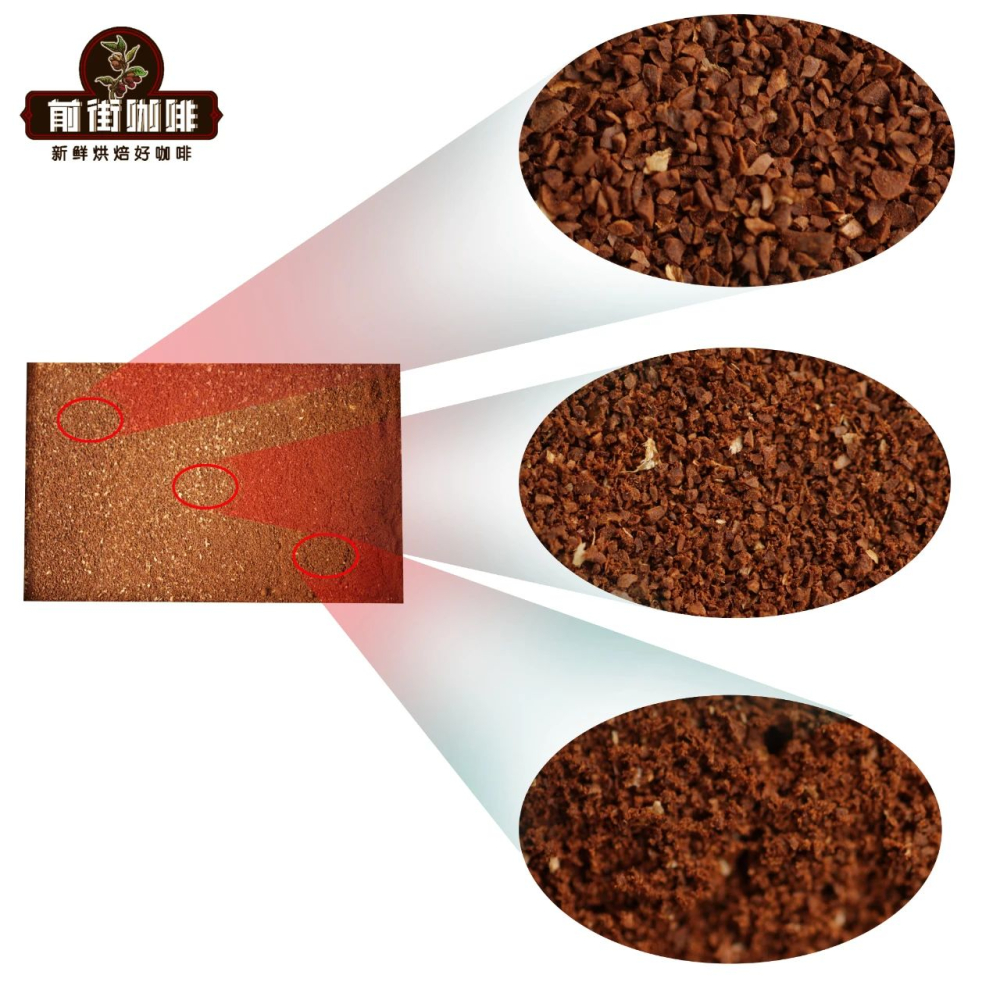
The grind size for French press coffee should be coarse - about the texture of brown sugar - with fairly uniform particles. This comes down to how the press extracts and filters: the metal mesh is relatively open, so fines slip straight through, and because the hot water sits in direct contact with the grounds the whole time, an overly fine grind will quickly tip into over-extraction.

Equipment Needed:
French press, pouring kettle, coffee grinder, thermometer, kitchen scale, timer, fresh coffee beans, and a coffee cup.
FrontStreet Coffee's French Press Brewing Steps:
- Weigh out 20g of fresh coffee beans and grind them coarse.
- French press water temperature generally sits between 85-95°C. Match it to the roast level: lighter roasts take higher temperatures to bring out their aromatics, while darker roasts do better slightly cooler to keep bitterness in check. Fine-tune with experience and personal taste.
- Pour the ground coffee into the French press.
- Add water, pouring in circles as you would for a pour-over.

- Add about 300g of hot water, for a coffee-to-water ratio of roughly 1:15. As noted above, anything in the 1:14-18 range works and can be tuned to taste. Since this press has no markings, we use a kitchen scale: after adding the grounds, tare the scale, then weigh in the hot water. Hot water weighs slightly less than the same volume of cold water, but that tiny discrepancy is negligible for home brewing.
- Stir the brew.

- Put the lid on with the plunger still up, and let the coffee steep for 4 minutes. Steep less and the cup tastes thin; steep more and it grows heavy - adjust to your own preference.
- Press the filter down slowly toward the bottom of the pot. Slow is the key word - pressing gently keeps fines from being driven through the mesh. Stop just above the bottom rather than forcing it all the way down.
- Pour the coffee, tilting the press gently so the grounds sitting at the bottom are not stirred back up into the cup.
- Enjoy your French press coffee.


Does French Press Coffee Have Lots of Oils?
As FrontStreet Coffee noted earlier, French press coffee holds more oils than pour-over but fewer than espresso - a happy middle ground.
Espresso Machine
If crema is what you are after, nothing beats an espresso machine. Its fixed high pressure is unique among brewing methods and pulls out the richest, thickest oils - ideal for latte art, with an intensely full mouthfeel. It typically calls for finely ground, dark roast blends.

Moka Pot
Anyone who has used a moka pot knows the coffee it makes is strong and on the bitter side, usually diluted with water or milk before drinking. Brewed with a fine grind of dark roasted beans, a moka pot also produces a decent head of crema, though less than an espresso machine. If your budget is tight but you still want the richness of freshly brewed, oil-topped coffee, the moka pot is hard to beat.

French Press
To coax oils out of a French press, use a medium-coarse grind of a dark roasted coffee. The crema it produces will be modest - the press's real selling points are simplicity and convenience. If you want an easy, fuss-free cup that still carries a little oil on top, the French press is a fine choice.

FrontStreet Coffee's Brewing Recommendations:
Pour-over, French press, or espresso - if it is a flavor you enjoy, it is good coffee. What every method demands, though, is fresh beans. FrontStreet Coffee has always held that freshness makes or breaks a coffee's flavor, which is why every bag we ship is roasted within 5 days of dispatch. Our roasting philosophy is simple: freshly roasted, good coffee. Since coffee beans need roughly 4-7 days to degas, the beans arrive right at their flavor peak.

A word for those who buy pre-ground coffee: ground coffee does not need to degas, because the pressure of the carbon dioxide trapped in the bag during transit actually helps round out the flavor, so you can brew it the moment it arrives. But brew it soon - once ground, coffee oxidizes fast in open air, its flavors fading quickly. That is why FrontStreet Coffee recommends buying whole beans and grinding just before brewing, the best way to taste everything a coffee has to offer.
FrontStreet Coffee Recommendation
If you are brewing French press, try FrontStreet Coffee's washed Ethiopia Yirgacheffe Guodingding. As a washed Yirgacheffe it delivers the clean, bright sweetness that suits immersion brewing, and it is a versatile, value-oriented everyday bean that performs just as well in a French press as in a cold brew, showing sweet berry, layered fruit, and honey notes in the cup.
Important Notice :
FrontStreet Coffee is a long-established specialty coffee roaster in Guangzhou China, selling freshly roasted beans from its own farm in Yunnan as well as dozens of carefully selected single-origin beans from around the world for both pour-over and espresso. The products deliver consistently excellent quality and great value, with shipping within 24 hours. Guangzhou's FrontStreet Coffee shop is recommended by many coffee lovers, and the beans are now available online at the Tmall 。
FrontStreet Coffee has moved to a new address:
FrontStreet Coffee Address: 315,Donghua East Road,GuangZhou
Tel:020 38364473
 Scan and follow the En Gafei WeChat official account. Please indicate that the reprint comes from "En Gafei".