Introduction to Baoshan Xinzhai Coffee Cultivation_Is Baoshan Xinzhai Coffee Delicious-How Much Does Xinzhai Coffee Cost
A Truly Bitter-Free Coffee Experience
It is true: at Xinzhai Coffee Farm in Baoshan City, you can drink a cup of coffee that is not bitter.
Coffee is not inherently bitter, of course, but for ordinary Chinese people who do not understand it, especially someone like me who is allergic to coffee, the general impression is genuinely bitter, and a bitterness that causes "internal heat." Burnt beans ground into powder and steeped in water create something both bitter and heat-inducing. You must acknowledge its aroma, but smelling too much of that fragrance still brings a scorching sensation rising from your scalp, entering your bloodstream with each breath, making you quickly restless and uneasy.
Xinzhai Farm's Typica Single Origin
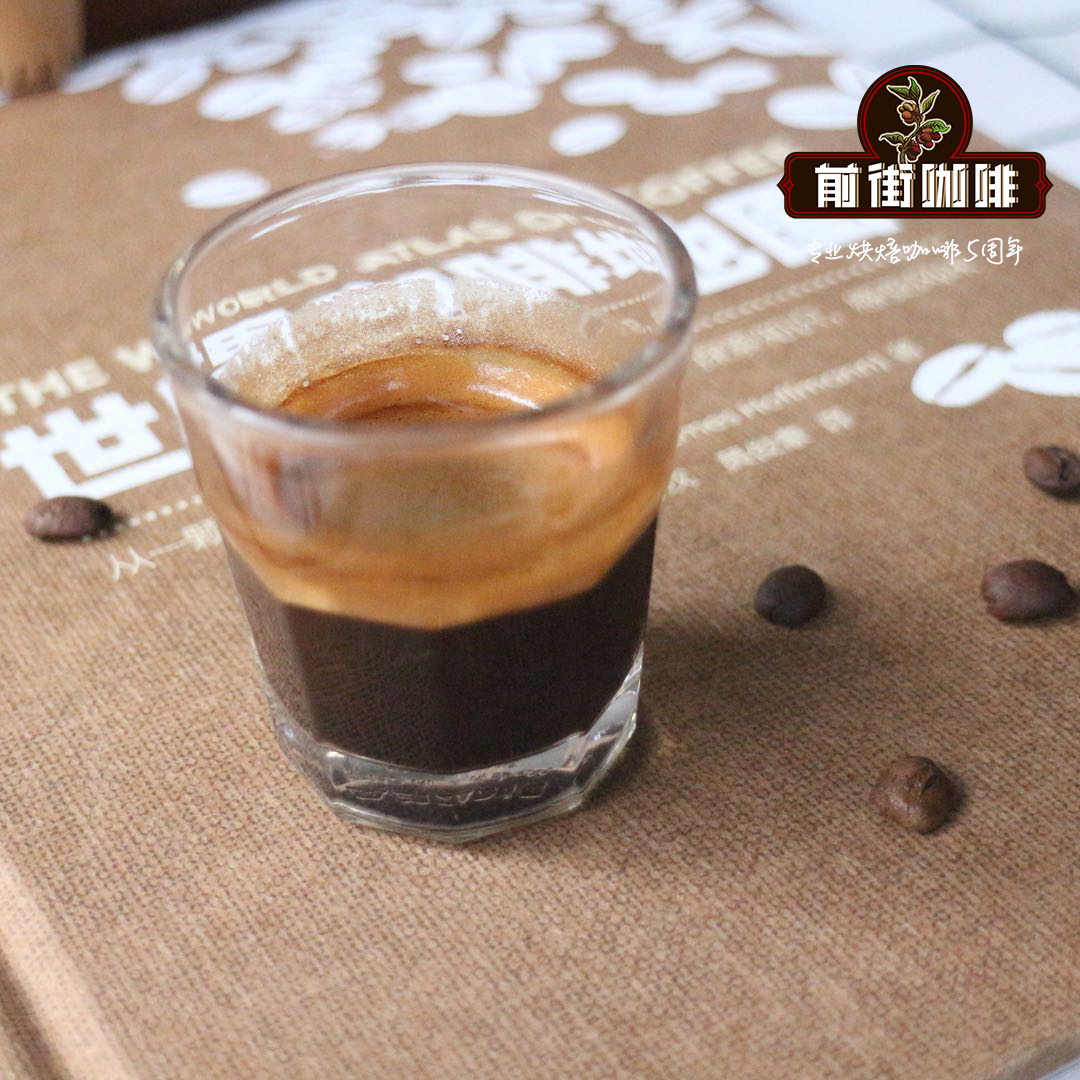
So for many years, I did not drink coffee. But on this early winter morning at Xinzhai Coffee Farm, unable to resist the temptation of this amber-like, crystal-clear, and lustrous liquid, I took a small sip. First, fruit flavors spread across my tongue: subtle acidity, rich fragrance throughout my mouth, and layers of aftertaste. Not bitter at all.
This is a medium-roasted Typica single-origin coffee, ground fresh and prepared by pour-over to achieve such flavor.
The Origins of Chinese Coffee
If Zhukula in Binchuan, Dali represents the origin of Chinese coffee, then Baoshan is where coffee was developed for large-scale cultivation. According to research and verification by Professor Chen Dexin, Secretary-General and Associate Researcher of the Yunnan Specialty Coffee Society and member of the Yunnan Association for Science and Technology, the French missionary Tian Deneng planted China's first coffee tree in Zhukula in 1904. Currently, more than 20 coffee companies are involved in the coffee industry here.
Father Tian Deneng planted a Typica coffee tree. This variety has thrived not only in Zhukula, Binchuan, but is now also grown in continuous plantations in Baoshan. Compared to newer varieties, Typica beans are smaller and yield less, only one-third of what newer varieties produce per acre. However, Typica has a rich fruit aroma, full flavor, and excellent quality. Just like what I tasted this morning, it is less stimulating and relatively mild, surprisingly without the discomfort I used to experience when drinking coffee, completely changing my long-held view of coffee.
From Non-Drinker to Coffee Enthusiast
Interestingly, Xie Xianwen, chairman of Xinzhai Coffee and a Baoshan native, initially did not drink coffee either. It was not until he entered the coffee industry, began large-scale coffee cultivation, and started its preliminary processing that he became fascinated with coffee. Every day before work, he must have a cup to refresh his mind, and the tea he used to drink daily has been completely replaced by coffee. Besides pour-over coffee, he also drinks a type of coffee brewed in a thick-bottomed, wide-mouthed mug, similar to how tea is prepared. It is also Typica. The cup must be thick, with a narrow bottom and wide mouth, and the cup is warmed before brewing. The large cup of coffee brewed this way suits his level of coffee enthusiasm, befitting a chairman.
Xie Xianwen told us that in his hometown, coffee was used as medicine when he was a child. For example, if a child had indigestion or diarrhea, the village doctor would mysteriously take out a few coffee beans, bury them in stove ashes, roast them until charred, then grind them into fine powder and have the child swallow it. The village doctor would often be secretive, intentionally not letting you know that coffee beans were used. Thinking back now, that was perhaps the earliest coffee in Baoshan people's lives.
A 96-Year-Old Coffee Tree
In one corner of the Xinzhai Coffee factory courtyard stands an old coffee tree. According to Xie Xianwen, it was purchased and transplanted in 2008 from Mangliu Village, Mangliu Group, in Lujiang Town, Baoshan City. The owner of this coffee tree was a guard of the Xian Tusi, or local chieftain. He had performed meritorious service, so the Xian Tusi rewarded him with a small handful of coffee beans, about ten or so. He brought them back to Mangliu Group and planted them beside his yard. Four trees survived. Later, three were cut down for house construction, leaving only this one, the one in Xinzhai Coffee's courtyard today. It is also Typica, calculated to be 96 years old. Today, among Xinzhai Coffee's 735 acres of continuous Typica coffee forest, there are descendants grown from its seeds.
This coffee tree has a thick trunk with several main branches, but due to its advanced age, the core of the trunk has rotted. Xie Xianwen cut it away, allowing new branches to grow from the base, making it lush with foliage.
Looking closely, you can see some round insect holes on the coffee trunk; they are from aphids. The aphids cooperate with ants: aphids cannot walk, so ants act as their legs, carrying them onto trees to feed. When winter comes and it gets cold, the ants move them into the soil to spend the winter warmly. When ants move them, aphids secrete a sugary feces, which is exactly the ants' food. However, their cooperation will soon be disrupted, as Xinzhai Coffee is actively seeking ways to eliminate them and protect this old coffee tree.
Innovative Coffee Sales Models
To sell coffee to distant markets, Xinzhai relies not only on Baoshan's unique climate and their own cultivation advantages, but has also devised many creative methods. For example, they offer coffee tree sponsorship: customers can remotely reserve a coffee tree, with a small tag hanging on the tree indicating whose coffee it is. At 380 yuan per tree, during harvest season workers pick the coffee from that specific tree, process it through hulling and roasting, then mail it to the customer. Customers can also visit in person to take part in picking and roasting, and Xinzhai Coffee provides free accommodation. One tree yields no less than one kilogram of coffee after picking and roasting, while the retail market price of one kilogram exceeds 500 yuan. This means the reservation model is not only enjoyable but also more economical.
Coffee Beyond the Bean
At Xinzhai Coffee, I also tasted a tea made from dried coffee fruit pulp. Amid the rich fruit fragrance filling my mouth, there was a subtle kudzu root flavor, somewhat like the Chinese herbal tea Wang Lao Ji, but unsweetened and more elegant.
As for coffee flower nectar, that is extremely luxurious. I will save that for next time.
Currently, Xinzhai Coffee is transforming a 13-acre former township government building into a coffee museum with at least four coffee bars, displays of various coffee plant varieties, demonstrations of coffee production processes, and accommodation facilities, similar to a tourism complex. It is clear that coffee is moving closer to culture and tourism.
The Perfect Morning Ritual
Leaving Xinzhai Coffee, I am certain I have grown fond of Typica. Do not tell me lengthy coffee theories; I just want sun-drenched Typica beans without a hint of impurity. After breakfast, I will grind them slowly and brew them carefully, starting a brand new day amid the layers of fruit fragrance and rich aftertaste of this ancient variety.
FrontStreet Coffee Recommendation
Typica is one of the oldest and purest Arabica varieties, and it is at the heart of FrontStreet Coffee's Yunnan range. FrontStreet's Yunnan 2013 Typica is grown on FrontStreet's own estate, picked only from fully ripe red cherries, sun-dried, and medium roasted to balance the cup with dark berry notes, caramel sweetness, chocolate, and a hint of dried apricot over a black tea finish. If you want an easy everyday entry to Yunnan, FrontStreet's Yunnan small-lot coffee from Baoshan is washed and medium roasted for soft nut and chocolate sweetness with a light plum acidity at a very approachable price. And if you prefer your Yunnan coffee in milk, the FrontStreet Black Cocoa Blend combines Yunnan small-lot with Brazil Cerrado for balanced nut, brown sugar, and chocolate flavors and a creamy, almond-like latte.
Important Notice :
FrontStreet Coffee is a long-established specialty coffee roaster in Guangzhou China, selling freshly roasted beans from its own farm in Yunnan as well as dozens of carefully selected single-origin beans from around the world for both pour-over and espresso. The products deliver consistently excellent quality and great value, with shipping within 24 hours. Guangzhou's FrontStreet Coffee shop is recommended by many coffee lovers, and the beans are now available online at the Tmall 。
FrontStreet Coffee has moved to a new address:
FrontStreet Coffee Address: 315,Donghua East Road,GuangZhou
Tel:020 38364473
 Scan and follow the En Gafei WeChat official account. Please indicate that the reprint comes from "En Gafei".