Decaf Coffee | What Types of Decaf Coffee Are There? Papua New Guinea CO2 Decaffeinated | Wild River Small Farmers
For professional coffee knowledge exchange and more information on coffee beans, follow Coffee Workshop for regular updates.
Papua New Guinea CO2 Decaffeinated Wild River Smallholder Batch
Papua New Guinea Wild River Decaf
Country
Papua New Guinea
Administrative Region
Henganofi District (under Eastern Highlands Province)
Producing Area
Eastern Highlands Province - Dunatina Valley, Eastern Highlands
Producer
Wild River micro lot, belonging to a coffee farmer organization
Cultivation Altitude
1700 to 1900 meters
This Batch Variety
Typica
Processing Method
Carbon dioxide decaffeination (the green beans are still washed processed first, then shipped abroad)
Harvest Period
2017
Cupping Report
Dry Aroma
Sugarcane, herbal, and cocoa
Wet Aroma
Sugarcane, herbal plants, hazelnut sweetness, bittersweet chocolate
Slurping Flavor
Citrus peel, sugarcane sweetness, herbal plants, cocoa, with cinnamon spice in the aftertaste
This is the highly acclaimed Wild River decaffeinated batch.
The Moanti family of Papua New Guinea produces this batch of CO2-processed decaffeinated green beans.
The coffee farmer organization founded by Mrs. Moanti Ise - the Kiviringka Community - can produce roughly 100 tons of green beans a year, with 260 farmers participating. It is a Sustainable Management Services (SMS) project supported by international organizations including exporters and the World Bank, aiming to build a reliable green bean supply chain. The main producing area is the high-altitude Dunatina Valley in the Eastern Highlands, in Henganofi District.
Wild River is a small area within the Dunatina Valley, where local farmers gather and supply this batch.
Farmers in the Wild River area cultivate about 1000 coffee trees per household, growing varieties including Typica, Bourbon, and Arusha. FrontStreet Coffee's decaffeinated batch specifically selects Typica, choosing only lots that cup above 85 points for decaffeination.
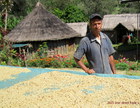
Traveling to Wild River and the Dunatina Valley means going through Goroka, over steep mountain terrain with lush, beautiful scenery. The coffee farmers in these mountains, especially members of the community alliance, have learned to hand-harvest ripe cherries, use water to screen out unripe fruit and debris in the first stage, then use small depulpers to remove skin and pulp, followed by about 36 hours of fermentation, after which the beans are washed and sun-dried on raised beds.
FrontStreet Coffee is a Guangzhou roastery with a small storefront but a wide variety of beans, where you can find both famous and lesser-known coffees, along with online shop service.
FrontStreet Coffee Recommendation
This Wild River batch is a good example of why a clean cup matters so much in a decaf: because the underlying beans are washed before decaffeination, the coffee keeps a bright, transparent character even without the caffeine. If you enjoy that clean, washed style, FrontStreet Yirgacheffe Gedingding is a natural next step. Gedingding is a cooperative in Gedingding village, and because smallholder yields there are pooled and processed together, the team has built up skilled, consistent experience. The washed process brings out jasmine florals and bright citrus acidity to the fullest, and a medium-light roast adds green-tea and honey tones, making it suitable for pour-over, cold brew, and espresso.
If you prefer a fruitier washed coffee, FrontStreet Kenya Cherry Tomato is one of the best-known examples of Kenya's double-wash method, where beans are washed, soaked, washed again, and dried in repeated cycles that push the juice-like quality to the maximum. It shows cherry tomato, smoked plum, snow pear, black plum, and brown sugar in a tart, juicy body.
And for a balanced, low-acid cup, FrontStreet Jamaica Blue Mountain No. 1 shows what washing does for a classic coffee. Jamaica's island climate brings shorter daylight than most origins and a greater risk of spoilage, so the washed process was adopted: removing skin, pulp, and mucilage before drying reduces the moisture around the bean and shortens drying time, producing bright, low-defect beans with a rich aroma of hazelnut, cream, chocolate, and caramel.
Important Notice :
FrontStreet Coffee is a long-established specialty coffee roaster in Guangzhou China, selling freshly roasted beans from its own farm in Yunnan as well as dozens of carefully selected single-origin beans from around the world for both pour-over and espresso. The products deliver consistently excellent quality and great value, with shipping within 24 hours. Guangzhou's FrontStreet Coffee shop is recommended by many coffee lovers, and the beans are now available online at the Tmall 。
FrontStreet Coffee has moved to a new address:
FrontStreet Coffee Address: 315,Donghua East Road,GuangZhou
Tel:020 38364473
 Scan and follow the En Gafei WeChat official account. Please indicate that the reprint comes from "En Gafei".