Why Indonesian Coffee Beans Use Wet Hulling Processing and How This Method Affects Flavor Profile
Do You Really Understand What "Wet Hulling" Means?
Indonesia is a country with year-round humidity between 70% and 90%, typhoons in certain regions, and annual rainfall exceeding 2000 millimeters.
Why do Indonesian coffees have a higher defect rate? And how has nature still given them such intense, mellow depth?
This article walks through every part of Indonesian coffee's wet-hulling process — its pros and cons, and what it means for roasters and brewers.
What Exactly Is Wet Hulling?
All coffee must be processed to turn it from cherries into dried green beans before it can be roasted and drunk. There are many ways to do that, but they fall into three broad categories: natural, washed, and honey. Wet hulling is a method of removing the seed's parchment, and it is the traditional method used in Indonesia. Although it shares some surface similarities with the washed process, the two are fundamentally different — so do not confuse wet hulling with washed coffee.
How the Wet-Hulled Process Works
Inside each coffee cherry, from the inside out, you find: the coffee seed (the green bean), the silver skin, the parchment (also called the endocarp), the gelatinous mucilage, and the outer skin (the exocarp).
Hulling here means removing the parchment to get at the green bean.
Step One
Remove the outer skin. Once the red outer skin is gone, the seeds are still wrapped in parchment and gelatinous mucilage. At this point fermentation must happen first, usually overnight in water tanks or plastic bags. This breaks down the pectin in the mucilage, making the flesh easier to remove during washing.
Step Two
The next day, the cherries that have fermented overnight are washed to remove the mucilage. Washing requires large amounts of water. If a plantation does not have enough, the first-fermented cherries with mucilage are sent to a processing plant for washing. After washing, we have "wet parchment coffee."
Step Three
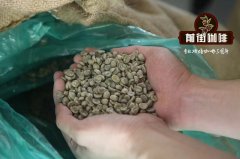
The wet parchment coffee from washing is then dried for 2-3 days depending on sunlight and humidity, and no more than 3 days, bringing the moisture content down to 20%-24% — the level at which the parchment is hard enough to remove. Up to this point there is still no difference between wet hulling and the washed process. If we continued with washed processing, these wet parchment beans would keep drying until moisture dropped to 11%, which makes the parchment brittle and easy to strip during hulling. But if we choose wet hulling, we must hull while moisture is still around 20%, when the parchment coffee is soft and the parchment only half dry. That is why a special wet hulling machine is required — it takes greater friction to remove semi-dry parchment.
As you can imagine, wet hulling does not remove parchment as cleanly as dry milling. High moisture means the parchment and the seeds are not fully separated, so the resulting green beans typically retain some parchment residue. Through the whole process, extreme care is required — touch a soft, wet bean with slight force and it cracks.
Because the beans are relatively low in density, they are prone to cracking after hulling and turning into defects. These cracked beans are called "kuku kambing," or "goat hooves."
Step Four
The hulled beans are dried further until moisture drops to 12%-13%. By day, the green beans are sun-dried on the drying patio; by night they must be stored indoors, bagged, and left to ferment further.
This cycle repeats for several more days. Once final drying is complete, the green beans reach finished-product standard with a deep green color, and the coffee can be bagged for export.
Why Wet Hulling Became Indonesia's Traditional Method
Wet hulling became Indonesia's primary coffee processing method for two reasons: history and environment. Coffee was first introduced to Indonesia by Dutch colonists in 1699 for economic profit. From a profit-driven perspective, the longer coffee stayed on the farm, the greater the loss. Wet hulling after picking could sharply shorten processing time, bringing returns faster and cutting labor costs.
Even without the profit motive, though, the Dutch would likely have adopted wet hulling anyway, because the extremely humid climate makes the entire process difficult. Drying coffee takes roughly 2-3 weeks in a warm climate, but most of Indonesia has high rainfall and humidity. With conventional methods the time required would be even longer, and the bacteria that would grow in that window could spoil the beans before they dried sufficiently. Parchment protects the bean and keeps the inner seed stable during drying, which is why conventional processing dries first and hulls later. Wet hulling does the opposite: remove the parchment first, then dry. Although it carries a higher risk of defects, the sun's heat acts directly on the hulled green bean and shortens drying time by 2-3 times.
How Wet-Hulled Coffee Tastes
Indonesian wet-hulled coffee is known for full, mellow depth and a denser mouthfeel, sometimes even reminiscent of tobacco's addictive quality, while still carrying some sweetness and acidity. Opinions on Indonesian coffee have always varied, with some believing it is only average in quality and inconsistent in flavor.
Why Does It Taste This Way?
First, wet hulling is fast, which can mean less consistent quality. More importantly, good equipment is relatively scarce in Indonesia, and wet beans are often dried on concrete patios, mud floors or even roads — clearly not optimal conditions. In some producing countries, growing demand for high-quality coffee is pushing processing methods to change. Indonesia is different: most Indonesian coffee is used for blending and sold to ordinary commercial coffee shops, so producing high-quality coffee offers little benefit locally. There are exceptions, though. The number of quality-focused farms is slowly growing, especially in Sumatra and Sulawesi, where farmers have begun to pay closer attention to their beans.
What Wet-Hulled Coffee Means for Roasters and Brewers
For Roasters
The key question for a roaster is this: if wet-hulled coffee is so inconsistent and full of defects, why roast it at all? The answer is its mellow depth. Indonesian coffee is popular because even a small amount greatly enhances the layers and body of a blend — adding just 10% Indonesian wet-hulled coffee has a noticeable effect on the whole cup. It is worth noting, though, that too much Indonesian wet-hulled coffee gives the brewed coffee an earthy taste. Finding the right ratio takes continuous exploration.
Wet-hulled beans are also relatively harder to roast than other coffees. One of the most important steps in roasting is dehydrating the beans so they crack at the right moment. The moisture content of wet-hulled beans is generally between 10.7% and 11%. That extra roughly 1% of moisture means wet-hulled coffee needs a longer dehydration time; if this step is done poorly, the coffee tastes inconsistent, unbalanced and overly acidic. Another important point for blends is to roast the coffee one degree darker or more to balance the maturity of other beans. The simplest approach is to roast different coffees separately.
For Brewers
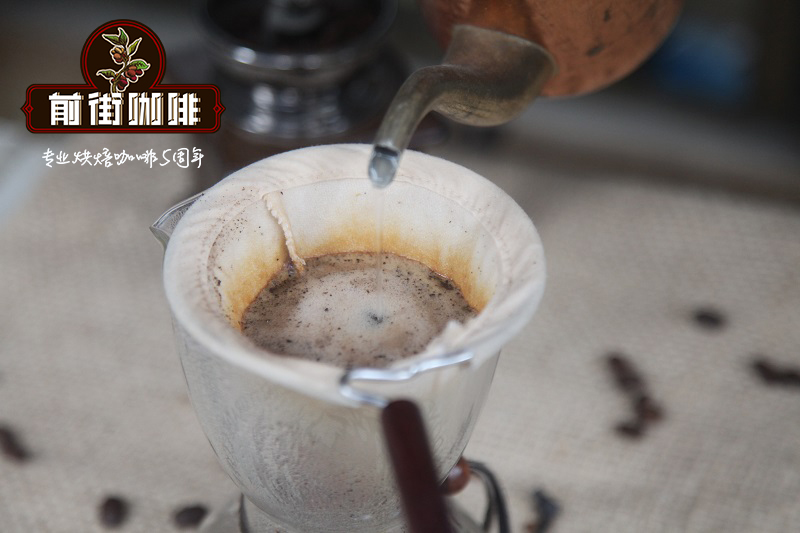
Remember this: wet-hulled coffee has a very heavy body. During extraction, keep the water temperature slightly lower and the brewing time not too long, so you do not destroy the coffee's rich layered texture. Aim for balance to bring out its strengths.
FrontStreet Coffee Recommendation
To taste wet hulling done with care, start with FrontStreet Indonesia Wet-Hulled Mandheling. It comes from the Lintong region near Lake Toba in Sumatra and is processed wet-hulled, which is why the beans show those characteristic herbal and spice notes — a result of the parchment being stripped while the bean was still half wet and then left exposed to the air. A medium-dark roast keeps acidity low and body thick, with caramel, dark chocolate and toasted-bread aromas and a long, mellow finish. It suits drinkers who like strong coffee.
For the top of the Mandheling range, FrontStreet PWN Golden Mandheling is selected under strict defect standards covering density, size, shape and color, and is both machine-sorted and hand-sorted to guarantee whole, uniform, large beans and to reduce the muddy, grassy notes typical of the region. Freshly roasted, it shows sandalwood, herbs, spice, toasted hazelnut, caramel and dark chocolate, with a clean, sweet, full-bodied cup and layered aroma.
If you want to see how Mandheling behaves in a blend, FrontStreet Classic Blend follows the old Taiwanese "Mamba" formula — Mandheling plus Brazil — with a small amount of Robusta added and a deep roast. The Brazil contributes a smooth, nutty sweetness that tempers Mandheling's wild, herbal bitterness, while the Robusta lifts aroma and crema, letting even a beginner pull a rich, golden-crema espresso with classic Mandheling character.
Important Notice :
FrontStreet Coffee is a long-established specialty coffee roaster in Guangzhou China, selling freshly roasted beans from its own farm in Yunnan as well as dozens of carefully selected single-origin beans from around the world for both pour-over and espresso. The products deliver consistently excellent quality and great value, with shipping within 24 hours. Guangzhou's FrontStreet Coffee shop is recommended by many coffee lovers, and the beans are now available online at the Tmall 。
FrontStreet Coffee has moved to a new address:
FrontStreet Coffee Address: 315,Donghua East Road,GuangZhou
Tel:020 38364473
 Scan and follow the En Gafei WeChat official account. Please indicate that the reprint comes from "En Gafei".