Why are washed coffee beans blue-green in color? What varieties of washed coffee beans are recommended?
Washed Method
The washed method uses washing and fermentation to remove the pulp, mucilage, and skin. Farms that use it must build washing tanks and have access to a continuous supply of fresh water. During processing, the fermented beans are placed in tanks and moved back and forth, using the friction between beans and the power of flowing water to wash them until smooth and clean. The whole fermentation process takes approximately 24-30 hours.
After washing, the beans are still encased in their parchment layer with a moisture content of 50%. They must be dried down to 12%, otherwise they will keep fermenting and become moldy and spoiled.
The better processing method is sun drying, which takes 1-3 weeks but produces exceptional flavor and is quite popular.
Washed processing generally removes the silverskin from the beans, giving them a special luster. Natural processing, the dry method, only removes the husk and leaves the silverskin completely intact.
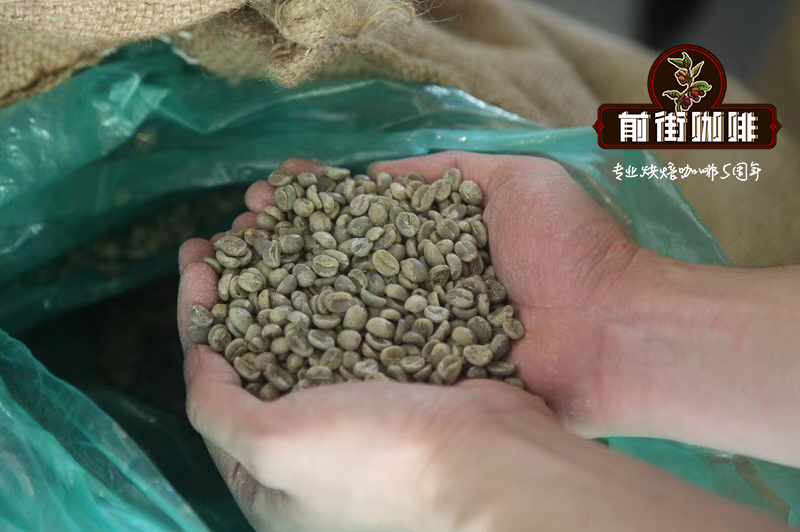
As a rule, washed green beans are blue-green in color, while natural processed green beans are yellow-green.
Ethiopian Washed Method
This belongs to the traditional wet fermentation method. Cherries are washed, peeled, and placed in fermentation tanks with water covering the fruit for wet fermentation. They are then washed, soaked overnight in clean water tanks, and sun-dried on raised racks the next day. The wet fermentation takes 12-30 hours, requires large amounts of clean water, and requires monitoring to keep the pH from dropping below four or five.
Recommended Washed Coffee Beans: Kenyan Washed
The famous K72 method. Cherries are washed, peeled, and given a 24-hour dry fermentation, then washed, given another 24-hour dry fermentation, washed again, and given a third 24-hour dry fermentation. The cycle repeats to reach 72 hours of fermentation, after which the beans are washed and soaked overnight in water tanks before sun drying begins the next day.
Three repeated cycles reaching 72 hours are what give the method its name: the Kenyan 72-hour fermentation washed process, or K72 for short.
Kenyan washing tanks have two levels, high and low. In the evening, harvested cherries are first sorted to remove defects, then depulped. The sticky parchment beans, with most of the mucilage removed, are placed in the lower clean water pool for secondary fermentation. The circulating water is renewed every few hours to prevent mold. The beans are then channeled to washing canals to remove residual mucilage.
This labor-intensive, water-hungry processing explains why Kenyan coffee has such a refined, delicate flavor.
Recommended Washed Coffee Beans: Guatemala
Guatemala's Fraijanes region surrounds the capital, Guatemala City, and features high altitude, abundant rainfall, and significant humidity variation. Volcanic ash from Pacaya, Guatemala's most active volcano, supplies important minerals to the soil. The green beans have grassy and spicy flavors, with a distinctive smoky taste and strong aroma.
After harvest, most of the pulp is separated from the beans by a depulping machine. The parchment beans are then guided to a clean water tank and soaked for fermentation to completely remove residual pulp. Through water processing, unripe and defective beans are floated out, and fermentation is better controlled. As a result, unlike natural processed beans that may have impure flavors, washed beans present distinct fruit acidity, slightly greater complexity, and a cleaner cup without astringency or sharpness.
Recommended Washed Coffee Beans: Papua New Guinea
Because it lies in the southern hemisphere, the local coffee harvest runs roughly from May to August, whereas most of Central and South America harvests from October to February of the following year. Farms and surrounding smallholders pick ripe red cherries across nearly 413 hectares and send them to their own processing facilities. Papua New Guinea's local washed processing, however, differs from Central and South American methods.
It uses three washing fermentations, each soaking for about 12 hours, with clean water replaced to control flavor. After washing, the green beans have their outer husks removed and then undergo various gradings, such as AA, AB, and PB (peaberries). This meticulous post-processing brings bright, delicate fruit acidity to the coffee, with a clean and lingering sweetness.
Papua New Guinea occupies the eastern half of the island of New Guinea. Although it is geographically close to Indonesia, its coffee flavor is completely different from the full-bodied richness of Mandheling. Papua New Guinea beans have a clean taste, full of floral aroma and a sweet aftertaste.
FrontStreet Coffee Recommendation
For a textbook washed coffee, FrontStreet Washed Yirgacheffe is a great first choice. It is known for clear jasmine and bright citrus acidity, with a light, elegant body and a tea-like finish that drinks like a clean, refreshing glass of lemon tea. FrontStreet Gedingding Cooperative takes the same washed style a step further: the beans come from the Gedingding station in the Worka area southeast of Yirgacheffe, and because the fruit is removed before drying, the coffee's inherent aroma comes through more clearly, with citrus and lemon character and an elegant white floral note.
For contrast, FrontStreet Natural Red Cherry shows what the natural process does differently: made only from fully ripe red cherries and sun-dried on raised beds, it is all bright citrus acidity, berry juice, honey sweetness, and a creamy smoothness, with none of the astringency that washing is designed to avoid.
Washed coffees like these show best as pour-over. Their clean structure and delicate fruit make them easy to enjoy black, and they are an ideal way to taste the difference processing makes.
Important Notice :
FrontStreet Coffee is a long-established specialty coffee roaster in Guangzhou China, selling freshly roasted beans from its own farm in Yunnan as well as dozens of carefully selected single-origin beans from around the world for both pour-over and espresso. The products deliver consistently excellent quality and great value, with shipping within 24 hours. Guangzhou's FrontStreet Coffee shop is recommended by many coffee lovers, and the beans are now available online at the Tmall 。
FrontStreet Coffee has moved to a new address:
FrontStreet Coffee Address: 315,Donghua East Road,GuangZhou
Tel:020 38364473
 Scan and follow the En Gafei WeChat official account. Please indicate that the reprint comes from "En Gafei".