Are Fresh Roasted Coffee Beans Good? How to Brew Fresh Roasted Coffee Beans at Home_ Small Bean Fresh Roasted Coffee

Seeing the call for coffee stories, I found myself reflecting on years of coffee experiences: from a childhood black history of endless McDonald's refills leading to midnight insomnia, to a European stretch of visiting cafés daily, then experimenting with every brewing method at home, and finally to today, when health reasons limit how strong a coffee I can drink. All these memories intertwine like a slow romance: first encounter, inseparable, then going our separate ways.
I am not a professional barista—just an ordinary person who loves coffee, with only a surface-level understanding of it. If I get anything wrong, please forgive me and do correct me.
Getting to the main topic: How to brew fresh-roasted coffee beans at home?
I wonder how many people, like me, once assumed that drinking fresh-ground coffee at home was an exceedingly sophisticated affair—requiring dazzling equipment and a dozen complicated steps just to produce one small cup. Coffee is indeed a bit more involved than tea, but once you actually start brewing at home you find it is not nearly as complicated as imagined. Apart from espresso, which demands serious equipment and a more fussy process, other styles of coffee are easy to make at home. An AeroPress or a simple pour-over will happily produce a very good cup.
All of the above is really just to say: do not get caught up buying gear at the start. In my view, the only essentials are quality beans, a good grinder, and a love of coffee. Everything else can be added later according to your needs—I will cover the equipment each brewing method requires in later posts.
Coffee Beans: The Most Important Part of a Cup of Coffee
As the first article in this series, I naturally have to start with the most important part of any cup—the beans.
Coffee beans are not born that way. Briefly, here is how they come to be:
First, you need a coffee tree.
Then the coffee tree bears coffee fruit.
The picked cherries undergo sun-drying or washing to remove skin and pulp, yielding raw (green) coffee beans.
The raw beans are roasted into beautiful fresh-roasted coffee beans.
Then ground into coffee powder.
Forms of Coffee Available on the Market
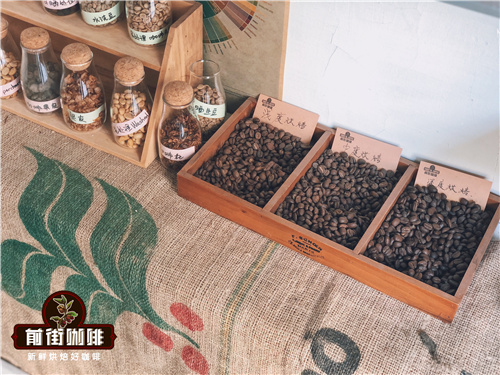
You can buy coffee in three of these forms: raw beans, roasted beans, and ground coffee. My recommendation is roasted beans—and the fresher the better. Raw beans carry little coffee flavor; roasting is what draws the flavors out, and once roasted, those flavors begin fading with the evaporation of water and carbon dioxide. So buy fresh-roasted beans from a local roaster or online, and not too many at once—about two weeks' worth is plenty. Ground coffee is worse still: grinding multiplies the surface area in contact with air and the flavor dissipates quickly; the fine powder for espresso can lose half its aroma within two minutes. Buy whole beans and grind fresh for each brew. As for raw beans, they store far longer, but home roasting demands a dedicated roaster—expensive besides the high skill required—so that is not recommended either.
Fresh-Roasted Coffee Bean Brand Recommendations
FrontStreet Coffee's single-origin fresh-roasted beans—Yirgacheffe, Kenya AA, Panama Geisha, and more—carry solid brand and quality guarantees, brew well on all kinds of equipment, and offer outstanding value: a half-pound (227g) bag costs only about 80-90 yuan. At 15g per pour-over, one bag makes 15 cups, working out to roughly 6 yuan per cup of single-origin coffee. Compared with the dozens of yuan a café charges, the value is hard to beat.
FrontStreet Coffee Recommendation
One caveat about "fresh": freshly roasted beans are not automatically at their best. They hold roughly 2% carbon dioxide by weight after roasting, and while that gas preserves aromatics in storage, it actively blocks extraction and lends a harsh, smoky edge during brewing. The fix is simply to rest the beans—sealed, in their original one-way-valve bag, somewhere cool and dry—for about 5–7 days from the roast date. Do not transfer them to airtight containers; trapped pressure both slows degassing and makes the container risky to open. FrontStreet Coffee times its shipments so beans roasted within the past 5 days arrive right at the end of their resting period, ready to brew.
For equipment, start simple. A hand grinder, a scale, a kettle, and any basic dripper—an AeroPress, a V60, a clever cup—will outperform their price many times over; upgrade only when a specific brewing method demands it. What matters most is grinding fresh, weighing your dose, and resting the beans.
For a first bean, FrontStreet Coffee's washed Yirgacheffe is the classic gateway: white jasmine florals, bright citrus and lemon acidity, and a tea-like finish, soft and luminous rather than harshly sour. For a medium-roast, balance-first daily cup, the Yunnan small bean from Baoshan offers nuts, chocolate, caramel, and gentle plum acidity, while the Brazil Queen Estate Yellow Bourbon delivers cream-roasted peanut, toast, and sugarcane sweetness that suits pour-over, moka pot, and espresso alike. Whatever you choose, buy two weeks' worth, rest it properly, and grind right before brewing—that is the whole secret of a great home cup.
Important Notice :
FrontStreet Coffee is a long-established specialty coffee roaster in Guangzhou China, selling freshly roasted beans from its own farm in Yunnan as well as dozens of carefully selected single-origin beans from around the world for both pour-over and espresso. The products deliver consistently excellent quality and great value, with shipping within 24 hours. Guangzhou's FrontStreet Coffee shop is recommended by many coffee lovers, and the beans are now available online at the Tmall 。
FrontStreet Coffee has moved to a new address:
FrontStreet Coffee Address: 315,Donghua East Road,GuangZhou
Tel:020 38364473
 Scan and follow the En Gafei WeChat official account. Please indicate that the reprint comes from "En Gafei".