Dominican Republic Coffee Beans: How to Prepare Dominican Coffee and Its Growing Regions
Dominican Republic Coffee Growing Regions
Most coffee cultivation in the Dominican Republic is dispersed across six major growing regions, situated in the western half of the country's valleys and steep mountain slopes. These farms use the unique altitude, humidity, temperature, and soil of each valley to create optimal conditions for coffee.
Dominican coffee growing regions are mostly located near mining areas: the Northern Mountain Range, or Septentrional Mountains; the Central Mountain Range, featuring Pico Duarte, the highest peak in the Caribbean at 10,415 feet (3,175 meters) above sea level; and the Neiba Mountain Range, or Sierra de Neyba.
Dominican Coffee Origins and Cultivation
Approximately 90% of Dominican coffee is of the Arabica variety. Introduced by the Spanish 265 years ago, cultivation began in rural nurseries and continues today with the same tradition of caring for the vulnerable. This legacy persists through programs implemented in Dominican coffee regions that help farmers escape poverty while improving coffee quality.
Dominican Arabica organic coffee grows in high-altitude forest areas alongside native trees including pine, inga, guava, and macadamia. These trees protect the coffee from direct sunlight while providing a warm environment for growth, and at the same time offer natural habitat for birds and other wildlife.
Organic Cultivation Practices
Nearly all Dominican coffee is cultivated using organic methods. An increasing number of farms are receiving official organic certification from international organizations such as the USDA (United States Department of Agriculture) and Germany's BCS, while continuing to develop coffee growing regions using more environmentally friendly approaches.
Dominican farmers typically use rich compost as fertilizer to nourish their coffee trees. Coffee grounds are then recycled through composting methods to capture residual biogas for daily living needs. This approach also restores ecological wetlands and reduces water pollution.
Dominican farmers employ careful pruning techniques to promote coffee-tree health and reduce pests and diseases, thereby eliminating the need for pesticides. Through pruning cuttings and the construction and maintenance of terraces on steep slopes, they practice soil and water conservation and prevent soil erosion.
Dominican Coffee Processing Methods
All coffee in the Dominican Republic is hand-picked, using superior harvesting techniques during the season. Each mature cherry is quickly processed and carefully tended, with this labor-intensive approach ensuring the highest-quality coffee.
Professional Dominican coffee production employs the wet processing method. All cherries are selected within 24 hours, then washed using the purest spring water to remove all mucilage.
Coffee Beans Dried by Tropical Sunlight
The freshly washed beans are dried under the bright Caribbean sun, with professional farmers ensuring uniform drying to reduce moisture content to approximately 12%. Only the finest beans are selected, using drying machines and a series of mechanical devices to classify the quality of each bean. These green beans then undergo manual separation (Pick Hand). Only the largest and best beans become specialty coffee, providing optimal quality assurance for the Dominican Republic's exceptional coffee. This core traditional process for producing quality coffee has been passed down for hundreds of years in this peaceful country.
Improving Farmers' Livelihoods and Protecting Global Ecology
Approximately 500,000 people in the Dominican Republic depend on coffee cultivation for their livelihood. Most farmers and their families still live in poverty. Coffee is one of the few crops that can be sustainably grown in resource-limited environments while growing in perfect harmony with many native plant species.
All farmers in the Dominican Republic follow strict production guidelines to ensure high-quality coffee while promoting environmental protection. Through harmonious coexistence with other plant varieties, forests and coffee-farm shade create important buffer zones between land and agricultural products. These areas protect rare orchids, insects, and birds within their natural habitats. During winter, over forty percent of birds migrate from the United States to the Caribbean region and reside in Dominican coffee farms. The Dominican government is committed to protecting bird habitats and ensuring their long-term survival.
FrontStreet Coffee's Dominican Coffee Brewing Suggestions
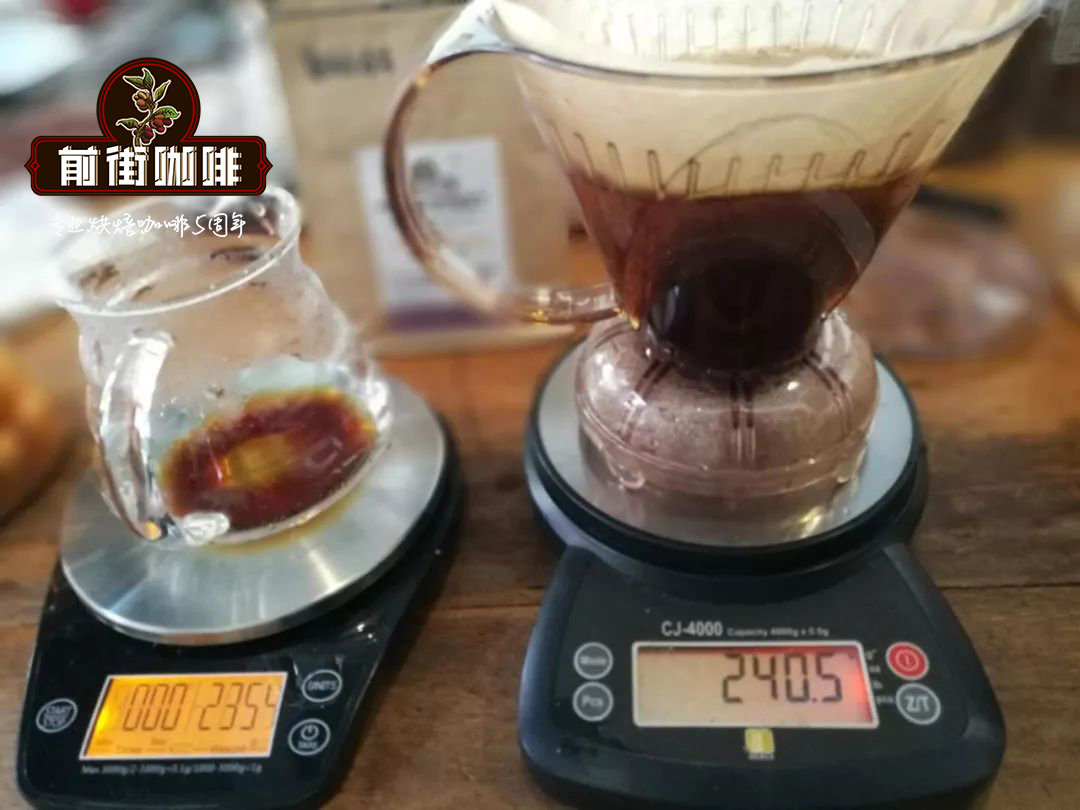
V60 / 1:15 / 91°C / Time: 2 minutes
FrontStreet Coffee Recommendation
To explore the best-known Arabica varieties alongside Dominican coffee, FrontStreet Coffee's most popular single-origins are a natural next step. For a natural Ethiopian, the Flower Queen uses the most common local Heirloom variety, a mix of several undistinguished varieties that gives the beans varied size, a refined floral note, and especially prominent fruit aroma. Washed and natural processed, it shows cream strawberry, mango, jackfruit, citrus, and blueberry, with the ripe tropical-fruit character typical of FrontStreet's natural Sidamo beans; the very lot that won first place in that year's TOH green-bean competition had exactly this lush berry aroma. It combines excellent flavor with a fair price.
If Flower Queen is the natural representative of Ethiopian Arabica, then FrontStreet's Yirgacheffe Gudingding is the washed representative. Yirgacheffe's clean, translucent lemon-and-citrus tonality makes it an important part of the specialty Arabica world, and digging deeper you find that the town holds many small villages, each building its own processing station, or cooperative; the station in Gudingding village is the Gudingding Cooperative. It is Ethiopia's highest grade, G1, washed in the classic way, showing an elegant white floral, citrus, orange, and green tea.
FrontStreet's Jamaica Blue Mountain No.1 is a Typica, one of the representative Arabica varieties and the first to be transplanted from Yemen to India, Indonesia, and Central and South America. Typica is very balanced, gentle, and smooth, its acidity not sharp and its aroma full and pure, but it has poor disease resistance and low yield. Blue Mountain's Typica was transplanted from Martinique to Jamaica's Blue Mountains in the 1720s, and over more than 200 years it evolved better disease resistance, especially against coffee berry disease, than ordinary Typica; outside Jamaica, however, it cannot reproduce its clean, delicate fragrance. FrontStreet's cupping of Blue Mountain Typica finds a balance of flavor that, so far, no other region's coffee approaches.
For a different Arabica, FrontStreet's Panama Emerald Estate Red Label Geisha is the legend of the specialty world, with elegant jasmine florals, citrus, bergamot, and fine black-tea flavors, a clean, transparent body, and a long, layered finish; the variety yields little, is fragile, and is demanding about its environment, and the Red Label comes from Panama's most famous estate, in Boquete, Chiriqui province, on fertile volcanic soil and ancient forest, wrapped year-round in mist with abundant rain. And FrontStreet's Brazil Queen Estate is the classic Bourbon, an old variety like Typica, named for the island of Bourbon where it was first planted, yielding about 30% more than Typica with round, short beans. Yellow Bourbon, the orange-yellow mutant, was first found at the Queen Estate, and it brings cream, peanut, toasted bread, and sugarcane aromas, rich and clean-sweet, and works for pour-over, moka pot, and espresso alike. FrontStreet's Colombia Sidra, finally, is medium-light roasted to show florals, tropical fruit, grape, preserved fruit, and passion fruit with a juice-like body.
Important Notice :
FrontStreet Coffee is a long-established specialty coffee roaster in Guangzhou China, selling freshly roasted beans from its own farm in Yunnan as well as dozens of carefully selected single-origin beans from around the world for both pour-over and espresso. The products deliver consistently excellent quality and great value, with shipping within 24 hours. Guangzhou's FrontStreet Coffee shop is recommended by many coffee lovers, and the beans are now available online at the Tmall 。
FrontStreet Coffee has moved to a new address:
FrontStreet Coffee Address: 315,Donghua East Road,GuangZhou
Tel:020 38364473
 Scan and follow the En Gafei WeChat official account. Please indicate that the reprint comes from "En Gafei".