Flavor Profile of Brazilian Coffee: How to Make Delicious Pour-Over Coffee? Are Brazilian Beans Light or Dark Roasted?

As the world's largest producer of Arabica coffee, Brazil's annual harvest has a decisive influence on global Arabica futures prices. By some estimates, at the peak of the Brazilian harvest the country can account for more than 30% of total global Arabica production.
In recent years, however, Brazil's coffee output has been less than rosy. Extreme weather driven by climate change has significantly cut the country's Arabica production. A weaker US dollar has squeezed growers' profits, and rising oil prices have pushed many Brazilian farmers to switch to corn for renewable energy production. Add in the disruption of the global pandemic and the steady rise of Brazil's own domestic coffee consumption, and Brazilian beans have ended up in a situation where demand keeps outrunning supply.
Arabica futures prices hinge on the volume of Arabica beans held in inventory at the New York Intercontinental Exchange. Because Brazil is the largest supplier to that exchange, how much coffee Brazil ships is always the decisive factor in futures pricing.
Brazilian Coffee Flavor
As a general rule, the higher the altitude a coffee grows at, the wider the day-night temperature swing, the more slowly the coffee matures, and the more time it has to develop. This builds greater bean density and, with it, richer, more layered flavors.
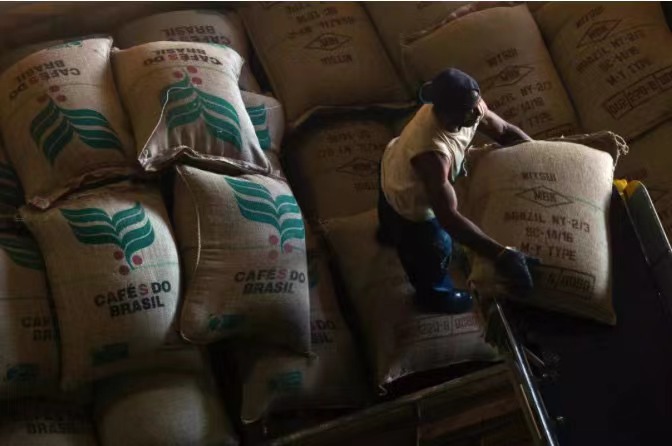
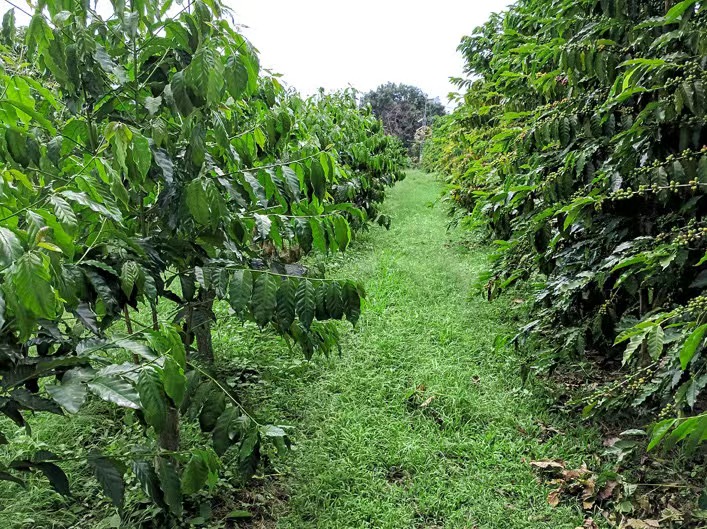
Measured against other Central and South American producing countries, Brazil's coffee is grown at a noticeably lower altitude, on relatively flat terrain, with few microclimates and coffee trees cultivated without shade.
As a result, Brazilian coffee has a softer character, and its flavor complexity does not match that of other origins. Brazilian beans typically show low acidity, and the better lots offer nutty and chocolate-like sweetness, balanced acidity and bitterness, and an excellent body. Lower-grade Brazilian beans can carry woody or earthy notes.

An Overview of Coffee Cultivation in Brazil
Coffee reached Brazil from French Guiana in the 1720s. The crop took to the local climate immediately, spreading quickly from the north to Sao Paulo state in the southeast and down to Parana in the south. Unfortunately, by the time coffee arrived in Parana, the region's higher latitude meant winter frosts that repeatedly dealt coffee farmers heavy losses.
It was not until the 1970s and 1980s that Brazilian farmers opened up the warmer Minas region and Bahia, north of Sao Paulo state, where winters are warm and frost-free. Minas has since grown into one of Brazil's principal specialty coffee regions.
Brazil's main producing regions are Minas Gerais, Sao Paulo, Bahia, and Espirito Santo, which together account for 90% of the country's total exports. Mogiana, one of the regions most often seen on labels, lies in Sao Paulo. Cerrado and South Minas, in Minas Gerais, sit at higher elevations than the rest of the state, which is why most Brazilian specialty beans come from these three areas.
Brazilian Coffee Varieties
Brazil's most widely grown varieties today are Red Bourbon, Yellow Bourbon, Mundo Novo, and Catuai, with the two Bourbon types leading the pack. Both are subspecies that mutated from Typica.
After a Red Bourbon tree flowers and sets fruit, its cherries change color in a distinct progression: green, then light yellow, then light orange, then mature red, and finally a deeper red at full ripeness. That is how the name Red Bourbon came about. In practice, Red Bourbon is simply the variety most people know as Bourbon.

Bourbon grown at high altitude typically shows a finer aroma, brighter acidity, and can even carry wine-like notes. Put simply, Bourbon is an Arabica variety. Its fruit usually ripens red, which gives us Red Bourbon, but there are also Yellow Bourbon and Orange Bourbon. Yellow Bourbon yields less, yet its quality is higher.

Are Brazilian Coffee Beans Good to Drink?
FrontStreet Coffee currently offers two Brazilian beans. The first comes from Queen's Farm in the Mogiana region near South Minas, at an altitude of 1400-1950m. Many farming families work this area; some still run traditional large-scale operations, while others have adopted small-scale, modern management. The blend of modern technique and the region's mountain coffee-growing tradition yields exceptionally high-quality green beans.
On the cupping table, FrontStreet Coffee found that beans from this area carry a sugarcane-like sweetness. Roasted medium-dark, Queen's Farm Brazil shows aromas of mixed roasted nuts, a peanut-butter-like richness and smoothness, and a brown-sugar sweetness.
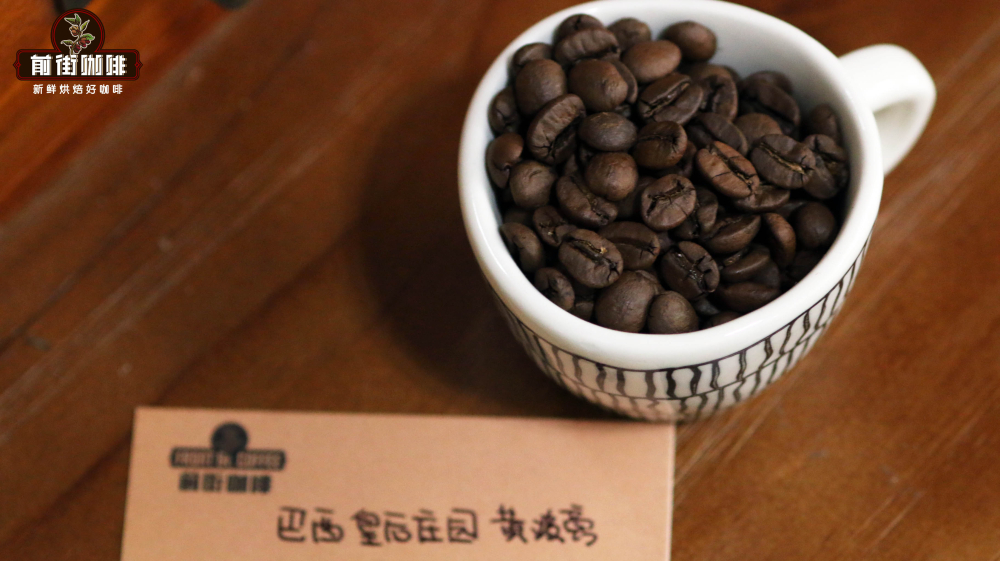
The second bean comes from the Cerrado region at an altitude of around 1000 meters. The Cerrado stretch runs from Mato Grosso in Brazil's southwest, through central-western Minas, to the western edge of Bahia. When FrontStreet Coffee says "Cerrado coffee," it does not mean the entire Cerrado savanna, but only the coffee-growing zones above 1000 meters in central-western Minas.
This area is the heart of the savanna, combining high elevation with fertile soil - exactly what it takes to grow sweet specialty beans with full body and a clean cup. Roasted medium-dark, FrontStreet Coffee's Brazilian Cerrado shows notes of nuts, peanuts, creamy smoothness, cocoa, and caramel.

How to Brew Brazilian Coffee Beans?
FrontStreet Coffee's shops typically brew this coffee in a Kono dripper. The difference from a V60 is that a Kono's ribs run only about a third of the way up the cone, leaving the upper two-thirds smooth. Once the filter paper sits flush against the wall, air cannot escape past it, so the water flow slows during brewing and the coffee essentially soaks - which makes the final cup more full-bodied.
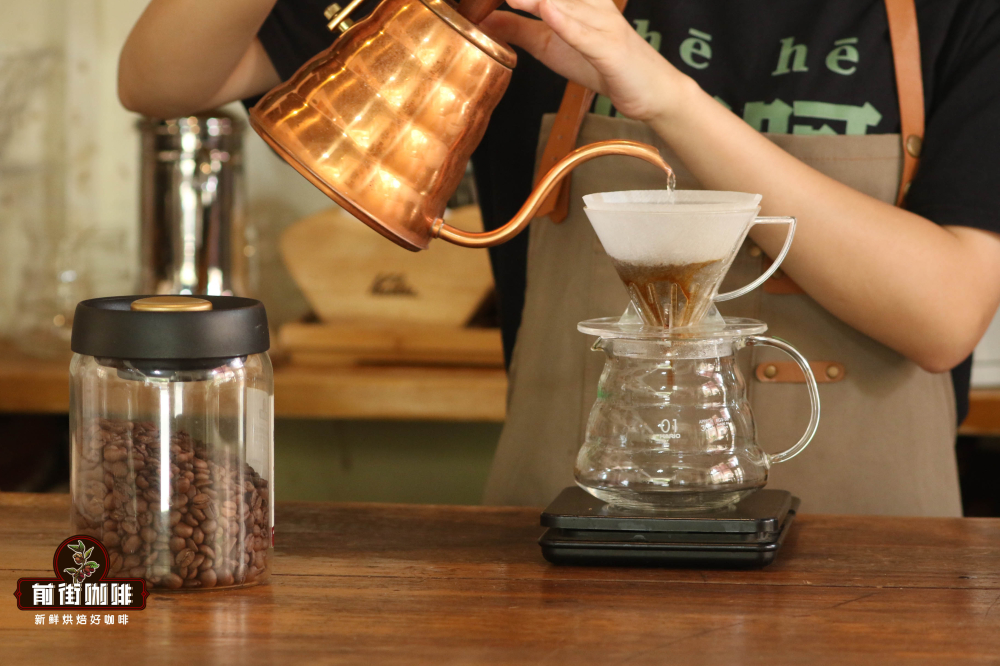
Because the dripper itself boosts extraction, FrontStreet Coffee recommends a medium-coarse grind (with 70% of the grounds passing through a Chinese #20 standard sieve), water at 88-89 degrees Celsius, and a 1:15 coffee-to-water ratio.
FrontStreet Coffee brews it in three stages: start the timer, pour 30g of water and bloom for 30 seconds, then pour in small circles up to 125g. When the water level drops far enough to nearly expose the coffee bed, pour again to 225g and stop. Measured from the start of blooming, total extraction time is 2 minutes.
FrontStreet Coffee Recommendation
If you simply want a first taste of what Brazil has to offer, FrontStreet Coffee's pulped natural Cerrado Red Bourbon is a classic single-origin starting point. Roasted medium, it opens with rich aromas of cream, peanuts, toast, caramel, and hazelnut, with a rounded mouthfeel, no acidity to speak of, and just a faint touch of bitterness. It works beautifully as pour-over, and it is equally at home in a moka pot, as an espresso SOE, in a siphon, or in a French press.
For something different, try Queen's Farm Yellow Bourbon, a rare mutation of Red Bourbon grown in Mogiana's fertile red volcanic soil near South Minas. Its fruit character is cleaner than most, and brewed by hand or through a home espresso machine it reveals a sugarcane sweetness you will not find in beans from other origins, alongside gentle fruit and chocolate notes.
Brazil's low acidity and balanced profile also make it a backbone of espresso blends: it contributes chocolate and cream aromas plus a soft sweet-sour-bitter balance that keeps extraction stable shot after shot.
Important Notice :
FrontStreet Coffee is a long-established specialty coffee roaster in Guangzhou China, selling freshly roasted beans from its own farm in Yunnan as well as dozens of carefully selected single-origin beans from around the world for both pour-over and espresso. The products deliver consistently excellent quality and great value, with shipping within 24 hours. Guangzhou's FrontStreet Coffee shop is recommended by many coffee lovers, and the beans are now available online at the Tmall 。
FrontStreet Coffee has moved to a new address:
FrontStreet Coffee Address: 315,Donghua East Road,GuangZhou
Tel:020 38364473
 Scan and follow the En Gafei WeChat official account. Please indicate that the reprint comes from "En Gafei".